








Índice
Introdução
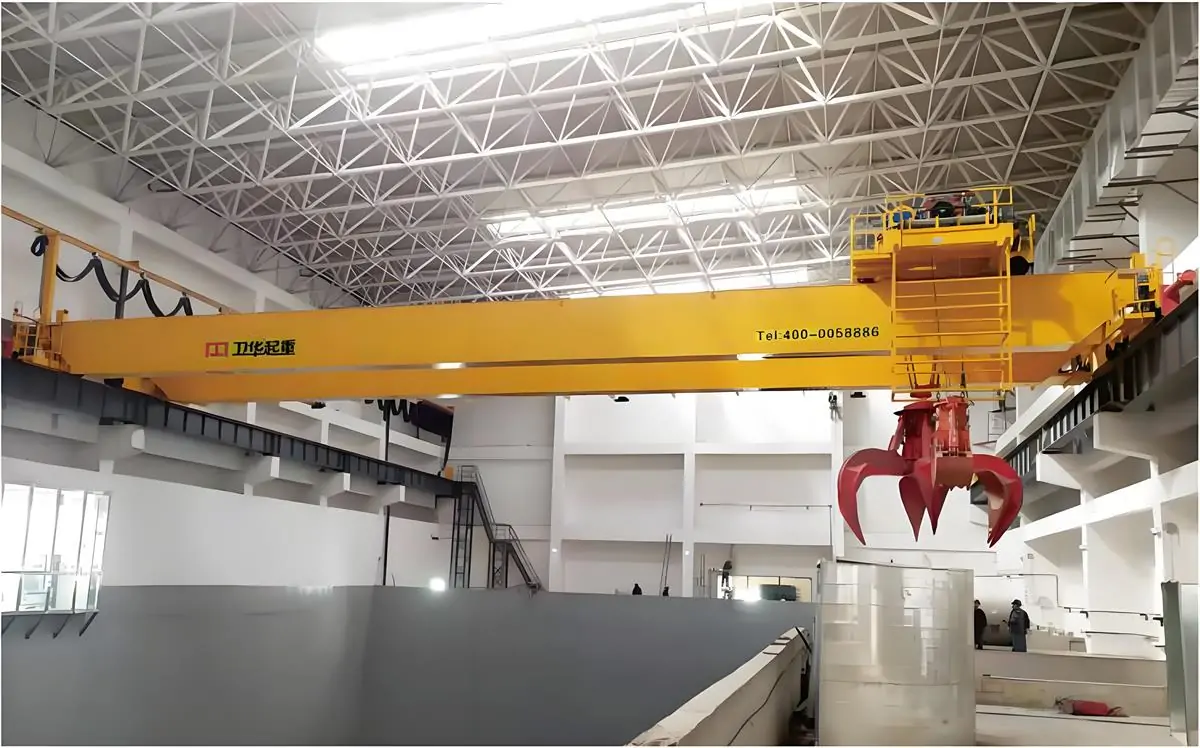
Choosing the right grab bucket for overhead crane and gantry crane depends on the material type, crane specifications, bucket capacity, and working conditions. A grab bucket is a crane attachment used for grabbing, lifting, and discharging bulk materials. Overhead cranes and gantry cranes are widely used in industrial material handling, with different grab bucket designs matched to different materials and operating requirements.
In this guide, I will explain how to select the right grab bucket for overhead cranes and gantry cranes by covering grab bucket types, material requirements, crane compatibility, capacity selection, and application conditions. The information helps buyers understand the differences between mechanical and hydraulic grabs and choose a suitable solution for their handling operations.
What Is a Grab Bucket for Overhead Crane and Gantry Crane?
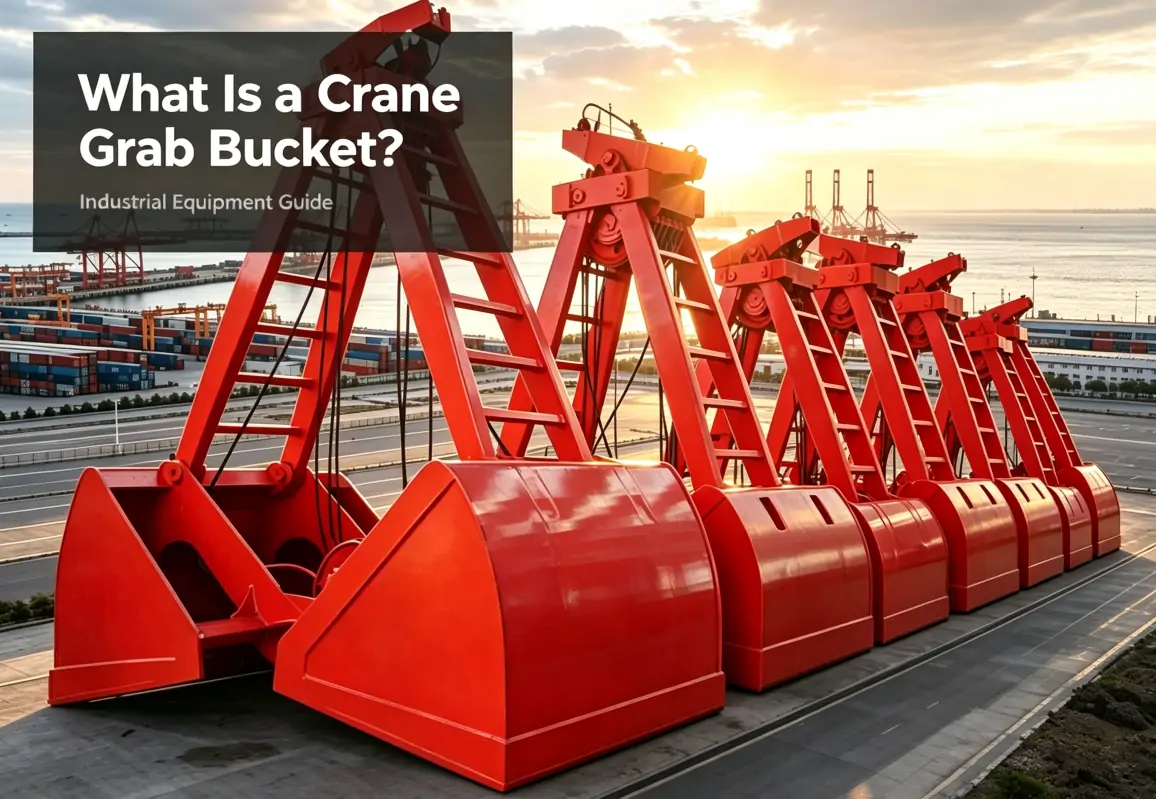
A grab bucket for overhead crane and gantry crane is a crane attachment used for grabbing, lifting, transporting, and discharging bulk materials. It is designed for handling loose and heavy materials in industrial applications such as ports, steel plants, power plants, and mining facilities.
A grab bucket is installed on an overhead crane or gantry crane through a hook or trolley system. Mechanical grab buckets use the crane’s wire rope mechanism to control opening and closing, while hydraulic grab buckets use hydraulic cylinders and a power unit for independent operation.
During operation, the grab bucket closes its shells around the material, lifts and transports the load, then opens at the discharge point to release the material. The crane provides lifting and travelling movement, while the grab bucket performs the grabbing and unloading process.
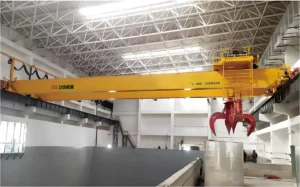
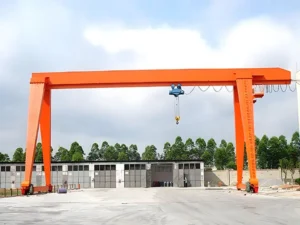
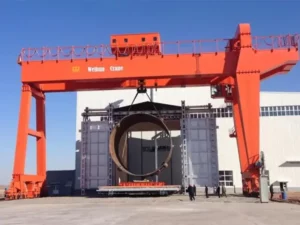
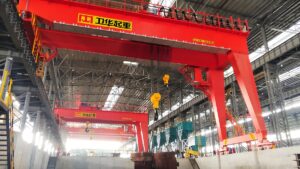
Overhead crane grab buckets are commonly used for indoor material handling in factories and storage areas. Gantry crane grab buckets are widely used for outdoor applications such as ports, terminals, and bulk material yards. The suitable grab type depends on the material characteristics, crane configuration, and working conditions.
For more information, read the article: What Is a Crane Grab Bucket?
Types of Grab Buckets for Overhead Crane and Gantry Crane
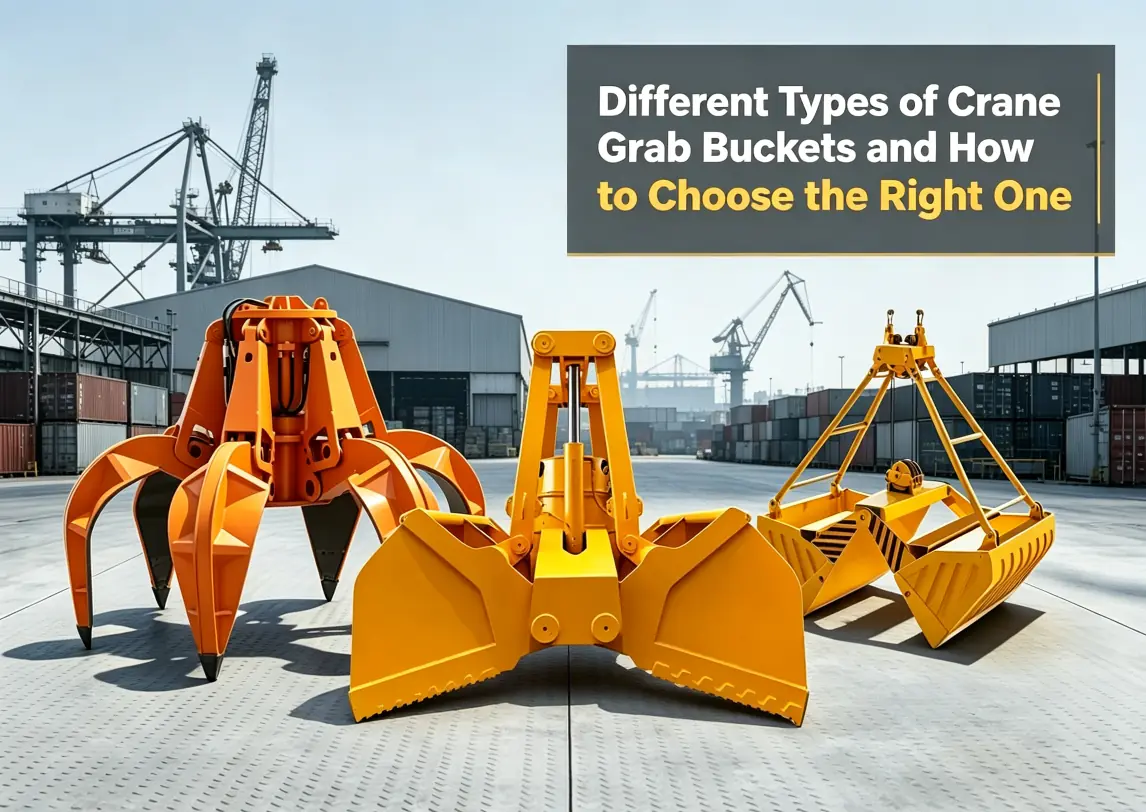
Different grab bucket designs are used for overhead cranes and gantry cranes based on material type, crane configuration, and operating requirements. The main types include mechanical clamshell grab buckets, hydraulic grab buckets, and hydraulic orange peel grabs.
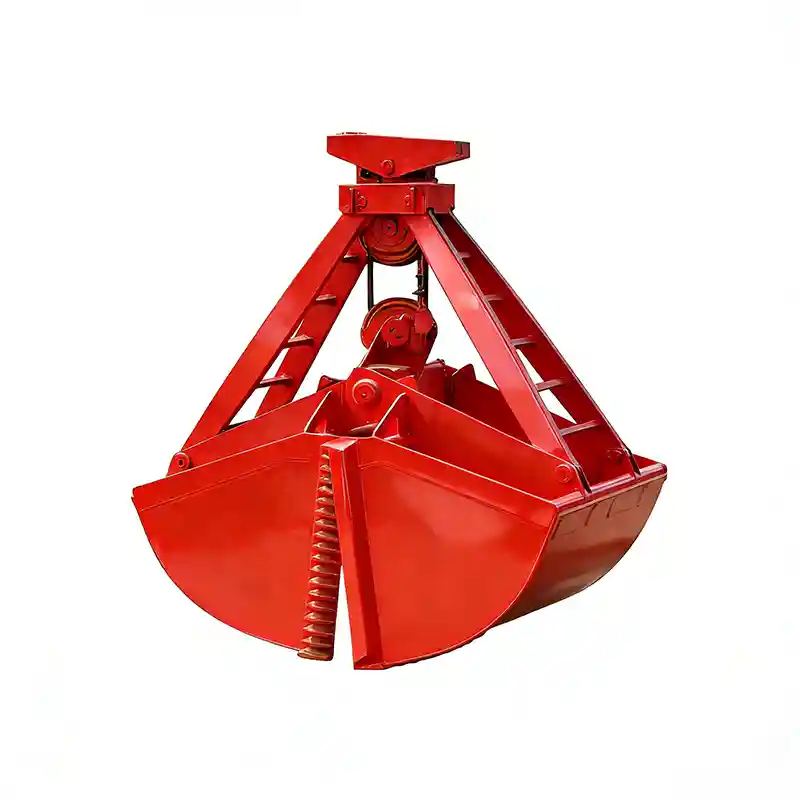
Mechanical Clamshell Grab Bucket
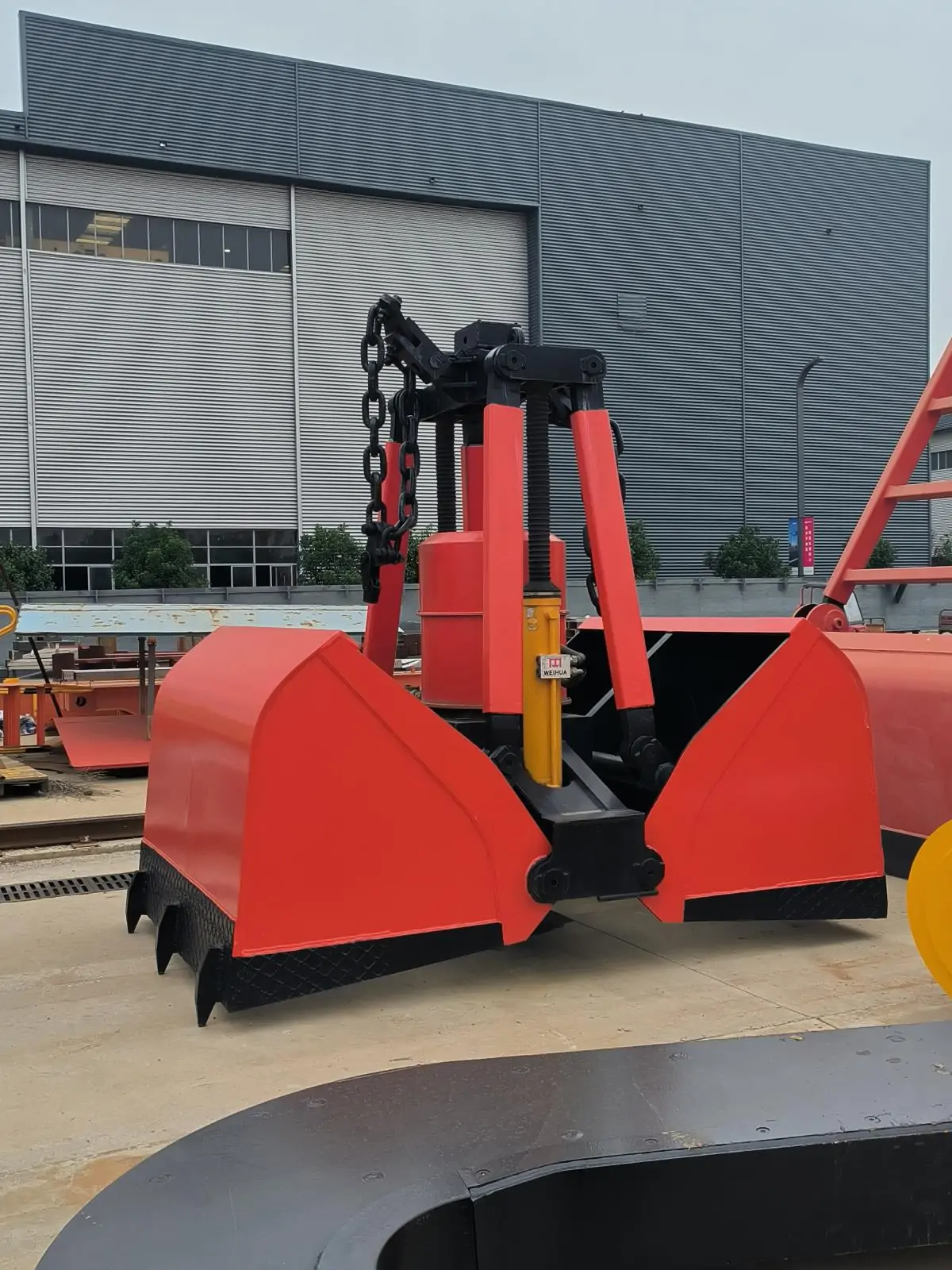
A mechanical clamshell grab bucket is a rope-operated crane attachment that uses the crane’s wire rope system to open and close the bucket shells. It is available in two-rope and four-rope designs and is widely used for continuous bulk material handling due to its simple structure and easy maintenance.
Características:
- Wire rope operated
- Two-rope or four-rope design
- Simple mechanical structure
- Low maintenance requirements
Aplicações:
- Coal handling
- Sand and gravel transfer
- Grain loading
- Ore handling
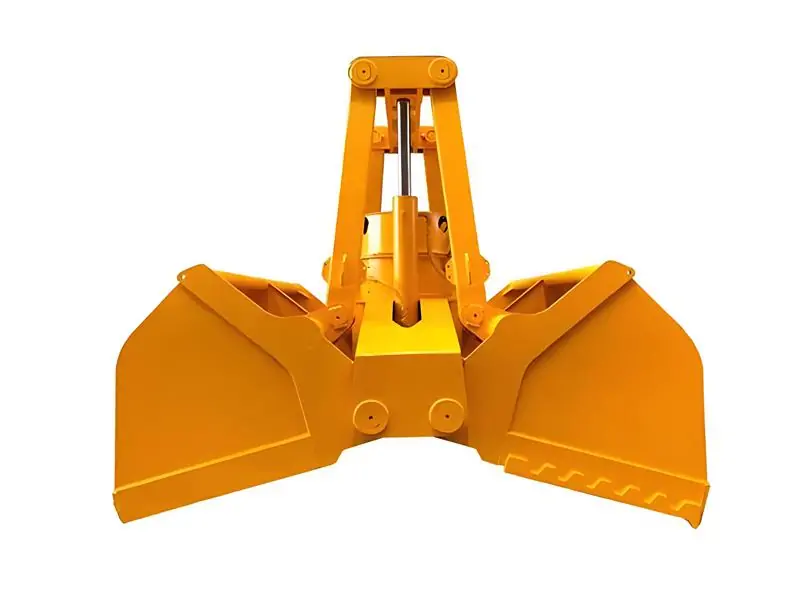
Hydraulic Grab Bucket
A hydraulic grab bucket is a crane attachment driven by hydraulic cylinders and a dedicated power system. It provides adjustable gripping force and independent control, making it suitable for heavy materials and applications requiring flexible operation.
Características:
- Hydraulic cylinder-driven
- Adjustable gripping force
- Flexible opening and closing control
- Suitable for heavy-duty handling
Aplicações:
- Scrap steel handling
- Rock handling
- Heavy bulk materials
- Industrial material transfer
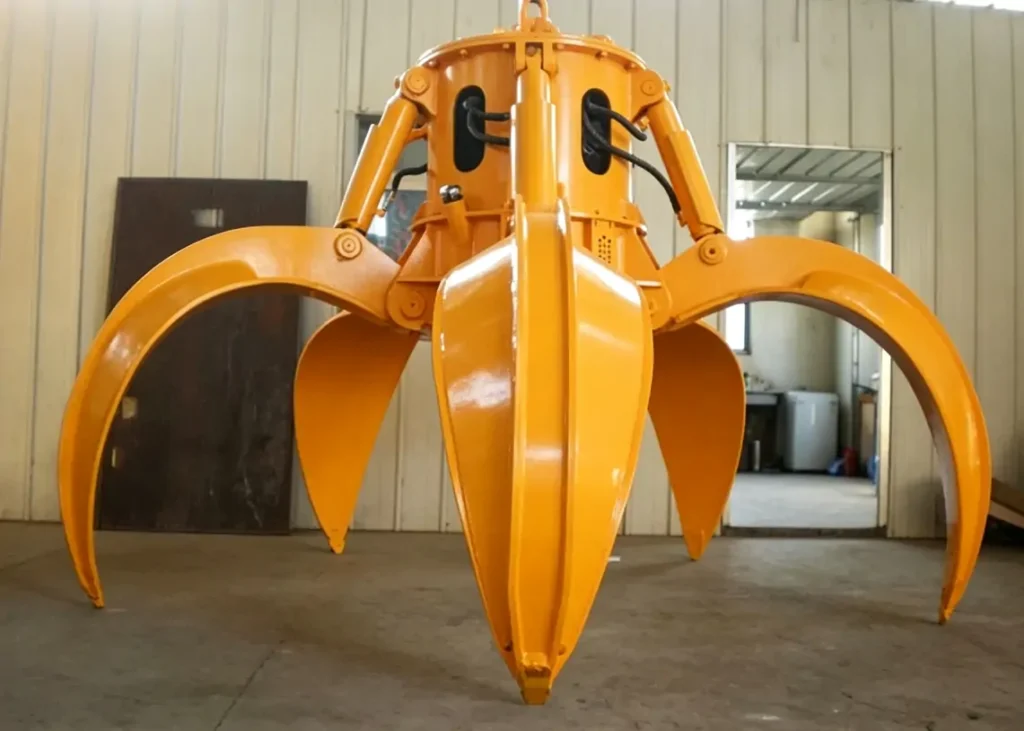
Hydraulic Orange Peel Grab Bucket
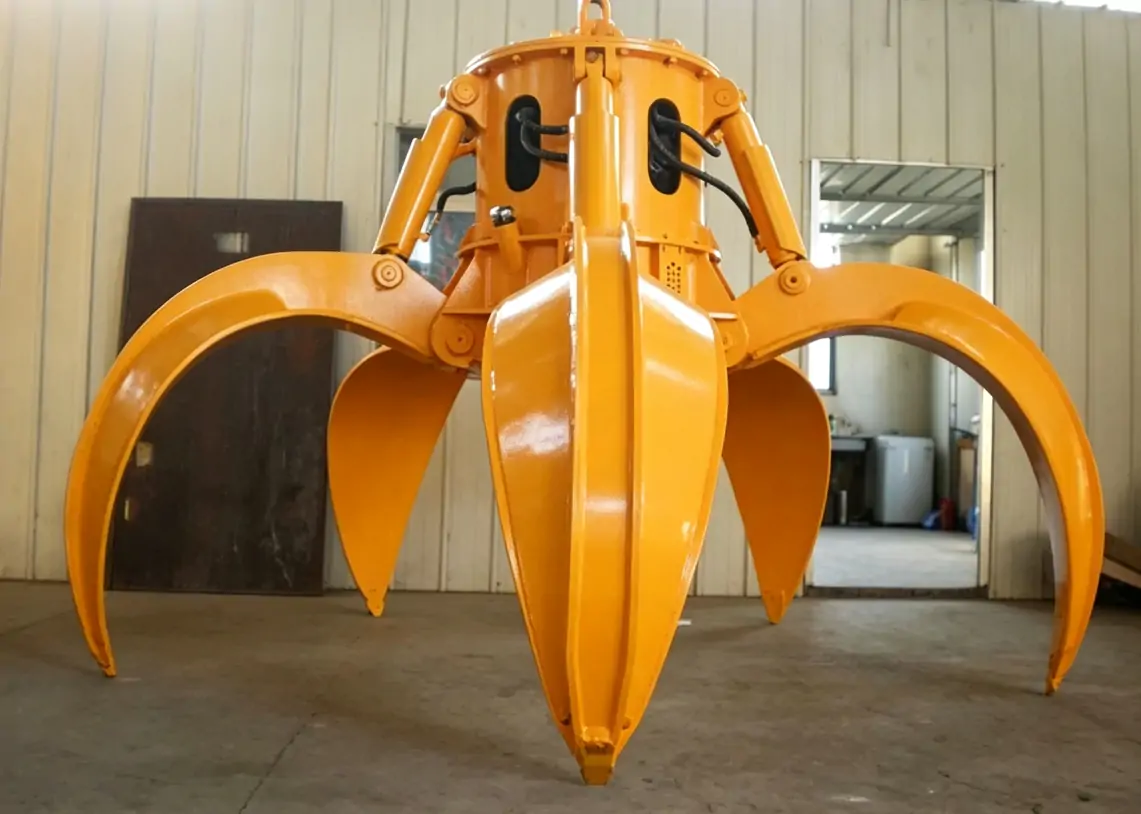
A hydraulic orange peel grab bucket uses multiple curved tines to grip irregular materials. The multi-tine structure provides strong holding performance for materials that are difficult to handle with standard clamshell grabs.
Características:
- Multiple tine design
- Strong grabbing ability
- Suitable for irregular materials
- Good control for loose and scattered loads
Aplicações:
- Scrap metal handling
- Steel plants
- Recycling facilities
- Waste material handling
For details on the different applications and classifications of grab buckets, see: Different Types of Crane Grab Buckets and How to Choose the Right One
How to Choose a Grab Bucket for an Overhead Crane?
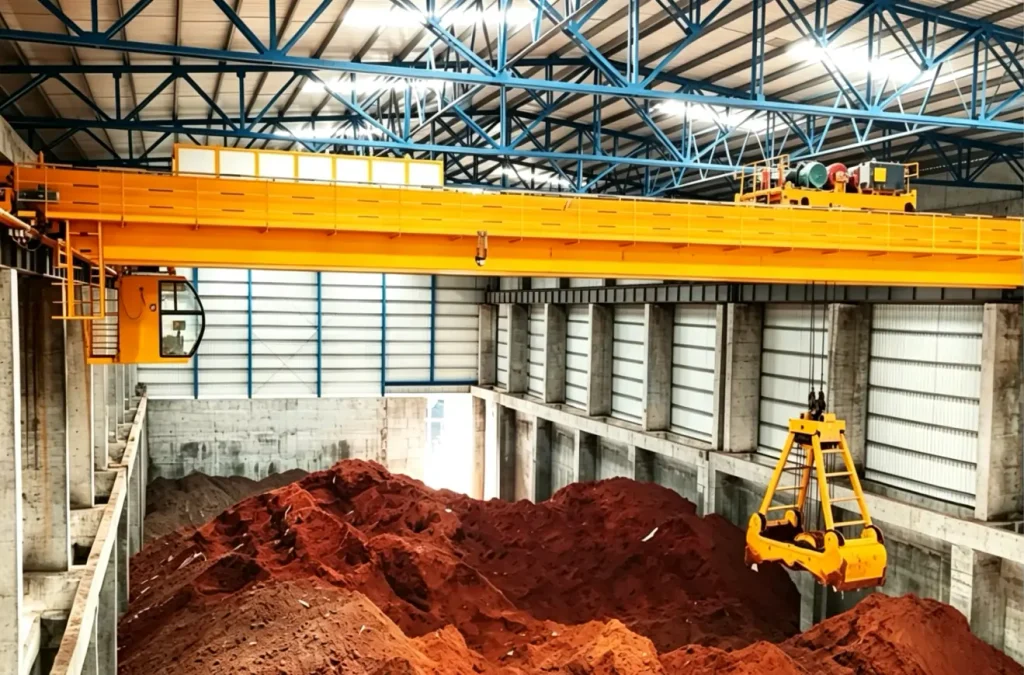
Choosing the right grab bucket for an ponte rolante requires matching the grab design with the material, crane capacity, bucket size, and operating conditions. A suitable grab bucket improves handling efficiency and keeps the crane system working within its rated load.
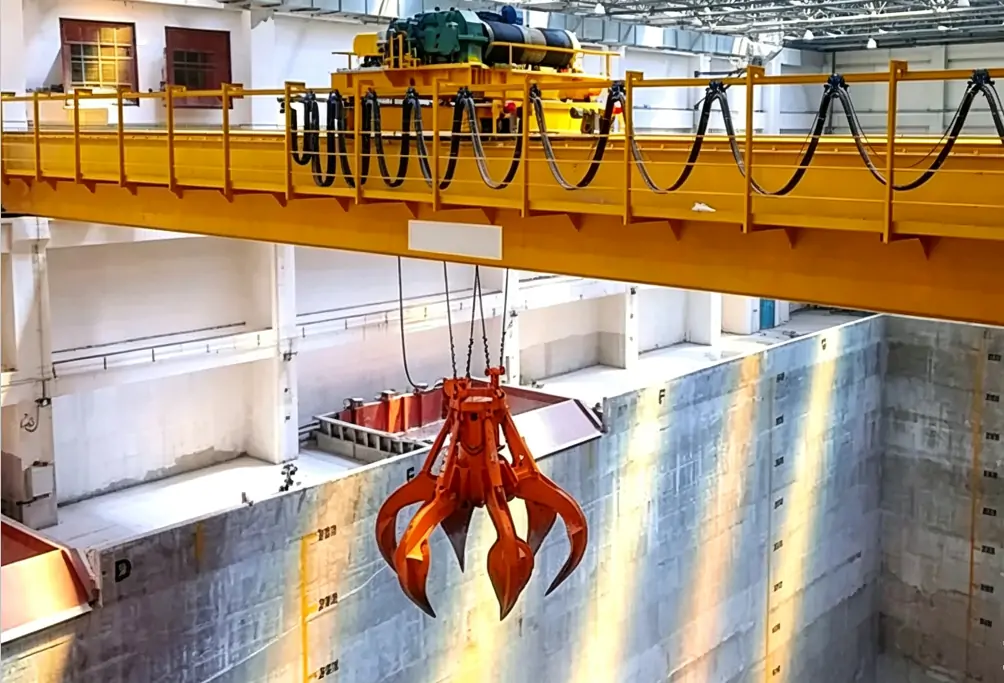
1. Identify the Material Type
Material properties are the first consideration when selecting a grab bucket. Different materials require different grabbing structures and closing forces.
Recommended grab types:
| Material | Recommended Grab |
|---|---|
| Coal | Mechanical clamshell grab |
| Sand | Mechanical grab |
| Grain | Mechanical grab |
| Scrap steel | Hydraulic grab |
| Rocks | Hydraulic grab |
| Waste | Hydraulic orange peel grab |
Mechanical clamshell grabs are commonly used for loose and flowable materials. Hydraulic grabs are better suited for heavy, irregular, or difficult-to-grab materials.
2. Match the Crane Capacity
The grab bucket must be compatible with the overhead crane lifting system. An oversized grab can increase the crane load and affect operating safety.
Include:
- Crane lifting capacity
- Grab bucket weight
- Material density
- Working load
The total lifted weight includes the grab bucket and the loaded material. The crane capacity should cover both during operation.
3. Select Suitable Grab Bucket Capacity
Grab bucket capacity should be selected according to material density, handling volume, and crane safe working load (SWL).
Capacity ranges:
- Mechanical clamshell grab: 0.5–30 m³
- Hydraulic grab: 2.5–16 m³
A high-capacity grab is not always the best choice. The bucket size must match the material weight and crane lifting capability.
4. Consider Working Frequency
Operating frequency affects the choice of grab structure. Different handling cycles require different levels of durability and control.
For continuous bulk handling, mechanical grabs are commonly used because of their simple structure and stable operation. For frequent loading cycles involving different materials, hydraulic grabs provide more flexible control and stronger adaptability.
The right grab bucket selection depends on material characteristics, crane capacity, bucket size, and operating requirements. A suitable configuration improves handling efficiency and provides reliable performance for long-term crane operation.
You can also read this article for more in-depth information: Grab Buckets for EOT Overhead Cranes
How to Choose a Grab Bucket for a Gantry Crane?
Choosing the right grab bucket for a ponte rolante requires considering the material type, crane specifications, working environment, and handling requirements. Gantry cranes are commonly used in ports, terminals, yards, and outdoor bulk handling areas, where grab buckets must match the crane capacity and operating conditions.
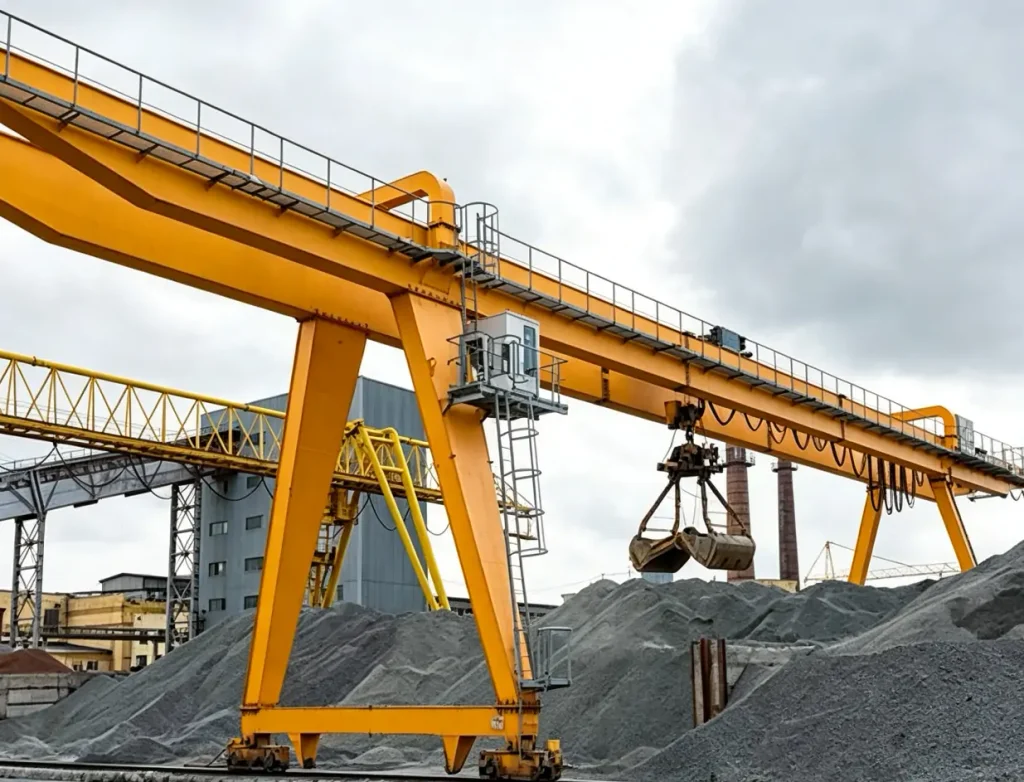
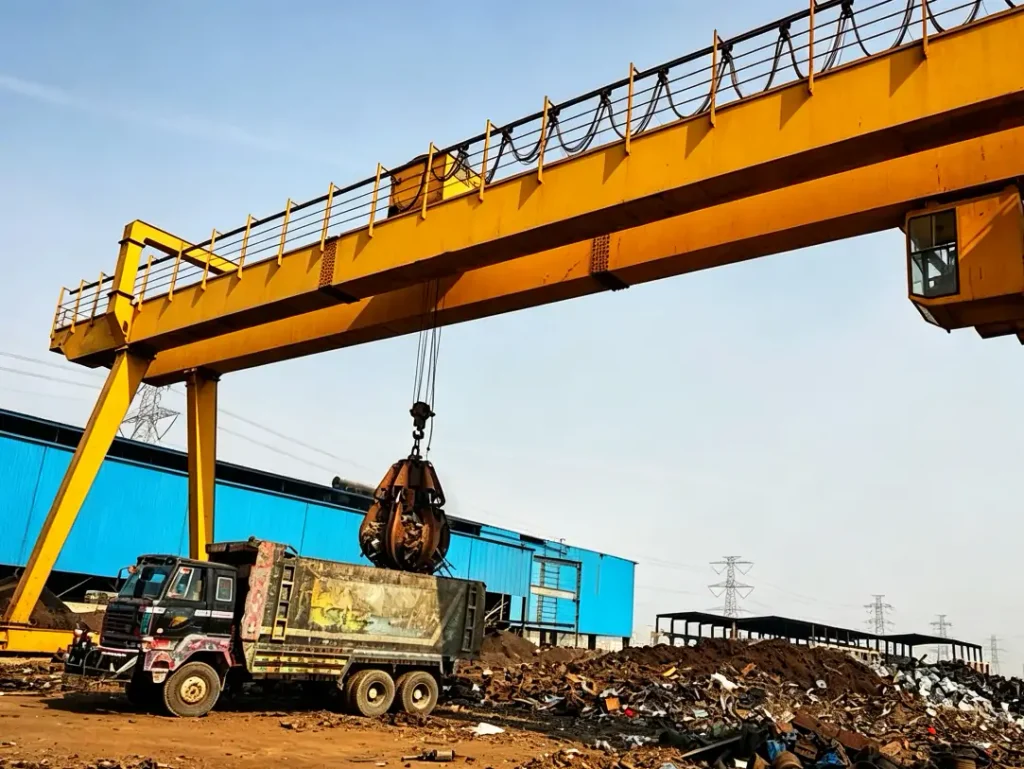
1. Consider the Material and Application
The material type determines the suitable grab bucket design. Different materials require different grabbing force and bucket structures.
Common applications:
| Material | Recommended Grab |
|---|---|
| Coal | Mechanical clamshell grab |
| Ore | Mechanical clamshell grab |
| Sand and gravel | Mechanical clamshell grab |
| Scrap steel | Hydraulic grab |
| Steel waste | Hydraulic orange peel grab |
| Mixed waste | Hydraulic grab |
Mechanical grabs are suitable for loose bulk materials with stable flow characteristics. Hydraulic and orange peel grabs are used for heavy, irregular, or difficult materials.
2. Match the Gantry Crane Specifications
The grab bucket must fit the gantry crane’s lifting system and operating parameters.
Factors include:
- Crane lifting capacity
- Grab bucket weight
- Rope system or hydraulic configuration
- Working load
- Lifting height and operating range
The combined weight of the grab and loaded material must remain within the crane’s rated capacity.
3. Select the Correct Grab Capacity
Grab capacity should match material density, handling volume, and crane load capacity.
Capacity ranges:
- Mechanical clamshell grab: 0.5–30 m³
- Hydraulic grab: 2.5–16 m³
Large-capacity grabs are commonly used in ports and bulk terminals, while smaller capacities are suitable for factories and storage yards.
4. Consider Outdoor Working Conditions
Gantry cranes are often installed in open environments where equipment faces dust, moisture, impact, and weather exposure.
Considerations include:
- Wear-resistant materials
- Corrosion protection
- Structural strength
- Continuous operation capability
Port terminals, mining yards, and bulk storage areas often require reinforced grab structures for long service life.
5. Evaluate Working Frequency
The operating cycle affects grab selection. Continuous bulk loading and unloading usually require durable and reliable grab designs.
- Mechanical grabs: Suitable for high-volume handling of coal, ore, and other bulk materials.
- Hydraulic grabs: Suitable for operations requiring stronger gripping force and flexible material handling.
Choose the grab type based on daily operating cycles, material changes, and handling requirements.
Selecting a grab bucket for a gantry crane requires matching the grab type, capacity, and structure with the crane specifications and handling conditions.
Regular inspection and maintenance of crane grab buckets can extend their service life. For details, please refer to: Crane Grab Bucket Maintenance Tips to Extend Service Life.
Mechanical vs Hydraulic Grab Bucket for Crane: Which One Should You Choose?
The material is the first factor when selecting a grab bucket. Mechanical grabs use wire ropes, while hydraulic grabs use hydraulic cylinders. Mechanical grabs have a simple structure and lower cost, while hydraulic grabs provide stronger gripping force and better control.
| Recurso | Mechanical Grab | Hydraulic Grab |
|---|---|---|
| Drive | Wire rope | Hydraulic system |
| Estrutura | Simple | Complex |
| Manutenção | Mais baixo | Higher |
| Control | Crane movement | Independent control |
| Material | Bulk materials | Heavy materials |
| Custo | Mais baixo | Higher |
- Mechanical grabs use rope systems to open and close the shells. They are widely used for coal, ore, sand, gravel, and grain handling with overhead cranes, gantry cranes, and port cranes.
- Hydraulic grabs use hydraulic cylinders for stronger and more flexible operation. They are suitable for scrap steel, rocks, wet soil, and other heavy or irregular materials.
Choose mechanical grabs for bulk materials and continuous handling. Choose hydraulic grabs for heavy materials and applications requiring stronger control.
Hydraulic grabs are widely used in port material handling. For details on materials and how to select the appropriate equipment, please refer to the article: “Electro Hydraulic Grab Bucket for Port Bulk Material Handling.”
Common Applications of Crane Grab Buckets
Grab buckets are used for different material handling tasks based on material properties and working conditions. Mechanical grabs are mainly used for loose bulk materials, while hydraulic grabs handle heavy, irregular, and difficult materials.
Mechanical Clamshell Grab Bucket Applications
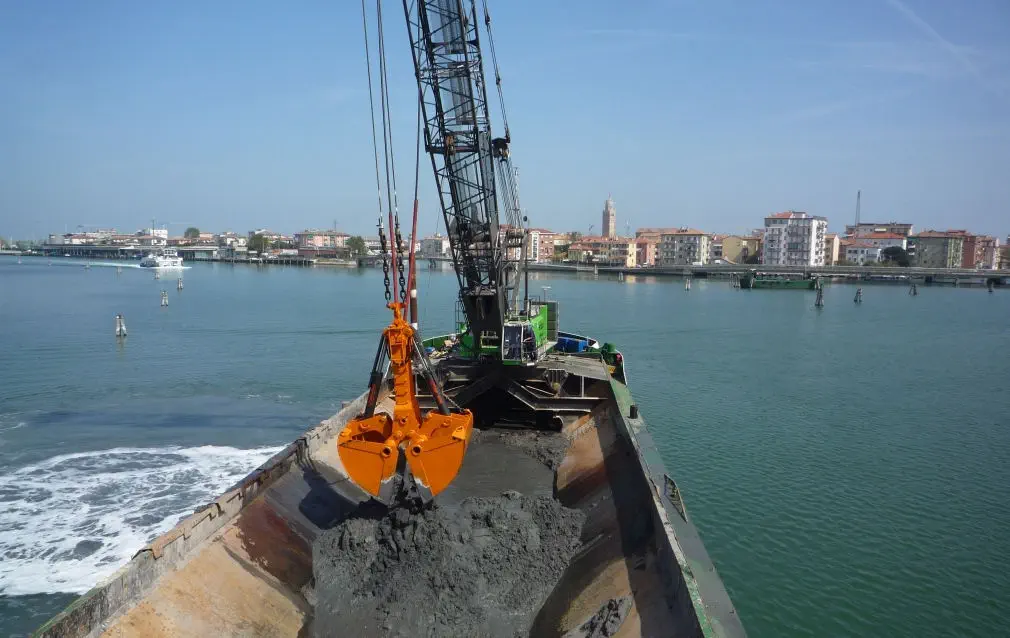
Ports
Used for loading and unloading coal, ore, and other bulk cargo.
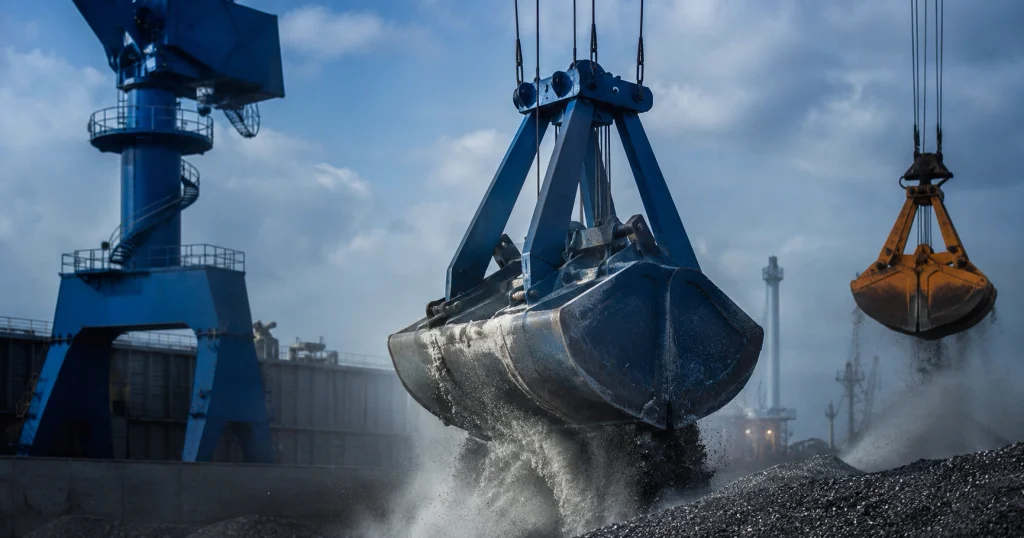
Coal Terminals
Handles continuous coal transfer with high operating efficiency.
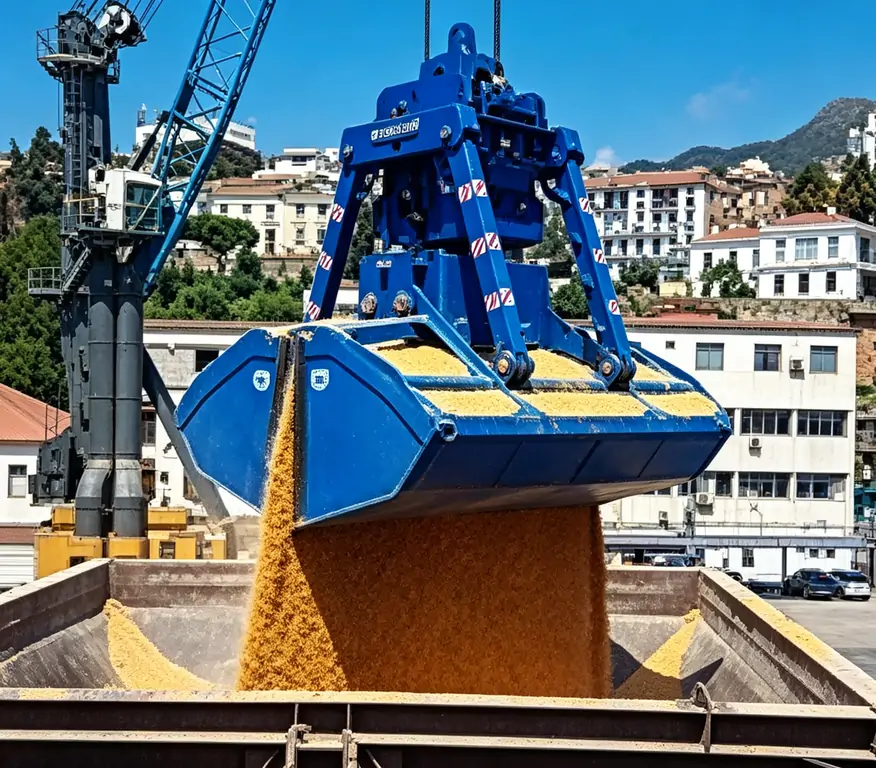
Grain Terminals
Suitable for loading and transferring grain and other free-flowing materials.
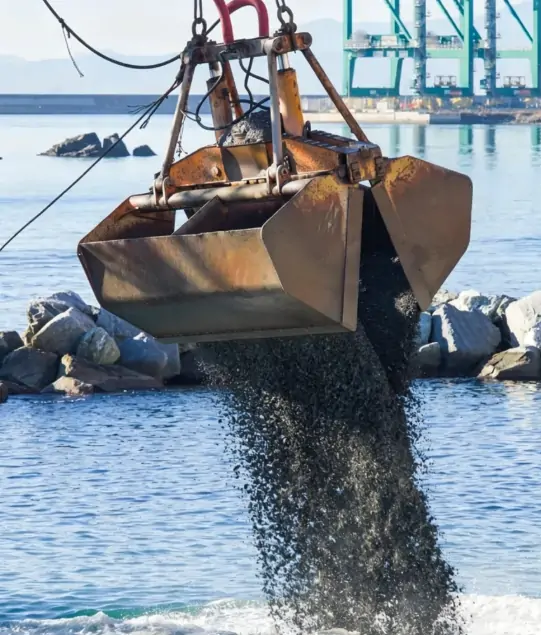
Sand and Gravel Yards
Used for moving sand, gravel, and construction materials.
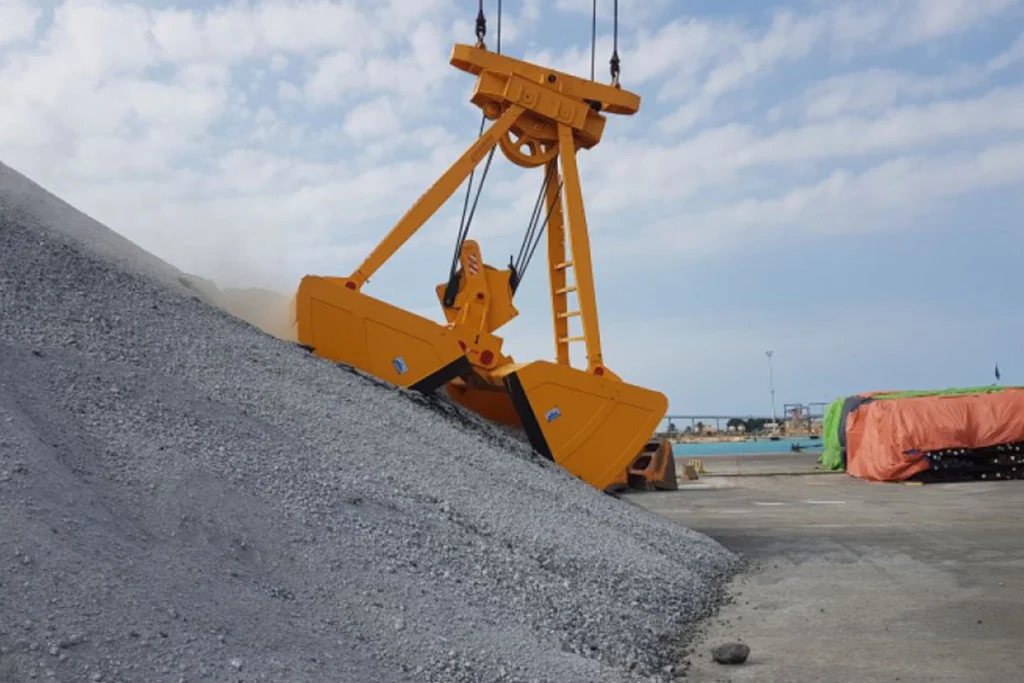
Mining Operations
Handles bulk ores and minerals in mining facilities.
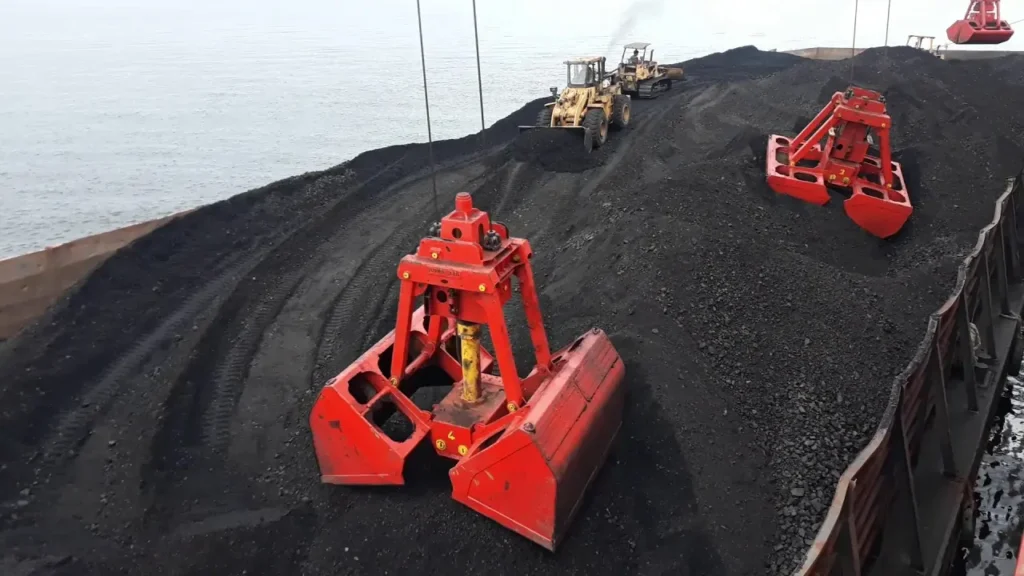
Usinas de energia
Used for coal and fuel material handling systems.
Hydraulic Grab Bucket Applications
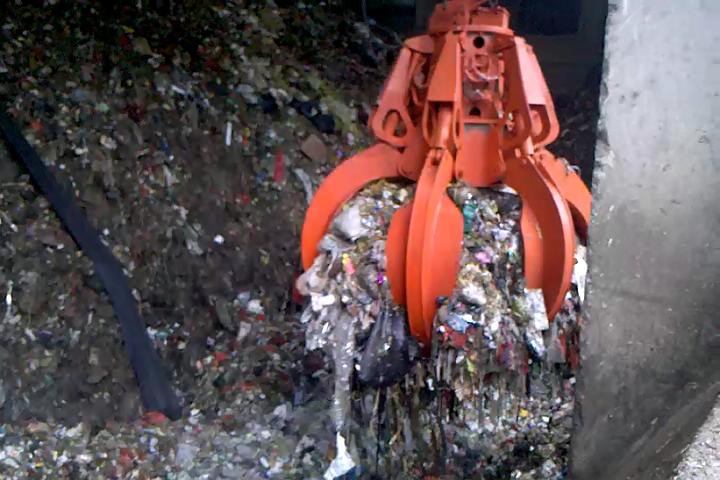
Scrap Yards
Used for grabbing irregular scrap steel and metal waste.
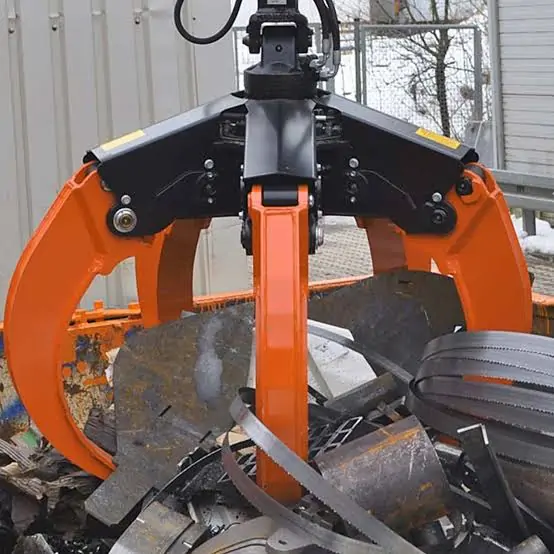
Steel Plants
Handles steel scrap, blocks, and heavy production materials.
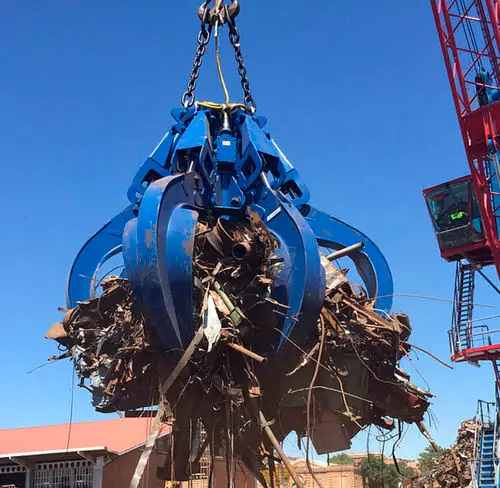
Waste Treatment Plants
Suitable for mixed waste with different shapes and sizes.
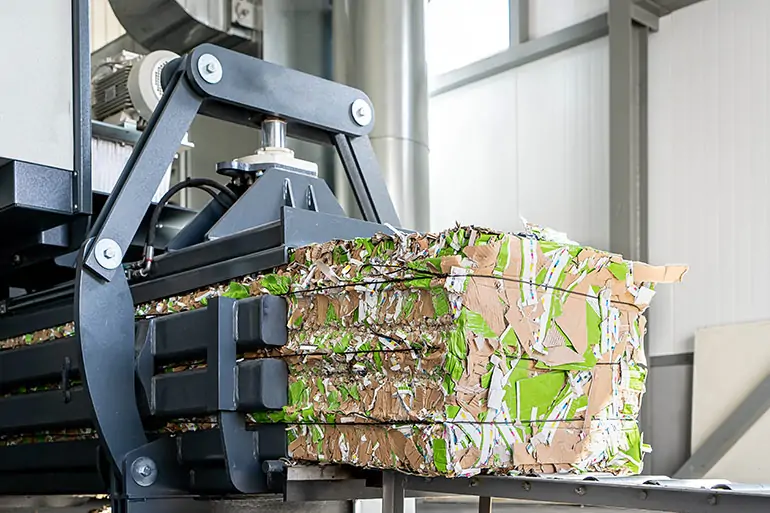
Recycling Facilities
Used for sorting and transferring recyclable materials.
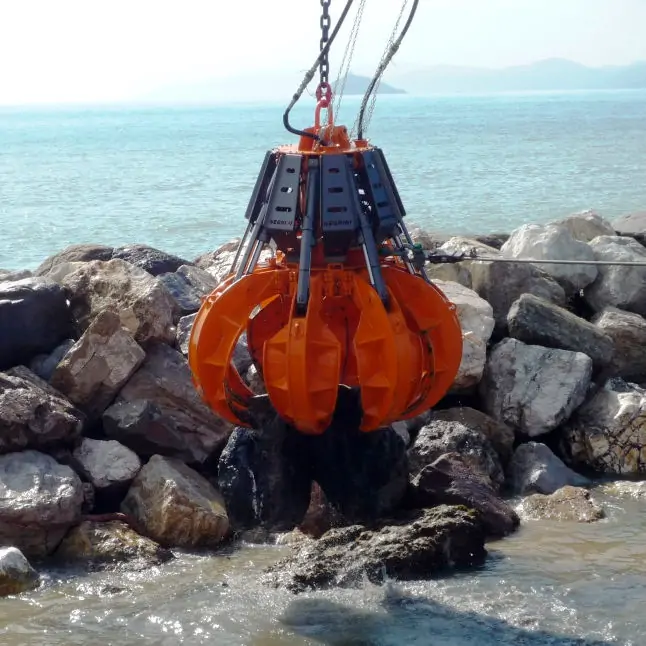
Quarries
Handle rocks, stones, and heavy mineral materials.
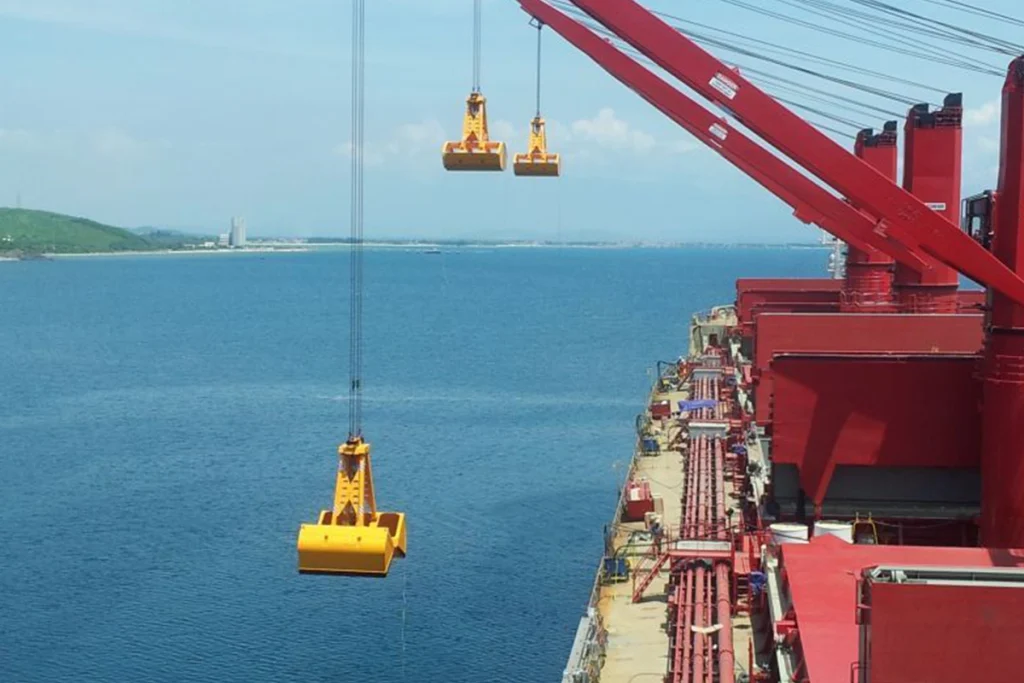
Dredging Operations
Used for underwater excavation and material removal.
To learn more about the specific applications of crane grab buckets in heavy-duty industries, read the article: “Crane Grab Bucket Applications in Ports, Steel Mills, Mining, and Bulk Material Handling”
Why Choose WEIHUA Crane Grab Buckets?
- · Customized Solutions
Grab buckets designed according to crane type, material characteristics, and working conditions. - · Wide Product Range
Mechanical clamshell grabs, hydraulic grabs, and orange peel grabs for different applications. - · Reliable Structure
Durable materials and reinforced designs for heavy-duty material handling. - · Professional Engineering Support
Technical assistance from design selection to project implementation. - · Global Project Experience
Solutions supplied for ports, steel plants, mines, and bulk handling industries. - · Complete Service Support
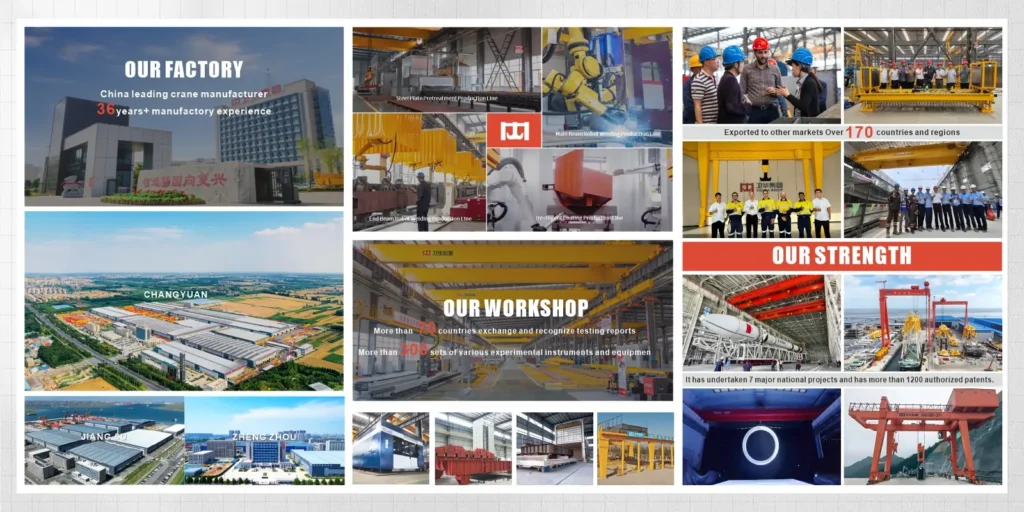
Export support, installation guidance, and after-sales service. - · International Standard Manufacturing
Grab buckets comply with FEM, DIN, ISO, and other applicable standards for lifting equipment, supporting safe operation and quality requirements in global projects.
Conclusão
Choosing the right grab bucket for overhead cranes and gantry cranes requires matching the grab design with material characteristics, crane capacity, and working conditions. The suitable grab type improves handling efficiency and supports stable crane operation in different industries.
WEIHUA supplies customized mechanical clamshell grab buckets, hydraulic grab buckets, and orange peel grabs for overhead cranes, gantry cranes, and bulk material handling systems. Contacte-nos for grab bucket solutions based on your crane type and application requirements.
FAQ
What type of grab bucket is used for overhead cranes?
Overhead cranes can use mechanical clamshell grab buckets, hydraulic grab buckets, and orange peel grabs. The suitable type depends on the material, crane configuration, and handling requirements.
What grab bucket is suitable for a gantry crane?
Gantry cranes commonly use mechanical clamshell grabs for bulk materials and hydraulic grabs for heavy or irregular materials such as scrap steel and rocks.
How do I select grab bucket capacity?
Grab bucket capacity should match the material density, required handling volume, and crane lifting capacity. The grab weight and loaded material weight must remain within the crane’s rated load.
Can overhead cranes use hydraulic grab buckets?
Yes. Overhead cranes can use hydraulic grab buckets when the crane system supports the required hydraulic configuration and lifting capacity.
Which grab bucket is used for scrap steel?
Hydraulic grab buckets and hydraulic orange peel grabs are commonly used for scrap steel because they provide stronger gripping force for irregular metal materials.
What materials can mechanical grab buckets handle?
Mechanical grab buckets are suitable for loose bulk materials such as coal, sand, grain, gravel, ore, and coke.
Can grab buckets be customized for cranes?
Yes. Grab buckets can be customized according to crane type, lifting capacity, material characteristics, bucket capacity, and working conditions.
How does WEIHUA select the right grab bucket?
WEIHUA selects grab buckets based on the crane specifications, material type, handling frequency, capacity requirements, and operating environment to provide a suitable solution.