- ProductEquipmentPrecision Power, Customization Crane SolutionE-mail:WhatsApp / Wechat:+8613781917315Address:No.18 Shanhai Road, Changyuan City, Henan Province, China


Tndustrial Smart AGV Transfer Cart is an intelligent device for the automatic transportation of materials within factories and warehouses. It operates autonomously using pre-set routes or intelligent navigation systems, safely transferring materials, workpieces, or heavy equipment between different workstations. It is used in manufacturing workshops, assembly lines, warehousing and logistics centers, and heavy industrial sectors, and is one of the key pieces of equipment for companies to achieve intelligent manufacturing and automated logistics.
Industrial Smart AGV Transfer Carts offer advantages such as reduced labor costs, improved production efficiency, and enhanced overall operational safety.

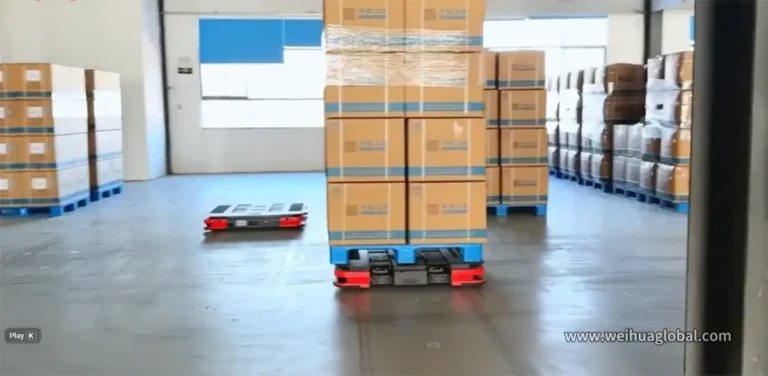
Based on the power supply method, Industrial Smart AGV Transfer Carts can be divided into KPD low-voltage rail-powered type, KPX battery-powered type, KPJ cable reel type, KPC contact line-powered type, and KPT suspended cable-powered type. Different power supply methods can be selected depending on the operating environment and workload.
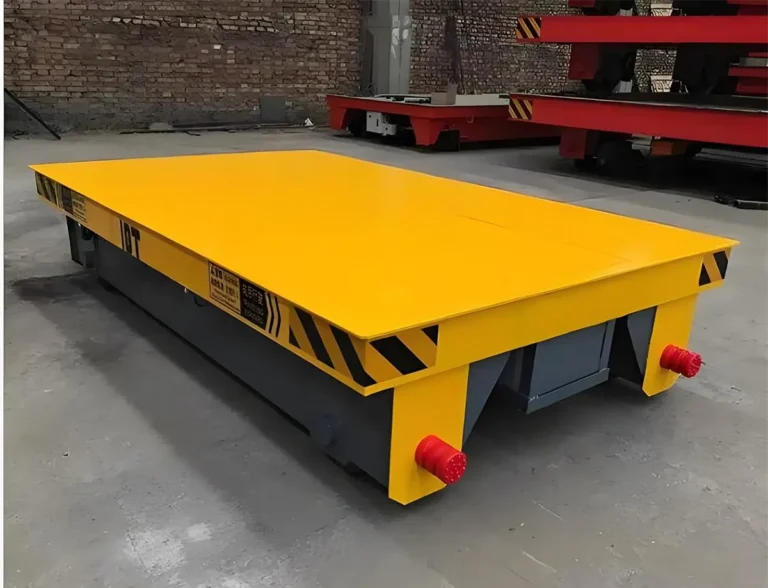
Multiple insulated conductive tracks are laid on the ground, reducing the 380V industrial voltage to a safe low voltage (such as 36V or 72V), and power is supplied through these tracks. The AGV transfer vehicle continuously draws power from the tracks through a current collection device (carbon brush), enabling continuous operation.
Power supply method: Ground insulated conductive track (low voltage)
Rated input voltage: AC 380V ±10%, 50/60Hz
Track power supply voltage: 36V / 48V / 72V (safe low voltage, optional)
Power supply method: Carbon brush current collection, continuous power supply
Operating mode: 24-hour continuous operation
Applicable load capacity: 5–100 tons
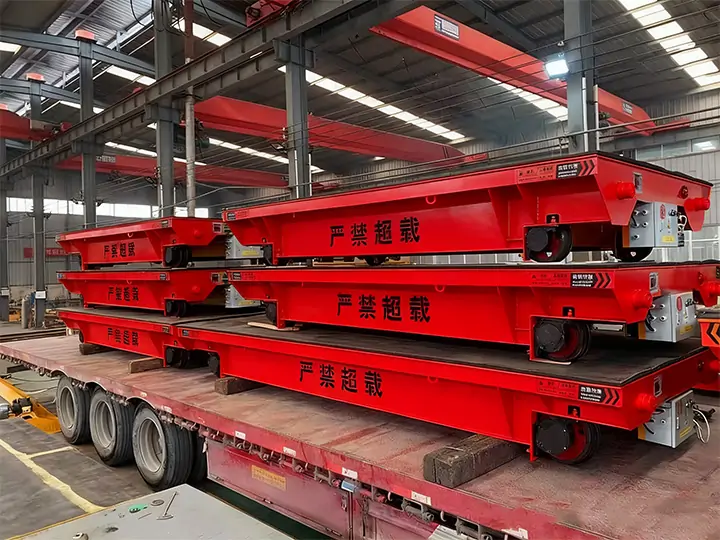
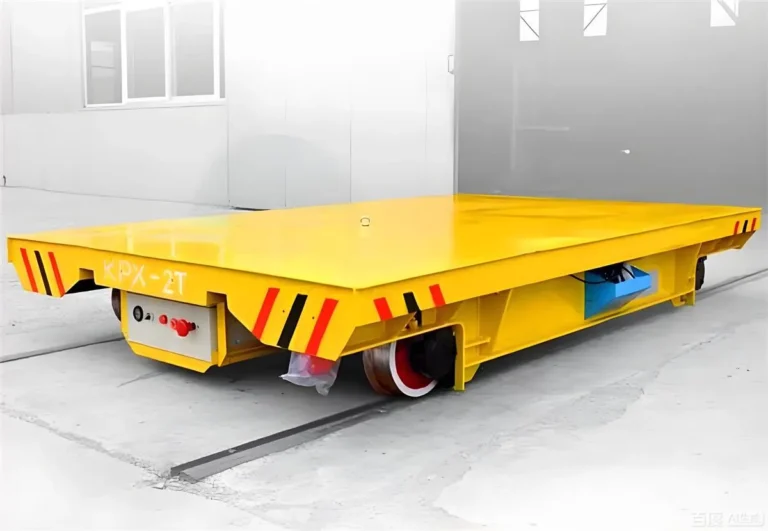
AGV transfer vehicles are powered by built-in battery packs; commonly used battery types are lead-acid batteries or lithium batteries, allowing them to operate completely independently of external power lines.
Power supply method: Built-in battery pack
Battery type: Lead-acid battery / Lithium battery (optional)
Battery voltage: 48V / 60V / 72V
Typical operating time: 6–10 hours (continuous operation)
Charging method: Manual charging / Automatic charging / Wireless charging (optional)
Applicable load capacity: 1–50 tons
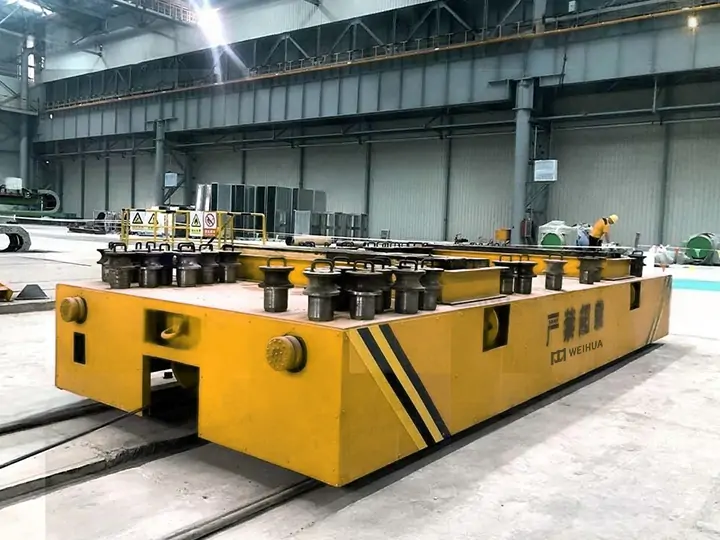
The AGV is connected to an external power source via a cable. A cable reel is mounted on the vehicle body, and the cable is automatically wound and unwound during operation, ensuring continuous power supply.
Power supply method: Automatic cable reel winding and unwinding
Power supply voltage: AC 380V, 50/60Hz
Cable length: 30–200 m (customizable)
Power supply type: Continuous power supply
Operating speed: ≤ 30 m/min (synchronized with cable winding and unwinding)
Applicable load capacity: 3–80 tons
Safety contact lines are installed on the support columns along the side of the track or on the roof of the factory building. The AGV obtains power through a collector that makes contact with the contact line, ensuring continuous power supply.
Power supply method: Top or side safety conductor rail
Rated voltage: AC 380V / 660V
Power collection method: Continuous power collection via current collector
Installation method: Column or factory roof mounting
Applicable load capacity: 5–100 tons
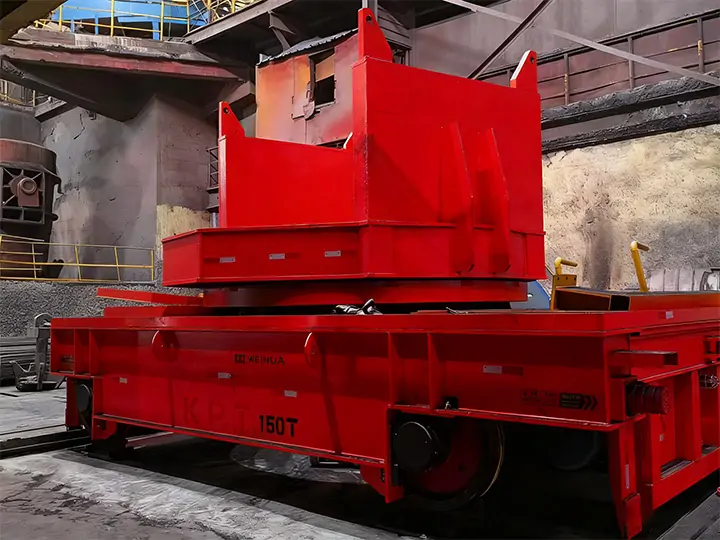
The AGV (Automated Guided Vehicle) draws power from an external power source via a suspended cable system; the cable moves along an overhead track with the vehicle, avoiding contact with the ground.
Power supply method: Suspended cable system
Power supply voltage: AC 380V, 50/60Hz
Cable layout method: Overhead track suspension
Operating distance: 20–150 m (customizable)
Power supply stability: Continuous power supply
Applicable load capacity: 3–60 tons
Vehicle Structure: High-strength steel structure body, responsible for carrying goods and ensuring stable operation of the entire vehicle.
Drive System: Motor and drive wheel combination, enabling smooth movement and flexible steering of the AGV.
Power Supply System: Provides power to the entire vehicle, supporting various power supply methods such as batteries, tracks, or cables.
Control and Navigation System: Controls the AGV’s operating logic and guides it to automatically travel along the set route.
Safety Protection System: Ensures the safety of personnel and equipment through obstacle avoidance sensors and emergency stop devices.
Loading Platform: Used for placing or securing materials, and can be custom-designed according to working conditions.

The Industrial Smart AGV Transfer Cart has a built-in control system and navigation device, enabling automated handling operations. The vehicle travels along a pre-set route or uses intelligent path planning within the factory or warehouse. The drive system provides power, and the load platform carries the materials. The power supply system (battery, track, or cable) provides energy to the entire vehicle, and the safety protection system continuously monitors the surrounding environment, avoiding obstacles and ensuring the safety of personnel and equipment. The entire process requires no human intervention, achieving efficient, continuous, and intelligent material transportation.
These Automated Guided Vehicle AGV Carts are used for automated, efficient material handling in factories, warehouses, and production lines. They feature advanced control systems, flexible navigation capabilities, and robust load-bearing platforms, ensuring safe, stable, and continuous operation. Each AGV can be customized to your specific operational needs, including load capacity, platform size, navigation system, power source, and safety features.
| Parameter | Typical Range / Options | Notes |
|---|---|---|
| Load Capacity | 1–100 tons | Depending on model and platform design, customizable |
| Platform Size | 2–10 m² | Can be adapted to specific cargo dimensions |
| Travel Speed | 0–30 m/min | Adjustable according to production requirements |
| Navigation System | Magnetic, Laser, QR code | Flexible routing and positioning |
| Power Supply Options | Battery (Li-ion / Lead-acid), Low-voltage track, Cable reel, Contact line, Suspended cable | Selection depends on work environment and route |
| Battery Voltage | 48V / 60V / 72V | For battery-powered models |
| Typical Battery Runtime | 6–10 hours | Depends on load and operation frequency |
| Charging Time | 2–8 hours | Depending on battery type and charging method |
| Operating Environment | Indoor / Outdoor | Customized protection available for harsh conditions |
| Safety Features | Laser obstacle detection, emergency stop, collision sensors | Ensures operator and cargo safety |


Industrial intelligent AGVs can be customized to your specific workflow, including:
We can provide customized configurations and pricing solutions based on your needs, ensuring that the AGV perfectly matches your production or warehousing processes.
Get Custom Quotation Now
Weihua Group was founded in 1988 and has focused on the research, development, production, and manufacturing of industrial intelligent AGVs and automated logistics equipment for many years. It has now developed into a world-leading manufacturer of intelligent material handling equipment. Weihua provides one-stop services ranging from solution design and installation and commissioning to maintenance, upgrades, and personnel training, continuously creating long-term value for its customers. If you have specific parameters or usage requirements, please feel to contact our professional team.
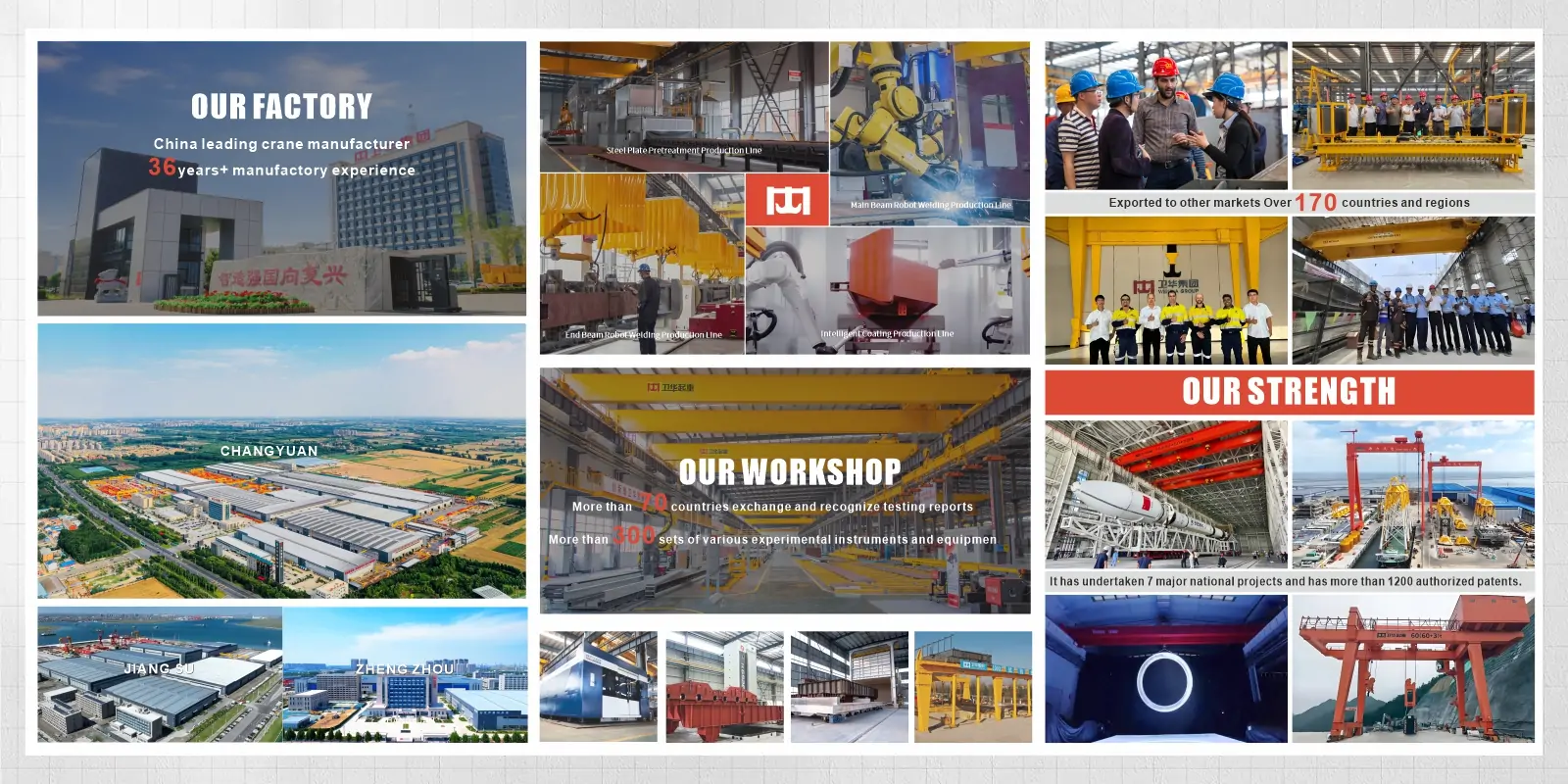

Weihua, founded in 1988, has evolved into a global leader in China's intelligent manufacturing field. We specialize in smart crane R&D and production while offering AGV solutions. Our professional engineering, delivery, and after-sales teams provide one-stop technical support, customized solutions, on-site installation guidance, and rapid-response global services to ensure every project operates safely and efficiently.
Routine maintenance includes checking the battery or power system, inspecting the wheels and sensors, and performing regular software diagnostics to ensure long-term stable operation.
Yes. These AGVs are equipped with multiple safety features, such as laser obstacle detection, emergency stop buttons, anti-collision sensors, and audible and visual alarms, to ensure safe operation.
Yes. Industrial Smart AGV Transfer Carts can be customized according to load capacity, platform size, navigation method, power type, and safety configuration.
Industrial Smart AGV Transfer Carts are designed for automated material handling in factories, warehouses, and production lines. They can safely and efficiently transport heavy loads without manual operation, improving productivity and reducing labor costs.
Contact us now via email: [email protected], or fill in the form below.


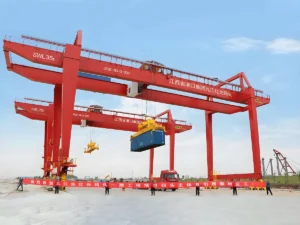
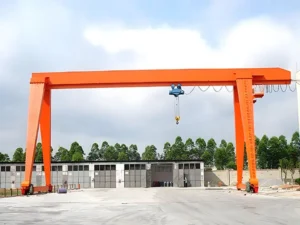
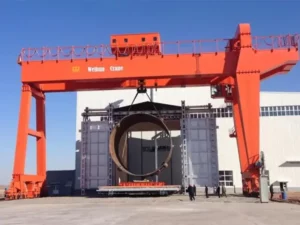
The gantry crane is a lifting equipment widely used across various industries, construction sites, ports, warehouses, and other fields. Its unique structure and powerful load-bearing capacity make it ideal for modern heavy-duty material handling. The “gantry” structure design allows the crane to move freely within a space, covering a large working area. So, what makes gantry cranes special? What are their types, parameters, control methods, applications, and working principles? How do they differ from bridge cranes? Let’s explore together. Types of Gantry Cranes Based on design, application, and operating environment, gantry cranes are typically categorized into the following types: Single-Girder Gantry Crane Single-girder gantry cranes are widely used across industrial sectors, warehouses, ports, and workshops. Featuring a single-girder support lifting mechanism, they traverse via side columns and bottom rails. With their simple structure, user-friendly operation, and moderate lifting capacity, they are ideal for handling light to medium loads. Capable of spanning large distances freely, single-girder gantry cranes are suitable for heavy material handling and lifting operations. Double Girder Gantry Crane Compared to single-girder gantry cranes, double-girder gantry cranes offer greater…
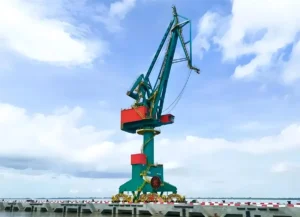
In ports, logistics parks, and industrial material handling, Portal Cranes and Gantry Cranes are two common and core loading/unloading equipment types. They differ in structural design, performance characteristics, operating methods, application scenarios, and investment costs. This article provides a comprehensive analysis of Portal Crane vs Gantry Crane and guides you in making the right selection. Structural Design Comparison The structural differences between Portal Cranes and Gantry Cranes primarily manifest in load-bearing methods, movement trajectories, and coverage ranges. The former centers on a fixed tower and rotating boom, emphasizing “point coverage” and flexible horizontal rotation. The latter features a portal frame structure and longitudinal rail travel, prioritizing “extensive horizontal movement” and efficient on-site logistics handling. Consequently, their distinct structural designs directly dictate their differing application scenarios. Portal Crane Structural Characteristics Portal slewing cranes employ single/double cantilever boom structures with the tower fixed to foundations or rails, enabling 360° or partial rotation. This configuration enables flexible operation in narrow, elongated spaces such as shorelines, dock fronts, and ship berths, making it particularly suitable for ship-to-shore material handling. Its core functionality combines vertical…
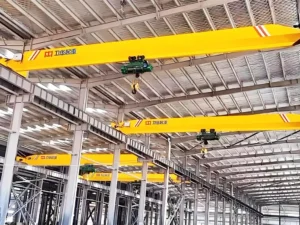
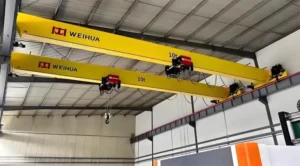
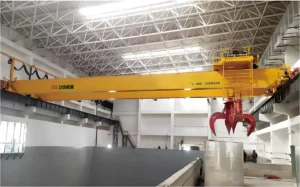
In modern industrial operations, efficient material handling is crucial for maximizing productivity and optimizing workflow. Bridge cranes, also known as overhead cranes or EOT cranes, are fixed material handling systems widely used in manufacturing, metal processing, warehousing, and loading/unloading operations. In this article, we will explore the working principle, main components, applications, and operational benefits of bridge cranes, providing a comprehensive guide for industrial planners and logistics professionals. Bridge Crane Working Principle A bridge crane operates on a bridge-like structure spanning the workspace, with a trolley and hoist system that moves horizontally along the bridge and vertically lifts or lowers loads. The crane’s movement across the runway, combined with precise hoist control, enables efficient and safe handling of heavy materials in factories, warehouses, and industrial facilities. For information on how overhead cranes work, please see this article: Overhead Crane Working Principle: Components, Motion & Operating Process Bridge Crane Terminology The following is an introduction to terminology related to bridge crane parts. Crane Capacity: Crane capacity refers to the maximum weight a bridge crane can safely lift. Typically measured in tons…
An EOT Crane (Electric Overhead Traveling Crane) is an efficient and reliable overhead lifting system used to handle heavy materials in factories, warehouses, workshops, and industrial plants. Running on overhead rails, EOT cranes enable safe and precise three-dimensional movement of loads through coordinated lifting, cross travel, and long travel motions. This article will guide you through EOT crane definitions, types, structure, working principles, applications, and cost factors to help you select the most suitable solution for your lifting needs. How EOT Crane Works? The working principle of an EOT crane involves a combination of vertical lifting, horizontal trolley movement, and longitudinal bridge travel, enabling efficient handling of heavy loads across industrial facilities. The crane operates on elevated runway rails installed along the building structure, with the bridge girder spanning the workspace. The hoist mechanism raises or lowers the load using steel wire ropes or chains, while the trolley moves the load horizontally along the bridge. The entire crane travels longitudinally along the runway rails, enabling three-dimensional positioning of materials. Modern EOT cranes are powered by electric motors with precise speed…
Gantry cranes are widely used in open-air stockyards, shipyards, factories, and construction sites, making them one of the most versatile and extensively applied material handling solutions. Gantry cranes come in various types, each customizable to suit different load capacities, site conditions, and operational requirements. However, selecting the wrong configuration can lead to unnecessary expenses, limited lifting capacity, or future expansion constraints. So, what are the main types of gantry cranes? How do you choose the right type for your application? In this guide, we will provide a detailed overview of different types of gantry cranes based on structure, mobility, and application scenarios, helping you make the right decision before investing in a lifting solution. The article is quite lengthy. Below is our table of contents. Please jump to the corresponding section as needed: What Is a Gantry Crane? Gantry cranes are lifting equipment designed for efficient handling of heavy cargo in large open-air sites. Their signature structure features one or more main beams supported by rigid (or flexible) legs on either side, forming a monumental “gate”-shaped frame. These cranes traverse…
 English English
  Русский
 العربية
 Français
 Português
 Español