



Tabla de contenidos
Introducción
Grúas pórtico are widely used for lifting and moving heavy materials in factories, warehouses, ports, shipyards, and construction sites. With a strong steel structure and flexible operating methods, they provide an effective solution for handling large and heavy loads in both indoor and outdoor working environments.
In this article, I will explain what a gantry crane is used for by covering its common applications, suitable industries, main types, and selection factors. The information is based on practical lifting requirements to help you understand how gantry cranes are applied in different working conditions and how to choose the right crane for your project.
What Is A Gantry Crane?
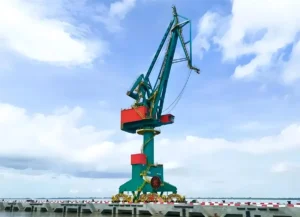
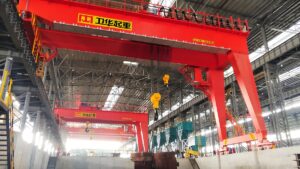
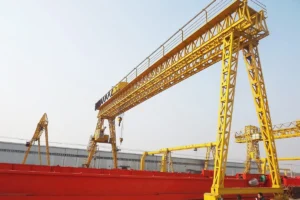
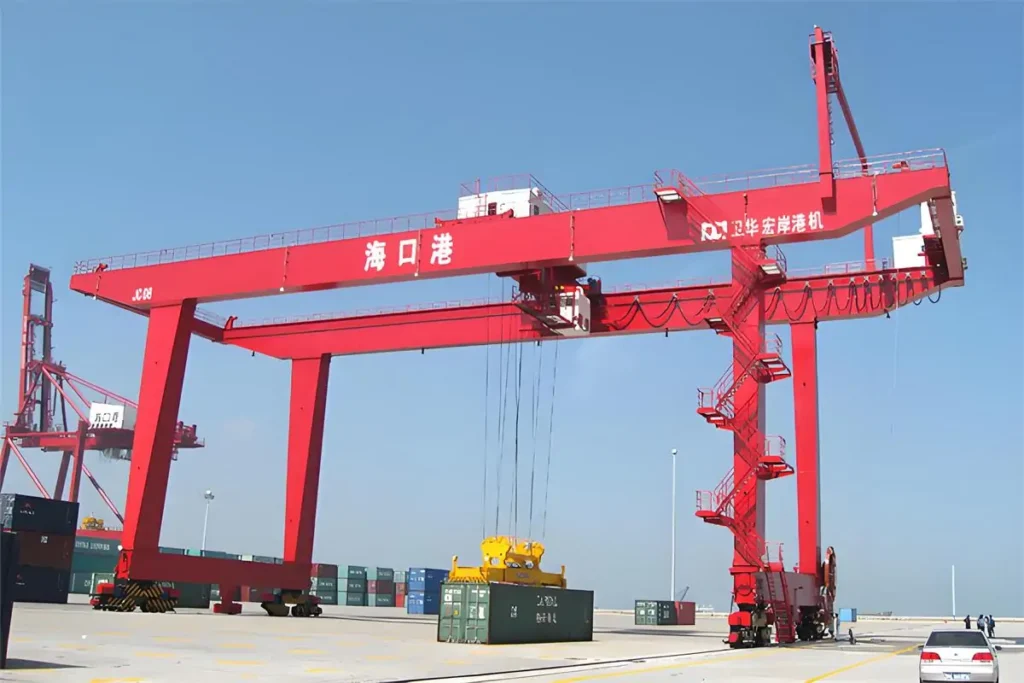
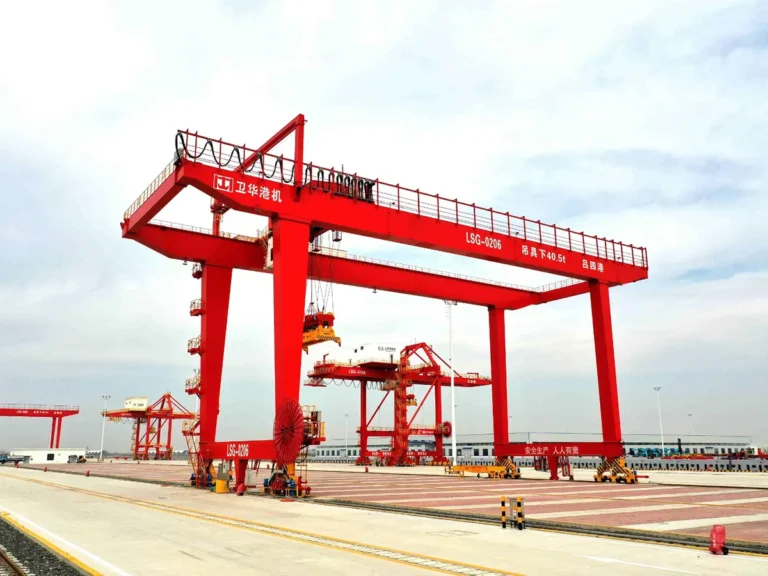
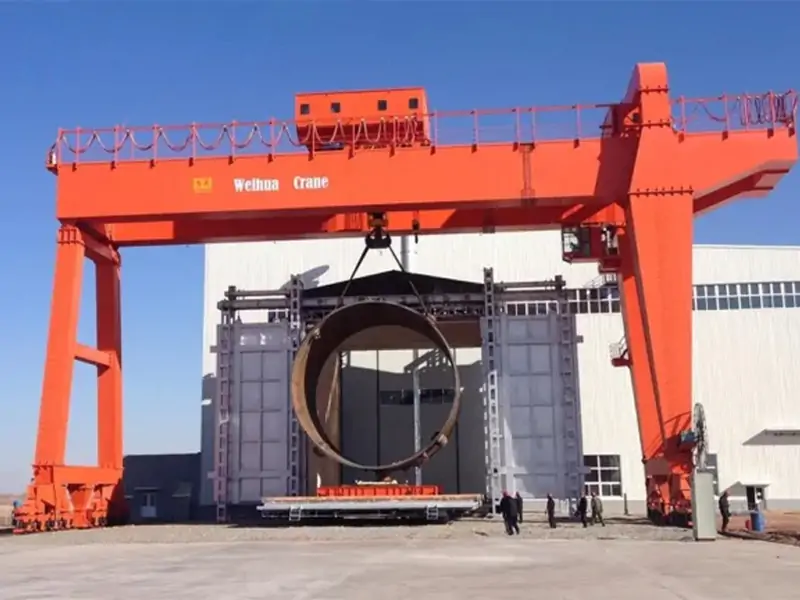
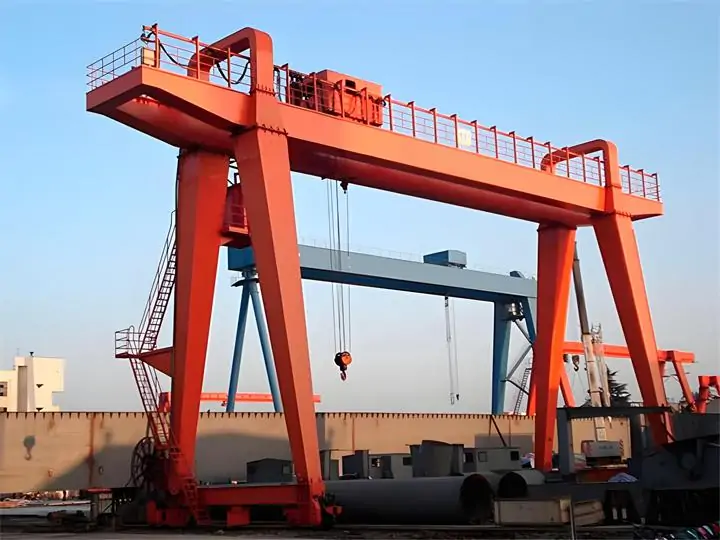
A gantry crane, also known as a portal crane or Longmen Crane, is a heavy-duty lifting equipment supported by two legs mounted on rails or wheels. Unlike overhead cranes that rely on building structures, gantry cranes have their own supporting frame and can operate independently in indoor or outdoor areas. The bridge girder, legs, hoisting system, and traveling mechanism form a complete lifting system for handling heavy loads.
The main structure of a gantry crane consists of a bridge beam, supporting legs, end trucks, hoisting mechanism, and control system. The crane moves along ground rails or rubber tires, while the trolley travels across the bridge girder to complete lifting and horizontal movement. Its three-directional operation enables precise material handling within a rectangular working area.
Gantry cranes are commonly used in ports, shipyards, precast concrete plants, steel yards, and large construction projects. Depending on the application, lifting capacity can range from several tons to over 500 tons for heavy-duty industrial operations. Different designs, including single girder, double girder, container gantry crane, and rubber tyred gantry crane, are available to meet specific load, span, and working environment requirements.
What Is A Gantry Crane Used For?
A gantry crane is mainly used for lifting, moving, and loading or unloading heavy materials in industrial and outdoor environments. With an independent supporting structure, it can operate on rails or wheels without relying on a building structure, making it suitable for large working areas such as ports, factories, yards, and construction sites.
Ports and Cargo Yards
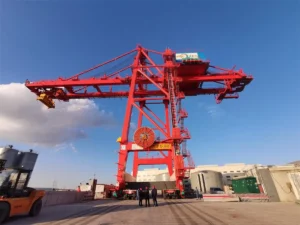
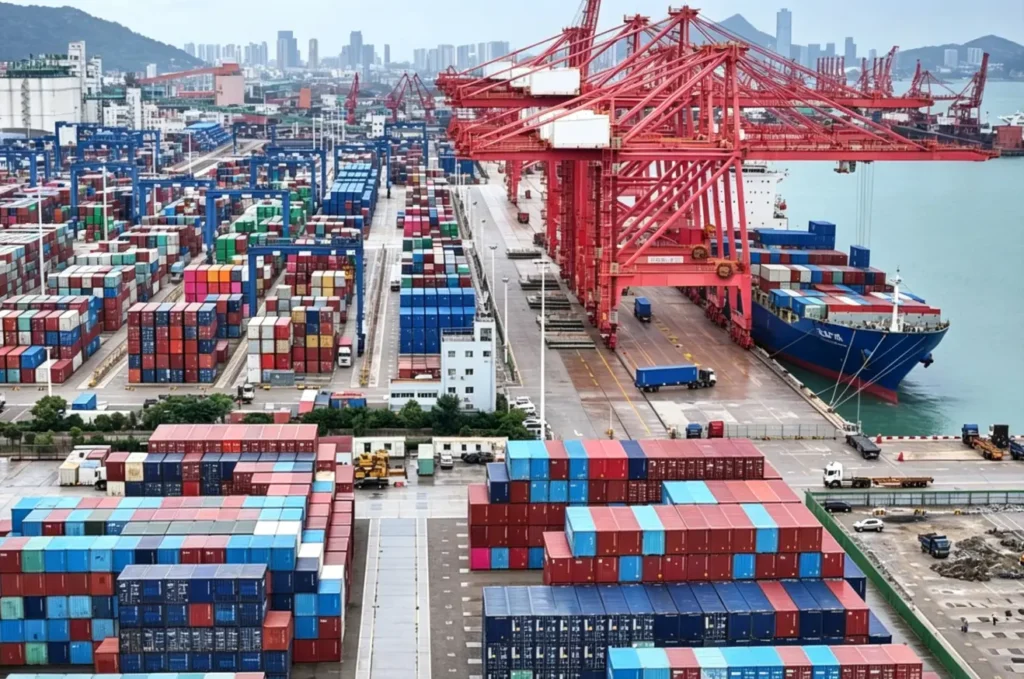
Gantry cranes are commonly used for container handling, bulk cargo transfer, and material stacking in ports and freight yards. Container gantry cranes are designed for moving containers between ships, trucks, rail wagons, and storage areas.
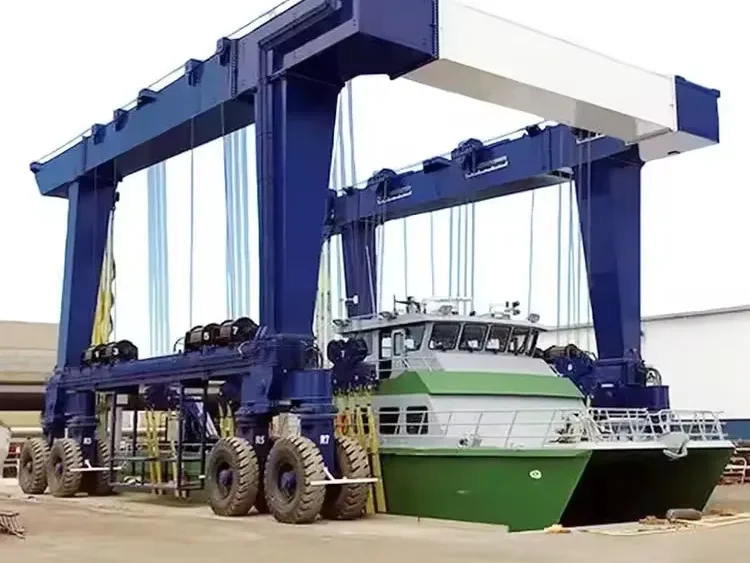
Shipyards and Marine Industry
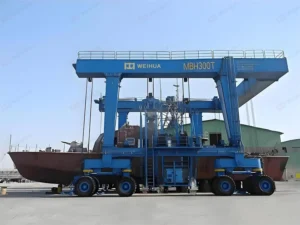
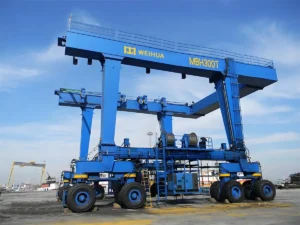
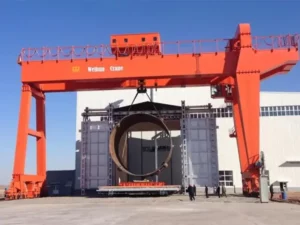
Shipyard gantry cranes are used for lifting ship blocks, steel structures, and heavy equipment during ship construction and repair. Large models can handle lifting capacities of hundreds to thousands of tons.
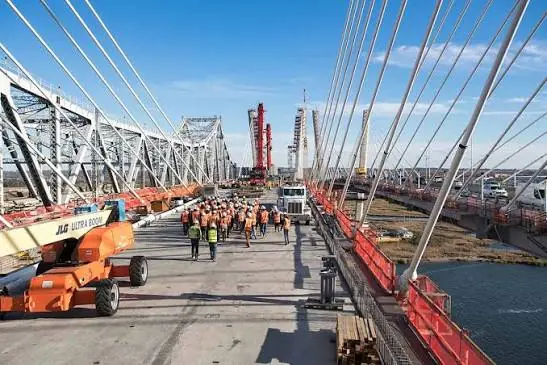
Construction and Infrastructure
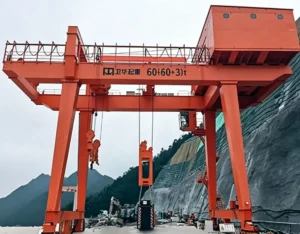
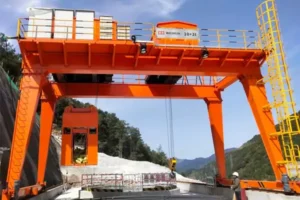
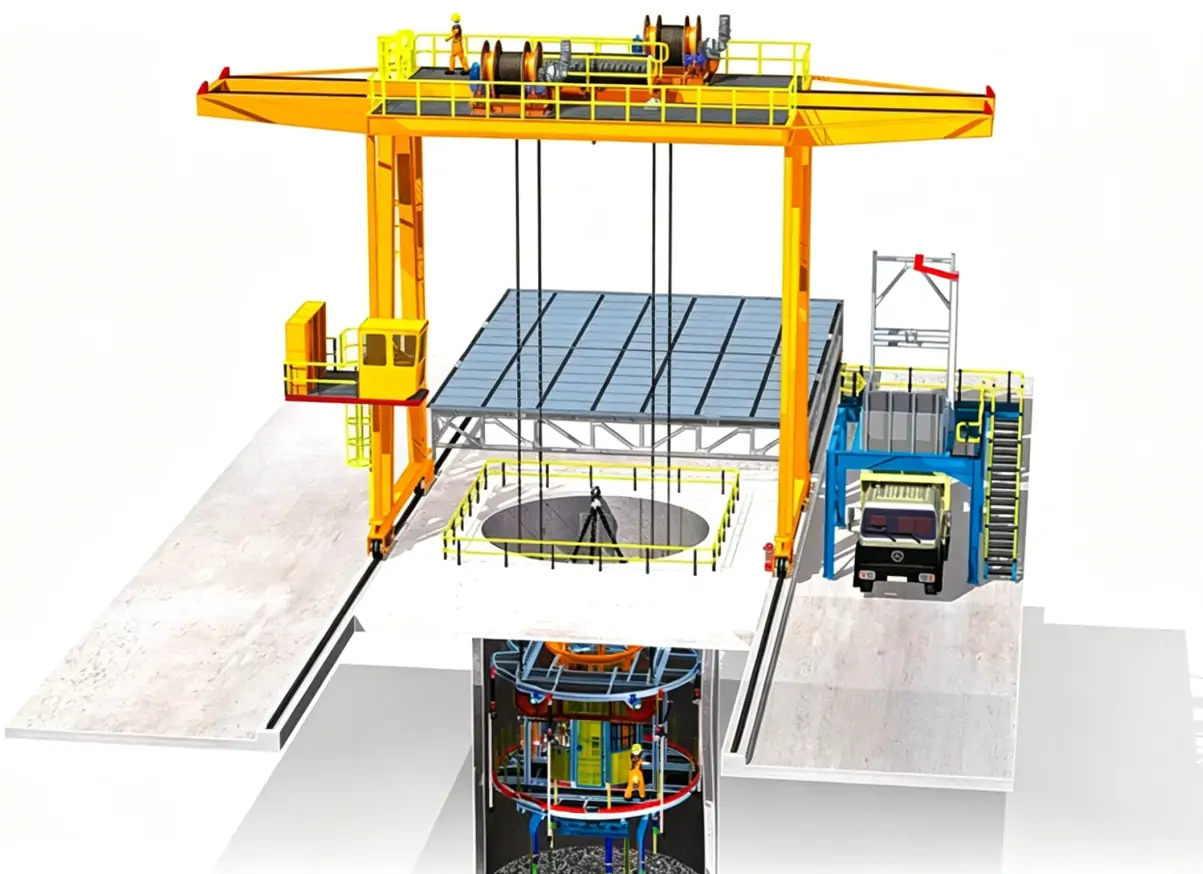
Gantry cranes are widely used for lifting precast concrete components, bridge sections, tunnel segments, and other large construction materials in infrastructure projects.
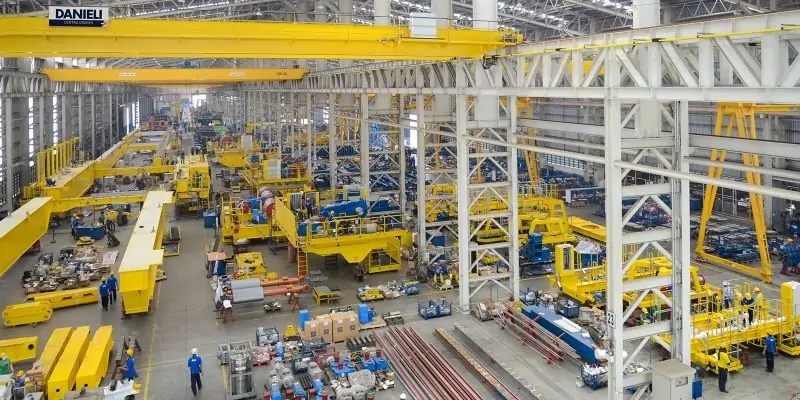
Factories and Workshops
In manufacturing plants, gantry cranes are used for handling steel products, machinery parts, and heavy production materials. Different designs are available for light-duty and heavy-duty lifting operations.
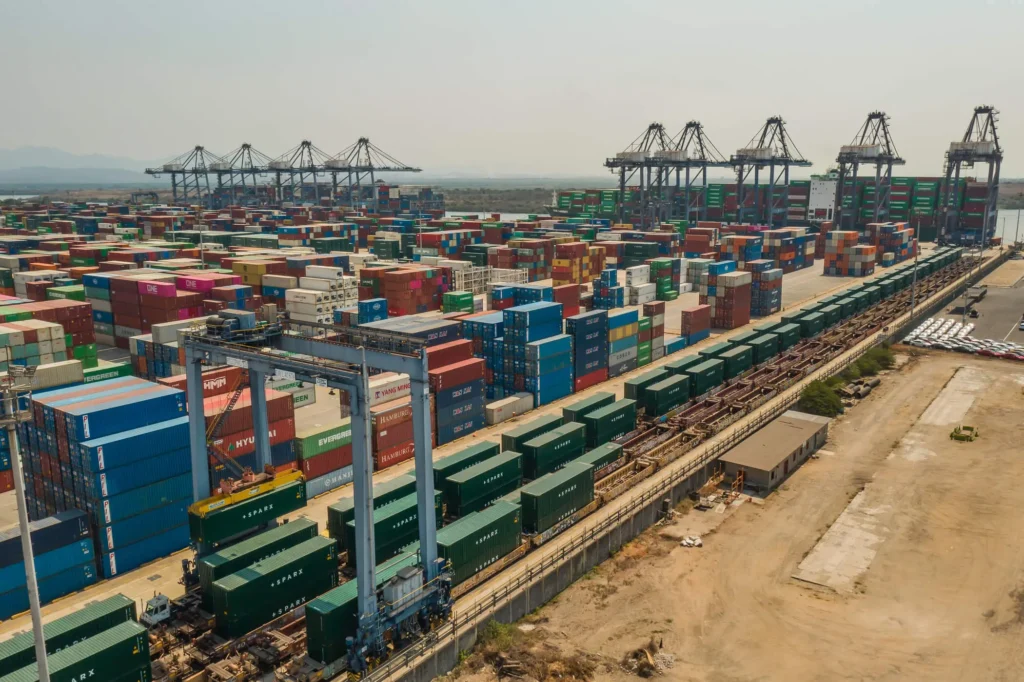
Logistics and Railway Terminals
Gantry cranes are used in logistics yards and railway terminals for container transfer and cargo handling, improving the efficiency of material transportation.
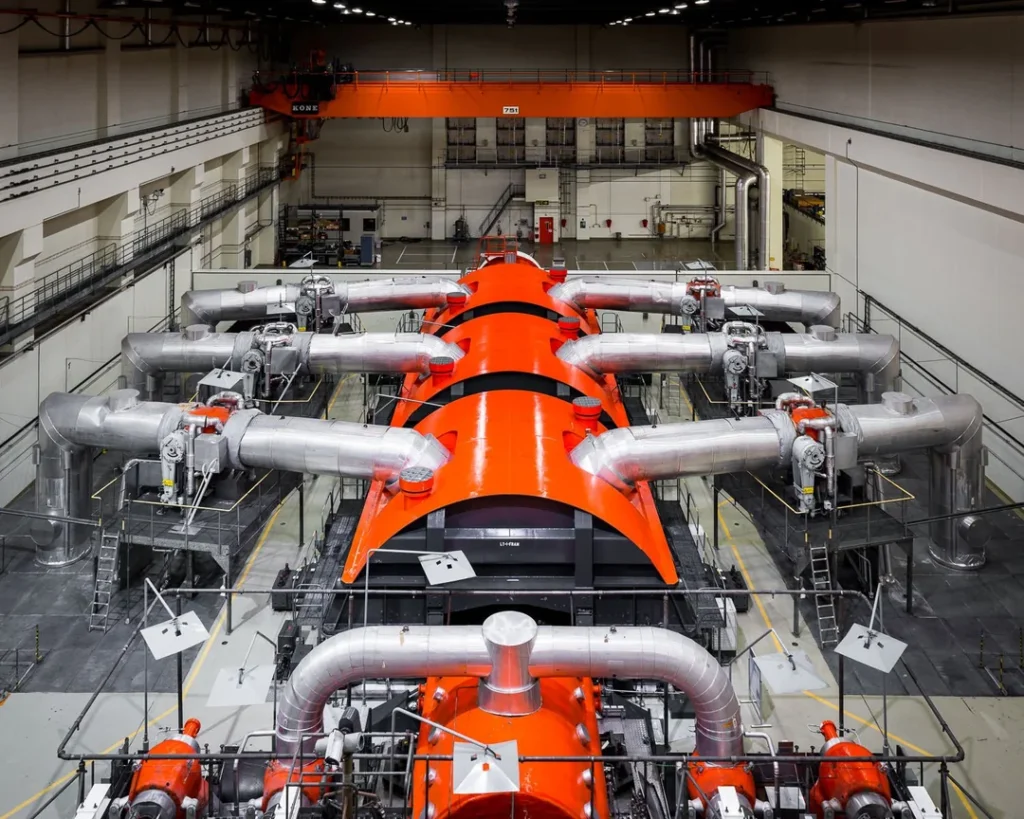
Power and Heavy Equipment Industry
Gantry cranes are applied in power plants and heavy equipment projects for installing and maintaining large machinery, generators, and oversized components.
Gantry cranes are available in various designs with lifting capacities ranging from a few tons to over 500 tons, depending on the application requirements. Their flexible installation and wide operating range make them suitable for different industrial lifting tasks.
Types of Gantry Cranes and Their Applications
Gantry cranes are available in different designs to meet specific lifting requirements, including load capacity, working environment, and operating conditions. Each type has its own structural features and application areas, from light-duty indoor handling to heavy-duty port and industrial lifting.
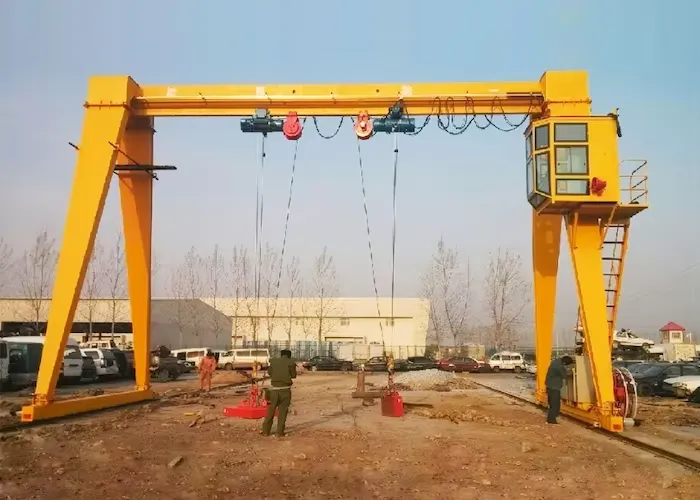
Grúa pórtico de una viga
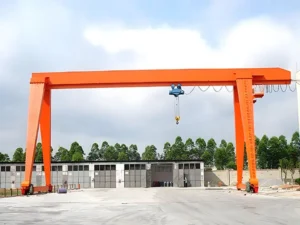
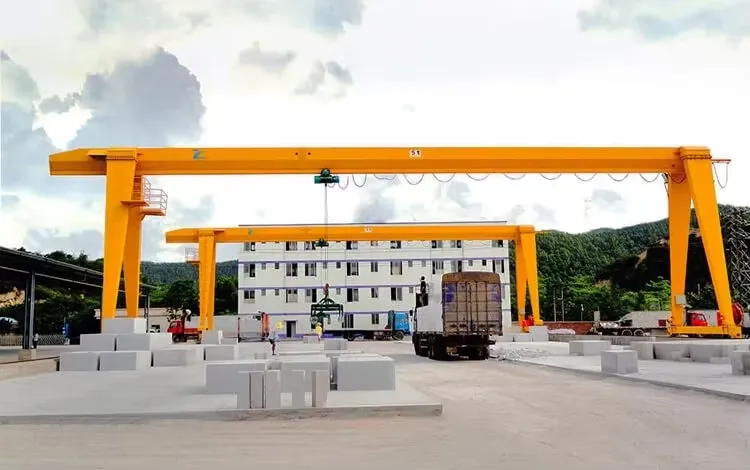
A single girder gantry crane uses one main beam with an electric hoist as the lifting mechanism. It features a simple structure, light weight, and lower installation cost, making it suitable for general material handling tasks.
Aplicaciones
- Small and medium factories
- Workshops and warehouses
- Machinery maintenance areas
- Light-duty material handling
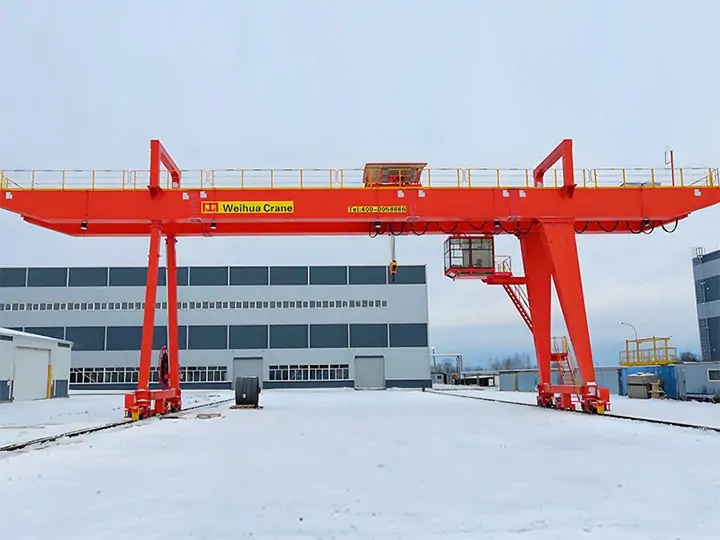
Grúa pórtico de doble viga
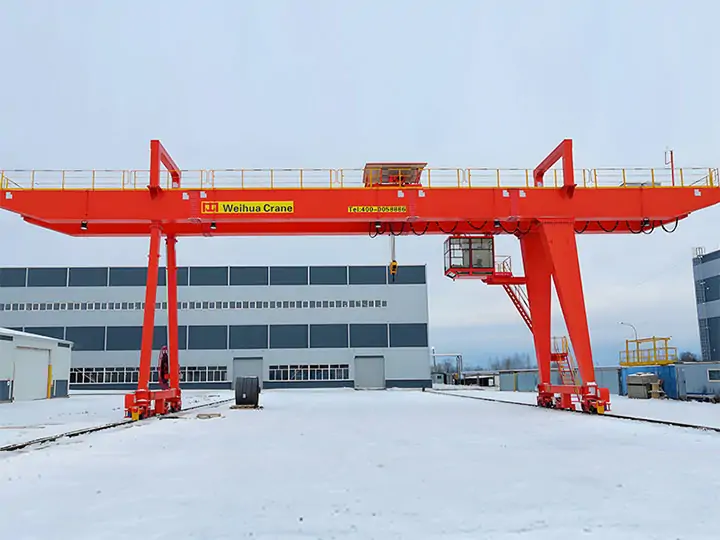
A double girder gantry crane is designed with two parallel main beams and a trolley-type hoisting system. It provides higher lifting capacity, larger span, and better stability for heavy-duty operations.
Aplicaciones
- Steel plants
- Shipyards
- Heavy machinery manufacturing
- Large outdoor material yards
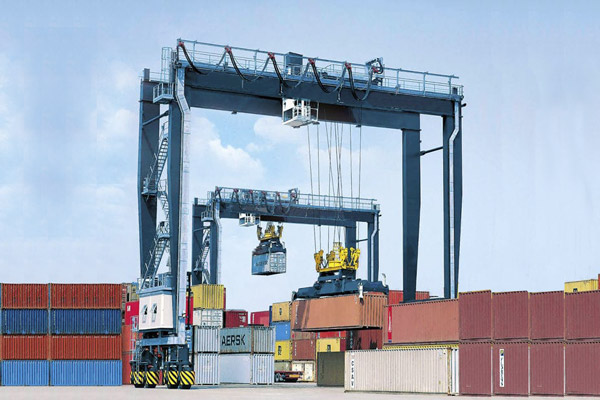
Container Gantry Crane
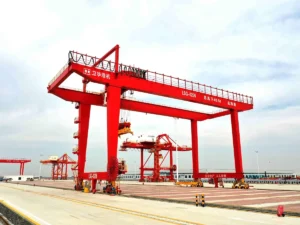
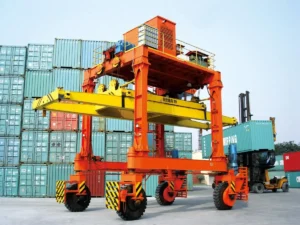
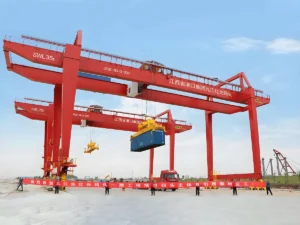
Container gantry cranes are designed for container loading, unloading, and stacking operations. The main types include Rail Mounted Gantry Cranes (RMG) and Rubber Tyred Gantry Cranes (RTG), with RTG cranes commonly used for stacking containers 4–6 levels high.
Aplicaciones
- Ports and container terminals
- Railway freight yards
- Intermodal logistics centers
- Container storage yards
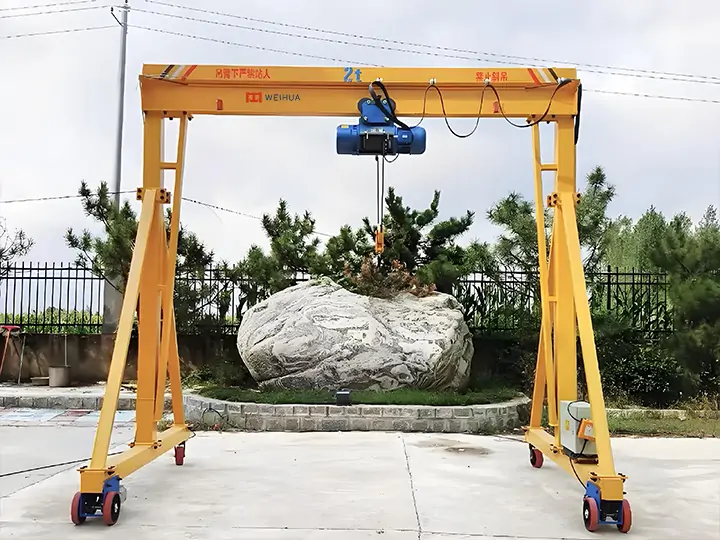
Portable Gantry Crane
Portable gantry cranes feature a movable frame that can be installed and relocated according to work requirements. They are mainly used for light and medium lifting operations with flexible working conditions.
Aplicaciones
- Workshops
- Maintenance areas
- Warehouses
- Equipment installation sites
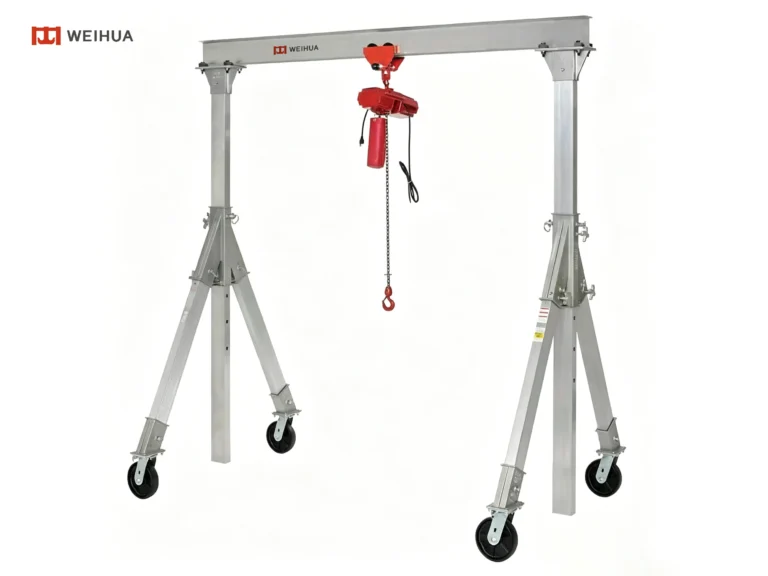
Aluminum Gantry Crane
Aluminum gantry cranes use lightweight aluminum structures for easy assembly and transportation. They are suitable for indoor environments with limited load requirements, typically handling loads up to around 2 tons.
Aplicaciones
- Laboratories
- Clean rooms
- Repair stations
- Indoor maintenance areas
Grúa semiafalcada
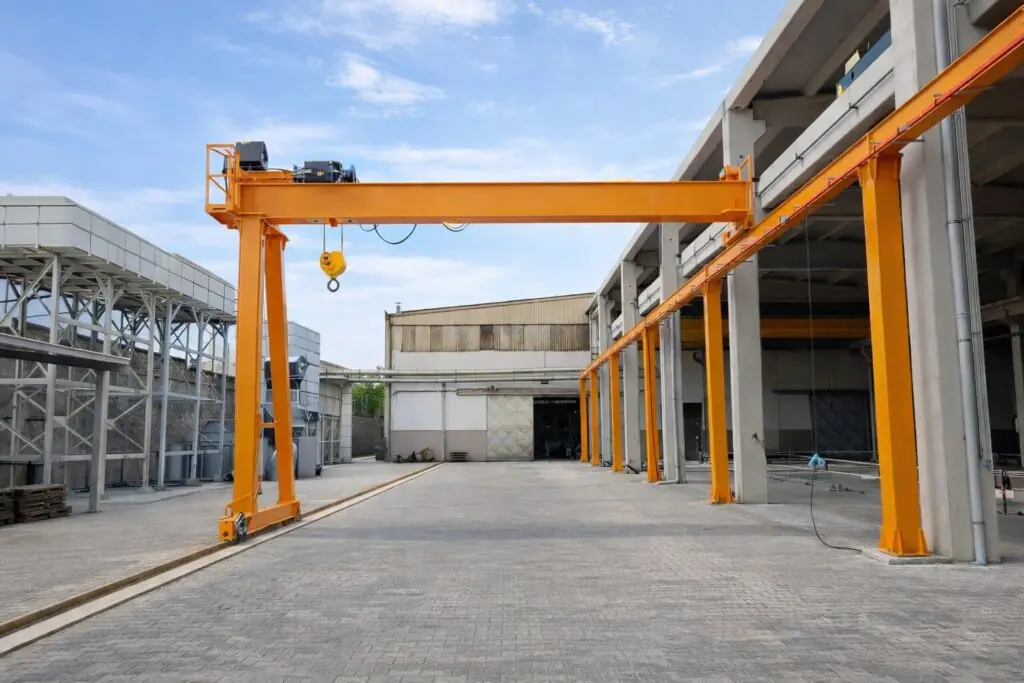
A semi gantry crane combines a ground-supported leg system with an overhead runway structure on one side. It is designed for facilities where a full gantry crane installation is not practical.
Aplicaciones
- Factory workshops
- Production lines
- Storage areas
- Indoor material handling systems
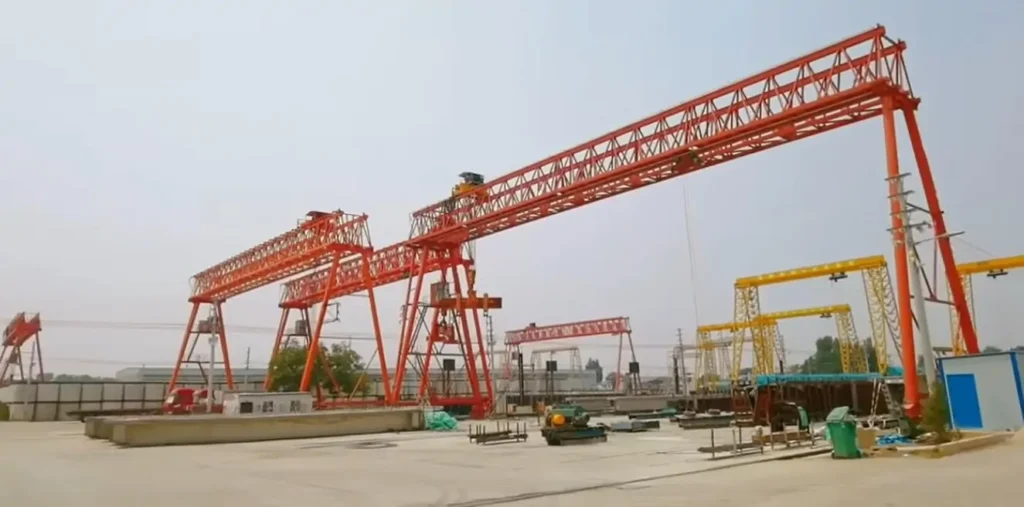
Grúa Pórtico de Armadura
A truss gantry crane uses a triangular truss structure to reduce the weight of the main beam while maintaining structural strength. Its lightweight design provides good wind resistance and is suitable for large-span applications.
Aplicaciones
- Construction projects
- Bridge and infrastructure works
- Outdoor material yards
- Large-span lifting operations
Why Are Gantry Cranes Widely Used?
Gantry cranes are widely used in industrial lifting applications due to their flexible structure, wide operating range, and ability to handle heavy loads in different environments. Their design allows them to work independently without relying on building structures, making them suitable for both indoor and outdoor operations.
- 1. Wide Working Range: The gantry structure allows the crane to cover a large rectangular working area. It can move along ground rails or wheels, making it suitable for outdoor yards, factories, ports, and large material handling areas.
- 2. Strong Load Handling Capability: Gantry cranes are available in different configurations to handle various loads, from small workshop materials to heavy ship structures and industrial components. Heavy-duty models can lift hundreds of tons for large-scale projects.
- 3. Flexible Installation Options: Unlike overhead cranes that require building runway structures, gantry cranes have independent supporting legs and can be installed in open yards or existing work areas with fewer structural limitations.
- 4. Wide Application Range: Gantry cranes are used in ports, shipyards, construction sites, steel plants, logistics terminals, and manufacturing facilities. Different crane designs can be selected according to load capacity, span, and working conditions.
- 5. Easy Operation and Maintenance: The simple structure and mature control systems make gantry cranes easier to operate and maintain. Options such as remote control, cabin operation, and automation systems can be configured according to project requirements.
Gantry Crane Applications by Industry
Gantry cranes are used in many industries for lifting, transporting, and positioning heavy materials. Their independent supporting structure allows them to operate in open areas and adapt to different working conditions, including ports, factories, construction sites, and large industrial projects.
| Industry | Aplicaciones Típicas |
|---|---|
| Ports & Logistics | Container handling, stacking, and transfer between ships, trucks, rail wagons, and storage yards using RTG and RMG cranes. |
| Shipbuilding | Lifting ship blocks, transporting steel structures, and supporting ship assembly and maintenance work. |
| Construction & Infrastructure | Handling precast beams, tunnel segments, bridge components, and other heavy construction materials. |
| Manufacturing & Workshops | Moving machinery parts, steel products, and production materials with portable, single-girder, or double-girder gantry cranes. |
| Energy & Heavy Industry | Handling large equipment and components in power plants, mining sites, and heavy industrial facilities. |
Gantry cranes are selected for their flexible installation, large operating area, and ability to handle different load requirements. From workshop material handling to large-scale port and shipyard operations, they provide reliable lifting solutions for various industrial applications.
How To Choose A Gantry Crane For Your Application?
Choosing the right gantry crane depends on load requirements, working conditions, operation frequency, and installation space.
- Determine Lifting Capacity — Select the crane based on the maximum load weight. Light-duty models usually handle 1–5 tons, medium-duty cranes cover 5–50 tons, and heavy-duty gantry cranes are used for loads above 50 tons.
- Choose Single Girder or Double Girder — Single girder gantry cranes are suitable for general handling with capacities below 50 tons and spans under 35 meters. Double girder models are designed for heavier loads, larger spans, and frequent operation.
- Check Span and Working Area — The crane span should match the working space and load size. Standard spans are usually 5–35 meters, while cantilever designs are available for extended working areas.
- Select the Crane Type — Choose the structure based on the application. Portable gantry cranes suit workshops, semi-gantry cranes fit limited spaces, and RTG/RMG cranes are used for container handling.
- Consider Working Environment — Indoor and outdoor conditions affect crane design. Outdoor cranes require weather-resistant structures, while indoor applications may need compact or low-headroom solutions.
- Evaluate Duty Class — The duty class should match operating frequency. A3–A4 is suitable for occasional lifting, A5–A6 for regular industrial use, and A7 for continuous heavy-duty operations.
- Define Custom Requirements — Select suitable options according to the job, including hoist type, control method, lifting attachments, and safety devices.
- Consider Total Cost — Evaluate purchase cost, installation, maintenance, and operating expenses to select a crane with suitable long-term value.
A suitable gantry crane should match the load, workspace, and operating conditions. Proper selection improves handling efficiency and reduces unnecessary investment.
Gantry Crane vs Overhead Crane: Which One Is Better?
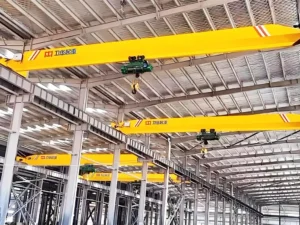
Gantry cranes and overhead cranes are both widely used for heavy material handling, but they differ in structure, installation requirements, and application environments. The right choice depends on the available space, building conditions, lifting requirements, and working location.
| Comparison | Grúa pórtico | Grúa puente |
|---|---|---|
| Estructura | Uses a door-frame structure with legs supporting the main girder and running on ground rails or wheels. | Uses a bridge structure installed on elevated runway beams supported by the building. |
| Instalación | Does not require existing building support structures and can be installed outdoors. | Requires suitable factory columns, runway beams, or building structures. |
| Aplicación | Commonly used in ports, yards, shipyards, construction sites, and outdoor material handling areas. | Mainly used in factories, workshops, and indoor warehouses. |
| Movement | Moves along ground rails or rubber tires with flexible operating range. | Travels along fixed overhead tracks with movement limited by the building layout. |
| Space Utilization | Covers a large working area but occupies some ground space with supporting legs. | Makes better use of indoor space with no ground support structure. |
| Cost | Higher installation flexibility but may require more structural components. | More economical when suitable building structures are already available. |
| Typical Types | Single girder, double girder, semi-gantry, portable, container, and shipyard gantry cranes. | Single girder, double girder, top running, and under running overhead cranes. |
Gantry cranes and overhead cranes each have their own advantages, and the better choice depends on the working conditions. Gantry cranes are suitable for outdoor operations with flexible installation and no building support requirements, while overhead cranes are preferred for indoor applications with existing runway structures and better space utilization.
Conclusión
Gantry cranes are widely used for lifting and transporting heavy materials in ports, shipyards, factories, construction sites, and logistics yards. Their independent structure, flexible installation options, and wide application range make them suitable for different lifting conditions. Selecting the right gantry crane requires consideration of load capacity, working environment, span, duty class, and operation requirements.
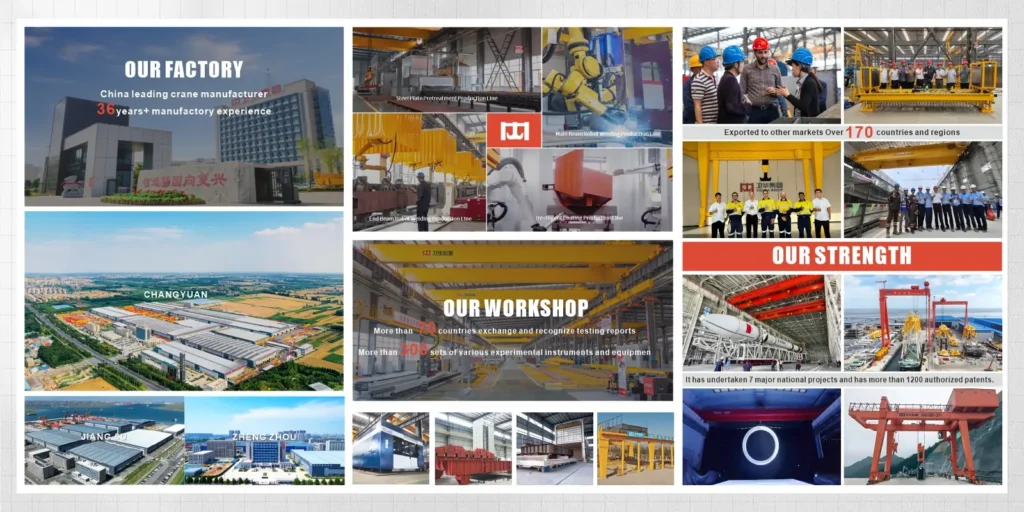
WEIHUA provides customized gantry crane solutions based on specific project needs, including crane design, structural configuration, control systems, and lifting accessories. With professional manufacturing experience and service support, WEIHUA helps customers select and build reliable lifting systems for different industries. Contáctanos to discuss your gantry crane requirements and get a suitable solution for your application.
Preguntas frecuentes
¿Para qué se utiliza una grúa pórtico?
A gantry crane is used for lifting, moving, and loading heavy materials in factories, ports, shipyards, construction sites, and storage yards.
Where are gantry cranes commonly used?
Gantry cranes are commonly used in outdoor yards, ports, warehouses, manufacturing plants, shipyards, and infrastructure construction projects.
What industries use gantry cranes?
Gantry cranes are widely used in industries such as logistics, shipbuilding, steel manufacturing, construction, energy, machinery production, and transportation.
How much weight can a gantry crane lift?
The lifting capacity of a gantry crane varies by design and application. Light-duty models handle several tons, while heavy-duty gantry cranes can lift hundreds of tons or more for shipyards and large industrial projects.
What is the difference between a gantry crane and an overhead crane?
A gantry crane is supported by legs that run on ground rails or wheels, while an overhead crane is installed on elevated runway beams inside a building. Gantry cranes are suitable for outdoor operations, while overhead cranes are mainly used in indoor facilities.
Can gantry cranes be used outdoors?
Yes. Gantry cranes are widely used outdoors in ports, material yards, construction sites, and shipyards. Outdoor models can be designed with weather-resistant structures for different environments.
What types of gantry cranes are available?
Common types include single girder gantry cranes, double girder gantry cranes, semi-gantry cranes, portable gantry cranes, container gantry cranes, and shipyard gantry cranes.
Can a gantry crane be customized?
Yes. Gantry cranes can be customized according to lifting capacity, span, lifting height, working environment, control system, and specific handling requirements.



 English
  Русский
  العربية
  Français
  Português
  Español