



Project Background
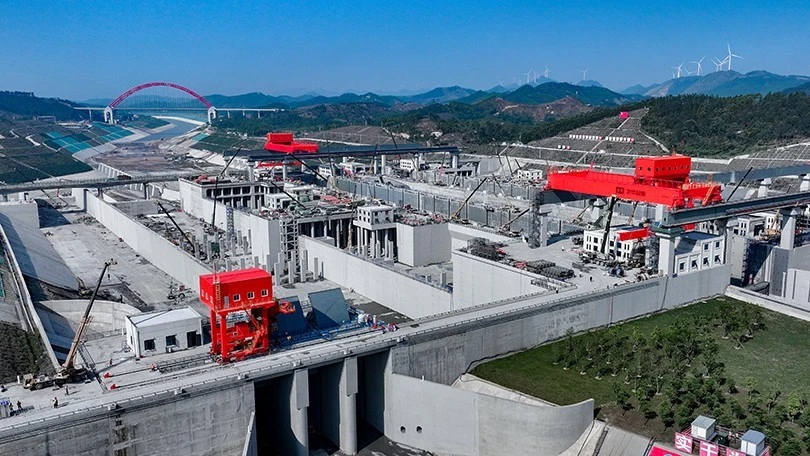
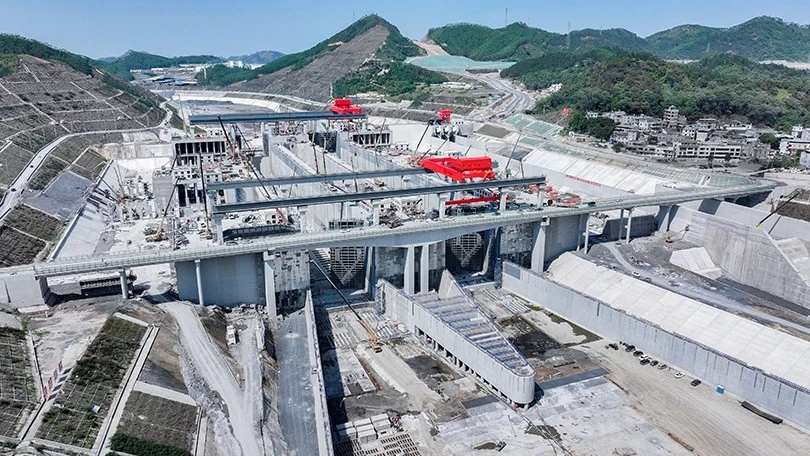
The Pinglu Canal is one of China’s largest inland waterway infrastructure projects, with a total length of 134.2 km and a designed capacity for 5,000-ton class vessels. Once completed, the canal will provide a direct shipping route connecting Southwest China to the sea, significantly improving regional logistics efficiency.
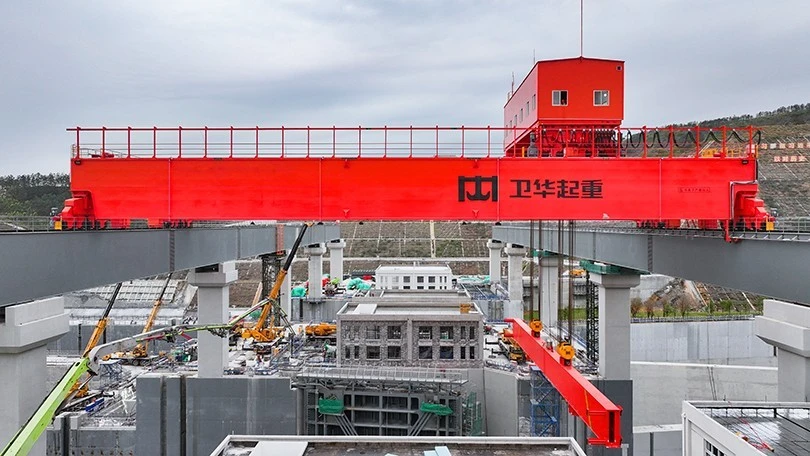
As the key control hub along the canal, the Mado Navigation Lock is responsible for vessel passage and water level regulation. To support lock gate maintenance and ensure long-term operational reliability, a heavy-duty trolley type gate hoist crane was required for the project.
Desafíos del proyecto
The navigation lock maintenance system demanded a lifting solution capable of handling extremely large lock gates while maintaining stable and synchronized operation.
The main challenges included:
- Large 52 m span requirement
- Heavy lifting capacity up to 2×2500 kN
- Precise positioning during gate maintenance operations
- Continuous outdoor service in humid and corrosive environments
- High reliability requirements for critical waterway infrastructure
The combination of heavy loads and long-span structure required careful control of deflection, load distribution, and lifting stability.
Solución
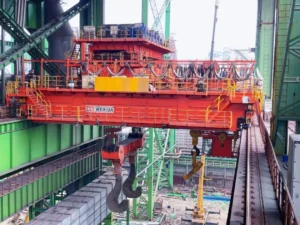
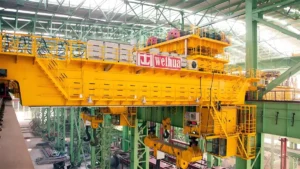
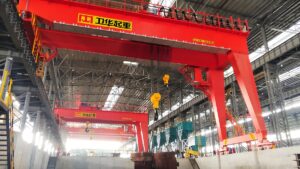
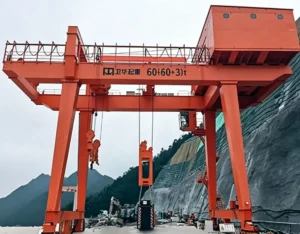
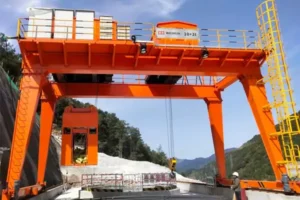
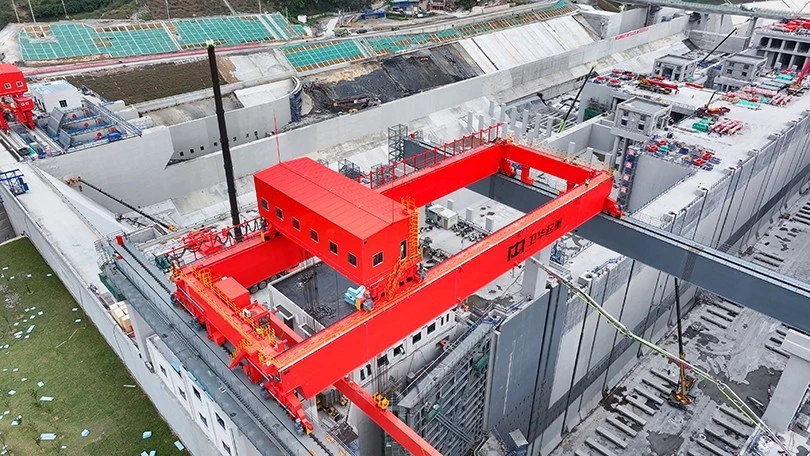
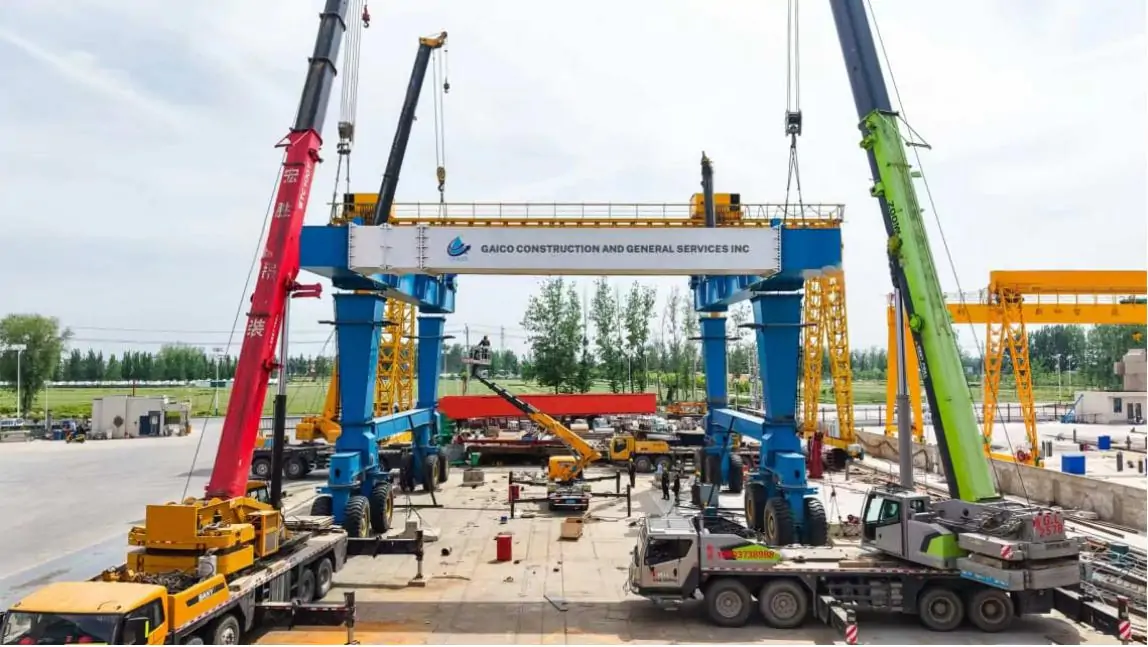
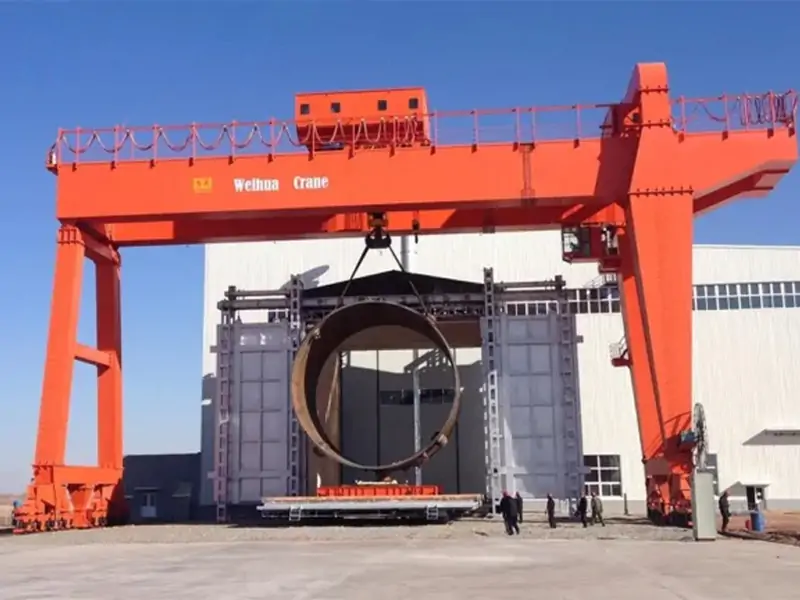
To meet the project requirements, a 2×2500 kN Heavy Duty Trolley Type Gate Hoist Crane was designed and manufactured for the navigation lock maintenance system.
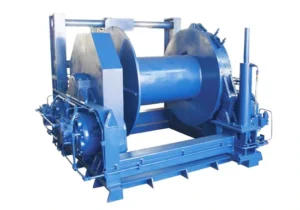
The crane adopts a trolley-mounted structure running on rails, allowing efficient lifting and removal of lock gates during inspection and maintenance work.
A fully enclosed transmission system was selected to protect key drive components from dust, moisture, and environmental contamination. During the design phase, 3D modeling and finite element analysis (FEA) were used to verify structural strength, optimize load distribution, and improve overall equipment reliability.
Especificaciones del equipo
| Artículo | Parámetro |
|---|---|
| Equipment Type | Trolley Type Gate Hoist Crane |
| Aplicación | Navigation Lock Gate Maintenance |
| Capacidad de elevación nominal | 2 × 2500 kN |
| Español | 52 m |
| Operating Mode | Rail-Mounted Trolley |
| Sistema de transmisión | Fully Enclosed Transmission |
| Design Method | 3D Engineering Design + FEA Analysis |
| Entorno de trabajo | Outdoor Water Conservancy Project |
Equipment Features
Gran capacidad de elevación
Rated lifting capacity of 2×2500 kN for navigation lock gate maintenance and handling. Suitable for large steel gates, stoplogs, and other heavy hydraulic structures.
52 m Large-Span Structure
52 m span design covers the entire lock chamber. The box-girder structure offers high rigidity and stable performance under heavy lifting loads.
Fully Enclosed Transmission
The hoisting mechanism uses a fully enclosed transmission system. Key components are isolated from rain, humidity, and dust, making it suitable for long-term outdoor operation.
Finite Element Verified Structure
The main girder, trolley frame, and load-bearing components were analyzed using finite element methods during the design stage. Structural stresses and deflection were verified under full-load conditions.
Synchronized Dual-Hoist Operation
Dual lifting units operate synchronously during gate lifting and lowering. The system maintains balanced load distribution and smooth movement when handling large lock gates.
Resultados del Proyecto
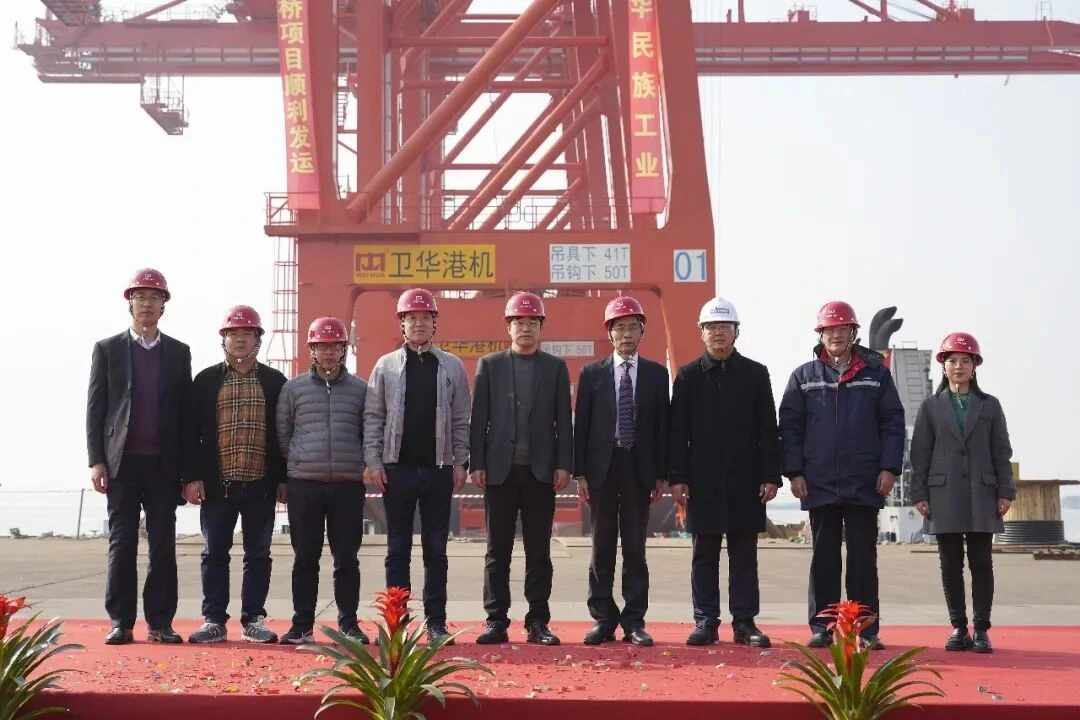
After installation and commissioning, the 2×2500 kN trolley type gate hoist crane successfully completed operational testing and was put into service at the Mado Navigation Lock.
The equipment demonstrated stable lifting performance, accurate positioning, and reliable operation under working conditions. The successful delivery provides critical support for lock gate maintenance activities and contributes to the long-term safe operation of the Pinglu Canal.
This project highlights the application of heavy-duty gate hoist cranes in large-scale navigation lock and water conservancy infrastructure, where reliability, lifting precision, and structural durability are essential for long-term performance.


 English
  Русский
  العربية
  Français
  Português
  Español