- ProductoEquipoPrecisión de Potencia, Personalización Solución de GrúasCorreo electrónicoWhatsApp / Wechat:+8613781917315Dirección:N.º 18, carretera Shanhai, ciudad de Changyuan, provincia de Henan, China
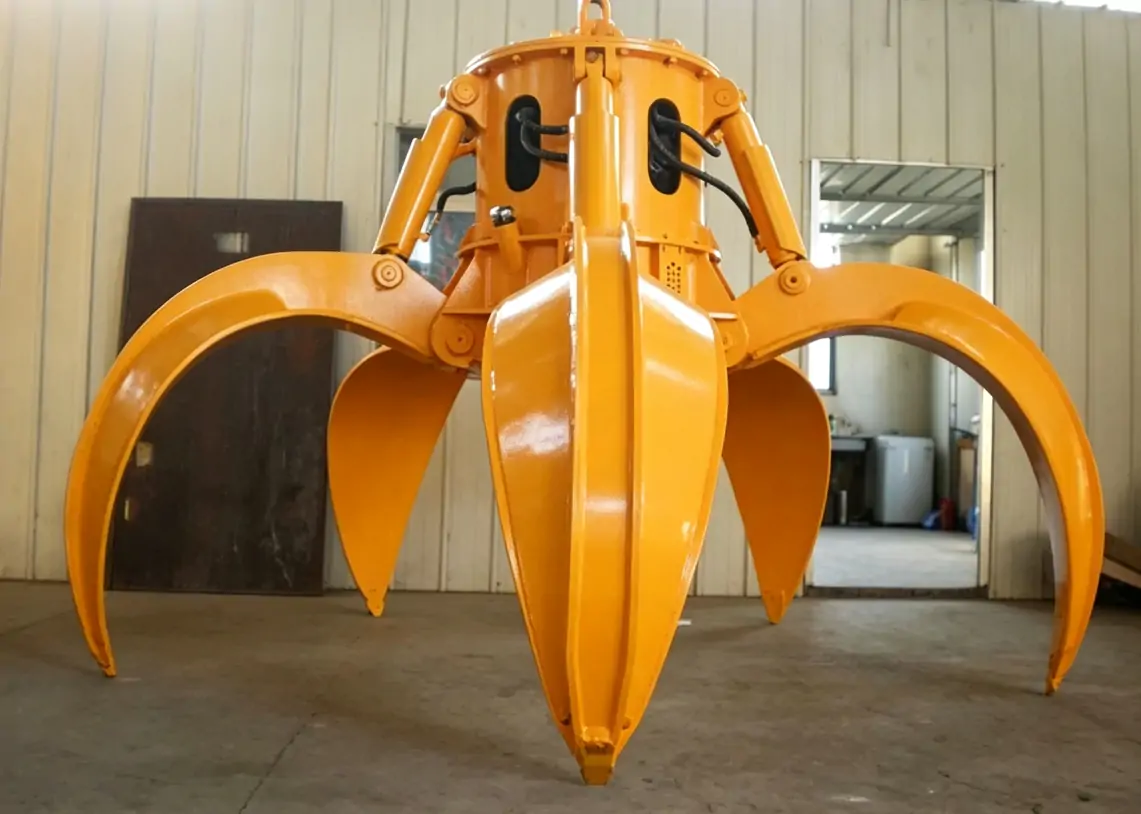
A Hydraulic Orange Peel Grab Bucket, also called a hydraulic cactus grab or electro-hydraulic orange peel grab, is a multi-tine attachment for handling scrap steel, metal scrap, rock, and other irregular materials. Hydraulic cylinders control the tines from multiple directions, reducing material slippage during loading and discharge.
It is used with overhead cranes, gantry cranes, port cranes, and excavators in recycling yards, steel mills, ports, and mines. Common crane-mounted models use 6 tines with capacities of 0.5–5.0 m³. Larger configurations can reach 20 m³.
Capacity, tine number, opening size, hydraulic pressure, and mounting connection can be customized. Working pressure is typically 180–260 bar for different crane and excavator systems.
For more information, read the article: ¿Qué es una cuchara de grúa?
Orange Peel Grab Buckets are available with different tine numbers to handle various scrap sizes, material shapes and loading conditions. Tine quantity affects the grab opening, contact area and material holding performance.
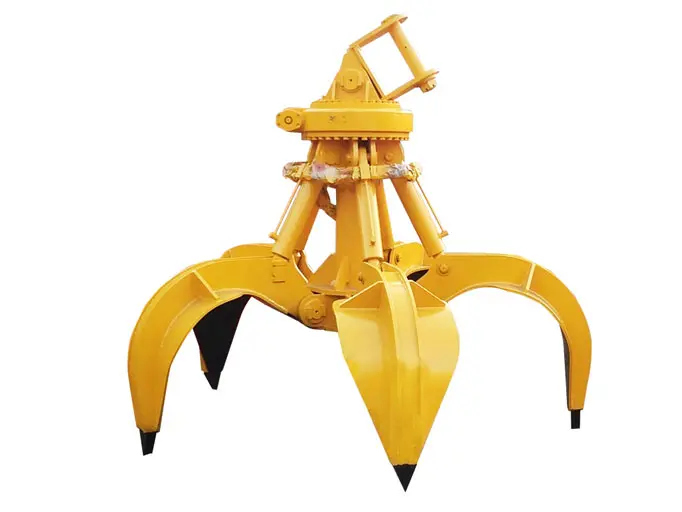
The 4-tine design has a larger opening and wider tine spacing. It is used for oversized scrap steel, heavy steel pieces, rocks and demolition materials. The structure allows the grab to enter large material piles and handle bulky loads.
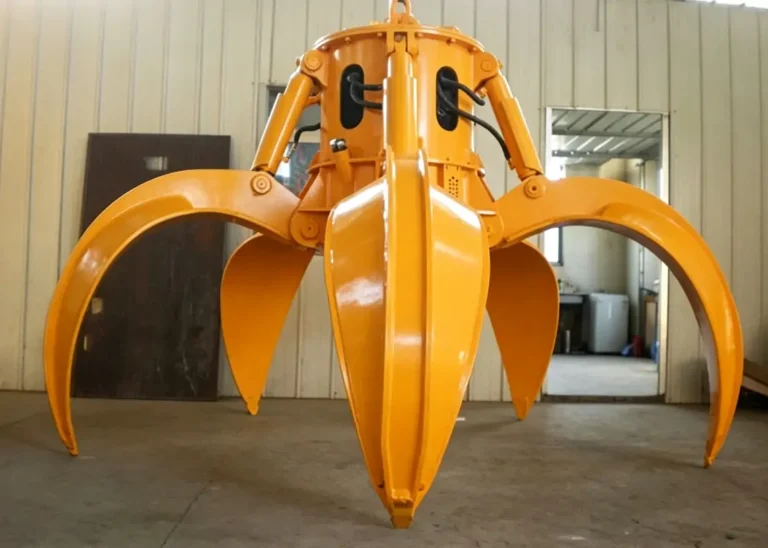
The 5-tine configuration offers a balanced structure for general scrap handling. It is commonly used for mixed metal scrap, irregular steel pieces and bulk materials with different sizes.
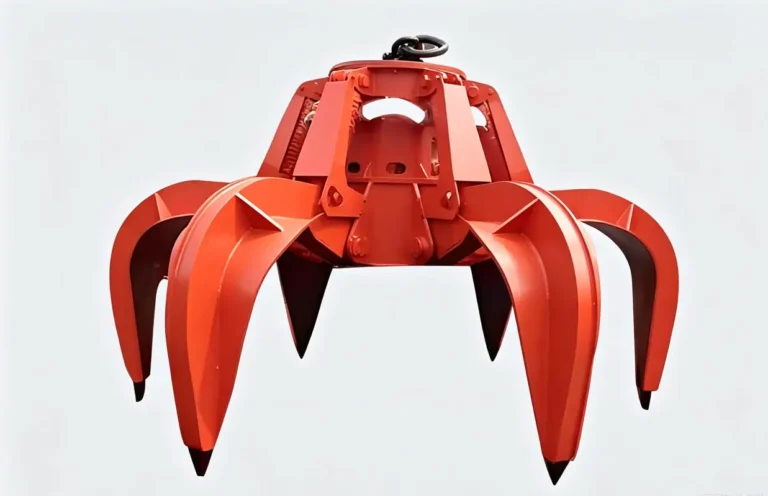
The 6-tine design increases the contact points between the grab and material. It is used for scrap steel, mixed scrap and irregular metal pieces that require stable gripping during lifting.
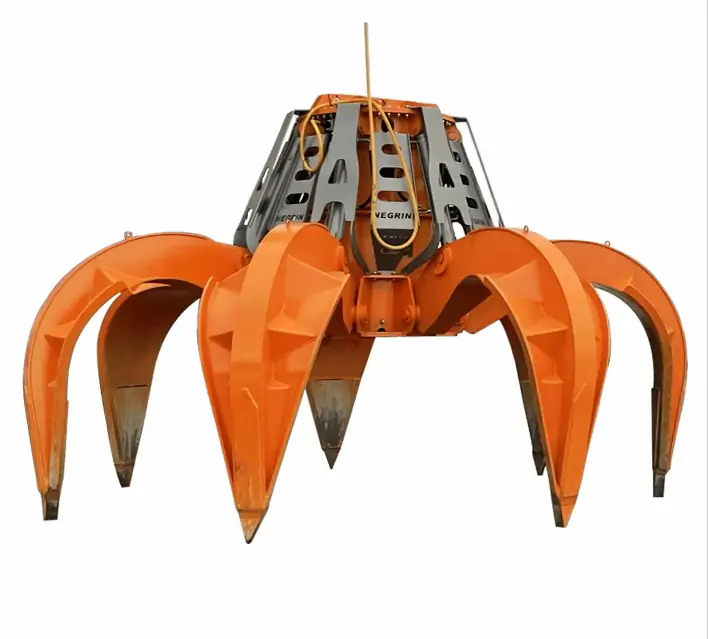
The 7–8 tine configuration features narrower gaps between tines and a compact grabbing structure. It is used for small scrap pieces, metal fragments and mixed materials with loose or irregular shapes.
The grab tines are driven by hydraulic cylinders mounted between the upper frame and each tine. Extending the cylinders closes the tines around the load, while retracting them opens the tines for discharge. Each tine is driven by its own cylinder or cylinder pair, distributing the closing force around the load. This allows the grab to hold irregular scrap, rock, and other uneven materials without relying on a single closing point.
1. Lowering: The open grab is lowered onto the scrap or bulk material. The retracted tines provide the maximum opening and allow the grab to penetrate the pile under its own weight.
2. Grabbing: The hydraulic cylinders extend and close the tines around the material. The closing force increases as the tines meet resistance. Hydraulic pressure holds the load during lifting.
3. Lifting: The crane or excavator lifts the closed grab and its load. The load is supported by the tines and hydraulic circuit, without rope tension to keep the grab closed.
4. Discharging: The hydraulic cylinders retract to open the tines at the discharge point. The operator can control the opening, including partial opening, when discharging into a hopper, truck bed, or stockpile.
The hydraulic cylinders control the tines directly, without a mechanical closing rope.
| Parámetro | Especificación |
|---|---|
| Drive Type | Hydraulic (electro-hydraulic / excavator hydraulic) |
| Grab Capacity | 0.3–20.0 m³ (standard 0.5–5.0 m³) |
| Rated Load / SWL | 3.2–63 t |
| Tine / Petal Number | 4–8 tines (4–5 for excavators, 6 standard, 7 for ≥3.2 m³) |
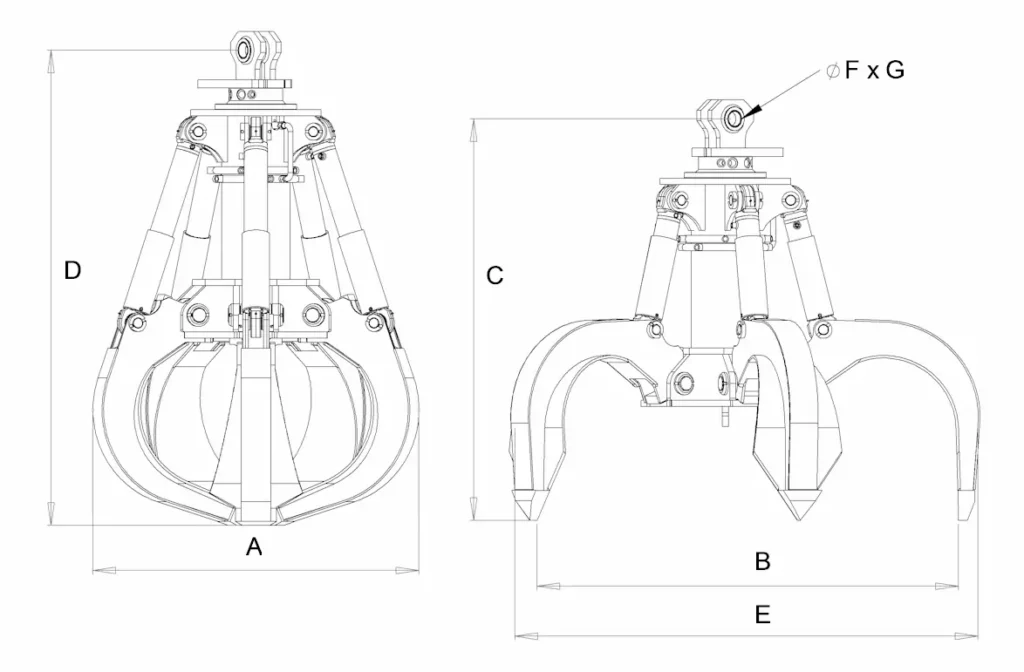
| Max Opening Size | 1,400–2,180 mm |
| Rotating Type | 360° hydraulic rotator (optional) / Non-rotating |
| Working Pressure | 180–260 bar |
| Dead Weight | 550–9,180 kg |
| Close Time | 9–14 s (380V/50Hz) |
| Material | Q355B / Q690D / NM400 / NM500 wear-resistant steel |
| Applicable Materials | Scrap steel, metal scrap, rock, stone, irregular bulk |
| Applicable Equipment | Overhead crane, gantry crane, port crane, excavator |
| Certification | CE / ISO 9001 |
Tine count varies by capacity: 4–5 tines for small excavator units, 6 tines for the mainstream crane-mounted range, and 7 tines for large 3.2 m³ and above configurations.
An orange peel grab uses multiple tines to grip irregular loads from several directions. This structure suits materials that are difficult to contain with a conventional two-shell grab.
An orange peel grab is a practical choice for scrap yards, steel plants, ports, mines, and other sites handling irregular bulk materials.
Regular inspection and maintenance of crane grab buckets can extend their service life. For details, please refer to: Crane Grab Bucket Maintenance Tips to Extend Service Life.
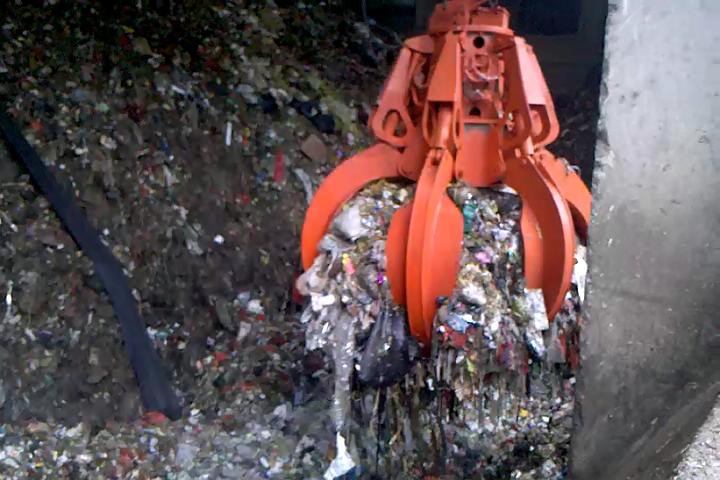
Grabbing bulky waste and irregular materials in waste sorting and processing facilities.
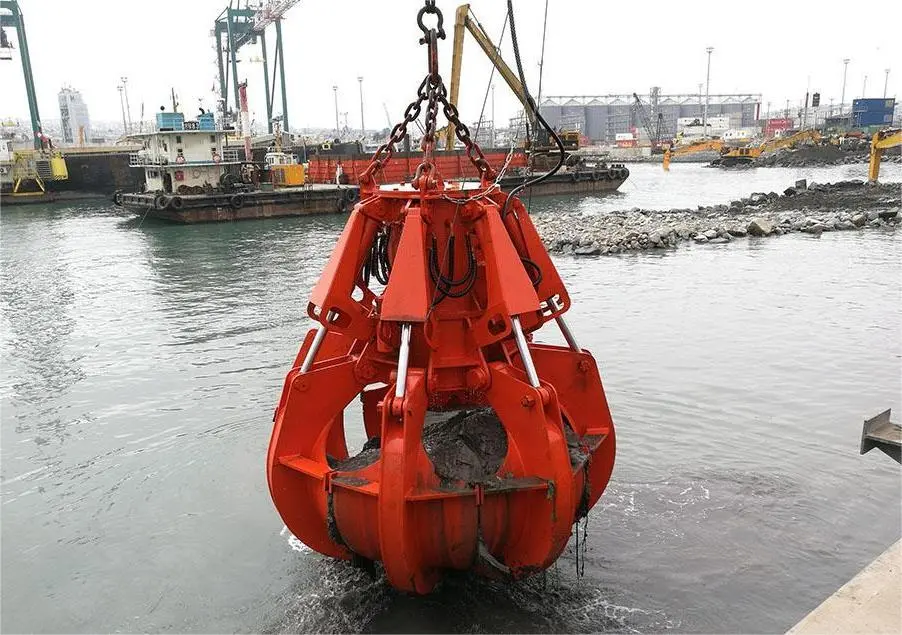
Loading and unloading scrap, minerals, and other bulk cargo at ports and terminals.
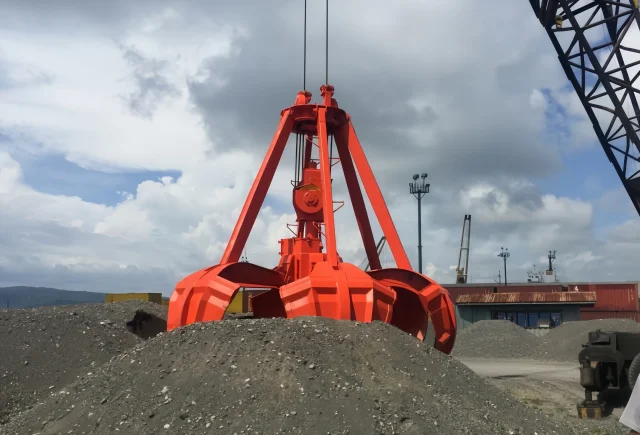
Moving scrap steel and raw materials between storage, charging, and processing areas.
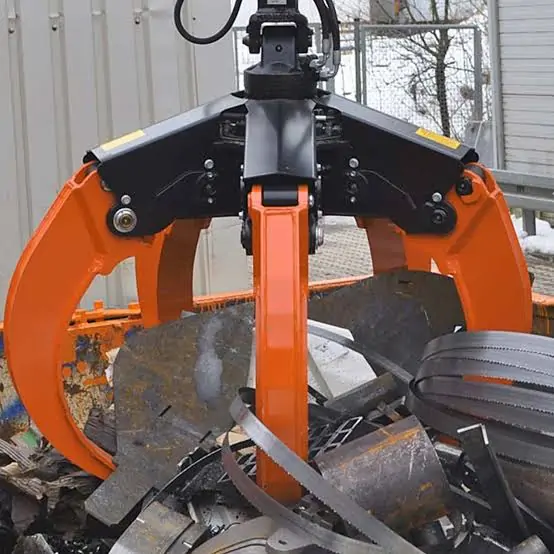
Handling steel scrap, cut steel sections, and irregular metal pieces in recycling yards and steel plants.
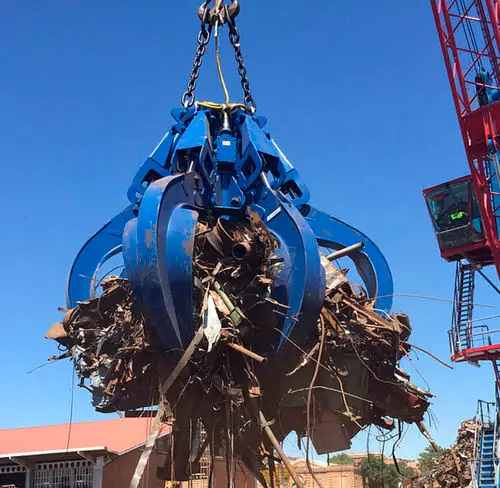
Loading and transferring non-uniform metal scrap in recycling and processing facilities.
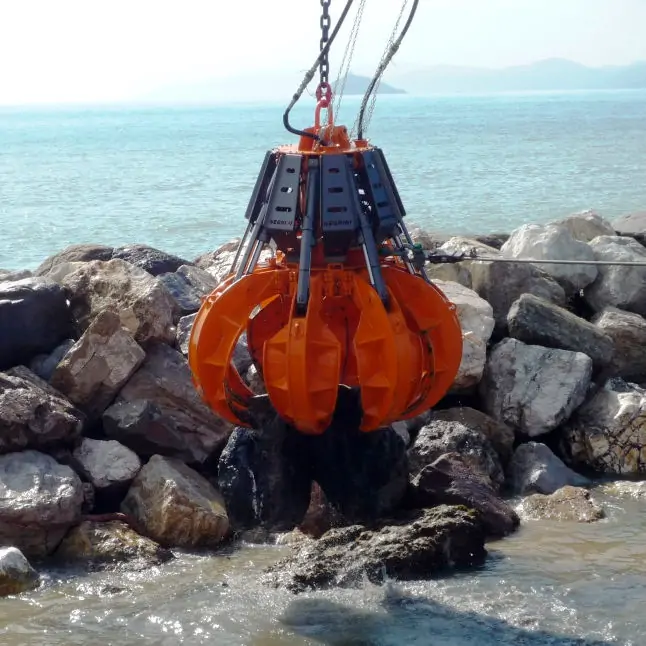
Handling loose rock, stone, and other irregular materials in mining and construction operations.
Orange peel grab buckets are widely used in various industries and are particularly suitable for handling irregularly shaped metal. Steel is one of the most common materials handled; for specific applications, read the article: Hydraulic Orange Peel Grab Bucket for Scrap
To learn more about the specific applications of crane grab buckets in heavy-duty industries, read the article: “Crane Grab Bucket Applications in Ports, Steel Mills, Mining, and Bulk Material Handling”
Hydraulic grabs are widely used in port material handling. For details on materials and how to select the appropriate equipment, please refer to the article: “Electro Hydraulic Grab Bucket for Port Bulk Material Handling.”
Hydraulic Orange Peel Grab Buckets can be mounted on different crane systems for scrap steel, metal waste, and other irregular heavy materials. The crane type is selected according to the working area, lifting capacity, and handling process.
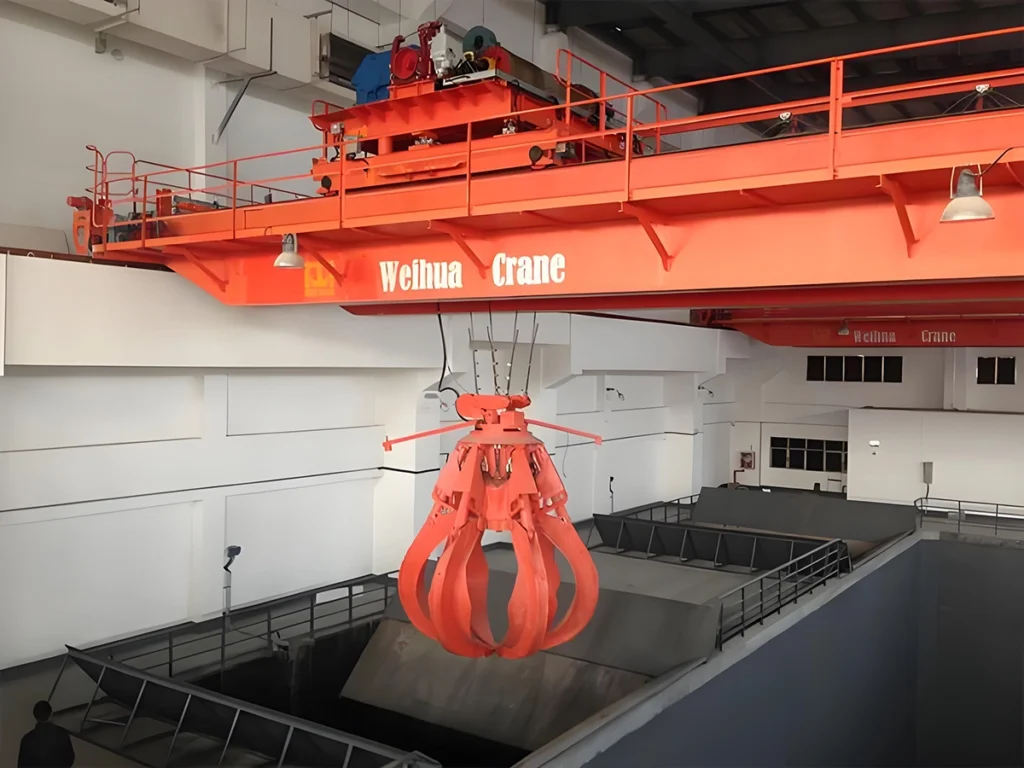
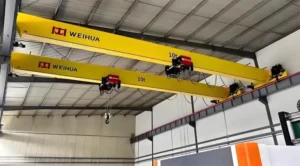
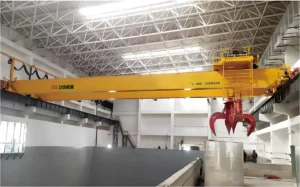
Used in steel mills, scrap processing plants, and indoor material yards. The hydraulic orange peel grab handles scrap steel, metal pieces, and production waste for loading, sorting, and transfer.
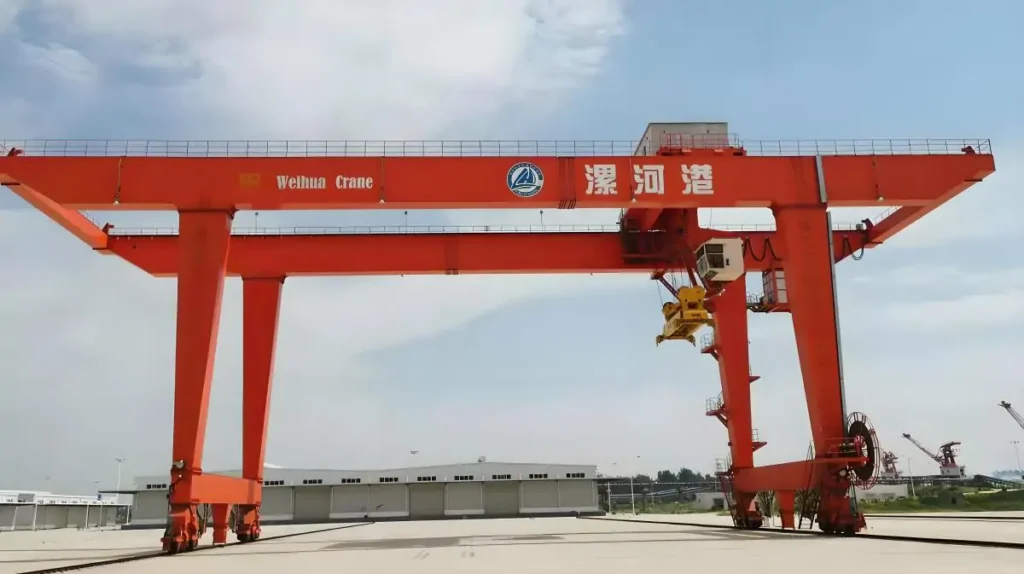
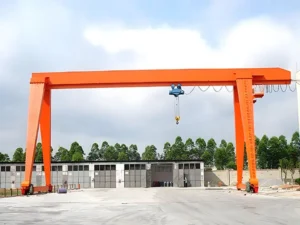
Used in outdoor scrap yards, steel storage areas, and industrial yards. The grab handles large metal pieces and heavy scrap between storage, processing, and loading areas.
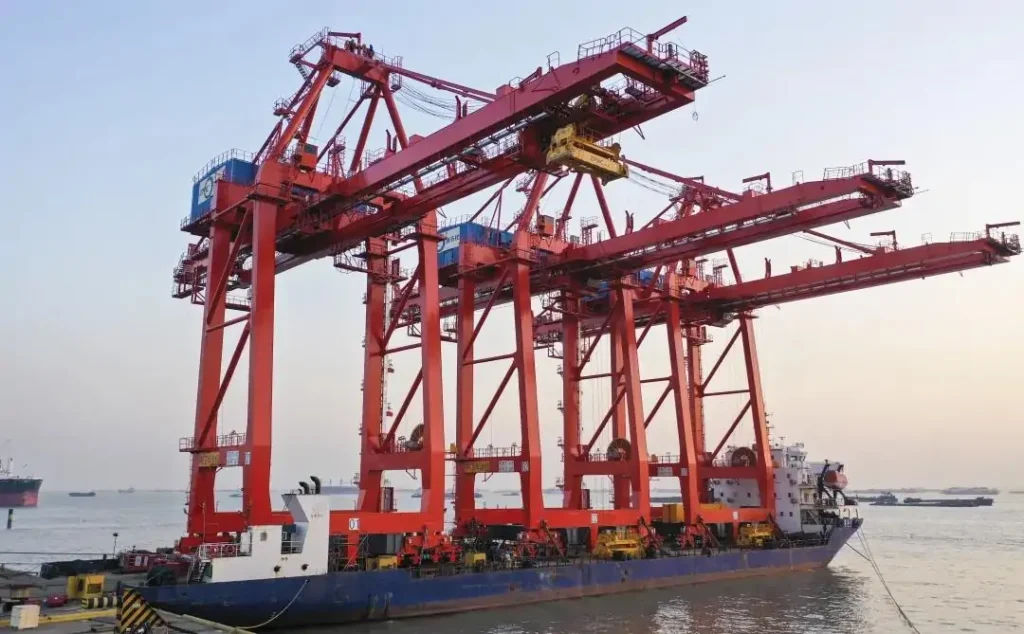
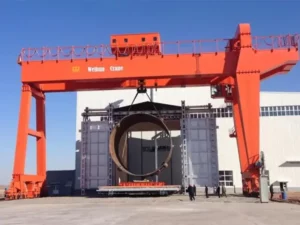
Used for bulk and scrap cargo handling at ports and terminals. The hydraulic orange peel grab handles scrap steel, metal waste, and irregular cargo during loading and unloading operations.
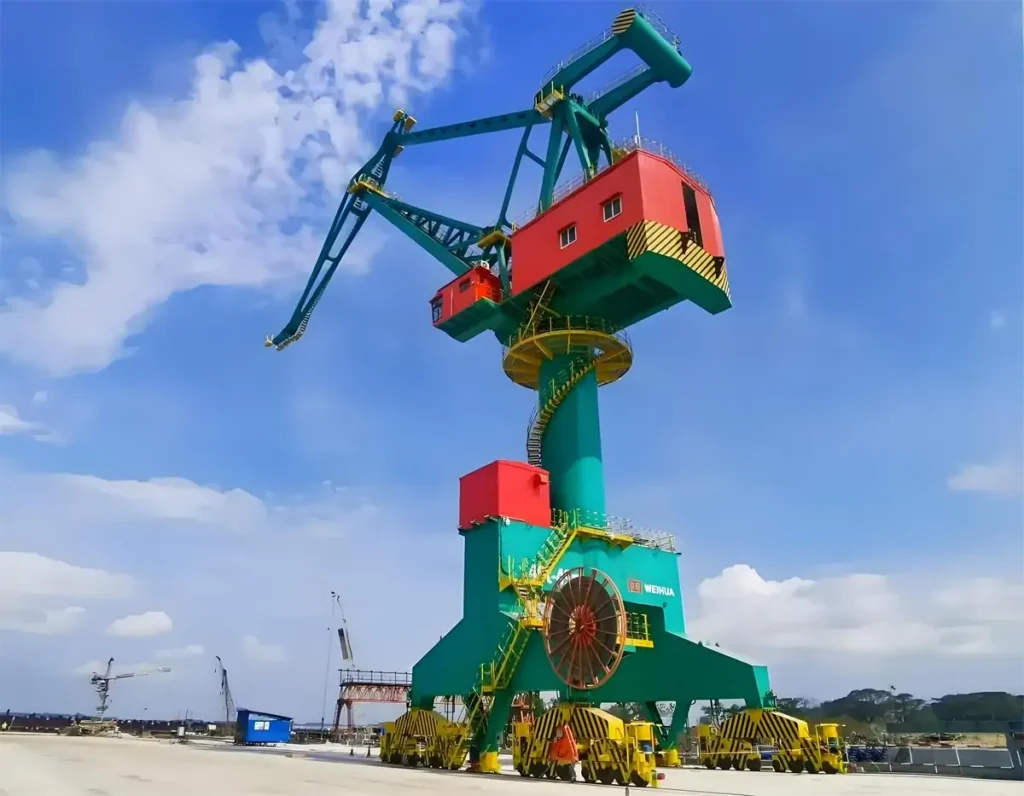
Used for multi-purpose port and yard operations. The orange peel grab handles scrap steel, bulk metal waste, and other irregular cargo with the crane’s slewing and lifting movements.
The right grab depends on the material, required capacity, tine configuration, and lifting equipment. Check the hydraulic system and working conditions before finalizing the grab size.
Consider the material type, piece size, shape, and density. Scrap steel, mixed metal, rock, and other irregular materials may require different tine designs.
Select the grab capacity according to material density and the required load per cycle. The grab weight must also fit within the crane or excavator lifting capacity.
Choose the number of tines according to material size and the required grip. Fewer tines provide a wider opening, while more tines give closer load coverage.
Check the crane or excavator capacity, hook or mounting connection, available lifting height, and working reach before selecting the grab.
Match the working pressure, flow rate, and power supply with the available hydraulic system. Crane-mounted and excavator-mounted grabs use different hydraulic arrangements.
Select the grab configuration based on the material, equipment, and site conditions rather than capacity alone.
If you are considering using an overhead crane or gantry crane and are unsure how to select the appropriate grab bucket, see the article: How to Choose a Grab Bucket for Overhead Cranes and Gantry Cranes?
Hydraulic Orange Peel Grab Buckets and Hydraulic Clamshell Grab Buckets both use hydraulic cylinders to open and close the grab. The main difference is the shell design. Orange peel grabs use multiple tines for irregular materials, while clamshell grabs use two shells for bulk materials.
| Comparación | Hydraulic Orange Peel Grab Bucket | Hydraulic Clamshell Grab Bucket |
|---|---|---|
| Grab Structure | Multiple tines | Two clamshells |
| Grabbing Method | Tines surround and grip the material | Shells close around the material |
| Typical Materials | Scrap steel, metal waste, rocks | Coal, sand, ore, grain, bulk materials |
| Material Shape | Large, irregular and bulky pieces | Loose and granular materials |
| Material Retention | Multiple tines grip irregular loads | Enclosed shells hold loose materials |
| Aplicaciones Típicas | Scrap yards, steel plants, demolition sites | Ports, mines, warehouses, bulk material yards |
| Common Crane Types | Overhead crane, gantry crane, port crane | Overhead crane, gantry crane, port crane |
Hydraulic Orange Peel Grab Buckets are mainly used for irregular and bulky materials such as scrap steel. Hydraulic Clamshell Grab Buckets are commonly used for loose bulk materials such as coal, sand, and ore. The material type and load shape are the main factors when selecting between the two.
For details on the different applications of grab buckets and how to choose the right one, see: Different Types of Crane Grab Buckets and How to Choose the Right One
Hydraulic Orange Peel Grab Buckets can be configured for different materials, lifting equipment, and working conditions. Grab capacity, tine structure, hydraulic system, and mounting connection can be specified for the required application.
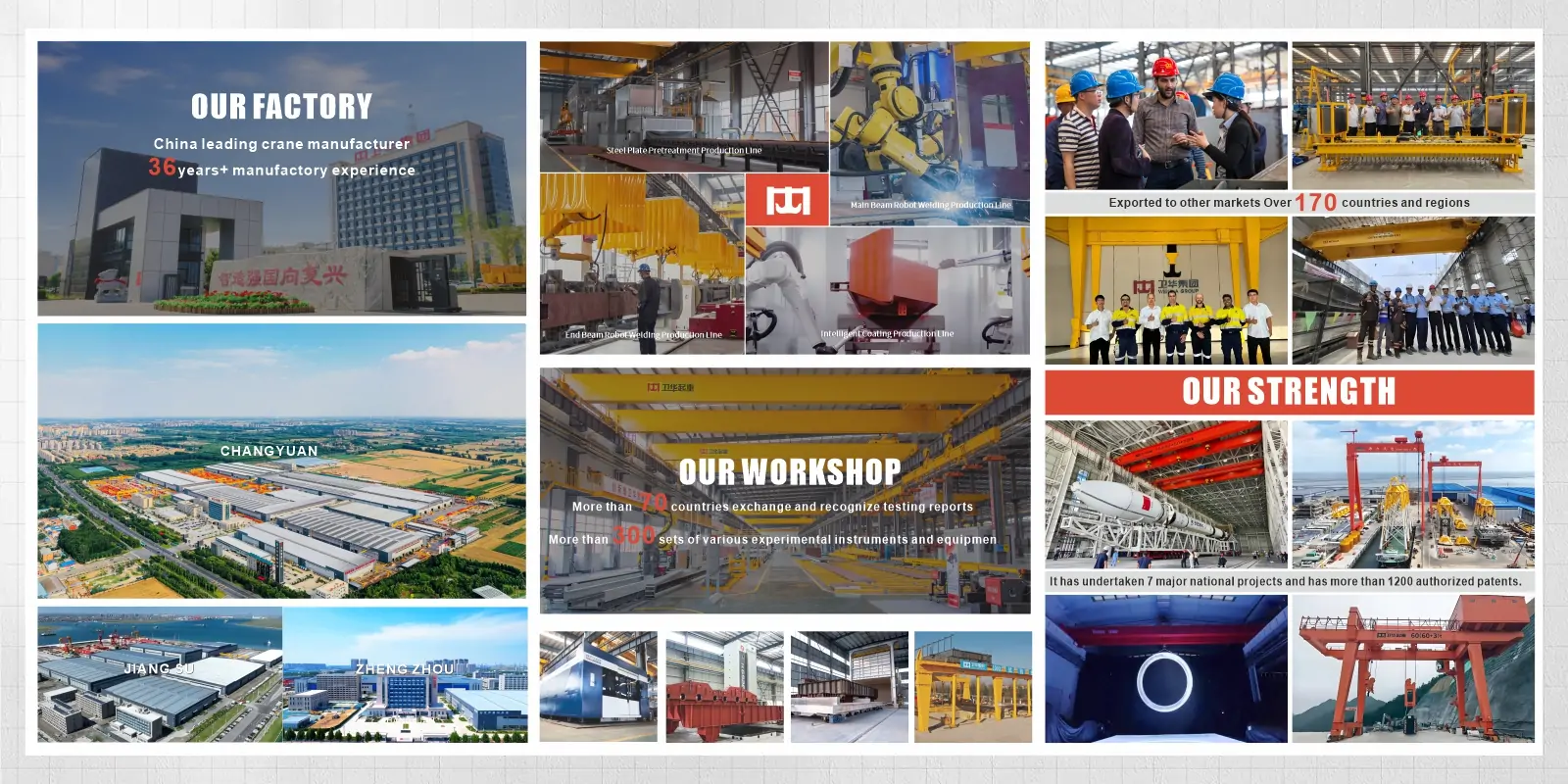
WEIHUA manufactures and supplies Hydraulic Orange Peel Grab Buckets for scrap steel, metal scrap, rock, and other irregular material handling applications. The grabs can be configured for overhead cranes, gantry cranes, port cranes, and excavators, with customized capacity, tine configuration, opening size, hydraulic system, and mounting connection. We have supplied material handling equipment to overseas markets and hold certifications including CE and ISO9001.
WEIHUA provides technical support from product selection and configuration to delivery, installation guidance, commissioning, and after-sales service. Spare parts and maintenance support are available for long-term operation. Send your material type, required capacity, and crane or excavator specifications to discuss a suitable Hydraulic Orange Peel Grab Bucket with the WEIHUA team.
A Hydraulic Orange Peel Grab Bucket is a multi-tine attachment for handling scrap steel, metal scrap, rock, and other irregular materials. Hydraulic cylinders control the tines to grip, lift, and discharge the load.
Hydraulic cylinders open and close the tines around the material. The crane or excavator lifts the closed grab, then the cylinders retract to open the tines and discharge the load.
It can handle scrap steel, metal scrap, rock, stone, and other irregular or bulky materials. The tine configuration and wear-resistant components can be selected for different material conditions.
An Orange Peel Grab uses multiple tines to grip irregular loads from several directions. A Clamshell Grab uses two or more shells and is more commonly used for loose, free-flowing bulk materials.
Hydraulic Orange Peel Grabs can be used with compatible overhead cranes, gantry cranes, and port cranes. Grab weight, capacity, mounting connection, and hydraulic power must match the crane.
Yes. Excavator-mounted Orange Peel Grabs connect to the excavator’s auxiliary hydraulic system. Grab capacity, hydraulic pressure, flow rate, and mounting connection are matched to the excavator.
Consider the material type, size, density, required capacity, tine configuration, and lifting equipment. Hydraulic pressure, flow rate, opening size, and working conditions should also be checked.
Yes. WEIHUA can customize the capacity, tine number, opening size, hydraulic system, rotating system, wear-resistant materials, and crane or excavator connection according to the application.
Weihua, fundada en 1988, se ha convertido en un líder mundial en el campo de la fabricación inteligente de China. Nos especializamos en la I+D y producción de grúas inteligentes, ofreciendo al mismo tiempo soluciones AGV. Nuestros equipos profesionales de ingeniería, entrega y posventa brindan soporte técnico integral, soluciones personalizadas, orientación de instalación in situ y servicios globales de respuesta rápida para garantizar que cada proyecto funcione de manera segura y eficiente.
Contáctenos ahora por correo electrónico: [email protected], o rellene el formulario a continuación.
La grúa pórtico es un equipo de elevación ampliamente utilizado en diversas industrias, sitios de construcción, puertos, almacenes y otros campos. Su estructura única y su potente capacidad de carga la hacen ideal para el manejo de materiales modernos de alta resistencia. El diseño de la estructura de “pórtico” permite que la grúa se mueva libremente dentro de un espacio, cubriendo una gran área de trabajo. Entonces, ¿qué hace especiales a las grúas pórtico? ¿Cuáles son sus tipos, parámetros, métodos de control, aplicaciones y principios de funcionamiento? ¿En qué se diferencian de las grúas puente? Vamos a explorarlo juntos. Tipos de grúas pórtico Según el diseño, la aplicación y el entorno operativo, las grúas pórtico se clasifican típicamente en los siguientes tipos: Grúa pórtico de viga única Las grúas pórtico de viga única se utilizan ampliamente en sectores industriales, almacenes, puertos y talleres. Con un mecanismo de elevación de soporte de viga única, se desplazan a través de columnas laterales y rieles inferiores. Con su estructura simple, operación amigable y capacidad de elevación moderada, son ideales para el manejo de cargas ligeras a medianas. Capaces de abarcar grandes distancias libremente, las grúas pórtico de viga única son adecuadas para operaciones de elevación y manejo de materiales pesados. Grúa pórtico de doble viga En comparación con las grúas pórtico de viga única, las grúas pórtico de doble viga ofrecen mayor...
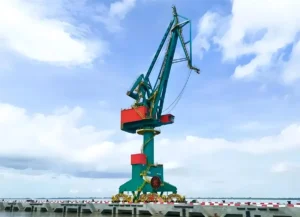
En puertos, parques logísticos y manipulación de materiales industriales, las grúas pórtico y las grúas de portal son dos tipos de equipos de carga/descarga comunes y fundamentales. Difieren en diseño estructural, características de rendimiento, métodos de operación, escenarios de aplicación y costos de inversión. Este artículo proporciona un análisis integral de las grúas pórtico frente a las grúas de portal y lo guía en la selección correcta. Comparación del diseño estructural Las diferencias estructurales entre las grúas pórtico y las grúas de portal se manifiestan principalmente en los métodos de soporte de carga, las trayectorias de movimiento y los rangos de cobertura. La primera se centra en una torre fija y una pluma giratoria, enfatizando la “cobertura puntual” y la rotación horizontal flexible. La segunda presenta una estructura de marco de portal y desplazamiento longitudinal sobre rieles, priorizando el “amplio movimiento horizontal” y la manipulación eficiente de la logística en el sitio. En consecuencia, sus distintos diseños estructurales dictan directamente sus diferentes escenarios de aplicación. Características estructurales de la grúa pórtico Las grúas de portal giratorias emplean estructuras de pluma en voladizo simple/doble con la torre fijada a cimientos o rieles, lo que permite una rotación de 360° o parcial. Esta configuración permite una operación flexible en espacios estrechos y alargados, como líneas de costa, frentes de muelle y atraques de barcos, lo que la hace particularmente adecuada para la manipulación de materiales de barco a tierra. Su funcionalidad principal combina verticalmente...
En las operaciones industriales modernas, el manejo eficiente de materiales es crucial para maximizar la productividad y optimizar el flujo de trabajo. Las grúas puente, también conocidas como grúas viajeras o grúas EOT, son sistemas fijos de manejo de materiales ampliamente utilizados en manufactura, procesamiento de metales, almacenamiento y operaciones de carga/descarga. En este artículo, exploraremos el principio de funcionamiento, los componentes principales, las aplicaciones y los beneficios operativos de las grúas puente, proporcionando una guía completa para planificadores industriales y profesionales de la logística. Principio de Funcionamiento de las Grúas Puente Una grúa puente opera sobre una estructura similar a un puente que abarca el área de trabajo, con un carro y un polipasto que se mueven horizontalmente a lo largo del puente y elevan o descienden cargas verticalmente. El movimiento de la grúa a lo largo de la vía, combinado con un control preciso del polipasto, permite el manejo eficiente y seguro de materiales pesados en fábricas, almacenes e instalaciones industriales. Para obtener información sobre cómo funcionan las grúas viajeras, consulte este artículo: Principio de Funcionamiento de las Grúas Viajeras: Componentes, Movimiento y Proceso de Operación Terminología de las Grúas Puente A continuación, se presenta una introducción a la terminología relacionada con las partes de las grúas puente. Capacidad de la Grúa: La capacidad de la grúa se refiere al peso máximo que una grúa puente puede levantar de forma segura. Típicamente medido en toneladas…
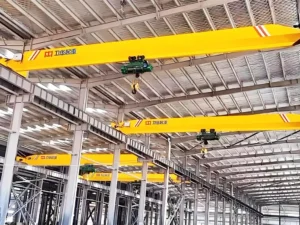
Una grúa EOT (Grúa Eléctrica de Puente) es un sistema de elevación aéreo eficiente y fiable que se utiliza para manipular materiales pesados en fábricas, almacenes, talleres y plantas industriales. Funcionando sobre rieles elevados, las grúas EOT permiten el movimiento tridimensional seguro y preciso de cargas mediante movimientos coordinados de elevación, traslación transversal y traslación longitudinal. Este artículo le guiará a través de las definiciones de las grúas EOT, sus tipos, estructura, principios de funcionamiento, aplicaciones y factores de costo para ayudarle a seleccionar la solución más adecuada para sus necesidades de elevación. ¿Cómo funciona una grúa EOT? El principio de funcionamiento de una grúa EOT implica una combinación de elevación vertical, movimiento horizontal del carro y desplazamiento longitudinal del puente, lo que permite la manipulación eficiente de cargas pesadas en las instalaciones industriales. La grúa opera sobre rieles de pista elevados instalados a lo largo de la estructura del edificio, con la viga del puente abarcando el área de trabajo. El mecanismo de elevación sube o baja la carga utilizando cables de acero o cadenas, mientras que el carro mueve la carga horizontalmente a lo largo del puente. Toda la grúa se desplaza longitudinalmente a lo largo de los rieles de la pista, permitiendo la posición tridimensional de los materiales. Las grúas EOT modernas están impulsadas por motores eléctricos con velocidad precisa...
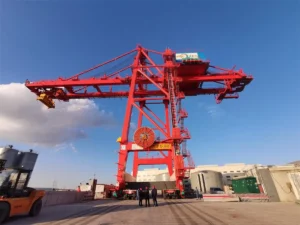
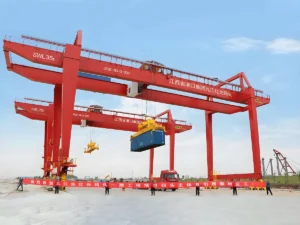
Las grúas pórtico se utilizan ampliamente en patios de almacenamiento al aire libre, astilleros, fábricas y sitios de construcción, lo que las convierte en una de las soluciones de manipulación de materiales más versátiles y aplicadas. Las grúas pórtico vienen en varios tipos, cada una personalizable para adaptarse a diferentes capacidades de carga, condiciones del sitio y requisitos operativos. Sin embargo, la elección de la configuración incorrecta puede generar gastos innecesarios, capacidad de elevación limitada o restricciones de expansión futuras. Entonces, ¿cuáles son los principales tipos de grúas pórtico? ¿Cómo elige el tipo correcto para su aplicación? En esta guía, proporcionaremos una descripción general detallada de los diferentes tipos de grúas pórtico según la estructura, la movilidad y los escenarios de aplicación, lo que le ayudará a tomar la decisión correcta antes de invertir en una solución de elevación. El artículo es bastante extenso. A continuación se presenta nuestra tabla de contenidos. Por favor, salte a la sección correspondiente según sea necesario: ¿Qué es una grúa pórtico? Las grúas pórtico son equipos de elevación diseñados para la manipulación eficiente de carga pesada en grandes sitios al aire libre. Su estructura distintiva presenta una o más vigas principales soportadas por patas rígidas (o flexibles) a cada lado, formando un marco monumental en forma de “puerta”. Estas grúas se desplazan...
 English English
  Русский
 العربية
 Français
 Português
 Español