








Table of Contents
Introduction
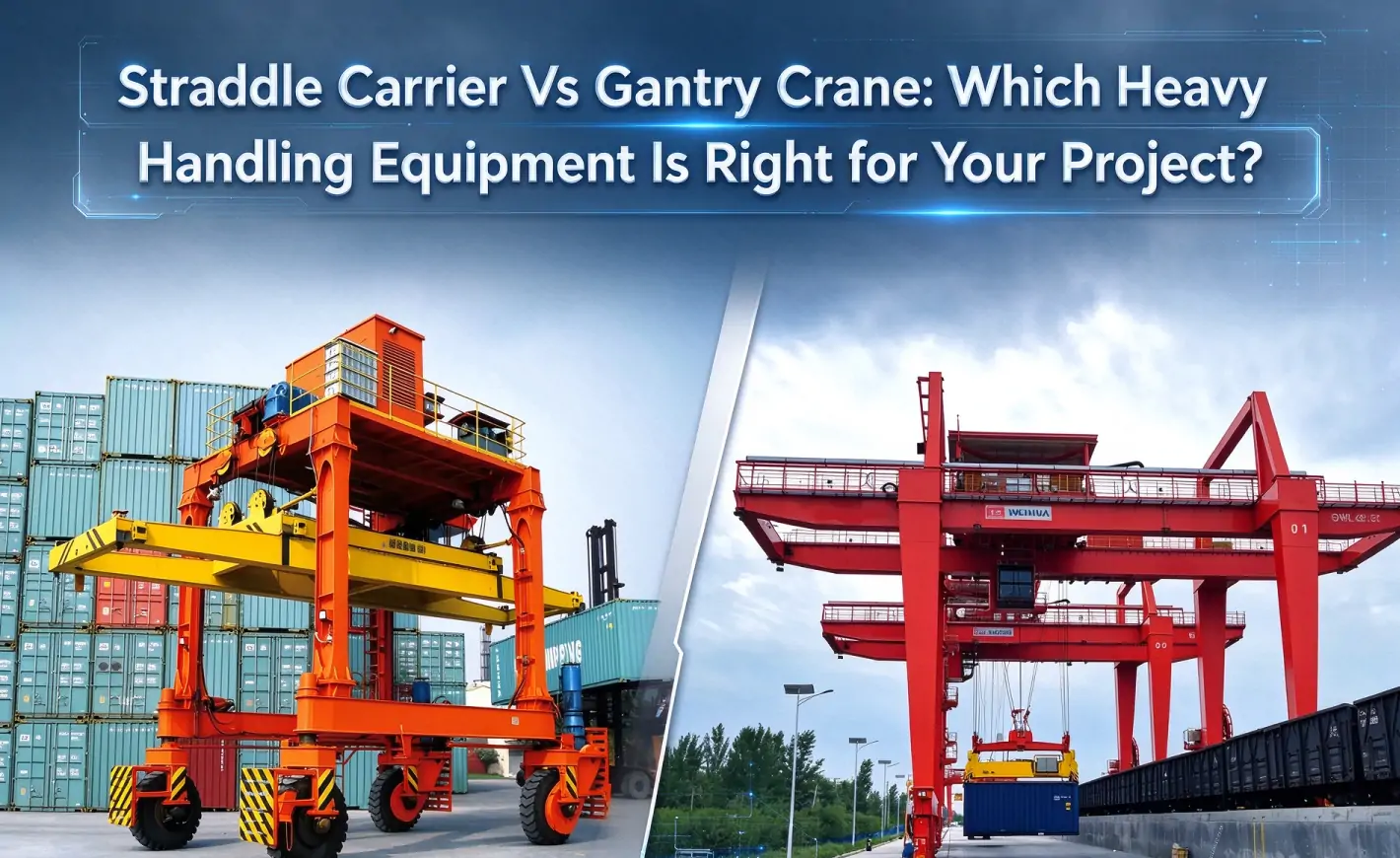
Straddle Carrier Vs Gantry Crane is a common comparison for heavy load handling projects. Both equipment types can lift and move large loads, but they are designed for different operating conditions. A straddle carrier combines lifting and transportation functions for flexible yard movement, while a gantry crane is used for stable lifting operations within a defined working area.
Choosing between a straddle carrier and a gantry crane depends on load requirements, site layout, handling frequency, travel distance, and operation method. This article compares their working principles, applications, advantages, and selection factors to help you identify the suitable equipment for your material handling needs.
What Is a Straddle Carrier?
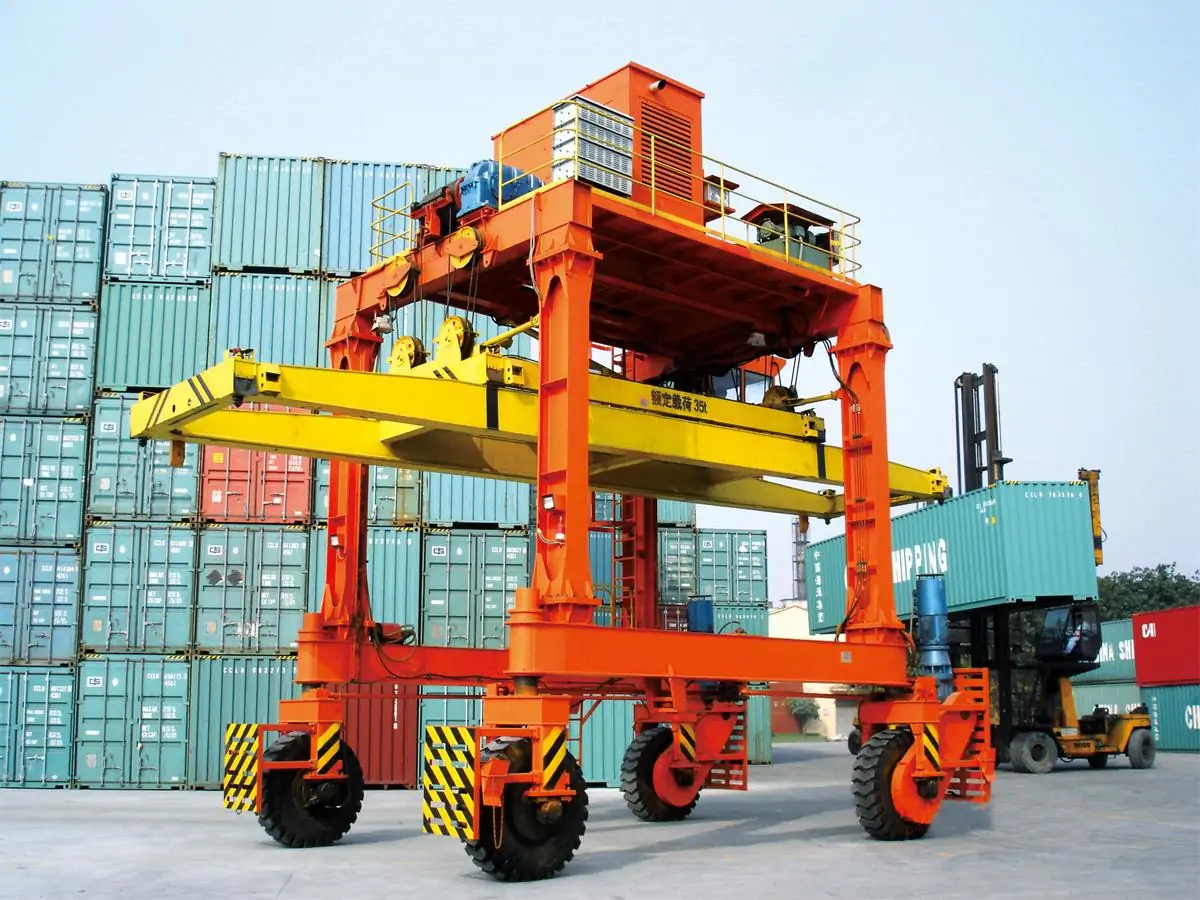
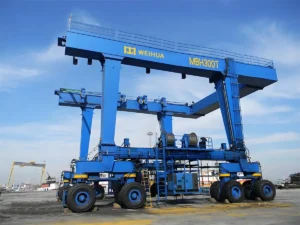
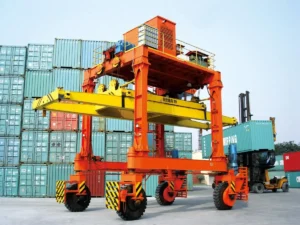
A straddle carrier, also called a straddle truck, container straddle carrier, or mobile straddle crane, is a self-propelled mobile lifting machine used for handling and transporting heavy loads across open yards. Unlike rail-mounted lifting equipment, it travels on rubber tires and can move freely between different working areas without a fixed travel path.
The straddle carrier lifts loads within its frame through lifting beams or spreader systems and transports them directly to the required location. This combination of lifting and transportation makes it suitable for applications that require frequent load movement, short-distance transfer, and flexible yard operation.
Straddle carriers are widely used in container terminals, precast concrete yards, steel fabrication yards, and heavy equipment handling areas. They are commonly selected for projects where load transfer routes change frequently or where fixed crane systems are not suitable.
- Movement: Self-propelled travel with rubber tires for flexible yard operation.
- Lifting Method: Lifts loads from the bottom or sides using lifting systems or spreaders.
- Mobility: Moves between different working areas without fixed rails.
- Best For: Suitable for mobile transportation and frequent heavy load handling.

What Is a Gantry Crane?
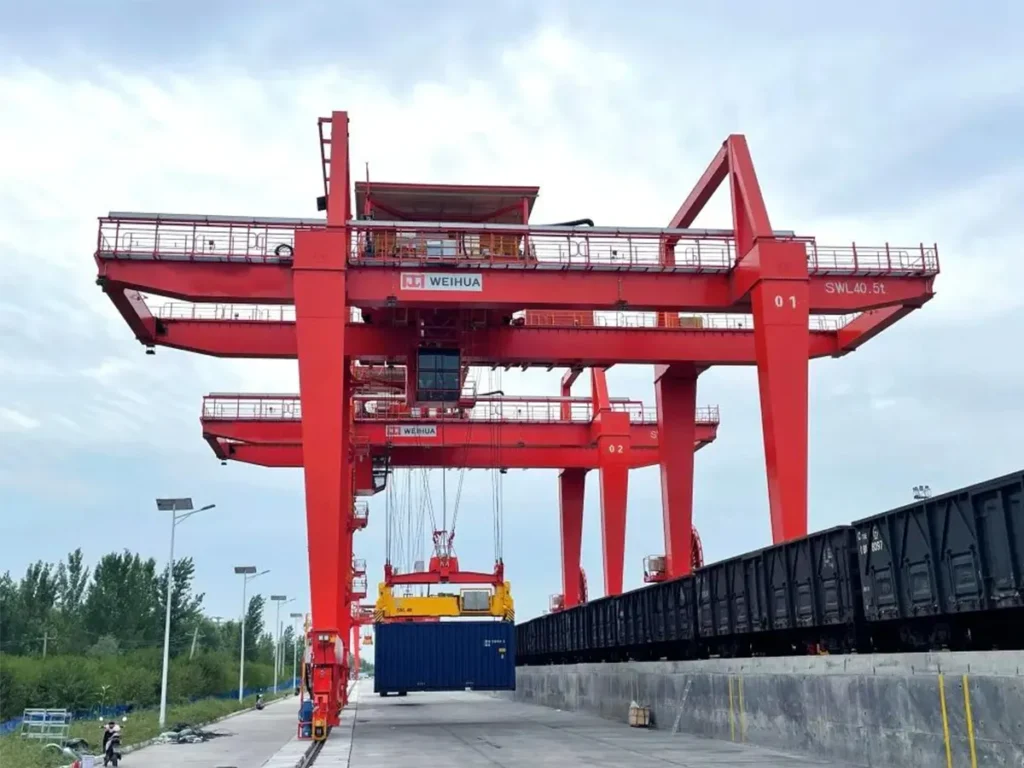
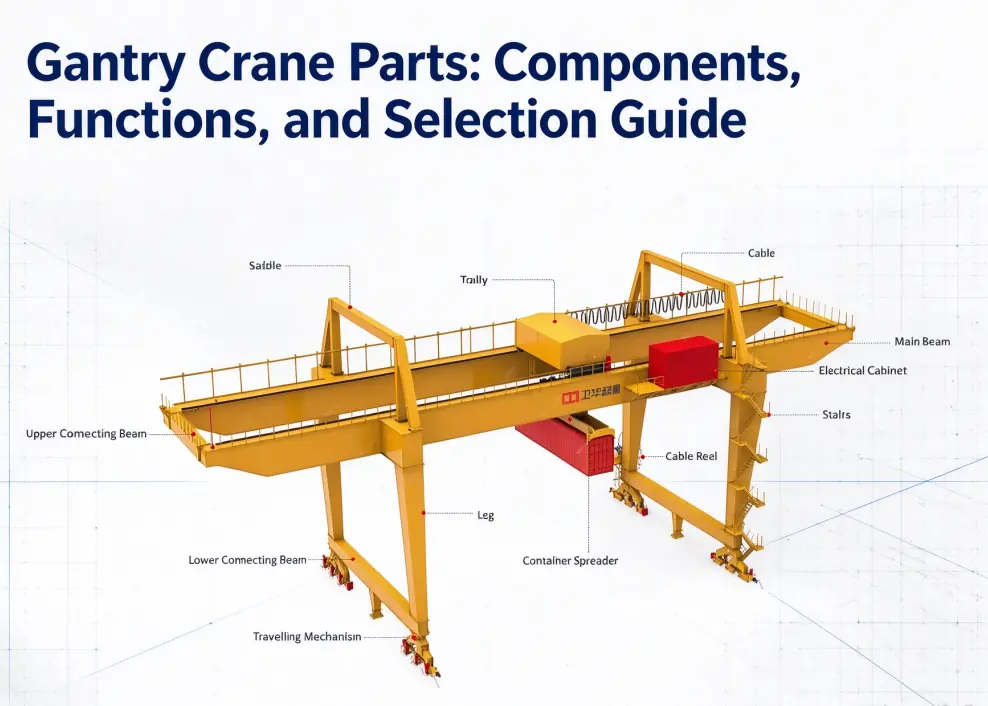
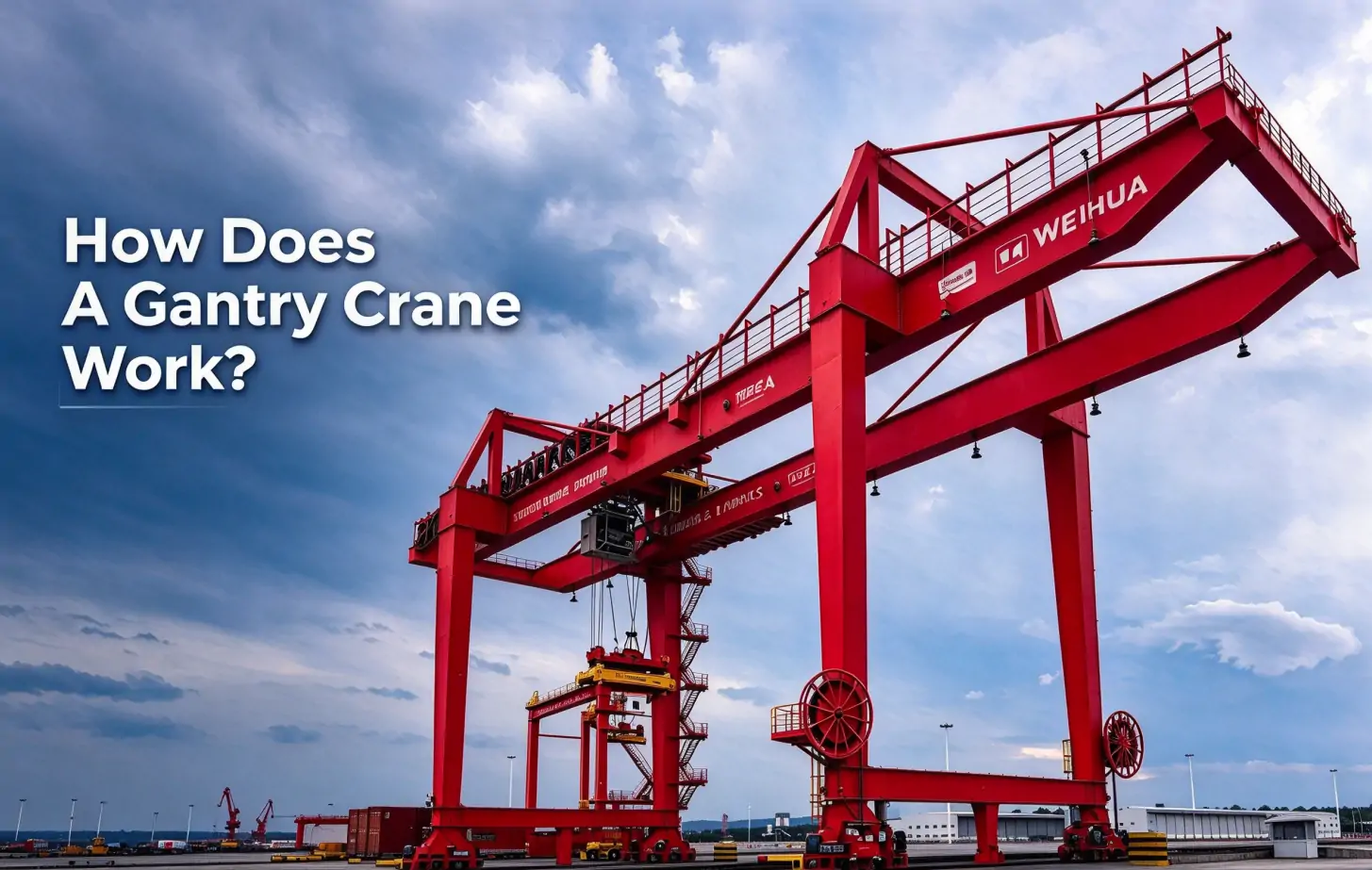
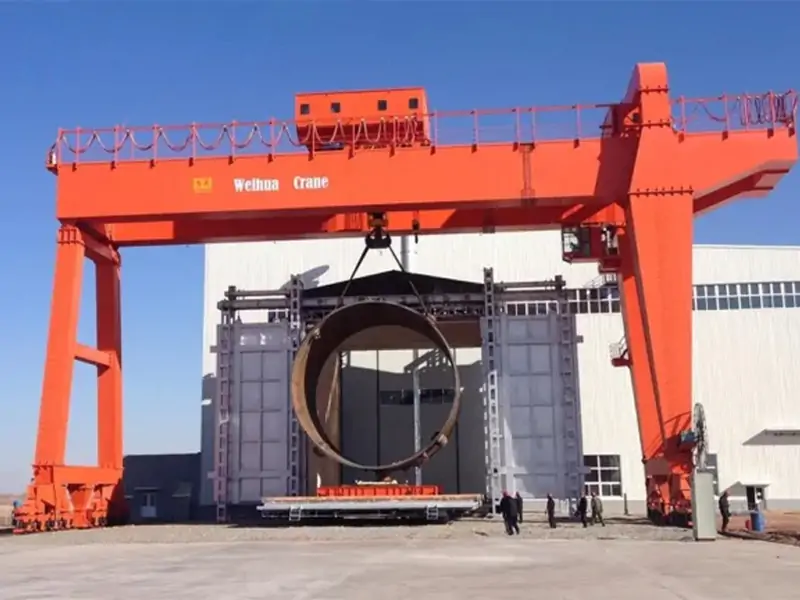
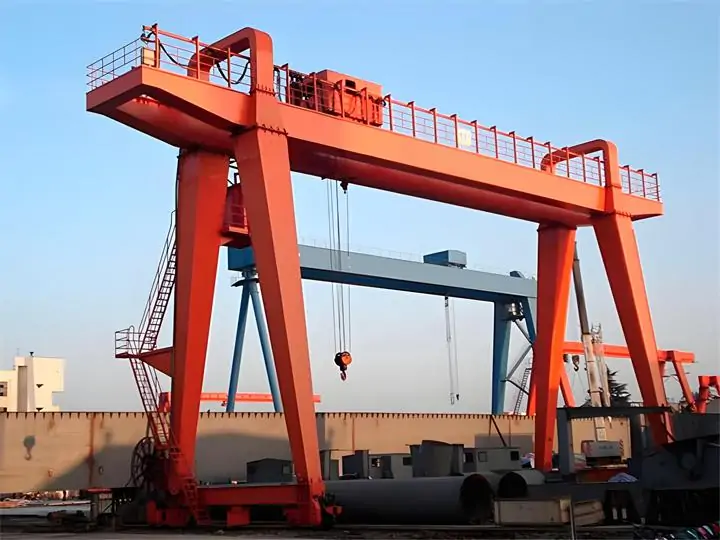
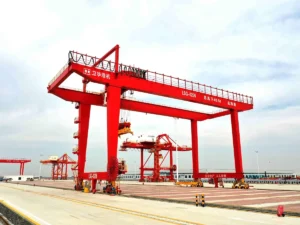
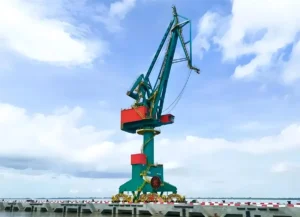
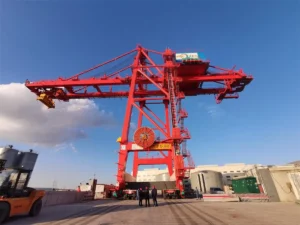
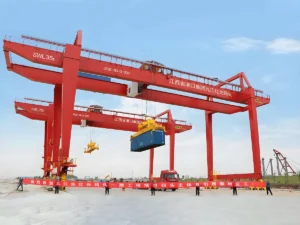
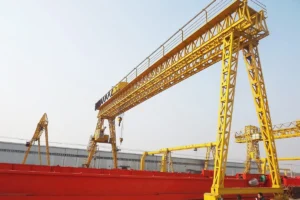
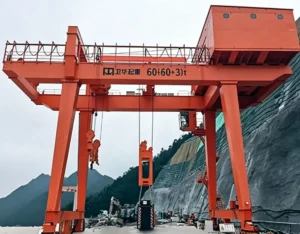
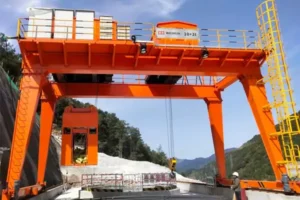
A gantry crane, also called a portal crane or outdoor gantry crane, is a bridge-type lifting crane supported by legs that move along rails or defined travel paths. The crane structure consists of the main girder, legs, trolley, and hoist, with the hoist and trolley working together to lift and position loads.
Unlike mobile lifting equipment, a gantry crane operates within a fixed working area and is designed for repeated lifting and material handling tasks. It provides stable load movement with accurate positioning, making it suitable for manufacturing plants, shipyards, container yards, and outdoor storage areas.
Gantry cranes are widely used for handling heavy components, containers, steel structures, and production materials where lifting routes and operating areas are clearly defined.
- Movement: Travels along rails or fixed travel paths.
- Lifting Method: Uses a hoist system to lift and lower loads vertically.
- Stability: Designed for stable and repeated lifting operations.
- Best For: Suitable for fixed-area material handling and heavy load lifting.
Straddle Carrier Vs Gantry Crane: Key Differences
Straddle carriers and gantry cranes use different handling methods. A straddle carrier combines lifting and transportation, while a gantry crane performs lifting and movement within a fixed working area. The right choice depends on site layout, handling frequency, load requirements, and operation methods.
| Comparison | Straddle Carrier | Gantry Crane |
|---|---|---|
| Working Method | Lifts and transports loads directly. | Lifts and moves loads within the crane coverage area. |
| Mobility | High mobility with self-propelled travel. | Limited to rails or fixed travel paths. |
| Installation | No fixed rail system required. | Requires rails, foundations, or support structures. |
| Best Application | Flexible yard handling and frequent transfers. | Fixed-area lifting and repeated operations. |
| Load Movement | Combines lifting and transportation. | Mainly lifting and horizontal movement. |
| Site Layout | Suitable for changing layouts and flexible routes. | Suitable for planned layouts and fixed zones. |
| Operation Area | Handles loads across multiple locations. | Operates within a defined working area. |
| Ground Requirement | Requires flat and load-bearing ground. | Requires rail foundations or crane support structures. |
| Lifting Height | Limited by frame clearance. | Higher stacking height is available. |
| Stacking Density | Requires wider aisles for movement. | Supports higher-density storage layouts. |
| Transfer Method | Direct pick-and-carry operation. | Usually works with trucks or transfer equipment. |
| Utilization Focus | High handling frequency and route flexibility. | High cycle rate and area coverage. |
- A straddle carrier is suitable for yards where load routes change frequently, and direct transportation is required. It reduces the need for additional transfer equipment but requires wider operating space for movement.
- A gantry crane is better suited for yards with fixed layouts that require high storage density and repeated lifting operations. It provides stable operation within the coverage area but depends on rail systems and permanent installation.
Straddle Carrier Vs Gantry Crane: How Do They Work?
Straddle Carrier Working Process
A straddle carrier completes lifting and transportation through a self-propelled travel system. The equipment moves to the load position, lifts the cargo, transfers it across the yard, and places it at the destination.
Working Process:
- 1. Load Positioning
The straddle carrier moves to the loading area and aligns with the cargo. - 2. Carrier Drives Under Load
The carrier positions its frame around or above the load for lifting. - 3. Lifting
The lifting system raises the cargo to the required transport height. - 4. Transportation
The carrier travels across the yard with the lifted load. - 5. Placement
The carrier lowers the load at the designated location.
During operation, the straddle carrier uses its self-propelled travel system to reach the cargo area. After lifting the load, it moves through the yard and places the cargo at the target position without requiring additional transfer equipment.
Gantry Crane Working Process
A gantry crane uses the hoist, trolley, and travel mechanism to move loads within a fixed operating area.
Working Process:
- 1. Hoist Lifting
The hoist raises the load vertically through the wire rope and hook system. - 2. Trolley Movement
The trolley moves along the main girder to adjust the load position. - 3. Crane Travel
The crane travels along rails to move the load across the working area. - 4. Load Positioning
The crane places the load at the required position with controlled movement.
During operation, the hoist raises or lowers the load, the trolley moves along the main girder, and the crane travels along rails to position the load accurately. This working method is suitable for repeated lifting operations in fixed yards, workshops, and storage areas.
Applications Comparison: When to Choose Each Equipment
Straddle carriers and gantry cranes serve different handling requirements. The selection depends on load movement needs, site layout, operating frequency, and whether the operation requires flexible transportation or fixed-area lifting.
Straddle Carrier Applications
A straddle carrier is suitable for operations that require frequent load transfer between different locations. It combines lifting and transportation functions, making it effective for open yards with flexible handling routes.
| Application | Reason |
|---|---|
| Container Yards | Provides flexible container movement between storage areas and transfer points. |
| Precast Yards | Handles long beams, concrete components, and large precast structures. |
| Steel Yards | Transports oversized steel structures and heavy components across the yard. |
| Heavy Equipment Transport | Combines lifting and movement for direct load transfer. |
Gantry Crane Applications
A gantry crane is designed for fixed working areas that require repeated lifting operations. It provides stable load handling for production, storage, and heavy-duty applications.
| Application | Reason |
|---|---|
| Manufacturing Plants | Supports repeated lifting of materials and production components. |
| Warehouses | Fits fixed material flow and organized storage operations. |
| Shipyards | Handles heavy ship components and large structures. |
| Storage Yards | Provides accurate positioning and efficient stacking within the working area. |
Straddle carriers are preferred for flexible yard operations that require frequent transportation between locations, while gantry cranes are better suited for fixed areas with repeated lifting and high positioning requirements. The right choice depends on the site layout, load handling method, and operation needs.
Straddle Carrier Vs Gantry Crane: Which One Should You Choose?
The choice between a straddle carrier and a gantry crane depends on how loads move, how the site is arranged, and the required handling method. A straddle carrier is suitable for flexible transportation, while a gantry crane is designed for stable lifting operations in fixed areas.
Choose Straddle Carrier:
- Loads need frequent movement between different areas.
- The site layout changes frequently or requires flexible travel routes.
- No fixed crane runway or permanent crane foundation is available.
- Lifting and transportation need to be completed in one operation.
Choose Gantry Crane:
- Operations are carried out within a fixed working area.
- Loads follow regular movement routes and handling procedures.
- High lifting stability and accurate positioning are required.
- The long-term production or storage layout has been confirmed.
For projects with changing handling requirements, a straddle carrier provides greater mobility. For planned yards requiring repeated lifting and high-density storage, a gantry crane offers more suitable performance. The final selection should match the actual load conditions, site structure, and operation requirements.
Cost Comparison Between Straddle Carrier and Gantry Crane
The cost difference between a straddle carrier and a gantry crane mainly comes from equipment investment, infrastructure, operation, and maintenance requirements.
1. Equipment Purchase Cost
- Straddle Carrier: Integrates lifting, traveling, and steering systems in one unit. The purchase cost is higher than some basic gantry cranes, but no additional transport vehicles are required.
- Gantry Crane: The price depends on crane type, capacity, span, and configuration. Rail-mounted and rubber-tired gantry cranes require different levels of equipment investment.
2. Infrastructure Cost
- Straddle Carrier: Runs on rubber tires and does not need rails or permanent foundations. The site requires a flat and load-bearing surface.
- Gantry Crane: Requires rail systems, foundations, or supporting structures. Civil construction costs are higher for rail-mounted configurations.
3. Operation and Energy Cost
- Straddle Carrier: Supports electric or diesel power options. It completes lifting and transportation in one operation, reducing the need for additional transfer equipment.
- Gantry Crane: Works efficiently within a fixed area. Load transfer outside the crane range usually requires trucks or other transport equipment.
4. Maintenance and Labor Cost
- Straddle Carrier: Main maintenance items include tires, steering systems, hydraulic components, and drive units. One operator can complete lifting and transfer tasks.
- Gantry Crane: Maintenance covers structure, wheels, rails, electrical systems, and travel mechanisms. Rail condition and alignment require regular inspection.
5. Long-Term Use
- Straddle Carrier: Suitable for yards with changing layouts and frequent load transfers. The equipment can be moved between operating areas.
- Gantry Crane: Suitable for fixed yards with continuous handling requirements. It provides stable operation for planned storage and production layouts.
Straddle carriers focus on flexible transportation with lower site requirements. Gantry cranes focus on fixed-area lifting with higher storage efficiency. Equipment selection should match the load type, yard layout, and handling process.
Conclusion
Straddle carriers focus on mobile lifting and flexible transportation, while gantry cranes focus on stable lifting within a defined working area. The right choice depends on load characteristics, site layout, handling frequency, and future operation requirements.
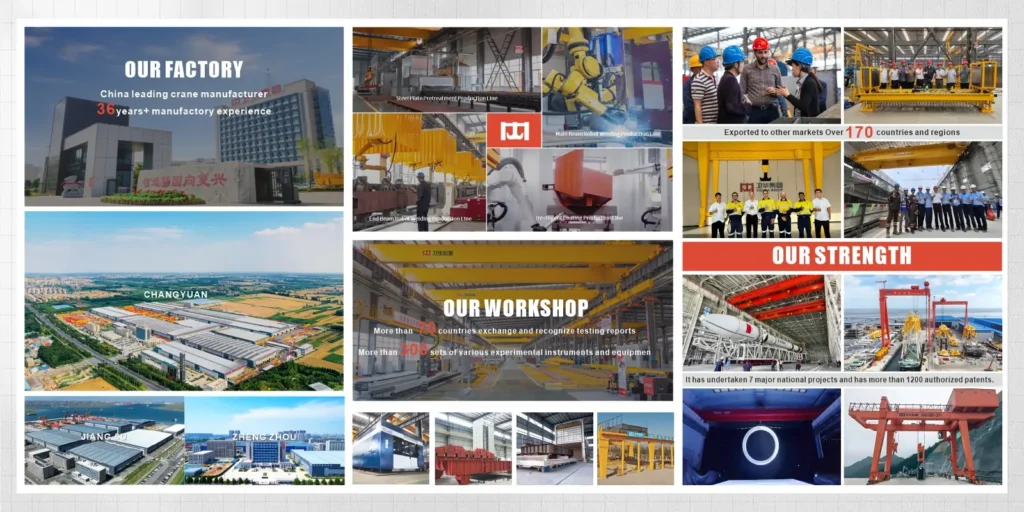
WEIHUA is a manufacturer and supplier of heavy lifting equipment, providing customized solutions for different material handling applications. Based on site conditions, load requirements, and operation processes, WEIHUA offers professional equipment selection guidance and customized crane designs.
With export experience, engineering teams, production capabilities, and after-sales support, WEIHUA serves customers in ports, manufacturing plants, storage yards, and other heavy handling industries. Contact us for a suitable lifting solution based on your project requirements.
FAQ
What is the difference between a straddle carrier and a gantry crane?
A straddle carrier is a mobile lifting machine that combines lifting and transportation. A gantry crane operates in a fixed area using a hoist, trolley, and travel system. The main difference is mobility, installation requirements, and handling method.
Is a straddle carrier better than a gantry crane?
Neither equipment is better for every application. Straddle carriers suit flexible transportation and changing layouts, while gantry cranes fit fixed yards requiring repeated lifting, stable operation, and higher stacking efficiency.
Can a straddle carrier replace a gantry crane?
A straddle carrier can replace a gantry crane in applications requiring mobile lifting and direct load transfer. However, gantry cranes remain suitable for fixed storage areas, high-frequency lifting, and operations requiring precise load positioning.
Which equipment is better for container handling?
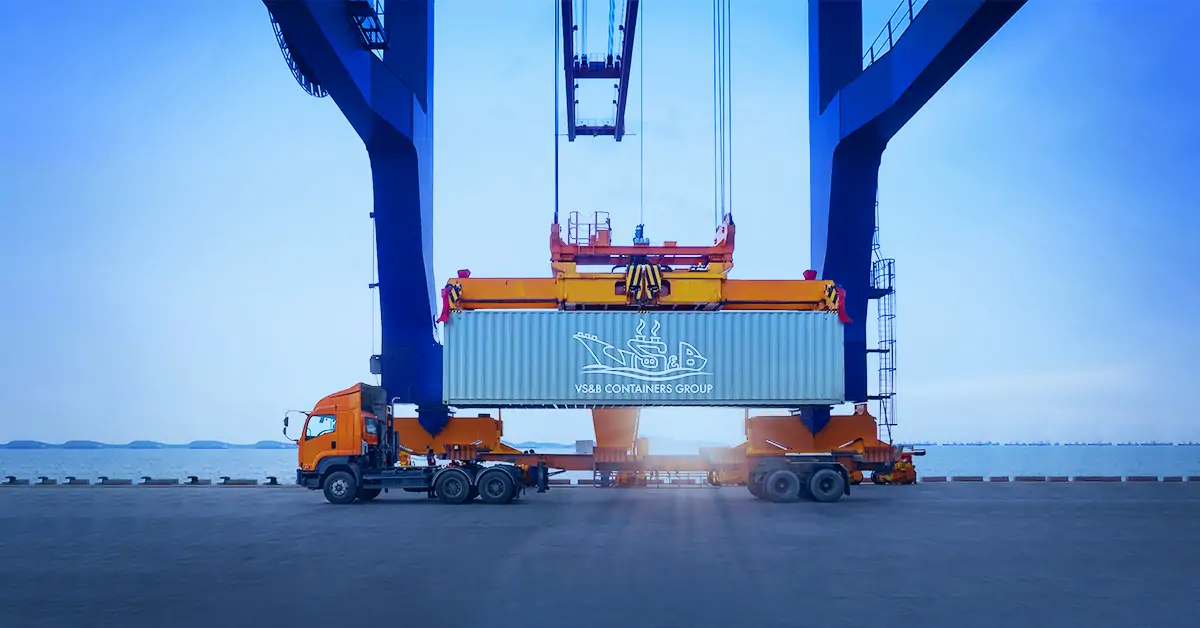
Both equipment types are used for container handling. Straddle carriers are suitable for container transfer and yard movement, while gantry cranes are commonly used for container stacking, storage management, and fixed terminal operations.
Which equipment requires less installation work?
A straddle carrier requires less installation because it operates on rubber tires without rail systems or permanent foundations. A gantry crane usually requires rail installation, foundations, or supporting structures before operation.
Are straddle carriers suitable for industrial yards?
Yes. Straddle carriers are suitable for industrial yards where loads require frequent movement between different areas. They are commonly used for precast components, steel structures, containers, and heavy equipment transportation.
Are gantry cranes better for heavy loads?
Gantry cranes are suitable for heavy loads that require stable lifting in fixed areas. They can be customized with different capacities, spans, and lifting heights for shipyards, manufacturing plants, and storage yards.
How do I choose between a straddle carrier and a gantry crane?
Choose based on load requirements, site layout, handling frequency, travel distance, and operation plans. Straddle carriers fit flexible transport needs, while gantry cranes fit fixed-area lifting with regular handling routes.