Marine Travel Lift Price: Complete Cost Guide for Buyers
Table of Contents
Introduction
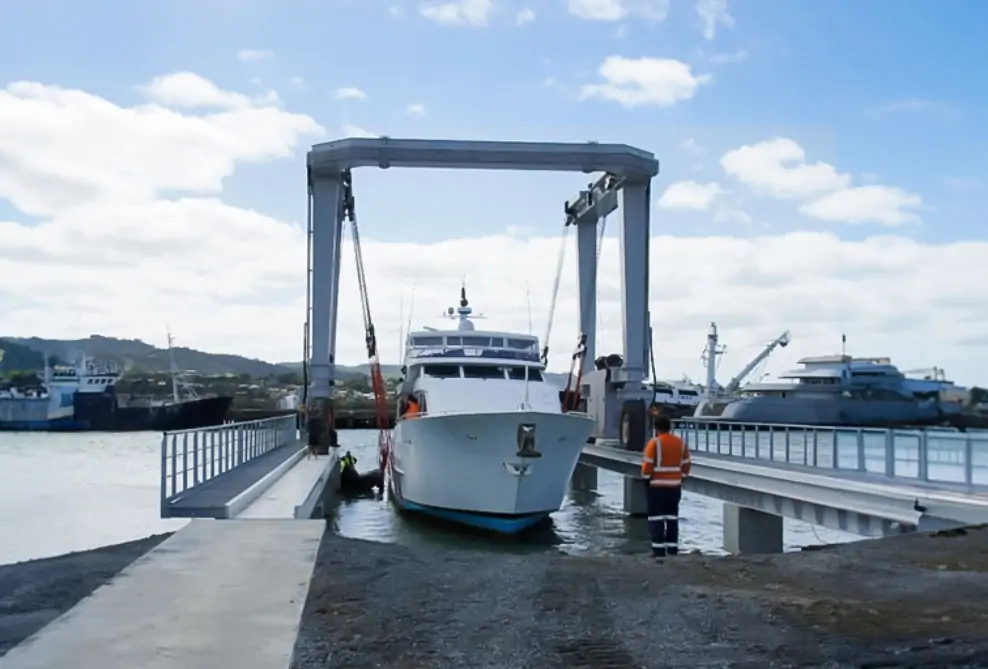
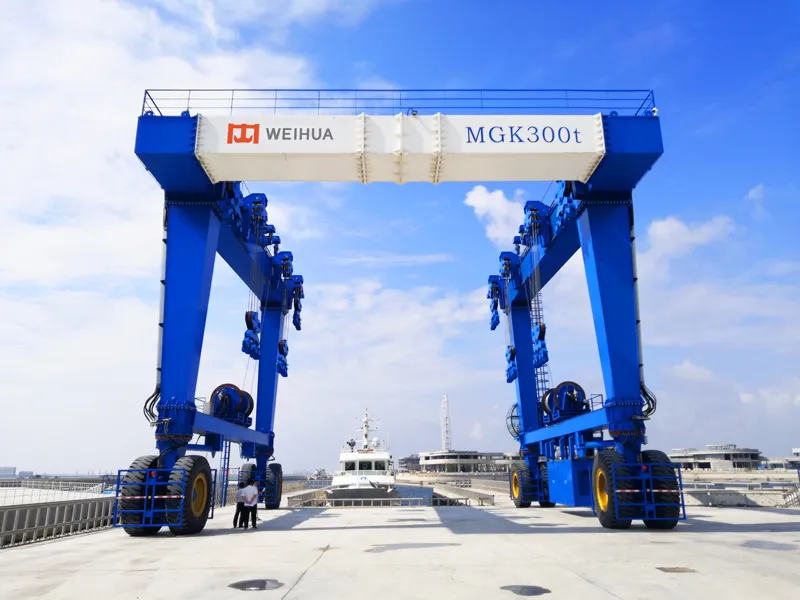
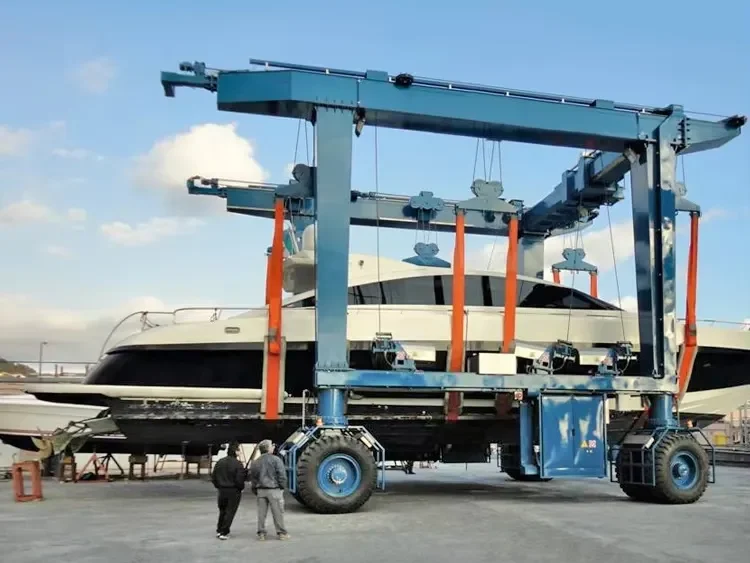
Marine travel lift prices typically range from USD 80,000 to USD 1,200,000+, depending on lifting capacity, span width, wheel system, power configuration, and site customization.
Small-capacity models for marinas and boat repair yards are generally priced between USD 80,000 and USD 300,000, while medium to large travel lifts for commercial shipyards commonly range from USD 300,000 to USD 800,000. For heavy-duty customized systems above 300 tons, the total price can exceed USD 1,200,000. Beyond lifting capacity, the final cost is also influenced by factors such as lifting height, travel width, tire quantity, electric or diesel drive systems, and site-specific customization requirements. Below, we will analyze the key pricing factors in detail to help buyers make an informed purchasing decision.
How Much Does a Marine Travel Lift Cost?
Marine travel lift prices typically range from USD 80,000 to USD 1,200,000+, depending on lifting capacity, span width, drive system, and customization requirements. For most buyers, the fastest way to estimate budget is to compare price ranges by tonnage. The table below provides a practical market reference for common capacity options.
Capacity
Typical Span Width
Suitable Vessel Type
Reference Price Range (USD)
25 Ton
6–8 m
Small boats, fishing vessels
80,000 – 120,000
50 Ton
7–10 m
Yachts, speedboats
120,000 – 220,000
100 Ton
8–12 m
Medium yachts, work boats
280,000 – 380,000
150 Ton
10–14 m
Tugboats, service vessels
380,000 – 500,000
200 Ton
12–16 m
Large yachts, patrol boats
500,000 – 650,000
300 Ton
14–18 m
Commercial vessels, barges
650,000 – 850,000
500 Ton+
18–25 m
Shipyard heavy-duty lifting
900,000 – 1,200,000+
These prices are intended as a general purchasing reference. The final quotation may vary based on factors such as lifting height, steering mode, wheel quantity, electric or diesel drive, anti-corrosion treatment, and site-specific customization. In most projects, customized configurations can increase the total investment by 10% to 30% compared with the standard model.
For buyers planning a new marina or shipyard project, it is recommended to first confirm the maximum vessel weight, beam width, and daily lifting frequency, as these directly affect the most suitable tonnage and final budget.
Marine Travel Lift Price by Capacity: How to Choose the Right Tonnage?
Marine travel lift pricing is primarily determined by lifting capacity, but the right tonnage should be selected based on vessel size, daily handling frequency, and future business growth. Choosing too small a capacity may limit operations and increase safety risks, while oversizing can lead to unnecessary investment.
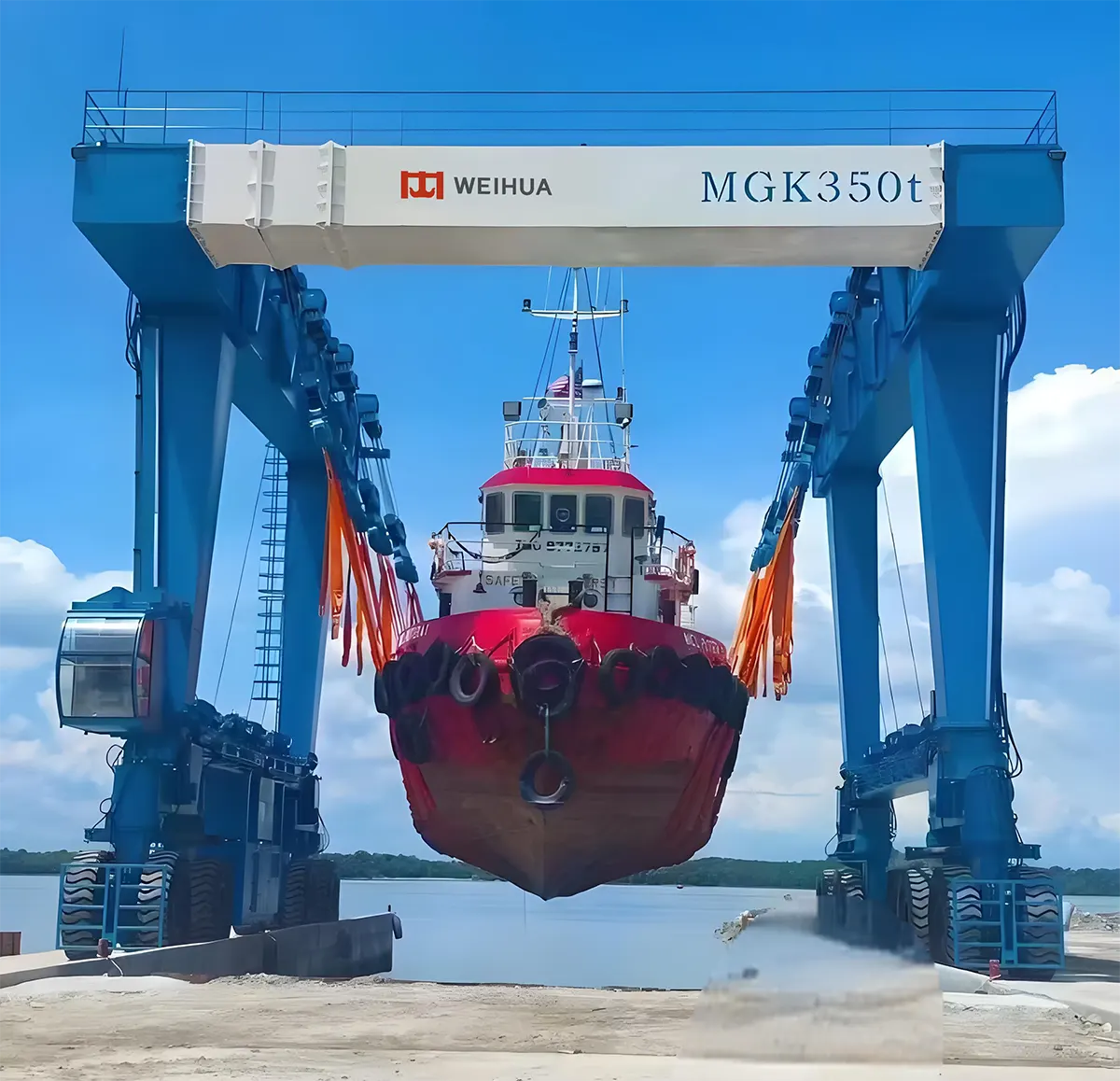
As a practical reference, small marinas and service yards typically choose 50-ton models, medium repair facilities often prefer 100-ton units, while commercial shipyards usually require 300 tons or above. Large vessel construction projects may need 500-ton travel lifts or higher.
Below is a quick guide to common capacity ranges, typical applications, and estimated price levels.
50 Ton Marine Travel Lift
Suitable for small marinas, yacht clubs, and maintenance workshops handling leisure boats and small yachts.
Application: small boat storage and repair
Typical vessel size: up to 40–60 ft
Estimated price: USD 80,000–150,000
Best for: budget-conscious buyers and light-duty operations
100 Ton Marine Travel Lift
A common choice for medium-sized boatyards and repair facilities serving mixed vessel types.
Application: yacht service and fishing vessel maintenance
Typical vessel size: 60–100 ft
Estimated price: USD 150,000–280,000
Best for: growing marine service businesses
300 Ton Marine Travel Lift
Designed for commercial shipyards and heavy-duty vessel handling projects.
Application: large yacht transfer and shipyard production
Typical vessel size: 100–180 ft
Estimated price: USD 450,000–700,000
Best for: frequent heavy-load operations
500 Ton and Above
Best suited for large shipbuilding yards and industrial marine projects.
Application: commercial vessel construction and offshore projects
Estimated price: USD 700,000–1,200,000+
Best for: high-capacity long-term investment
Selection Tip
As a general rule, choose a travel lift with 20–30% higher capacity than your maximum vessel weight. This provides a safer operating margin and allows room for future expansion.
What Affects Marine Travel Lift Price?
Marine travel lift pricing is influenced by far more than the lifting capacity shown on the specification sheet. In real purchasing scenarios, two units with the same tonnage can have noticeably different quotations because project requirements, yard conditions, and configuration choices all affect the final cost. For example, a standard 100-ton model may start around USD 300,000, while a fully customized version for a commercial shipyard can be significantly higher. To estimate a realistic budget, buyers need to look at the main cost factors behind the equipment price.
1. Lifting Capacity
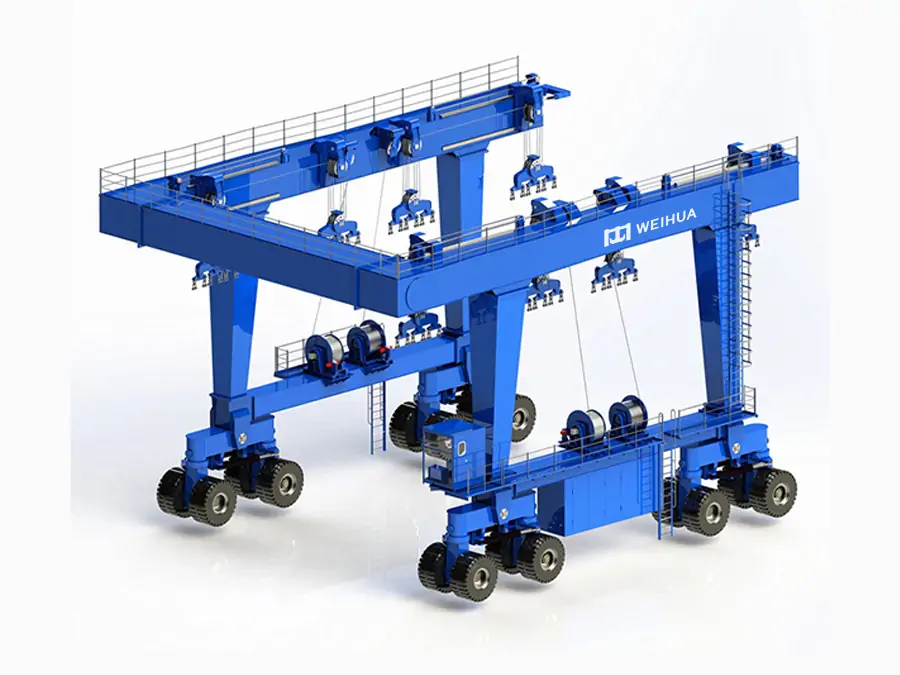
Capacity is usually the first factor that affects price. As the rated tonnage increases, the lift requires a stronger steel frame, larger wheel assemblies, a more powerful hydraulic system, and higher-grade safety components. A 50-ton model is typically much more affordable than a 200-ton or 300-ton unit, simply because the material and engineering requirements increase substantially.
2. Span Width and Lifting Height
The overall dimensions of the travel lift also have a direct impact on cost. Wider span widths are needed for larger yachts, catamarans, or vessels with greater beam width, while higher lifting clearance may be required for maintenance and launching operations. More width and height mean more steel usage, stronger structural support, and additional stability considerations, all of which raise manufacturing costs.
3. Wheel System and Steering Configuration
The wheel system is another major pricing factor. Basic models usually come with standard multi-wheel steering, while high-end configurations may include 90-degree steering, diagonal travel, or all-wheel synchronized movement for better maneuverability in confined shipyard spaces. The more flexible the steering system, the higher the equipment cost tends to be.
4. Power and Drive System
Buyers also need to consider whether the lift uses an electric or diesel drive system. Diesel-powered units often have a lower initial purchase cost and are suitable for outdoor yards without stable power supply. Electric models generally cost more upfront but are often preferred by modern marinas because of lower long-term operating and maintenance costs.
5. Site Customization and Project Requirements
Site-specific customization can significantly affect the final quotation. Factors such as corrosion-resistant coating for saltwater environments, non-standard voltage, lifting speed requirements, anti-sway protection, and local safety compliance may all add to the total investment. In many cases, customized solutions can increase the base price by 10% to 30%, depending on the project.
Weihua Cases Show
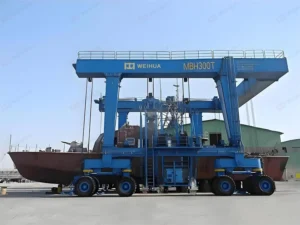
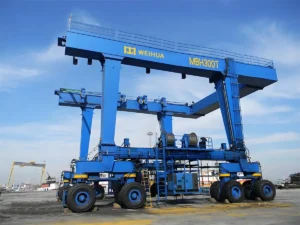
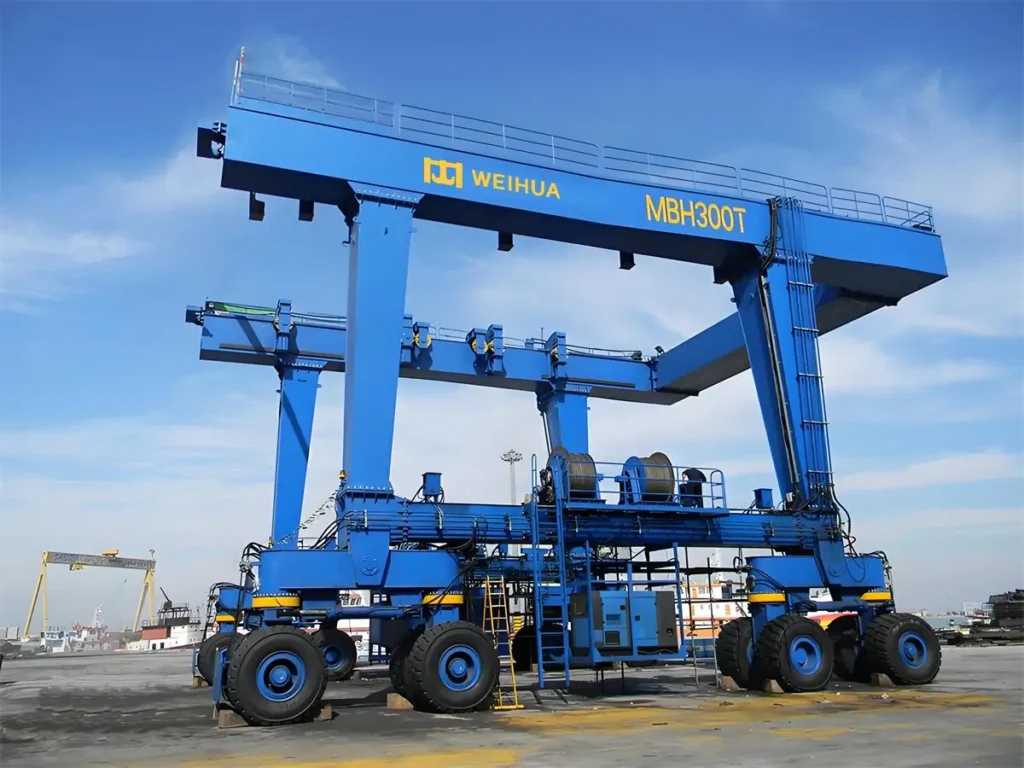
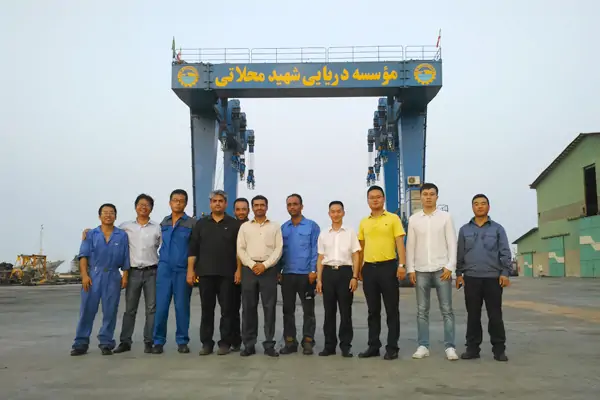
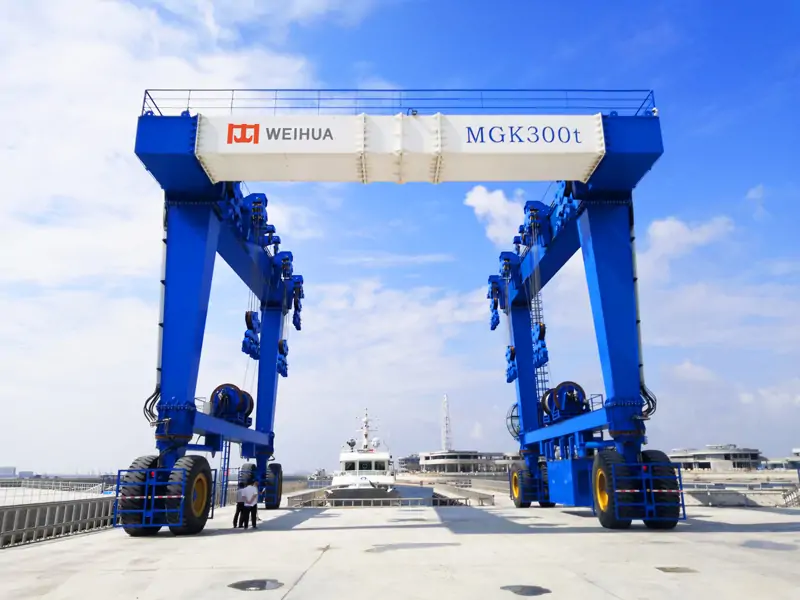
300T Boat and Yacht Handling Crane Delivered in Iran for Shipyard Expansion
In April 2017, our 300-ton boat lifting gantry crane was successfully commissioned at a shipyard in Bushehr, Iran, supporting the customer’s yard expansion and vessel handling upgrade.
The installation significantly enhanced boat transfer efficiency, increased overall yard throughput, and made better use of the available workspace for larger yacht and vessel operations.
Choosing the right marine travel lift is not only about price, but also about matching the lifting capacity, vessel size, yard layout, and long-term operational needs. From 50-ton marina applications to 500-ton shipyard projects, understanding the cost range and key pricing factors helps buyers make a more informed investment decision.
At Weihua, we provide customized marine travel lift solutions for marinas, yacht service centers, and commercial shipyards worldwide. With extensive project experience, reliable engineering support, and tailored configurations, we help clients find the right equipment for both performance and budget.
If you need a latest marine travel lift price, capacity recommendation, or custom quotation for your project, feel free to contact Weihua’s team for expert advice and a fast quote.
FAQ
1. What is the average marine travel lift price?
Marine travel lift prices typically range from USD 80,000 to over USD 1,200,000, depending on lifting capacity, span width, wheel steering system, and custom requirements. Small marina models cost less, while shipyard-grade units are significantly higher.
2. How much does a 100 ton marine travel lift cost?
A 100-ton marine travel lift usually costs around USD 150,000–280,000. The final price depends on lifting height, wheel configuration, power system, and whether installation or operator training is included.
3. How do I choose the right lifting capacity?
As a general rule, select a travel lift with 20–30% more capacity than your maximum vessel weight. This provides a safe lifting margin and allows room for future vessel size upgrades.
4. Is installation included in the quoted price?
This depends on the supplier. Some quotes cover equipment only, while others include shipping, on-site installation, commissioning, and load testing. Buyers should always confirm the quotation scope before purchase.
5. What factors have the biggest impact on price?
The main cost drivers are lifting capacity, span width, lifting height, steering system, and corrosion protection level. For example, a customized 300-ton unit may cost 30–50% more than a standard model.
6. How long is the delivery time?
For standard models, production usually takes 45–90 days. Large customized marine travel lifts, especially above 300 tons, may require 90–150 days, depending on design complexity and shipping schedule.
7. What is the annual maintenance cost?
Annual maintenance typically accounts for around 3–5% of the equipment value, including tires, hydraulic systems, lifting belts, and regular safety inspections.
8. Can the travel lift be customized for my shipyard?
Yes. Most suppliers offer customization based on vessel beam, lifting route, yard width, climate conditions, and local safety standards, ensuring the equipment fits your actual operating environment.
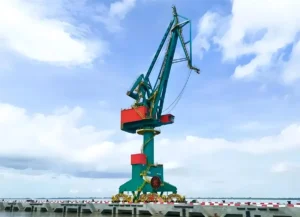
Product Introduction A Portal Slewing Crane, also known as a Port Portal Crane or Portal Boom Crane, is a heavy-duty lifting solution designed for quay operations, bulk cargo handling, and container transfer. Featuring a portal gantry structure with a 360° slewing mechanism, it provides wide working coverage and high operational efficiency in busy port environments. We provide fully customized designs, including lifting capacity, outreach, lifting height, rail span, working class, and power systems to meet your specific port operation requirements. Video Play Below are actual application examples of our Port Cargo Handling Cranes in multiple ports. Click to view. Customized Spreaders The selection of lifting attachments for Portal Slewing Cranes offers versatility and can be changed according to different materials and requirements, meeting the diverse needs for bulk cargo, general cargo, containers, and other materials. When selecting attachments, comprehensive consideration must be given to the physical characteristics of the material (shape, dimensions, weight, material composition), packaging form, and handling efficiency. Below are the commonly used lifting attachments for Portal Slewing Cranes and their descriptions: Hooks Single-hook and double-hook types are…
Product Introduction Boat Lifting Crane, also known as Boat Hoist, Marine Travel Lift, or Yacht Lifter, is a specialized piece of equipment designed for lifting, moving, and launching boats. It is widely used in yacht marinas, shipyards, ship repair bases, and maritime service centers. Typically featuring a gantry structure, hydraulic transmission, and an adjustable sling system, it provides flexible support tailored to the hull shape, enabling safe and stable handling of various types of boats. Port Boat Handling Cranes offer lifting capacities ranging from 10 to 1200 tons, spans from 6 to 20 meters, customizable lifting heights, and a choice of wheeled or rail-mounted travel systems. Characterized by high load-bearing capacity, stable operation, compact turning radius, and broad vessel compatibility, they support the entire lifecycle of vessels—including launching/retrieval, dry dock maintenance, hull refurbishment, servicing, and transfer operations. We offer multiple Boat Lifting Crane variants, including standard, wide-span, heavy-duty, energy-efficient models, and fully customizable solutions tailored to vessel length, beam, weight, and dock layout. Contact our team for bespoke designs and technical support. Please view this article for details: Types of…
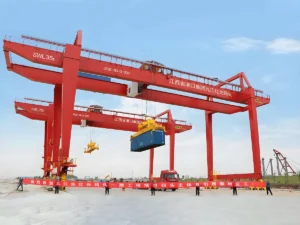
Product Introduction A Rail Mounted Container Gantry Crane (RMG Crane) is a high-efficiency container-handling crane operating on fixed rails, widely used in container yards, intermodal terminals, and logistics hubs for stacking, transferring, and loading/unloading ISO containers. Designed for intensive, continuous operations, RMG cranes deliver stable performance, high positioning accuracy, and exceptional yard utilization. Weihua’s Rail-Mounted Container Gantry Crane strictly adheres to the latest domestic and international standards including FEM, DIN, IEC, AWS, and GB in its design, manufacturing, and inspection processes. The equipment offers advantages such as multifunctionality, high efficiency, stable and reliable operation, and extensive coverage. It also provides greater convenience in usage, maintenance, and upkeep, delivering sustained and efficient operational capabilities for container yards. We customize every key parameter, including span, lifting height, stacking layers, hoisting capacity, rail gauge, operation mode, power supply system, and intelligent automation functions such as anti-sway, auto-positioning, remote control, and container recognition. If you are planning a new container yard or upgrading existing equipment, contact our technical team for a tailored proposal. We will provide professional engineering consultation, precise layout matching, and a…
Product Introduction Rubber Tyred Gantry RTG Cranes offer exceptional mobility and are designed for high-intensity yard operations, providing high productivity and stable performance. It features an advanced control system that enables precise positioning and minimizes sway, ensuring safer loading and unloading of containers or oversized cargo. RTG cranes offer various options, including diesel, hybrid, or fully electric drive systems, helping operators reduce fuel consumption and operating costs while maintaining reliable lifting capabilities and a long service life. Rubber Tyred Gantry Cranes are widely used across container terminals, railway hubs, logistics centres, and industrial storage yards, supporting both standard container transport and heavy-duty material handling. To meet different yard layouts and operational requirements, we offer full customization, including span width, lifting height, wheel configuration, stacking layers, power system, and intelligent control options. Our engineering team can tailor an RTG crane to your site conditions and boost your overall yard efficiency. Related gantry cranes used in ports and terminals also include: Container Handling Gantry Crane Solutions for Ports and Terminals, and Rail Mounted Container Gantry Crane. RTG cranes come in a variety…
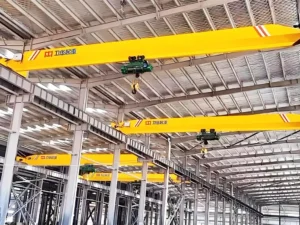
Product Introduction Single Girder Overhead Traveling Crane also known as Single Girder EOT Crane, features a compact structure, light weight, and low wheel load, making it an ideal choice for locations requiring high operational efficiency and optimized building space. Its design combines a single main girder with a low-headroom hoist, enabling greater lifting height while ensuring structural integrity. The equipment also offers low noise, minimal maintenance, and easy installation. Through optional configurations such as variable frequency drives, anti-sway technology, and intelligent monitoring, this equipment achieves higher lifting efficiency and safer operation while effectively reducing structural loads and operational costs. Widely used in manufacturing, machining, steel structure production, logistics warehousing, automotive, and light industries, it suits diverse scenarios from raw material handling and production line transfers to equipment maintenance. For an in-depth look at single-girder EOT cranes, read the article: What Is a Single-Girder EOT Crane? Customized Hoisting Attachments Lifting Hook Standard universal lifting device suitable for most factory material handling operations. Customizable based on tonnage and structural requirements. Grab Bucket Designed for loading and unloading bulk materials such as sand,…