















Table of Contents
Introduction
Gantry crane parts support the crane’s lifting, traveling, positioning, and safety functions. The configuration varies with crane type and application. Common gantry crane parts include hoists, trolleys, end trucks, wheels, motors, electrical systems, controls, and safety devices. When replacing a part, capacity, span, lifting height, travel speed, and duty class should be checked before selection.
I will cover the main gantry crane parts, their functions, common replacement parts, and selection factors. I will also explain the differences between single girder and double girder configurations, maintenance requirements, and custom part options for different working conditions.
Main Gantry Crane Parts and Their Functions
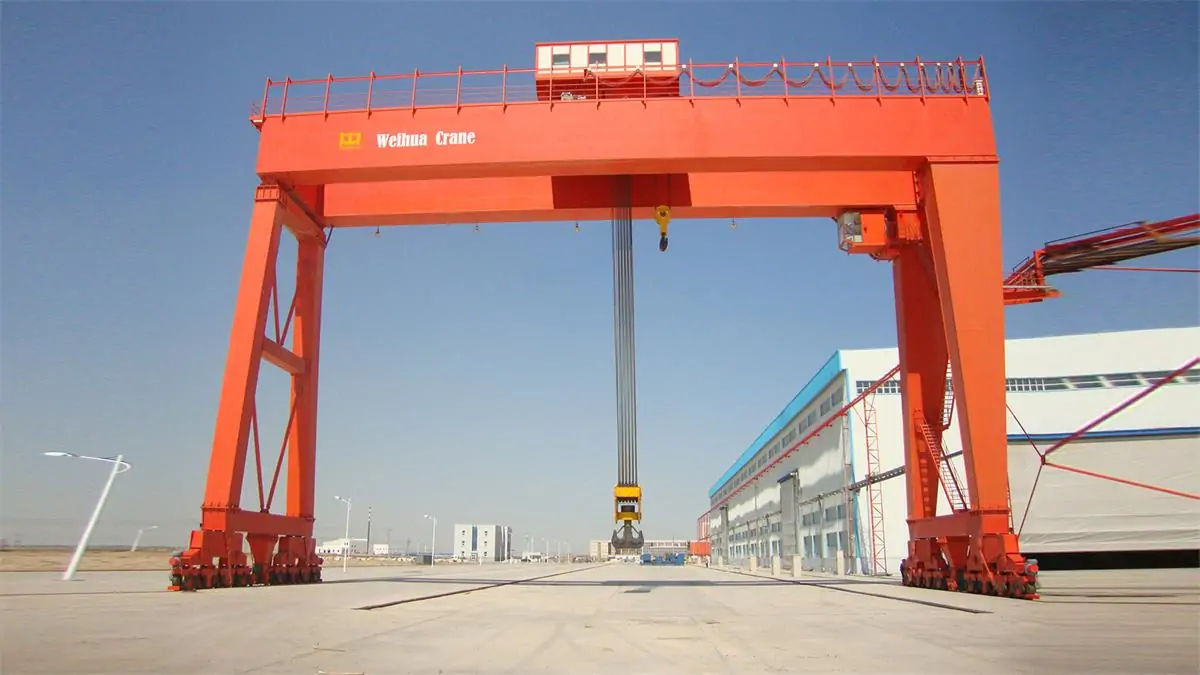
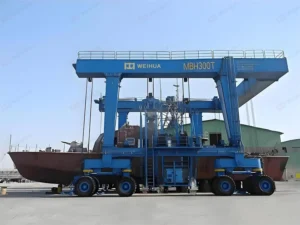
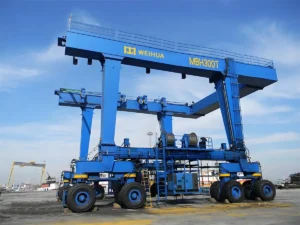
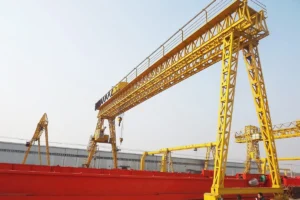
The main gantry crane parts include the main girder, gantry legs, hoist, trolley, end trucks, wheels, motors, electrical system, control system, and safety devices. Each part plays a specific role in load lifting, crane movement, and operation control.
- Main Girder: The main girder is the primary horizontal structure that supports the trolley and lifted load. It transfers the load to the gantry legs and traveling system. Single-girder and double-girder designs are selected according to load capacity, span, lifting height, and duty class.
- Gantry Legs: Gantry legs support the main girder and connect the crane structure with the end trucks. They provide structural stability and clearance for load handling, while withstanding vertical loads, wind forces, impact forces, and travel loads in outdoor applications.
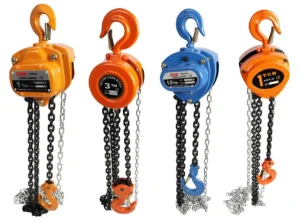
- Hoist: The hoist is the lifting unit used to raise and lower loads. It includes the motor, drum, wire rope or chain, hook, and hook block. Key parameters include lifting capacity, lifting height, speed, duty class, and motor power.
- Trolley: The trolley carries the hoist and moves horizontally along the main girder. It controls the load position across the crane span and includes drive motors, gearboxes, wheels, brakes, and control components.
- End Trucks: End trucks connect the crane structure to the rails and support crane travel. They contain wheels, axles, bearings, drive units, and brakes, transferring the crane load and travel forces to the rail system.
- Gantry Crane Wheels: Gantry crane wheels support the crane weight and guide its movement along the rails. Wheel selection depends on wheel load, rail size, travel speed, and working conditions. Proper wheel and rail matching reduces wear and improves travel stability.
WEIHUA supplies complete gantry crane parts, including structural components, lifting units, travel systems, electrical systems, and customized components for different crane designs and operating conditions.
For information on how the components operate and how the system works, see the article: “How Does a Gantry Crane Work?”
Gantry Crane Parts by Function
Gantry crane parts can be divided into six functional groups: lifting parts, traveling parts, structural parts, electrical parts, control parts, and safety parts. Each group covers components used for load handling, crane movement, structural support, power supply, operation, and protection.
1. Lifting Parts
Lifting parts handle the vertical movement of the load. The main components include:
- Hoist: Provides the lifting and lowering force.
- Lifting motor: Drives the hoisting mechanism.
- Wire rope or chain: Transfers lifting force to the load.
- Drum: Stores and winds the wire rope.
- Hook and hook block: Connect the lifting system to the load.
- Sheaves: Guide the wire rope and form the reeving system.
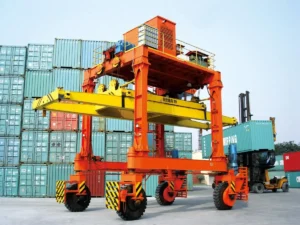
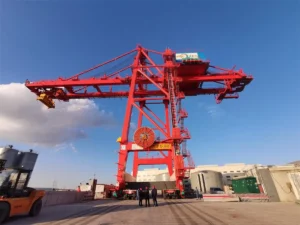
For container gantry cranes, a spreader replaces the conventional hook assembly for lifting 20 ft, 40 ft, or 45 ft containers.
2. Traveling Parts
Traveling parts control crane movement along the runway and trolley movement across the main girder. Common gantry crane traveling parts include:
- End trucks: Support the crane and house the traveling mechanism.
- Wheels: Run on rails and carry the crane load.
- Axles and bearings: Support wheel rotation and load transmission.
- Traveling motors: Provide drive power.
- Gearboxes: Transmit motor torque to the wheels.
- Brakes: Stop and hold the crane or trolley.
Wheel diameter, wheel load, rail size, travel speed, and drive arrangement are key factors in traveling system selection.
3. Structural Parts
Structural parts form the load-bearing frame of the gantry crane. Main components include:
- Main girder: Supports the trolley and lifting load.
- Gantry legs: Support the main girder and connect it to the traveling system.
- Cross beams: Connect and reinforce structural members.
- Platforms: Provide access for inspection and maintenance.
- Ladders: Provide access between working levels.
- Maintenance walkways: Provide access to service points and crane components.
Main girder and leg dimensions are designed according to lifting capacity, span, lifting height, duty class, and operating conditions.
4. Electrical Parts
Electrical parts supply, distribute, and protect power for the crane drives and auxiliary equipment. Common components include:
- Power supply system
- Electrical cabinets
- Cable reels
- Festoon systems
- Contactors
- Circuit protection devices
- Limit switches
The power supply can use conductor rails, cable reels, or other systems based on crane design and site conditions.
5. Control Parts
Control parts manage lifting, trolley travel, and gantry travel. Common control components include:
- Pendant control: Suitable for close-range manual operation.
- Radio remote control: Allows operation away from the crane.
- PLC: Controls crane sequences and motion logic.
- Control panel: Provides local operation and status indication.
- Variable frequency drive (VFD): Controls motor speed and acceleration.
Control system selection depends on crane configuration, operating environment, visibility, travel distance, and automation requirements.
6. Safety Parts
Safety parts limit operating risks and protect the crane, load, and personnel. Common safety devices include:
- Emergency stop: Stops crane operation during an emergency.
- Overload limiter: Limits lifting loads above the rated capacity.
- Hoist limit switch: Controls upper and lower hook travel limits.
- Travel limit switch: Limits trolley and crane travel.
- Anti-collision device: Reduces collision risk between cranes or nearby equipment.
- Audible and visual alarms: Warn personnel during crane movement.
Safety device configuration should match the crane type, operating environment, control system, and applicable safety standards.
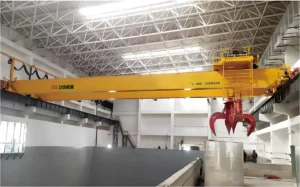
What Parts Are Used in a Double Girder Gantry Crane?
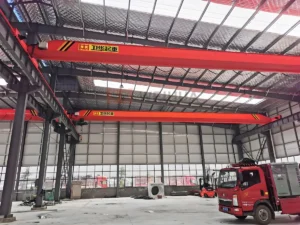
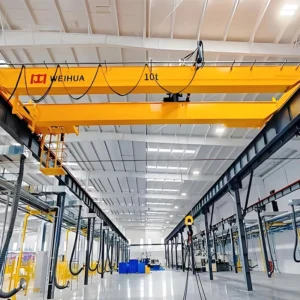
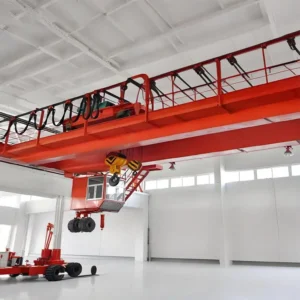
A double girder gantry crane uses two parallel main girders to support the trolley and lifting system.
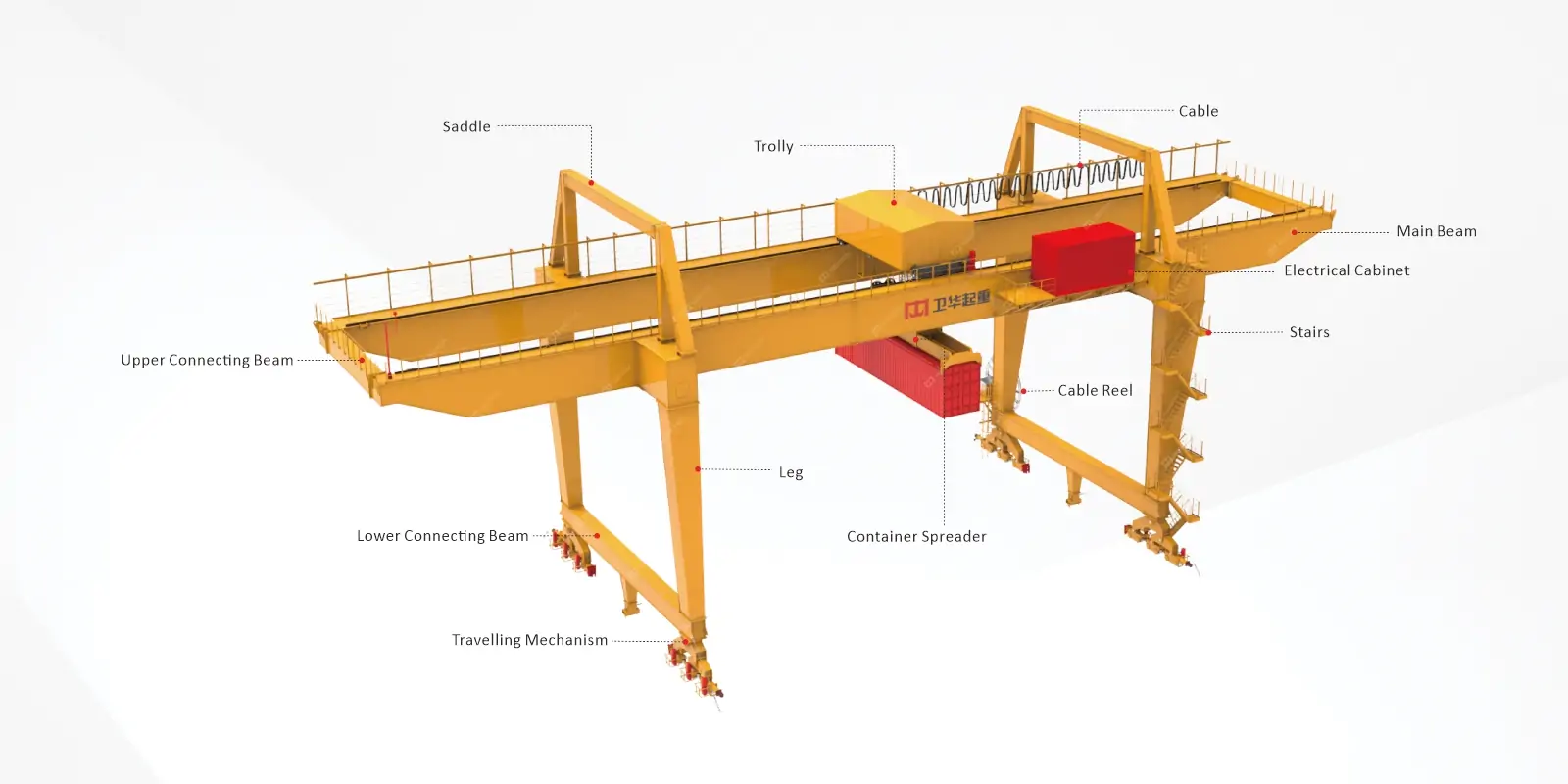
- Two Main Girders: Form the primary load-bearing structure and support the trolley rails. The two-girder design provides the stiffness required for high loads and long spans.
- Heavy-Duty Trolley: Runs along the girder rails and carries the hoist. Trolley configurations vary according to lifting capacity, span, and duty class.
- Wire Rope Hoist: Includes the lifting motor, gearbox, drum, wire rope, hook block, and related lifting components. A spreader can replace the hook system for container handling.
- End Trucks: Connect the main girders and gantry legs to the traveling system. The assembly includes wheels, axles, bearings, drive units, and brakes.
- Traveling Wheels: Carry the crane load and move the crane along the runway rails. Wheel arrangement depends on crane capacity, wheel load, rail design, and drive configuration.
- Traveling Drive System: Consists of travel motors, gearboxes, brakes, and drive units. The system controls crane travel speed, acceleration, and braking.
- Electrical System: Includes the power supply system, electrical cabinet, cable system, switching components, and protection devices. Power can be supplied through conductor rails, cable reels, or other site-specific systems.
- Control System: Controls hoisting, trolley travel, and gantry travel. Pendant controls, radio remote controls, PLCs, and VFDs are common configurations.
- Safety Devices: Include emergency stops, overload limiters, hoist and travel limit switches, and anti-collision devices.
Double girder gantry cranes are used for higher lifting capacities, longer spans, and heavy-duty operating conditions. The two-girder structure provides higher structural stiffness and supports heavier trolley and lifting systems.
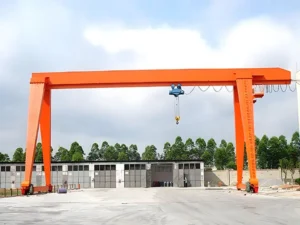
What Parts Are Used in a Single Girder Gantry Crane?
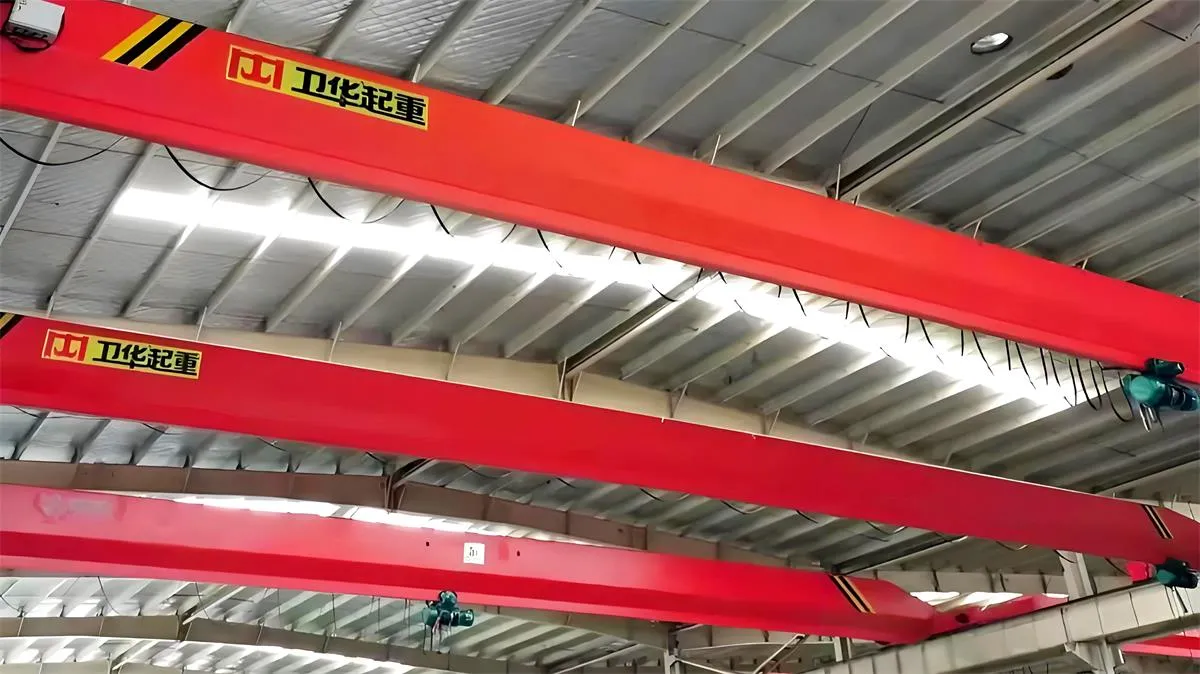
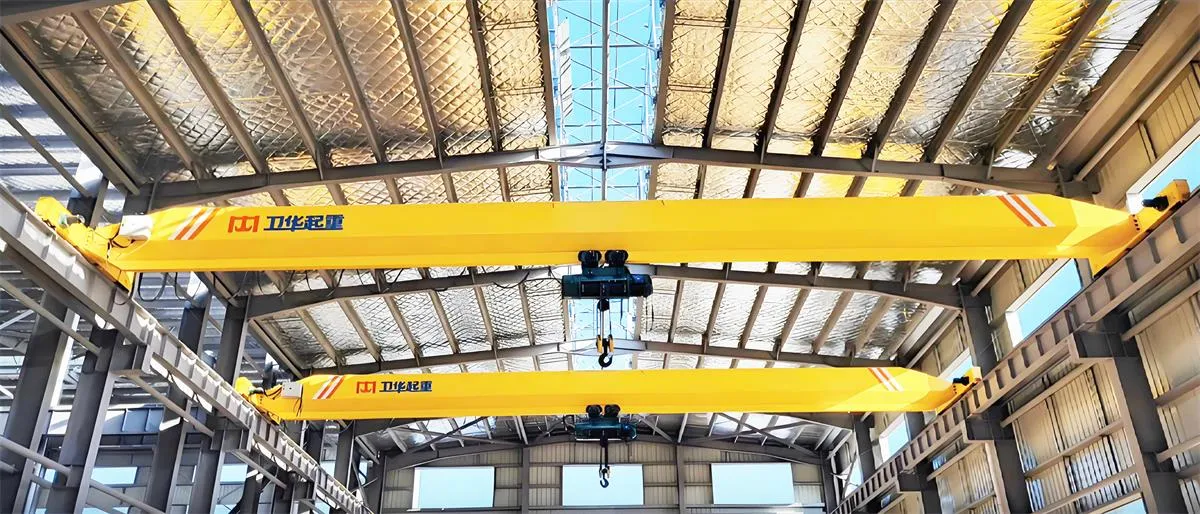
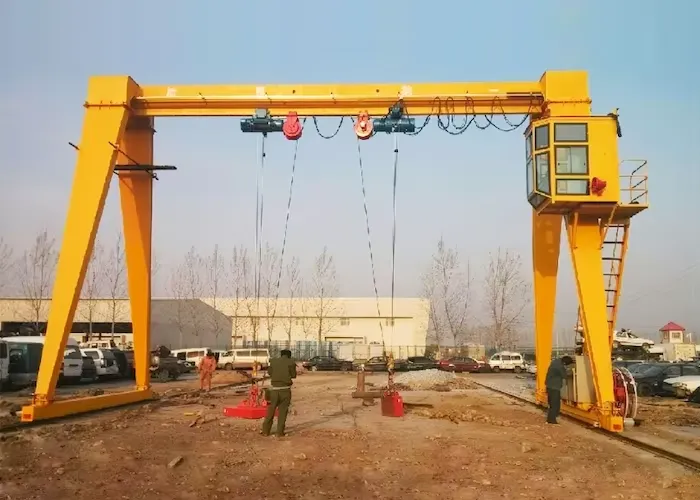
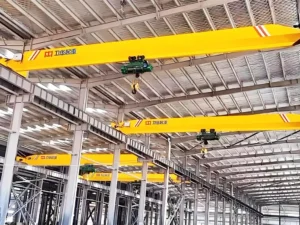
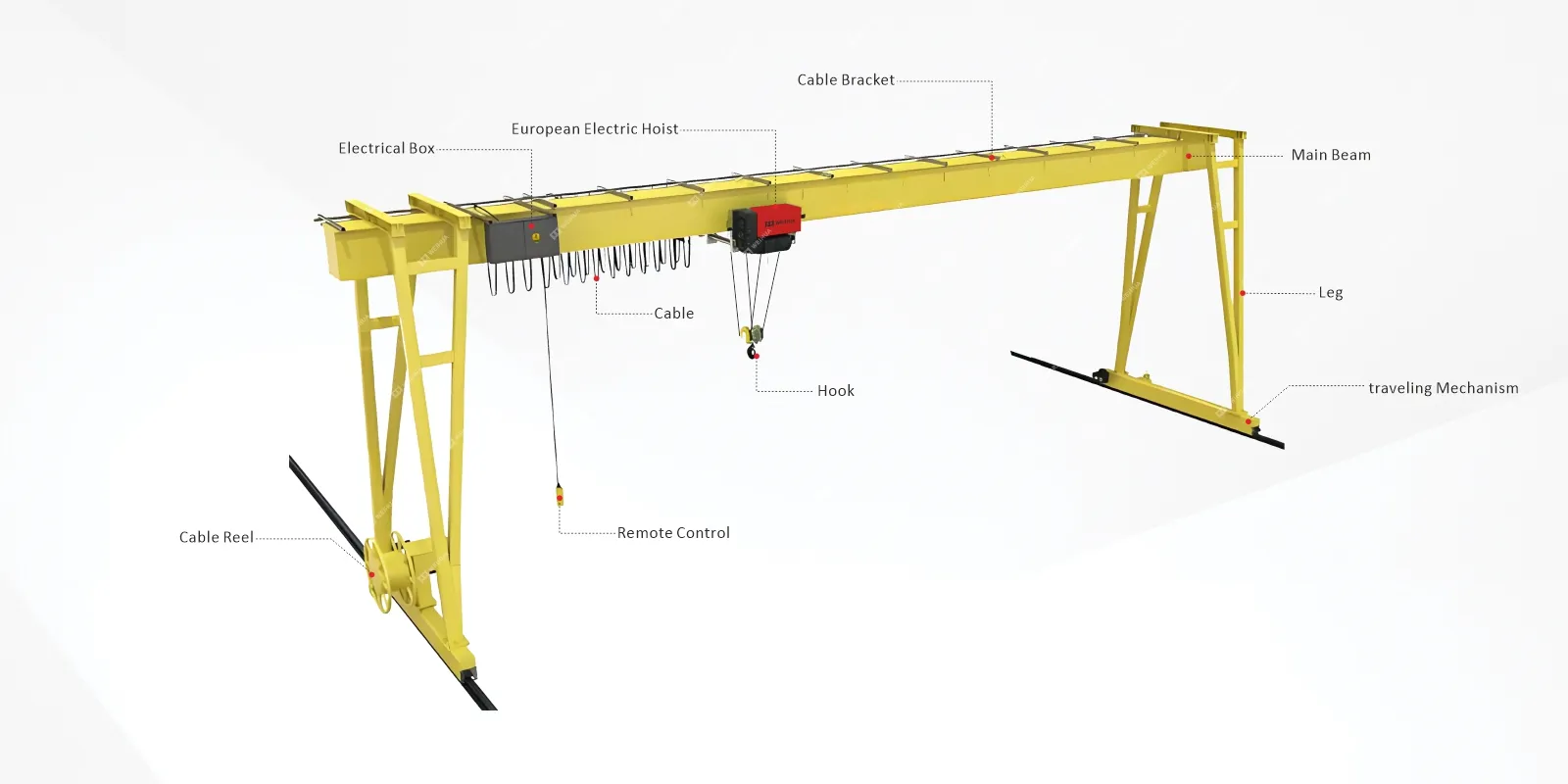
A single girder gantry crane uses one main girder to support the trolley and lifting system.
- Single Main Girder: Forms the primary load-bearing structure and supports the trolley across the crane span.
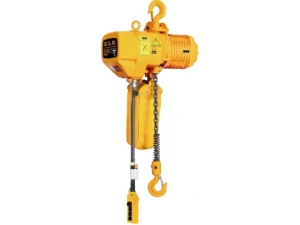
- Electric Hoist: Lifts and lowers the load. Wire rope hoists and electric chain hoists are common options.
- Trolley: Carries the hoist and travels along the main girder to position the load.
- End Trucks: Connect the main girder to the traveling system and support the wheels, axles, bearings, and drive components.
- Gantry Crane Wheels: Carry the crane load and guide the crane along the runway rails.
- Drive Motors: Power gantry travel and control crane movement along the rails.
- Electrical Control System: Controls the hoist, trolley, and traveling mechanisms. Common components include electrical cabinets, contactors, VFDs, and control switches.
- Safety Devices: Include overload limiters, emergency stops, travel limit switches, and other protection devices required by the crane configuration.
- Single girder: Simpler structure, lower dead weight, and suitable for light to medium lifting applications.
- Double girder: Higher load capacity, greater lifting height, and suitable for heavy-duty applications and larger spans.
See more types and applications of gantry cranes: Gantry Crane
How to Choose the Right Gantry Crane Parts?
Choosing the right gantry crane parts starts with matching the component specifications to the existing crane. Capacity, dimensions, duty class, power supply, and operating conditions should be checked before ordering replacement or custom parts.
1. Check the Crane Capacity
Confirm the rated lifting capacity, trolley capacity, and wheel load to select components with the required load rating.
2. Check the Crane Span
Crane span affects the main girder, end trucks, wheel arrangement, and traveling system specifications.
3. Check the Lifting Height
Lifting height determines the required hoist capacity, wire rope length, drum size, and hook block configuration.
4. Check the Duty Class
Check the applicable FEM, ISO, or CMAA duty classification based on the crane’s working cycle and operating requirements.
5. Check Rail and Wheel Dimensions
For replacement wheels, confirm wheel diameter, wheel width, rail size, flange dimensions, tread profile, and axle dimensions.
6. Check the Power Supply
Confirm voltage, frequency, phase, rated power, and power supply method before selecting motors and electrical components.
7. Check the Operating Environment
Specify indoor or outdoor use, dust, temperature, humidity, corrosive conditions, and site conditions such as ports or steel plants.
The correct gantry crane parts should match the crane’s load, dimensions, duty class, power system, and working environment. For replacement parts, existing component drawings, dimensions, nameplates, and photos can help confirm the required specifications before production.
What Information Is Needed to Order Gantry Crane Parts?
When ordering gantry crane parts, provide the following crane and component information:
- Crane Type — Single girder, double girder, rail-mounted, or rubber-tyred gantry crane.
- Rated Capacity — Crane lifting capacity or component load rating.
- Span — Distance between the supporting legs or runway rails.
- Lifting Height — Required hook lifting height.
- Working Class — FEM, ISO, CMAA, or project-specific classification.
- Part Name — Wheel, end truck, hoist, motor, gearbox, brake, electrical component, or other part.
- Part Dimensions — Wheel diameter, wheel width, axle size, mounting dimensions, or other relevant measurements.
- Motor and Electrical Data — Motor power, voltage, frequency, phase, speed, and control requirements.
- Rail Size — Rail type and dimensions for wheel and traveling system selection.
- Photos or Drawings — Component photos, nameplate data, technical drawings, or existing part drawings.
For crane wheels, end trucks, and hoists, provide the original drawing or detailed component dimensions. These details allow the replacement part to be checked against the existing crane configuration.
Gantry Crane Parts for Different Applications
Gantry crane parts vary with load capacity, operating cycle, travel distance, and site conditions.
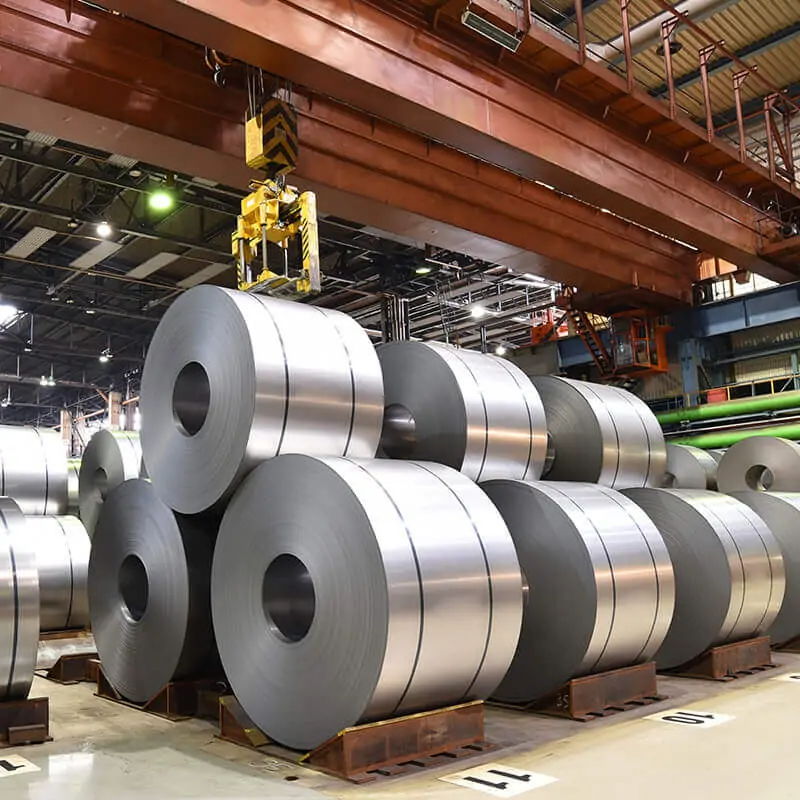
Steel Mills
Steel mill gantry cranes use heavy-duty hoists, large wheels, high-duty traveling systems, and heat-resistant components for handling steel products and heavy loads.
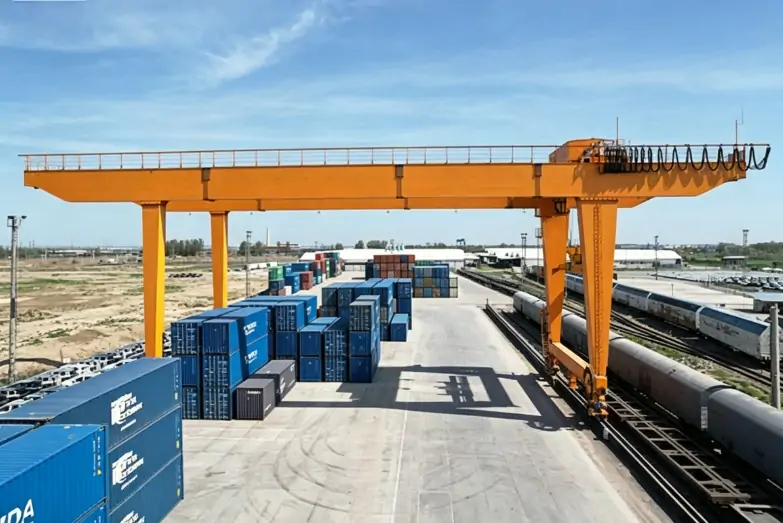
Ports and Container Yards
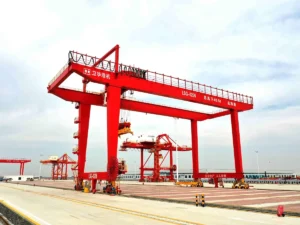
Port gantry cranes use durable wheel assemblies, high-duty electrical systems, long-travel components, and corrosion protection for container handling.

Manufacturing Plants
Manufacturing gantry cranes use electric hoists, trolleys, pendant controls, and safety limit devices for machinery, steel parts, and production materials.

Shipyards
Shipyard gantry cranes use large-span structures, heavy lifting systems, high-capacity wheels, and outdoor electrical protection for ship components and heavy equipment.
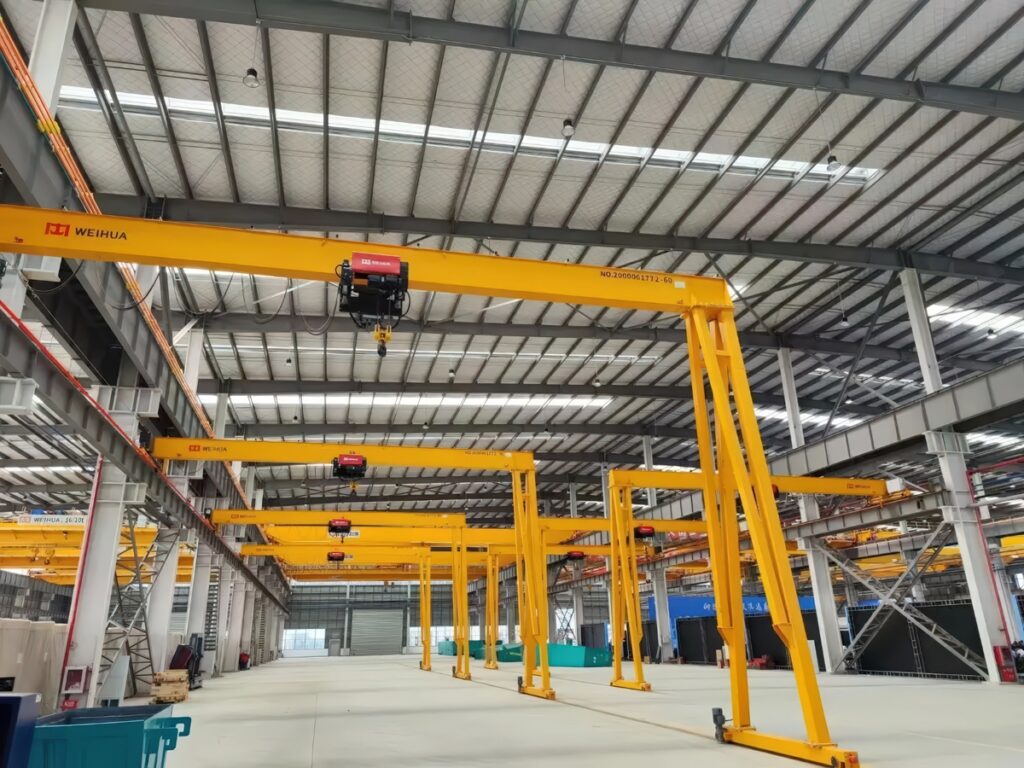
Warehouses and Workshops
Warehouse and workshop gantry cranes use single girder systems, electric hoists, compact traveling mechanisms, and pendant or wireless controls for routine material handling.
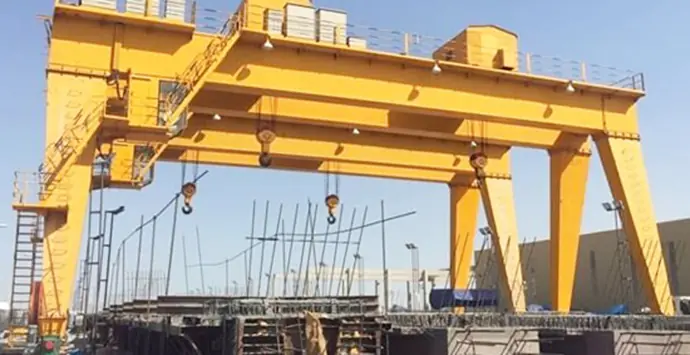
Construction Sites
Construction gantry cranes use compact lifting systems, electric hoists, durable wheels, and remote controls for handling steel structures, machinery, and construction materials.
Gantry Crane Parts Maintenance
Inspection frequency should follow crane duty, operating environment, manufacturer requirements, and applicable safety standards.
| Inspection Item | Main Inspection Points |
|---|---|
| Hoist and Wire Rope | Check hoist, wire rope, drum, hook, and sheaves for wear or damage. |
| Wheel and Rail | Check wheels, rails, bearings, alignment, and wheel-rail contact condition. |
| Motor and Gearbox | Inspect noise, vibration, temperature, leakage, and component wear. |
| Brake System | Check brake lining, clearance, response, and holding performance. |
| Electrical System | Inspect cabinets, cables, connectors, contactors, and VFDs. |
| Safety Devices | Test overload limiters, emergency stops, limit switches, alarms, and anti-collision devices. |
When Should Gantry Crane Parts Be Replaced?
Replacement decisions should be based on inspection findings, wear measurements, operating conditions, and the manufacturer’s limits. Common replacement signals include:
Wheel Tread Wear — Excessive tread or flange wear, cracks, or surface damage indicate wheel replacement.
Wire Rope Damage — Broken wires, strand damage, deformation, or abnormal wear require rope inspection and replacement according to applicable standards.
Brake Performance Decline — Insufficient holding force, excessive lining wear, or abnormal brake clearance requires service or replacement.
Abnormal Gearbox Noise — Persistent noise after lubrication checks can indicate worn gears, bearings, or other internal components.
Motor Overheating — Repeated overheating can indicate insulation failure, bearing wear, overload, or motor damage.
Damaged Limit Switches — A limit switch that fails its operating test should be replaced before crane operation.
Electrical Contact Problems — Pitted, loose, or damaged contacts can cause intermittent electrical faults and require replacement.
Hook Deformation or Cracks — A hook with cracks, deformation, or serious surface damage should be removed from service and replaced.
Inspection records should include the inspection date, measured wear, component condition, and corrective action. This provides a clear basis for future replacement decisions and spare parts planning.
Custom Gantry Crane Parts
Custom gantry crane parts are selected according to component dimensions, load requirements, crane configuration, and working conditions. WEIHUA supplies custom components for new gantry cranes and replacement projects.
- Custom Wheel Assemblies: Wheel diameter, tread width, flange dimensions, axle size, and wheel load can be matched to the crane and rail system.
- End Trucks: End trucks can be configured for different wheel arrangements, spans, loads, travel speeds, and rail systems.
- Hoists: Hoists can be selected according to lifting capacity, lifting height, lifting speed, duty class, and working environment.
- Trolleys: Trolley dimensions, wheel arrangement, travel speed, and hoist configuration can be designed for the available girder and load requirements.
- Electrical Systems: Power supply, control components, cable systems, VFDs, and protection devices can be configured for site voltage, travel distance, and operating conditions.
- Structural Components: Main girders, gantry legs, platforms, walkways, and other structural components can be designed to match crane dimensions and load requirements.
- Special-Duty Crane Components: For high-temperature, outdoor, corrosive, heavy-load, or high-cycle applications, component materials and configurations can be adapted to the working conditions.
For custom gantry crane parts, provide the required dimensions, load data, crane specifications, and working conditions. Contact WEIHUA to discuss your requirements and select a suitable component configuration for your project.

FAQ
What are the main parts of a gantry crane?
The main gantry crane parts include the main girder, gantry legs, hoist, trolley, end trucks, wheels, motors, electrical system, control system, and safety devices.
What is the most important part of a gantry crane?
The main girder is a key structural component because it supports the trolley and lifting system across the crane span.
What parts need regular inspection on a gantry crane?
Hoists, wire ropes, wheels, rails, motors, gearboxes, brakes, electrical components, limit switches, overload devices, and other safety devices require inspection.
How do I choose the right gantry crane wheels?
Select wheels based on wheel load, diameter, rail size, tread and flange dimensions, travel speed, material, and operating conditions.
When should gantry crane parts be replaced?
Replace parts when inspection shows excessive wear, cracks, deformation, corrosion, damage, or performance outside the manufacturer’s specified limits.
What information is needed to order gantry crane spare parts?
Provide the crane type, rated load, span, lifting height, duty class, part name, dimensions, rail size, electrical data, and photos or drawings when available.
Can gantry crane parts be customized?
Yes. Gantry crane parts can be customized according to component dimensions, load requirements, crane configuration, and working conditions.
Can WEIHUA supply replacement gantry crane parts?
Yes. WEIHUA supplies replacement and custom gantry crane parts, including wheel assemblies, end trucks, hoists, trolleys, electrical systems, and structural components.