- ProductEquipmentPrecision Power, Customization Crane SolutionE-mail:WhatsApp / Wechat:+8613781917315Address:No.18 Shanhai Road, Changyuan City, Henan Province, China


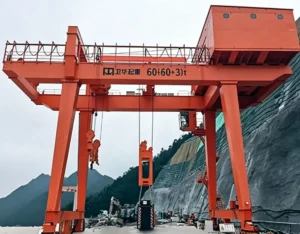
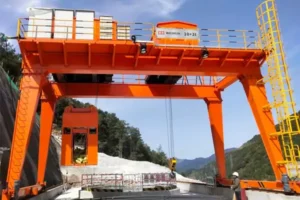
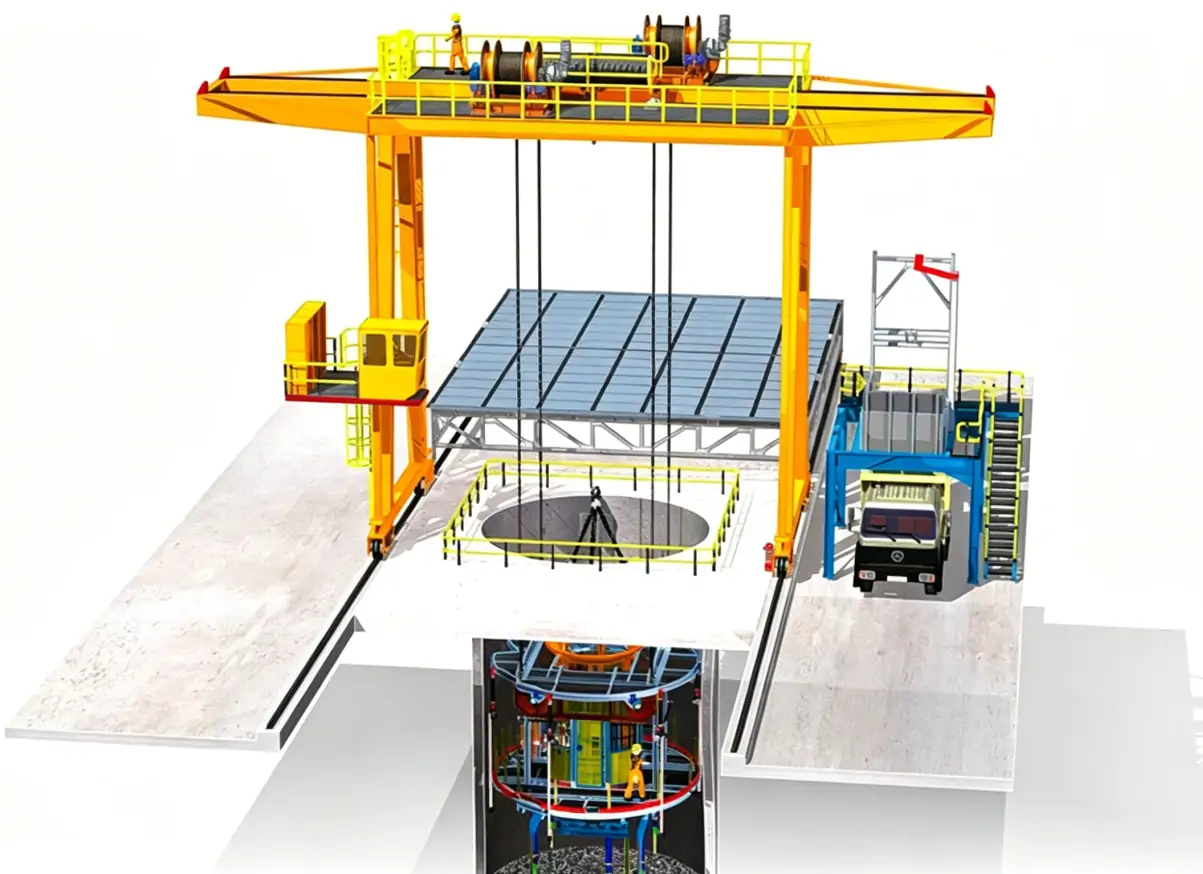
A hydropower shaft gantry crane is a vertical lifting system used in hydropower shaft construction, including penstock tunnels, surge shafts, and powerhouse access shafts. It is used for lifting and lowering heavy equipment, construction materials, and workers during excavation and lining work in underground shafts. Compared with general gantry cranes, it is designed for confined deep shaft environments and is often installed with shaft support structures, replacing traditional derricks or tower cranes to support vertical transport in hydropower underground construction.
For more information on the features of this equipment, see: What Is a Vertical Shaft Gantry Crane?
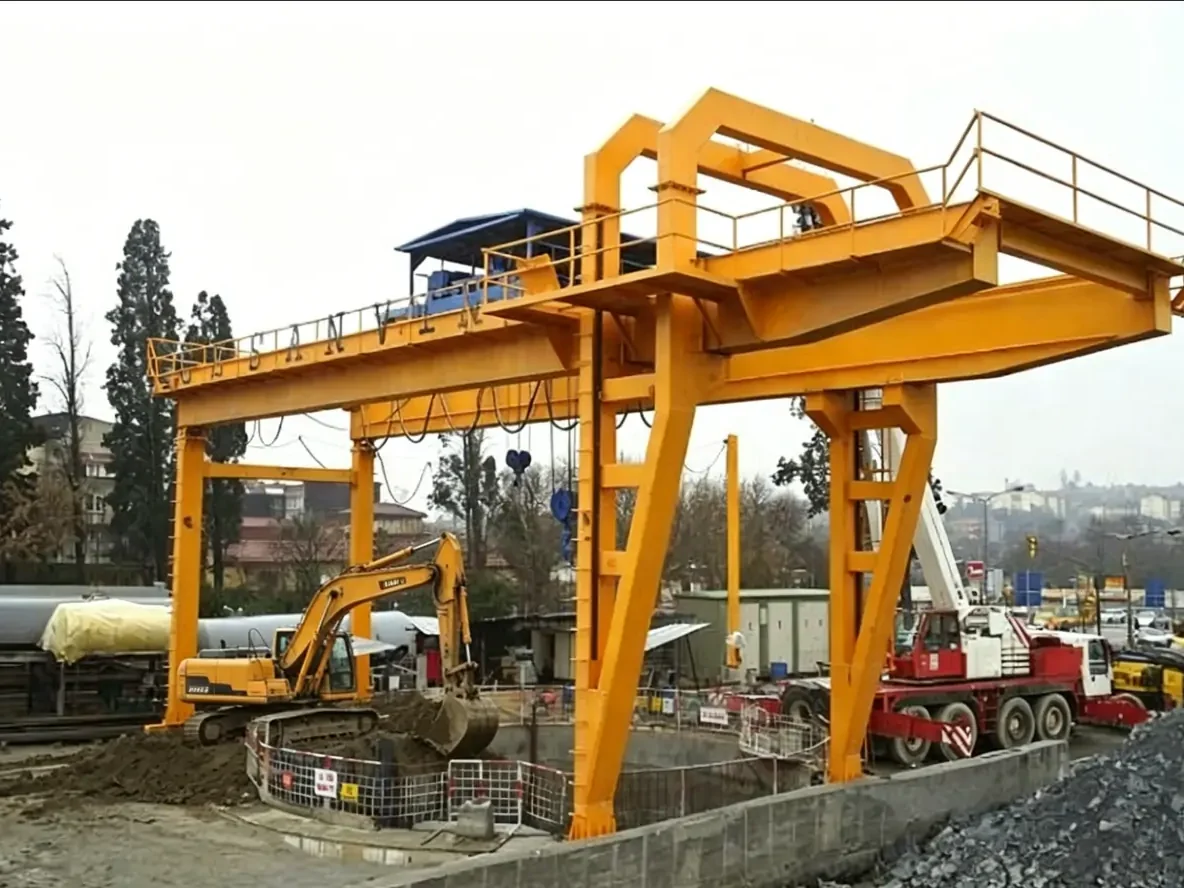
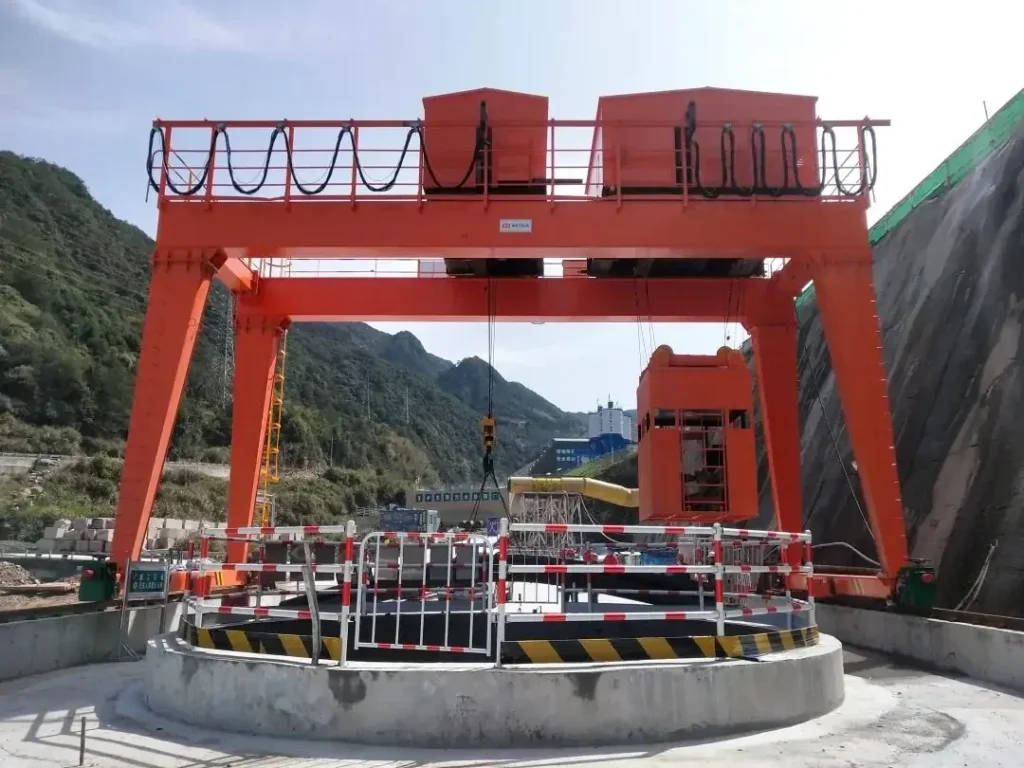
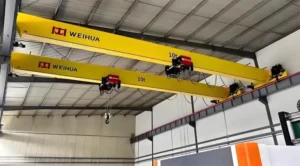
Hydropower shaft gantry cranes are available in single girder and double girder configurations, allowing different lifting capacities and structural arrangements to match various shaft construction requirements.
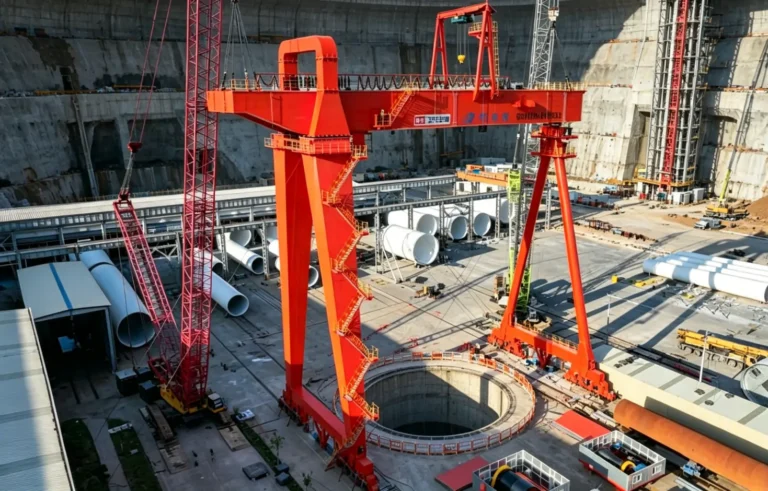
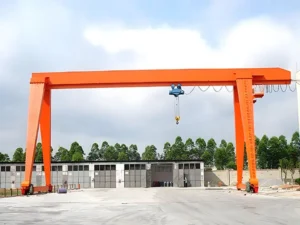
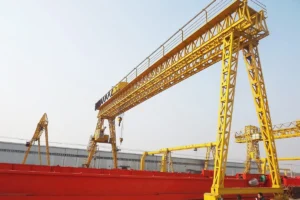
For more information on the features of this equipment, see: What Is a Vertical Shaft Gantry Crane?The single girder design is suitable for light to medium-duty lifting tasks in hydropower shaft construction. It features a simpler structure, lower overall weight, and reduced installation requirements, making it suitable for projects with limited space and moderate lifting demands.
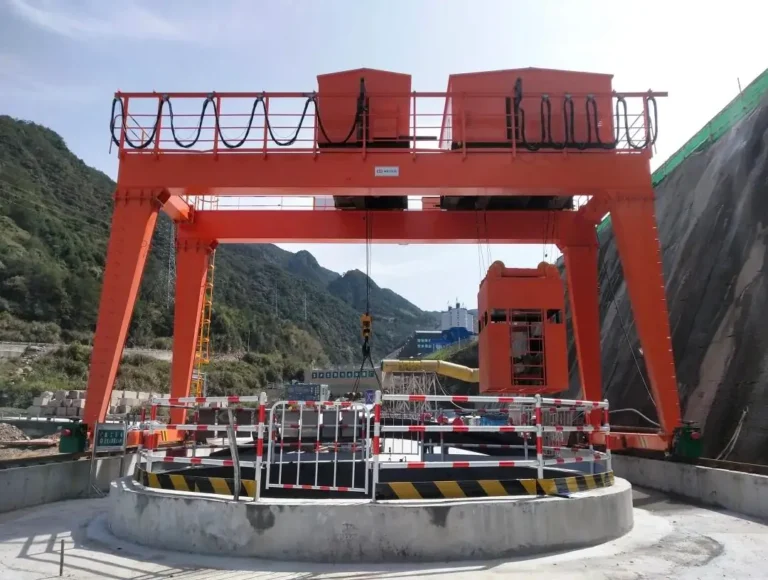
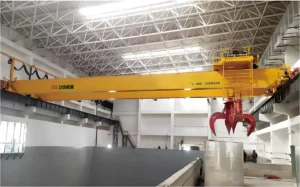
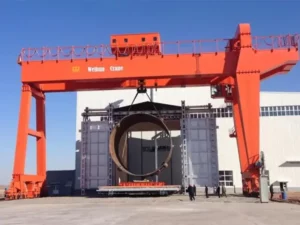
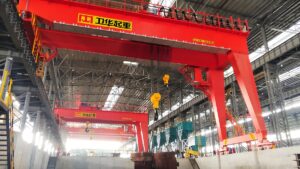
The double girder design is used for heavier loads and more demanding shaft operations. It provides greater lifting capacity, higher structural rigidity, and improved stability during frequent lifting cycles, making it suitable for deep shaft excavation, large equipment handling, and long-term construction projects.
Hydropower shaft gantry cranes use a vertical lifting system for deep shaft construction, connecting ground handling with controlled lifting inside the shaft.
1. Rail or foundation installation: Rails or a fixed base are installed around the shaft opening to support crane operation.
2. Gantry structure setup: The gantry frame is assembled across the shaft and connected to the hoisting system.
3. Hoisting system activation: Winches and wire ropes are engaged to provide controlled vertical lifting power.
4. Load preparation and lifting: Materials or equipment are secured to lifting hooks and raised or lowered into the shaft.
5. Vertical movement in the shaft: The load is guided along a controlled vertical path inside the shaft opening.
6. Placement and unloading:The load is positioned at the required level and released for construction use.
7. Return for next cycle: The system returns to the starting position to prepare for the next lifting operation.
The process follows a repeated cycle from setup to lifting and unloading, supporting continuous vertical transport in hydropower shaft construction. Learn more about how the equipment works: How Does a Vertical Shaft Gantry Crane Work?
| Parameter | Specification |
| Lifting Capacity | 50/5t–1000/100t |
| Double-Hook Capacity | 2×25/5t–2×500/100t |
| Span | 10m–40m |
| Lifting Height | 15m–30m (customizable for deep shafts) |
| Duty Class | A2–A6 (FEM M5–M6) |
| Main Hoisting Speed | 0.8–7m/min |
| Crane Traveling Speed | 3–30m/min |
| Trolley Traveling Speed | 2–20m/min |
| Power Supply | 380V / 660V, 50Hz, 3 Phase |
| Protection Class | IP54 |
| Motor Insulation Class | F |
| Working Temperature | -20°C to +40°C |
| Girder Type | Single Girder / Double Girder |
| Control Method | Pendant Control / Radio Remote Control |
| Rail Type | Straight Rail / Curved Rail |
| Application | Hydropower Shaft Excavation, Material Handling, Equipment Installation |
| Custom Options | Capacity, Span, Lifting Height, Voltage, Duty Class |
WEIHUA can customize lifting capacity, span, lifting height, duty class, power supply, control system, and structural configuration according to specific hydropower shaft project requirements. Please contact us for a tailored solution.
Deep hydropower shaft construction involves frequent vertical lifting tasks across different stages of work. A shaft gantry crane is used to support material and equipment handling in confined shaft environments.
| Application Scenario | Description |
|---|---|
| Continuous muck hoisting after blasting | The mining vertical shaft gantry crane lifts blasted rock and soil from the shaft bottom to the surface for cyclic handling during excavation. |
| Precast shaft segment lowering and installation | It lowers and positions precast concrete shaft segments during shaft sinking and lining construction. |
| Supply of daily construction materials | It hoists drilling tools, support steel, pipelines, and shotcrete materials into and out of the deep shaft. |
| Large equipment hoisting for shaft bottom expansion | It lifts and transfers heavy equipment such as roadheaders and conveyor systems to the shaft bottom. |
| Temporary rescue and handling in construction | It handles recovery operations for fallen equipment or materials inside the shaft during construction. |
| Shaft inspection and maintenance access lifting | It lifts inspection personnel and maintenance tools for shaft checking and repair operations. |
These scenarios cover the main lifting needs in shaft excavation and construction, showing how the crane is applied throughout the different phases of deep hydropower projects.
To learn more about the applications of gantry cranes, read the article: What Is a Gantry Crane Used For? Applications and Industries
Shaft gantry cranes are used in hydropower projects to handle heavy vertical lifting in deep, narrow shafts where precision and stability are required. A hydropower shaft gantry crane is better suited than general cranes for this type of confined underground work.
Vertical lifting is a core part of hydropower shaft construction. A vertical shaft excavation crane solution supports stable and continuous material handling in deep shaft projects.
The structural design of a hydropower shaft gantry crane is developed around the lifting requirements and working conditions of deep shaft construction projects.
These structural features provide the foundation for stable lifting, reliable operation, and long-term use in hydropower shaft construction.
Gantry cranes must be inspected regularly during operation to ensure safe use. For a detailed inspection checklist, see the article: “Gantry Crane Inspection Checklist: Daily, Monthly, and Annual Inspection Guide.”
The technical features of a hydropower shaft gantry crane are configured to match different lifting requirements and operating conditions in shaft construction.
These features support lifting, material handling, and installation work across different stages of hydropower shaft projects.
Hydropower shaft gantry cranes are configured according to different project conditions, covering load, structure, and site requirements in shaft construction.
Parameters set by shaft depth, opening size, and site conditions. Configured for 50t-class lifting based on project load requirements.
Surface treatment for salt spray, heat, and UV exposure. Hoisting and electrical systems sealed for underwater operation.
Span 10m–40m based on shaft opening, with optional side cantilevers for wider coverage.
Lifting height 15m–30m or higher, depending on shaft depth, with dual-hook options for deeper work.
Duty class from A2 to A5–A6 based on operation frequency.
Voltage and frequency matched to local grid standards.
A double girder structure ensures stability under large loads.
Configured for different hydropower shafts such as penstock, surge, and access shafts.
Design adjusted for shaft opening space, foundation, and on-site assembly conditions.
WEIHUA provides design support and on-site guidance for hydropower shaft projects.
These customization options allow the crane to adapt to various hydropower shaft projects, supporting installation and operation across different site conditions.
For details on the price guide for gantry cranes, see the article: How Much Does a Gantry Crane Cost? Price Guide and Cost Factors
The Songyang pumped-storage hydropower station in Zhejiang involves an ultra-deep shaft project with a vertical depth of 637 meters. The construction site faces extremely complex underground conditions, including active fault zones, frequent water inflow, poor ventilation, and difficult muck removal. Conventional construction methods and standard lifting equipment are not suitable for these conditions, resulting in low efficiency, delayed data transmission, and high safety management challenges. They also cannot meet the requirements of multiple operations, such as surge shaft cleaning, tunnel boring machine assembly, and precise lifting of penstock sections.
Henan Weihua developed a customized 700-meter-class integrated intelligent lifting and handling system for this project. The solution is centered on an intelligent shaft gantry crane, integrated with full 5G communication coverage, ground-based remote control, unmanned underground operation, and a sensor system with over 100 monitoring points. The system enables continuous workflow from excavation and cleaning to precision lifting of equipment. It improves operational safety in harsh underground conditions, reduces labor demand, and increases overall construction efficiency by nearly ten times, setting a new benchmark for ultra-deep shaft construction in China
WEIHUA shaft gantry cranes are designed for hydropower deep shaft construction, supporting stable lifting in excavation, lining, and equipment installation under complex underground conditions. We also offer custom solutions: Mining Vertical Shaft Gantry Crane Manufacturer and Supplier
Span, lifting height, and capacity can be adjusted based on shaft depth and site conditions.
Double girder design ensures stable operation under frequent and high-load lifting tasks.
Suitable for underground hydropower sites with humidity, dust, and temperature variations.
Designed according to project requirements, including different shaft types, loads, and construction stages.
Provides installation guidance, commissioning support, and long-term technical service for project operation.
To learn about the factors that affect pricing and how to choose the right model, see the article: Gantry Crane for Sale: Types, Prices & Buying Guide (2026)
WEIHUA is a professional manufacturer and supplier of shaft gantry cranes, offering customized solutions and engineering support for hydropower projects. For project consultation, technical specifications, or a tailored hydropower shaft gantry crane solution, please contact our team. We will provide recommendations based on your shaft depth, lifting requirements, and site conditions.
Weihua, founded in 1988, has evolved into a global leader in China's intelligent manufacturing field. We specialize in smart crane R&D and production while offering AGV solutions. Our professional engineering, delivery, and after-sales teams provide one-stop technical support, customized solutions, on-site installation guidance, and rapid-response global services to ensure every project operates safely and efficiently.
A hydropower shaft gantry crane is a lifting system used in hydropower shaft construction for handling materials, equipment, and construction components during excavation and installation work.
The lifting height can be customized according to project requirements, making it suitable for both standard and deep shaft construction projects.
Depending on the project, lifting capacity can range from light-duty configurations to heavy-duty models exceeding 50 tons, with customized options available.
Single girder cranes are suitable for lighter lifting requirements, while double girder cranes are commonly used for heavier loads, larger spans, and continuous construction operations.
Yes. Capacity, span, lifting height, duty class, power supply, and structural configuration can be customized according to shaft depth and site conditions.
Contact us now via email: [email protected], or fill in the form below.


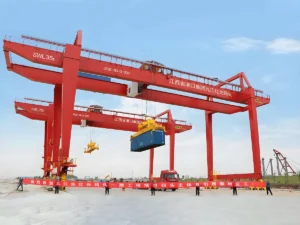
The gantry crane is a lifting equipment widely used across various industries, construction sites, ports, warehouses, and other fields. Its unique structure and powerful load-bearing capacity make it ideal for modern heavy-duty material handling. The “gantry” structure design allows the crane to move freely within a space, covering a large working area. So, what makes gantry cranes special? What are their types, parameters, control methods, applications, and working principles? How do they differ from bridge cranes? Let’s explore together. Types of Gantry Cranes Based on design, application, and operating environment, gantry cranes are typically categorized into the following types: Single-Girder Gantry Crane Single-girder gantry cranes are widely used across industrial sectors, warehouses, ports, and workshops. Featuring a single-girder support lifting mechanism, they traverse via side columns and bottom rails. With their simple structure, user-friendly operation, and moderate lifting capacity, they are ideal for handling light to medium loads. Capable of spanning large distances freely, single-girder gantry cranes are suitable for heavy material handling and lifting operations. Double Girder Gantry Crane Compared to single-girder gantry cranes, double-girder gantry cranes offer greater…
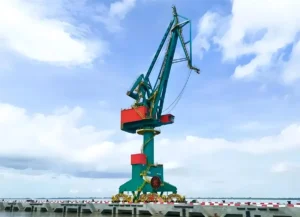
In ports, logistics parks, and industrial material handling, Portal Cranes and Gantry Cranes are two common and core loading/unloading equipment types. They differ in structural design, performance characteristics, operating methods, application scenarios, and investment costs. This article provides a comprehensive analysis of Portal Crane vs Gantry Crane and guides you in making the right selection. Structural Design Comparison The structural differences between Portal Cranes and Gantry Cranes primarily manifest in load-bearing methods, movement trajectories, and coverage ranges. The former centers on a fixed tower and rotating boom, emphasizing “point coverage” and flexible horizontal rotation. The latter features a portal frame structure and longitudinal rail travel, prioritizing “extensive horizontal movement” and efficient on-site logistics handling. Consequently, their distinct structural designs directly dictate their differing application scenarios. Portal Crane Structural Characteristics Portal slewing cranes employ single/double cantilever boom structures with the tower fixed to foundations or rails, enabling 360° or partial rotation. This configuration enables flexible operation in narrow, elongated spaces such as shorelines, dock fronts, and ship berths, making it particularly suitable for ship-to-shore material handling. Its core functionality combines vertical…
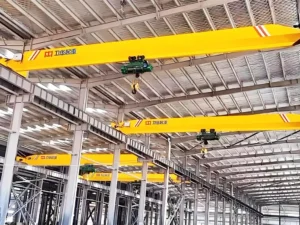
In modern industrial operations, efficient material handling is crucial for maximizing productivity and optimizing workflow. Bridge cranes, also known as overhead cranes or EOT cranes, are fixed material handling systems widely used in manufacturing, metal processing, warehousing, and loading/unloading operations. In this article, we will explore the working principle, main components, applications, and operational benefits of bridge cranes, providing a comprehensive guide for industrial planners and logistics professionals. Bridge Crane Working Principle A bridge crane operates on a bridge-like structure spanning the workspace, with a trolley and hoist system that moves horizontally along the bridge and vertically lifts or lowers loads. The crane’s movement across the runway, combined with precise hoist control, enables efficient and safe handling of heavy materials in factories, warehouses, and industrial facilities. For information on how overhead cranes work, please see this article: Overhead Crane Working Principle: Components, Motion & Operating Process Bridge Crane Terminology The following is an introduction to terminology related to bridge crane parts. Crane Capacity: Crane capacity refers to the maximum weight a bridge crane can safely lift. Typically measured in tons…
An EOT Crane (Electric Overhead Traveling Crane) is an efficient and reliable overhead lifting system used to handle heavy materials in factories, warehouses, workshops, and industrial plants. Running on overhead rails, EOT cranes enable safe and precise three-dimensional movement of loads through coordinated lifting, cross travel, and long travel motions. This article will guide you through EOT crane definitions, types, structure, working principles, applications, and cost factors to help you select the most suitable solution for your lifting needs. How EOT Crane Works? The working principle of an EOT crane involves a combination of vertical lifting, horizontal trolley movement, and longitudinal bridge travel, enabling efficient handling of heavy loads across industrial facilities. The crane operates on elevated runway rails installed along the building structure, with the bridge girder spanning the workspace. The hoist mechanism raises or lowers the load using steel wire ropes or chains, while the trolley moves the load horizontally along the bridge. The entire crane travels longitudinally along the runway rails, enabling three-dimensional positioning of materials. Modern EOT cranes are powered by electric motors with precise speed…
Gantry cranes are widely used in open-air stockyards, shipyards, factories, and construction sites, making them one of the most versatile and extensively applied material handling solutions. Gantry cranes come in various types, each customizable to suit different load capacities, site conditions, and operational requirements. However, selecting the wrong configuration can lead to unnecessary expenses, limited lifting capacity, or future expansion constraints. So, what are the main types of gantry cranes? How do you choose the right type for your application? In this guide, we will provide a detailed overview of different types of gantry cranes based on structure, mobility, and application scenarios, helping you make the right decision before investing in a lifting solution. The article is quite lengthy. Below is our table of contents. Please jump to the corresponding section as needed: What Is a Gantry Crane? Gantry cranes are lifting equipment designed for efficient handling of heavy cargo in large open-air sites. Their signature structure features one or more main beams supported by rigid (or flexible) legs on either side, forming a monumental “gate”-shaped frame. These cranes traverse…
 English English
  Русский
 العربية
 Français
 Português
 Español