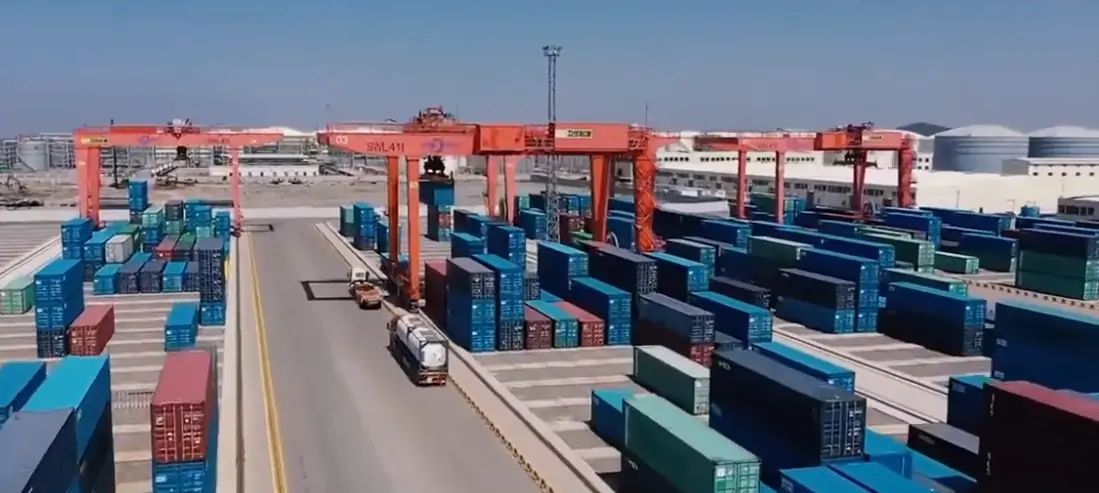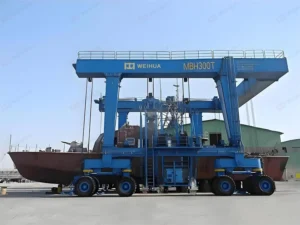
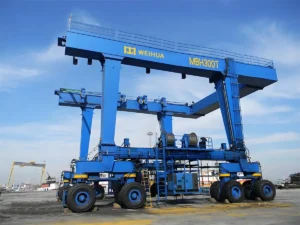

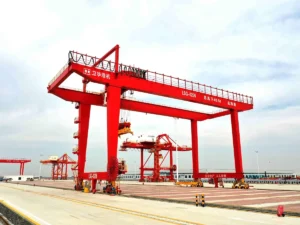
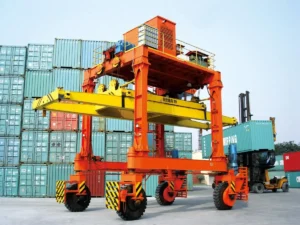
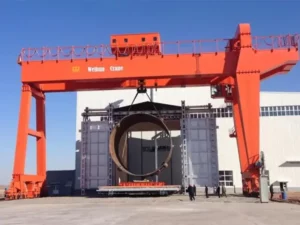
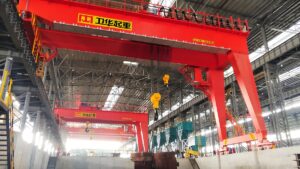
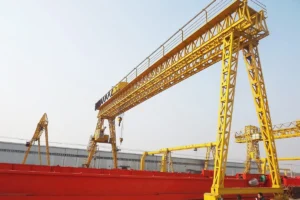

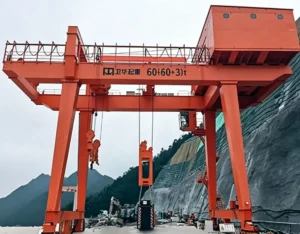
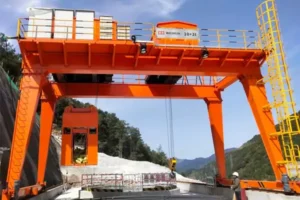







Straddle carriers play a vital role in container handling operations, as they can independently perform container lifting, transportation, and stacking, thereby reducing reliance on multiple pieces of equipment.
This article will introduce the definition, working principles, and main types of straddle carriers, while comparing their differences with other container handling equipment at ports and logistics terminals.
Table of Contents
What Is a Straddle Carrier?
A straddle carrier is a mobile container handling vehicle used for lifting and transporting shipping containers within container terminals or yards. Unlike cranes or stackers, straddle carriers can straddle (drive over) containers, lift them using a lifting device system, and transport them to other locations for stacking or loading.
Straddle carriers are primarily used in:
- Container terminals
- Multimodal logistics terminals
- Port container storage yards
- Automated container terminals

Types of Straddle Carriers
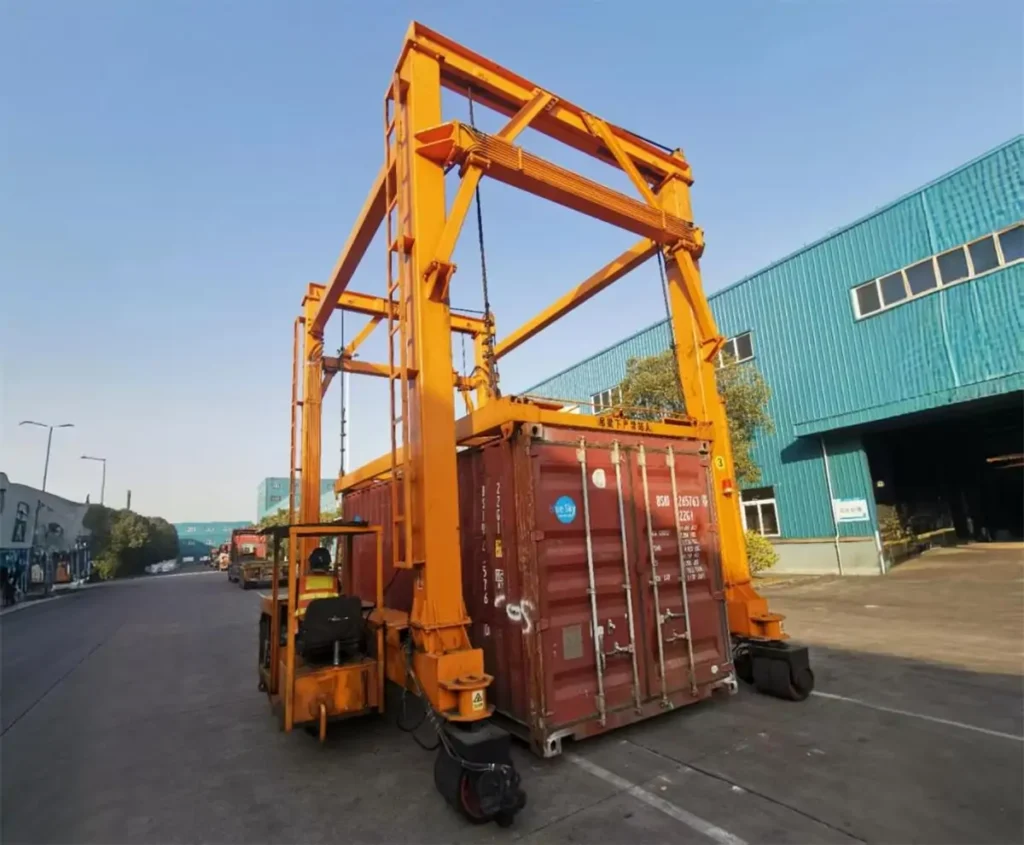
Industrial straddle carrier cranes are primarily classified by their power systems into diesel-powered straddle carriers and electric straddle carriers. Ports and container yards can select appropriate equipment based on operational intensity, environmental requirements, and site conditions.
Diesel-Powered Straddle Carrier
Diesel-powered straddle carriers deliver robust power and high continuous operation capability, making them ideal for intensive port handling and large yard transportation. However, they produce emissions and noise during operation.
- Lifting Capacity: 30–60 tons
- Engine Type: Diesel engine
- Fuel System: Diesel-powered
- Drive System: Rubber tires, multi-wheel drive
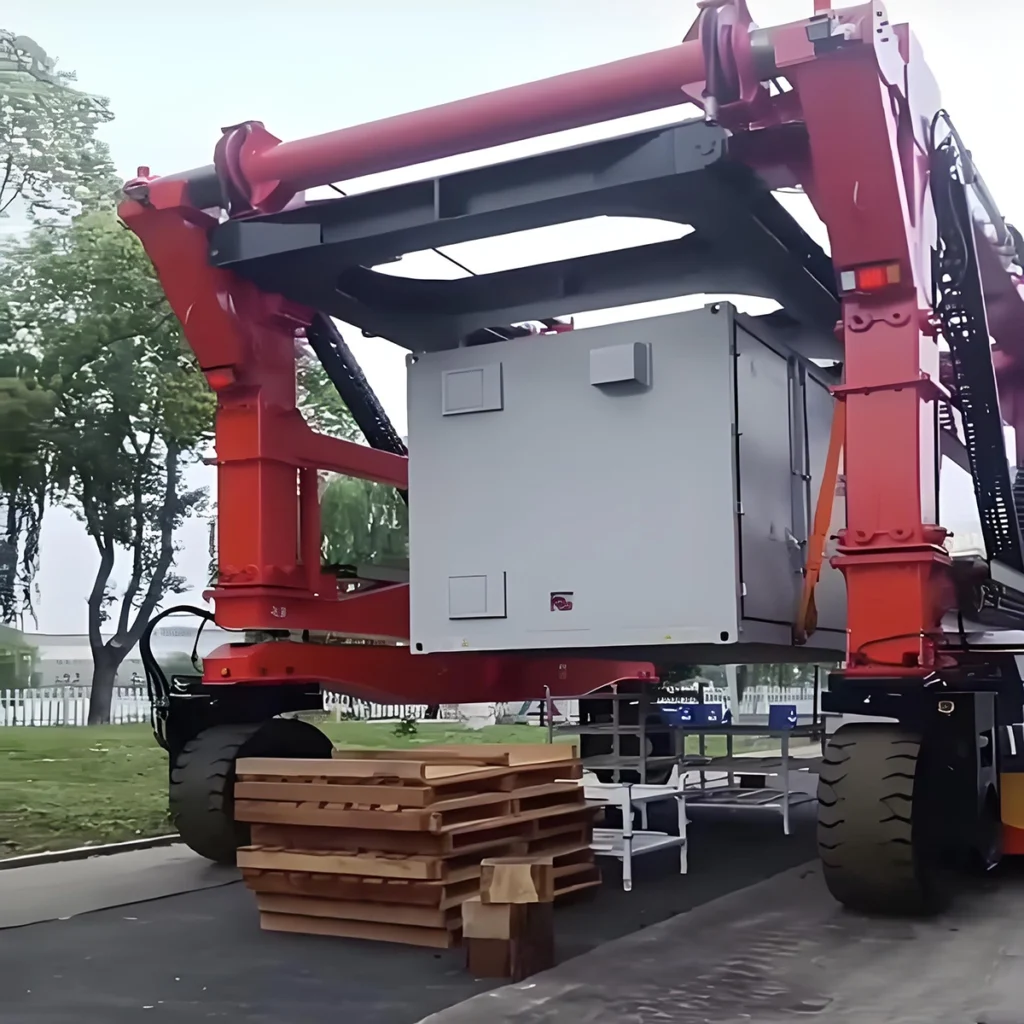
Electric straddle carriers
Electric straddle carriers are powered by cable reels or lithium batteries, offering low operational noise and zero on-site emissions. They are suitable for green ports and fixed operational areas.
- Lifting Capacity: 30–60 tons
- Power Source: Cable reel or lithium battery
- Drive System: Electric motor drive
- Emissions Level: Zero local emissions
How Does a Straddle Carrier Work?
The straddle carrier operates the container spreader via a lifting frame mounted between the high-lift legs.
The basic workflow includes:
- Positioning: The equipment moves to the container’s location.
- Lifting: The spreader locks onto the container’s corner fittings.
- Transportation: The container is lifted and transported to the designated yard location.
- Stacking: The container is placed on the ground or stacked atop other containers.
Parts of Industrial Straddle Carrier Crane
The Straddle Carrier consists of multiple core systems designed to perform container lifting, transportation, and stacking operations.
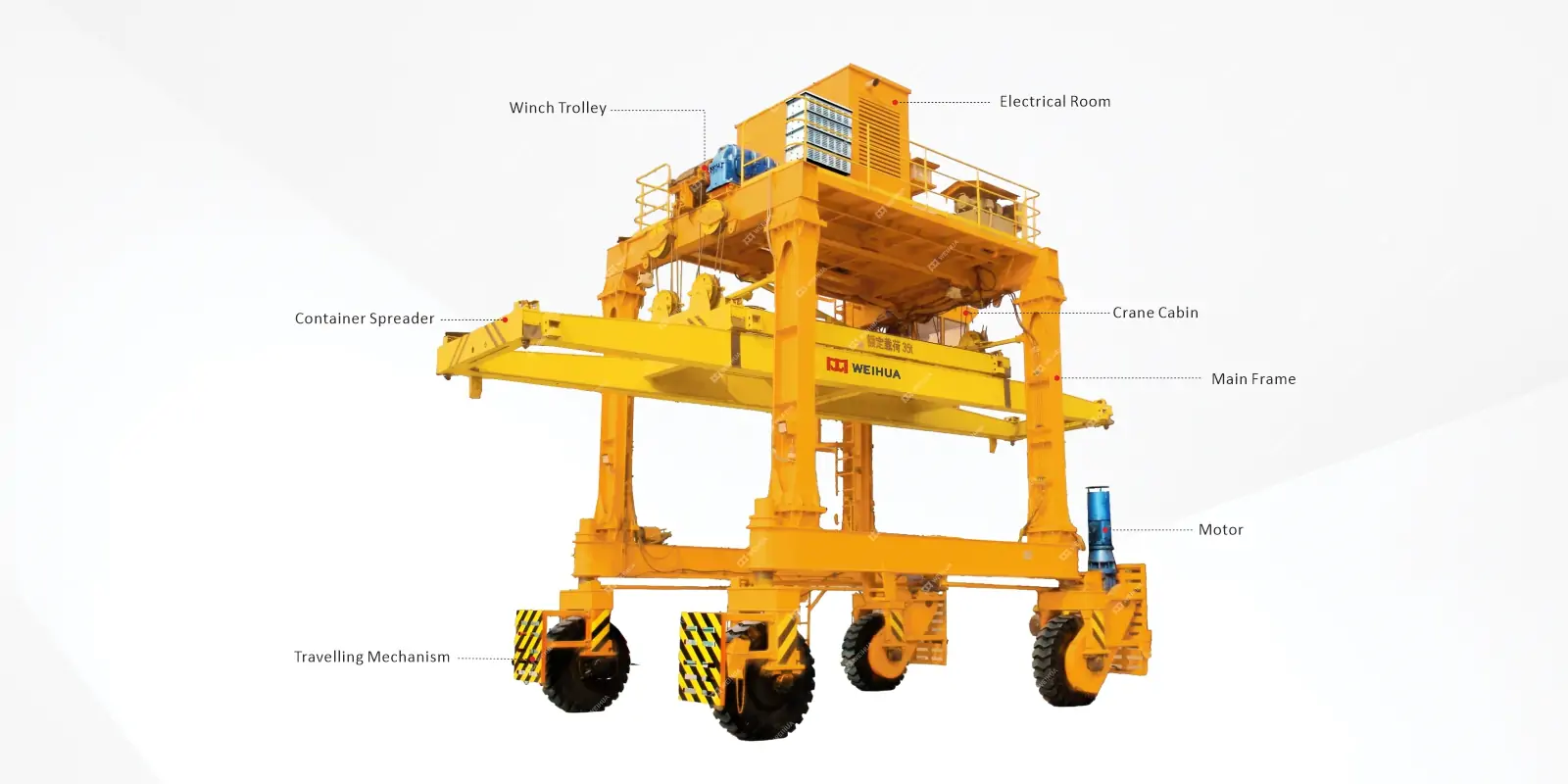
- Spreader: Used to grasp and secure containers by connecting to container corner fittings via twist locks, designed for handling 20ft and 40ft containers.
- Lifting System: Performs container hoisting operations, comprising wire ropes, pulley blocks, and drive units.
- Frame Structure: The main body of the straddle carrier, constructed with high-strength steel to enable operation over containers.
- Traveling System: Comprised of rubber tires, drive axles, and steering mechanisms, enabling flexible movement within the yard.
- Power & Control System: Provides operational power and controls all functions, commonly utilizing diesel or electric drive systems.
Features of a Straddle Carrier
Straddle carriers are used for container yard operations. Key features include:
- High mobility: Straddle carriers can move swiftly across large container yards, enhancing transport efficiency.
- Independent Container Handling: Capable of lifting, moving, and stacking containers without requiring assistance from other equipment.
- Flexible Yard Layout: Unlike rail-mounted cranes, HCLs do not require fixed tracks.
- High Operational Efficiency: This equipment reduces container handling steps and shortens container transfer times.
What Is a Straddle Carrier Used For?
Straddle carriers are used in logistics operations for the rapid transport of containers.


Typical application scenarios include:
- Container terminals: Transporting containers between gantry cranes and storage yards.
- Container yards: Efficiently stacking containers while maintaining flexible yard operations.
- Multimodal hubs: Transferring containers between trucks, rail systems, and storage areas.
- Automated container terminals: Smart ports increasingly adopt automated straddle carriers to enhance operational efficiency.
Straddle Carrier Specifications
Weihua can provide you with a customized container Straddle Carrier tailored to your port size, yard layout, and operational intensity. Below are the primary technical specifications for common industrial straddle carrier cranes:
| Parameter | Specification |
|---|---|
| Lifting Capacity | 30–60 tons |
| Container Size | 20 ft / 40 ft ISO Containers |
| Stacking Height | 1–3 Containers High |
| Travel Speed (Loaded) | 20–25 km/h |
| Travel Speed (Unloaded) | 25–30 km/h |
| Power Type | Diesel Engine / Electric Motor |
| Drive Mode | Rubber Tire, Multi-Wheel Drive |
| Steering System | Multi-Wheel Steering |
| Power Supply (Electric Type) | Cable Reel or Lithium Battery |
| Emission Level | Diesel: Standard Emissions / Electric: Zero Local Emissions |
| Operating Noise | Diesel: Moderate / Electric: Low Noise |
| Application | Container Terminals, Container Yards, Intermodal Logistics Hubs |
Straddle Carrier vs RTG Crane
Both machines are used in container yards. Straddle carriers focus on container transport, while RTG cranes are designed mainly for stacking operations.
| Feature | Straddle Carrier | RTG Crane |
|---|---|---|
| Mobility | High | Limited to yard lanes |
| Container transport | Yes | No |
| Stacking height | 1–3 containers | 5–6 containers |
| Infrastructure | Minimal | Requires power supply and structured yard |
| Flexibility | High | Moderate |
Straddle Carrier vs Reach Stacker
Reach stackers are another common container handling machine, but they operate differently. Straddle carriers are typically used at large-scale container terminals, while reach stackers are commonly employed at smaller logistics yards.
| Feature | Straddle Carrier | Reach Stacker |
|---|---|---|
| Container transport | Yes | Limited |
| Stacking efficiency | High | Medium |
| Yard coverage | Large yards | Smaller yards |
| Automation potential | High | Low |
How to Choose the Right Straddle Carrier for Your Terminal
When selecting straddle carriers for container terminals, the following factors must be considered:
- Container throughput: Higher throughput requires higher-speed equipment.
- Yard layout: Terminal design and aisle width influence equipment selection.
- Stacking requirements: Terminals with limited space may require greater stacking capacity.
- Automation level: Automated terminals may require advanced control systems and navigation technology.
Straddle Carrier Price and Factors
The price of straddle carriers is influenced by multiple factors. Generally, automated or electric straddle carriers have higher initial costs but lower long-term operating expenses. Key cost factors include:
- Lifting capacity
- Stacking height
- Level of automation
- Drive system (diesel or electric)
- Control and navigation systems
Conclusion
Straddle carriers are among the most critical pieces of equipment at modern container terminals. They possess the independent capability to lift, transport, and stack containers.
As logistics speeds accelerate and port automation demands grow, straddle carriers are becoming an indispensable component of advanced container handling systems.
If you are planning a new container yard or upgrading port equipment, selecting the right straddle carrier will enhance terminal efficiency. Contact our engineering team for customized industrial straddle carrier solutions.
FAQS
What is the lifting capacity of a straddle carrier?
Most straddle carriers have a lifting capacity of 40–60 tons, allowing them to handle standard loaded shipping containers.
How many containers can a straddle carrier stack?
Depending on the design, straddle carriers can typically stack one to three containers high.
Is a straddle carrier better than an RTG crane?
They serve different purposes. Straddle carriers focus on container transport, while RTG cranes are mainly used for high stacking operations.
What is the average speed of a straddle carrier?
Most straddle carriers can travel at speeds of up to 25–30 km/h in container yards.
Can straddle carriers be automated?
Yes. Many modern ports use automated straddle carriers equipped with sensors, GPS navigation, and terminal operating systems.