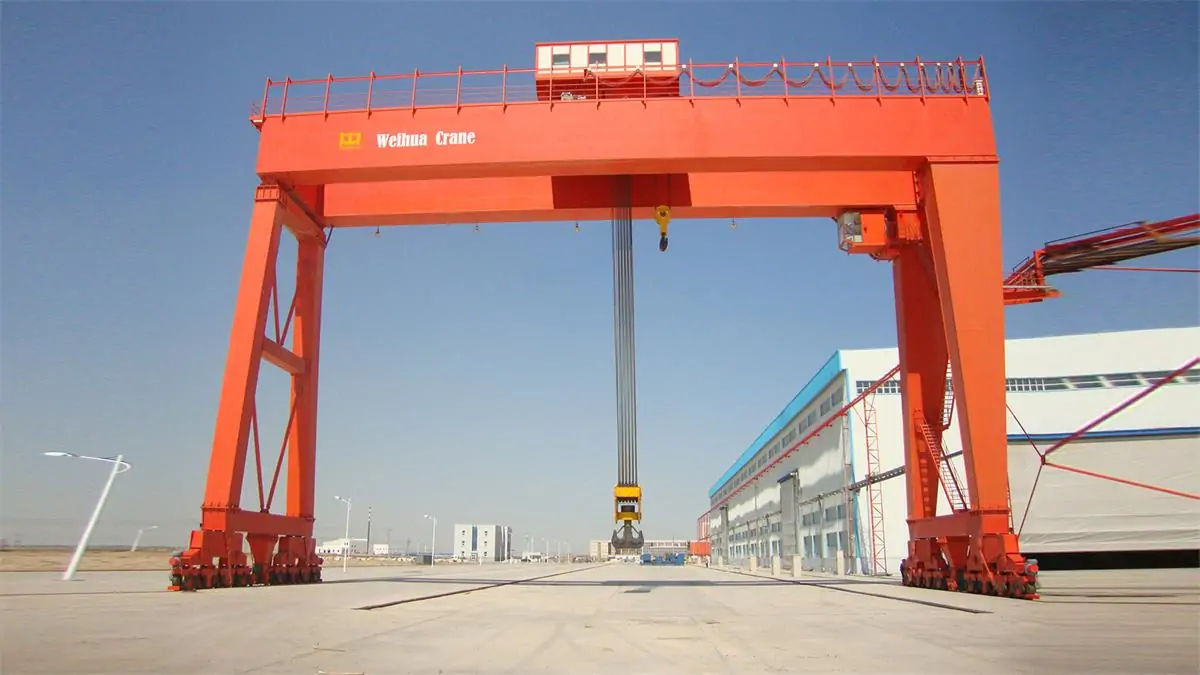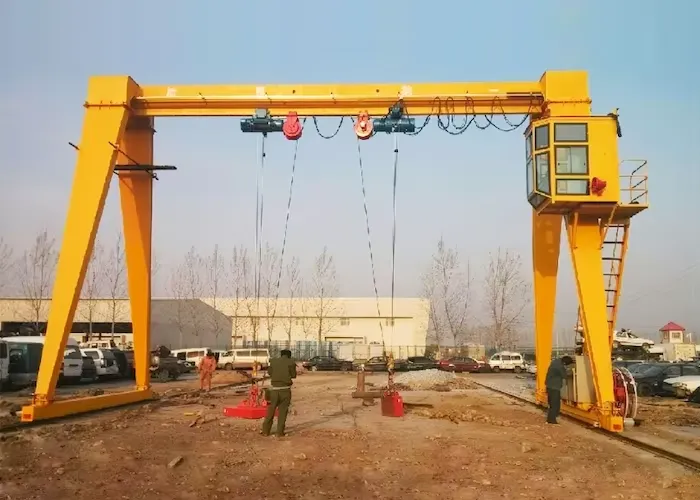

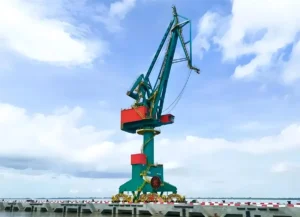
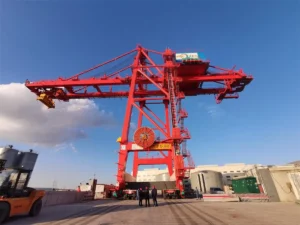
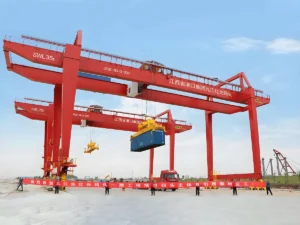
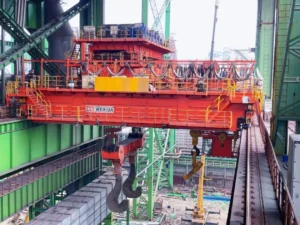
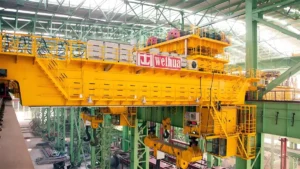
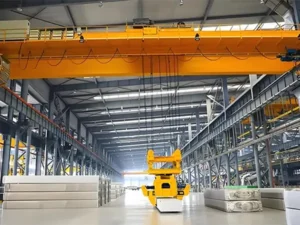
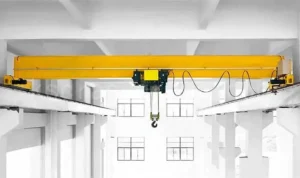
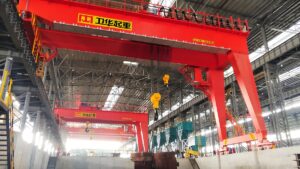
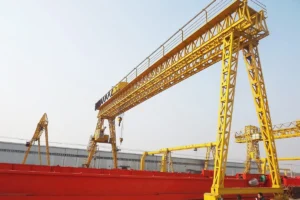

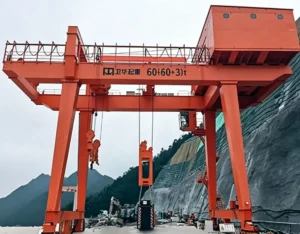
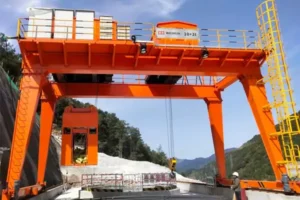







In container terminals and logistics yards, RTG vs RMG crane is a common comparison when selecting yard lifting equipment. Rubber Tyred Gantry (RTG) and Rail Mounted Gantry (RMG) cranes are mainly used for container stacking and transshipment, but they differ in mobility, power supply, automation level, and infrastructure requirements.
This article will compare and analyze the structural composition, technical parameters, performance, application scenarios, and costs of RTG and RMG.
Table of Contents
What Is an RTG Crane?
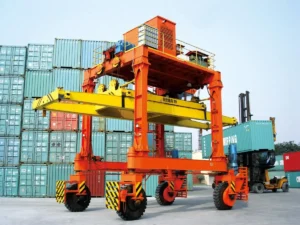
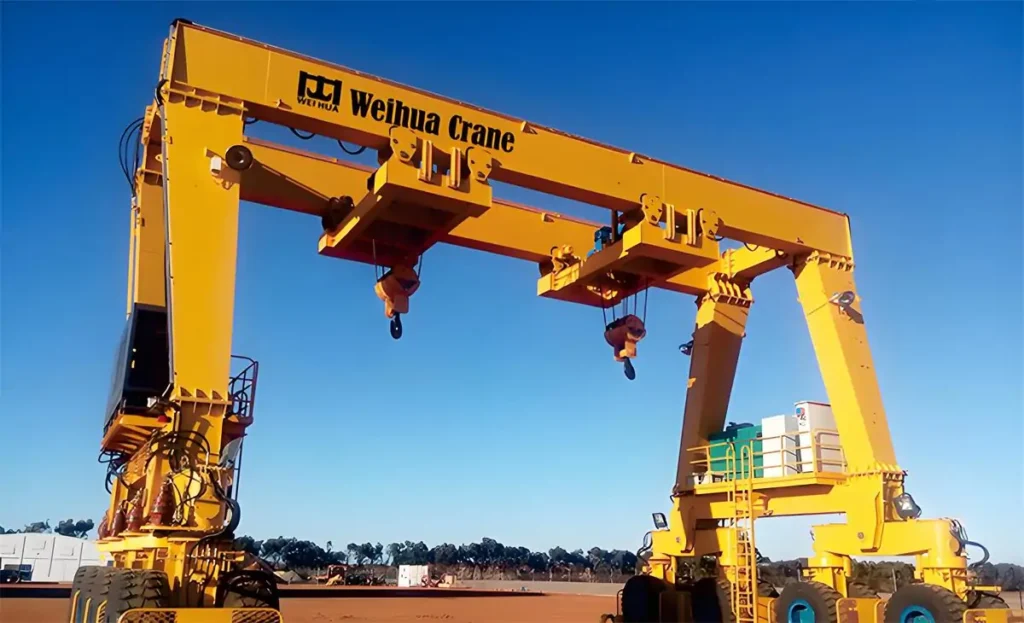
Rubber Tyred Gantry RTG Cranes is a mobile and flexible yard crane primarily used for container stacking and transshipment. It uses tires for mobility, allowing it to move freely within the yard. Powered typically by diesel or hybrid power, it offers flexible deployment options for scenarios requiring frequent repositioning within the yard.
What Is an RMG Crane?
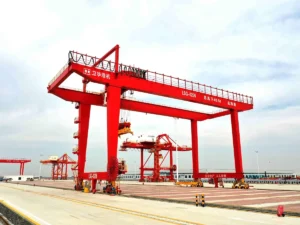
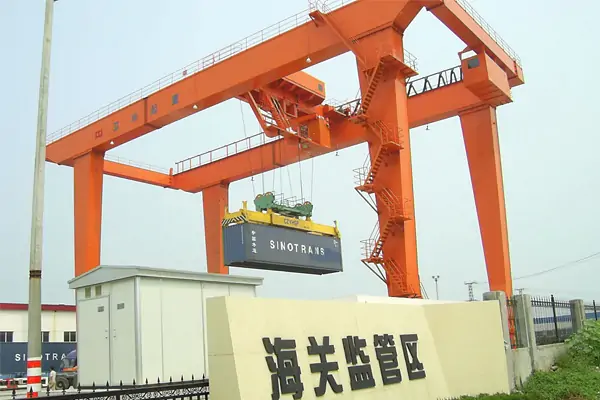
Rail Mounted Container Gantry Crane operates along fixed tracks and is primarily used for container stacking and loading/unloading. It is electrically powered, offers stable operation, and is suitable for standardized yard layouts.

RTG vs RMG: Key Differences Comparison
RTG and RMG differ in terms of mobility, energy structure, level of automation, and long-term operating costs. The following is a key comparison:
| Feature | RTG | RMG |
|---|---|---|
| Mobility | Free moving | Rail mounted |
| Energy source | Diesel/Hybrid | Electric |
| Yard density | Medium | High |
| Automation | Semi-auto | Fully auto |
| Maintenance | Tire + engine | Rail + motor |
| Initial cost | Lower | Higher |
| Long-term cost | Higher | Lower |
Application Comparison
In container yard operations, rubber-tired gantry cranes (RTGs) and rotary gantry cranes (RMGs) are two mainstream gantry crane solutions. RTGs originated in the 1980s and offer high flexibility and mobility; RMGs are characterized by higher automation and operational efficiency, and their application scope is gradually expanding. Each has its advantages, and the choice should be made based on the size and layout of the container yard and automation requirements.
- Site Adaptability: RTGs are suitable for flexible, frequently repositioned container yards, allowing them to move between different sites. RMGs require track laying and are suitable for specialized, fixed-layout yards.
- Mobility: RTGs move on rubber tires, offering flexible steering; the tires can rotate 90 degrees for cross-site operations. RMGs run along fixed tracks, with their movement limited by track laying.
- Investment Cost: RTG yard construction is simple, requiring no track laying, resulting in low initial investment. RMGs require track infrastructure, leading to higher initial investment but lower long-term operating costs.
- Automation Level: RTG automation is more difficult, relying heavily on manual operation. RMGs are suitable for automated control.
- Energy Efficiency: RTG tire-based operation consumes a lot of energy, with tire wear being a continuous cost. RMGs have lower track resistance, resulting in lower energy consumption and relatively lower maintenance costs.
- Application Scenarios: RTGs are more suitable for small to medium-sized terminals, road/rail freight stations, and other situations requiring flexible deployment. RMGs are suitable for large, specialized container terminals, where high efficiency and automation are prioritized.
- Market Trends: RTG technology is mature, and its market share is stable. RMG has advantages in automation, its market share continues to grow, and it is gradually becoming the mainstream choice for large terminals.
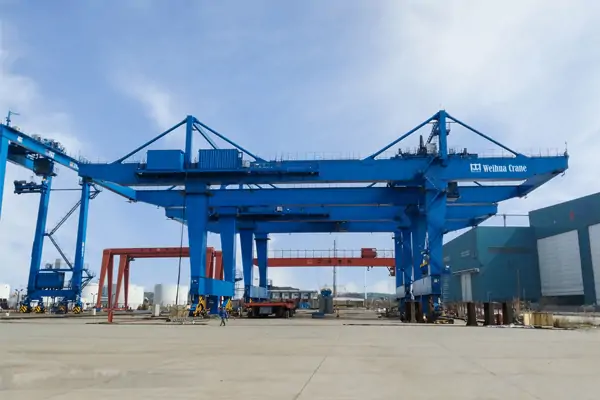
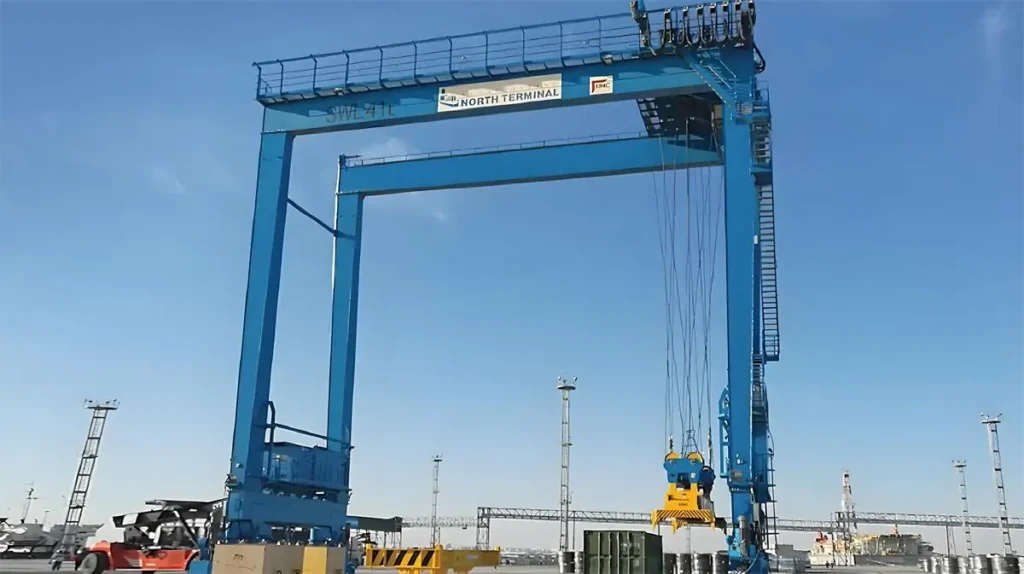
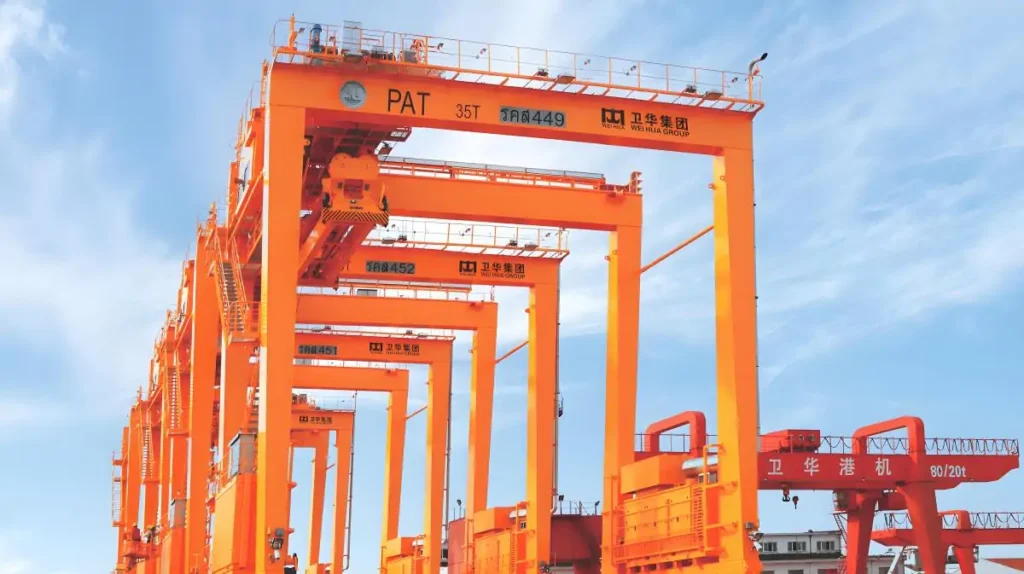
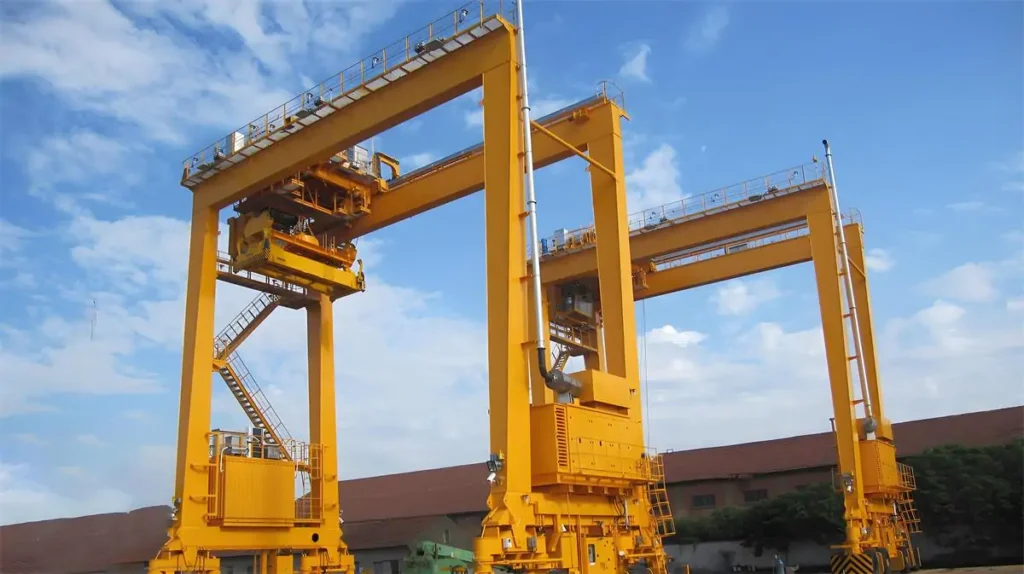
Main structural components of container gantry cranes
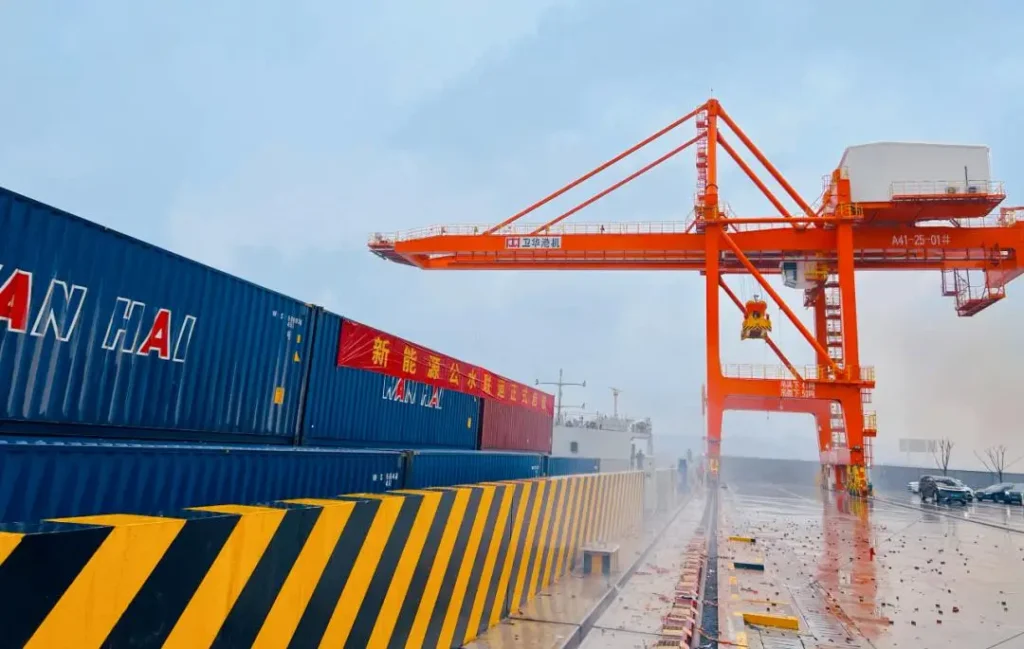
RTG and RMG machines primarily utilize box-type steel structures, which are lightweight and high-strength. While truss structures are feasible, their complex manufacturing and high cost limit their practical application.
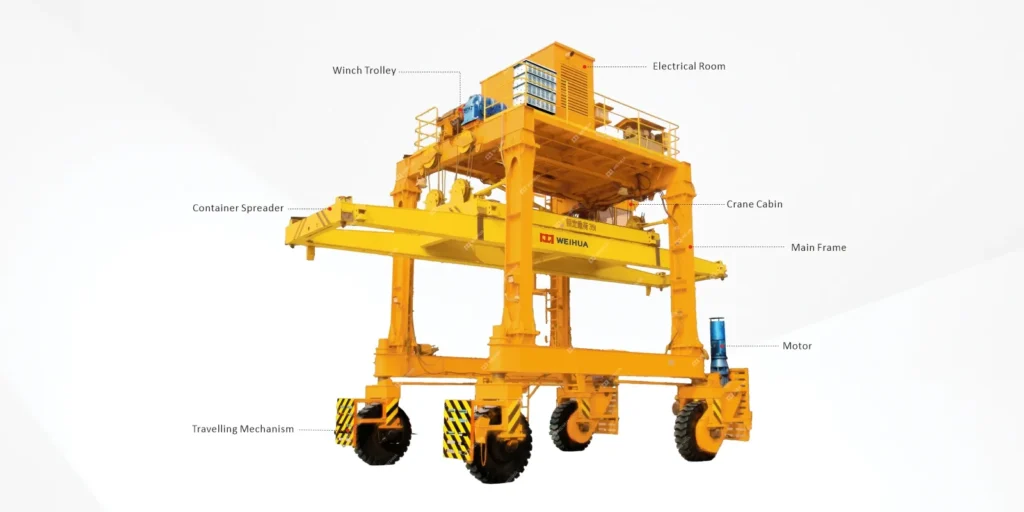
RTG Main Components:
- Support System: Eight rubber tires support the entire machine.
- Power System: Diesel engine drives a generator for power, requiring no external power source.
- Working Mechanism: Hoisting mechanism, trolley traveling mechanism, gantry traveling mechanism.
- Lifting Device: Telescopic spreader, suspended below the self-propelled trolley.
- Other Components: Cab, transmission system.
- Connection Method: Welding or flange connection.
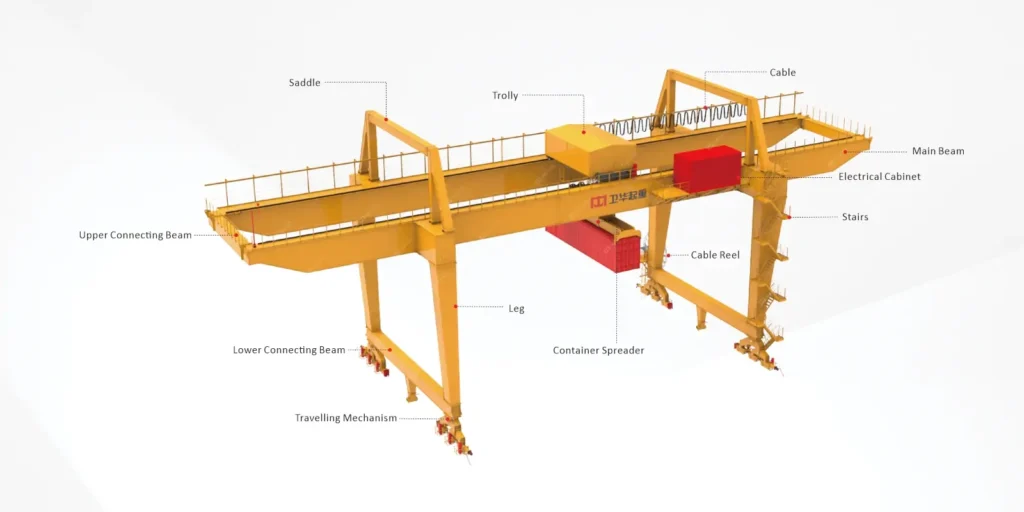
RMG Main Components:
- Support System: Steel wheels travel along rails.
- Steel Structure: Gantry frame; span and cantilever can be customized.
- Working Mechanism: Hoisting mechanism, trolley traveling mechanism, gantry traveling mechanism.
- Electrical System: Electric drive, requires rail power supply.
- Lifting Device: Spreader.
- Other Components: Cab.
Technical Parameters Comparison
Based on actual yard operations, RTG and RMG differ in terms of lifespan, operational efficiency, and structural design. A comparison of their technical parameters is as follows:
| Main Parameters | RTG (Rubber Tyred Gantry Crane) | RMG (Rail Mounted Gantry Crane) |
|---|---|---|
| Design Service Life | Approx. 15 years | Approx. 25 years |
| Basic Depreciation Rate | Approx. 6–7% | Approx. 4% |
| Overhaul Cost Ratio | Approx. 2–3% | Approx. 1–2% |
| Annual Maintenance Cost Ratio | Approx. 0.5–1% | Approx. 0.1–0.3% |
| Rated Lifting Capacity | 40–41 tons | 40–41 tons |
| Span | Smaller span, no cantilever | Larger span, with cantilever |
| Rated Lifting Height | 5-high stacking over 6 containers | 5-high stacking over 6 containers |
| Wheel Base / Gauge | Smaller | Larger |
| Full Load Hoisting Speed | Relatively lower | Higher |
| No-load Hoisting Speed | Relatively lower | Higher |
| Trolley Traveling Speed | Lower | Higher |
| Driving Method | Diesel generator-electric drive (mainstream) | AC variable frequency or DC speed control |
| Traveling Mechanism | Rubber tires (commonly 8 wheels), steerable, high mobility | Steel wheels (16 or 24), fixed rail operation |
Performance Comparisons
Both RTG and RMG are mainstay equipment in container yards. RTG emphasizes maneuverability and flexibility, while RMG prioritizes high efficiency and precision. Understanding the performance differences between the two is a prerequisite for making an appropriate selection.
- Mobility Flexibility: RTGs are tire-powered, allowing for free movement between different terrains and sites, facilitating inter-yard scheduling. RMGs, limited by tracks, can only operate along fixed routes and cannot cross yard boundaries.
- Economy: RTGs have low purchase costs and high utilization rates, making them suitable for projects with limited budgets. RMGs require a larger initial investment (track construction), but have lower energy consumption and require less maintenance, resulting in longer-term cost savings.
- Operational Efficiency: RTGs offer flexible operation but slightly lower positioning accuracy, requiring primarily manual operation. RMGs offer accurate positioning, high automation, and superior continuous operation efficiency, making them suitable for high-throughput scenarios.
- Applicable Scenarios: RTGs are suitable for multi-point operations, temporary yards, small to medium-sized terminals, and rail/road freight stations. RMGs are suitable for large, specialized terminals with fixed layouts, automated yards, and high-density operation areas.
- Selection Principles: Choose RTGs for flexible deployment; choose RMGs for high-efficiency automation.
RTG vs RMG Cost Comparison
When selecting yard equipment, procurement, installation, energy consumption, and long-term operating costs should be considered comprehensively, not just the equipment price.
Initial Investment
RTG cranes generally require lower upfront investment.
RMG cranes have higher equipment costs, especially with automation systems.
Installation Cost
RTGs do not require rail infrastructure, resulting in simpler foundations and shorter installation time.
RMGs require rail tracks and dedicated power systems, leading to higher civil construction costs.
Fuel vs Electricity Cost
RTGs are typically diesel or hybrid powered, with higher fuel expenses and sensitivity to fuel price fluctuations.
RMGs are electrically driven, offering lower energy consumption and more stable long-term operating costs.
Maintenance Cost
RTGs involve tire and engine maintenance, resulting in higher long-term service costs.
RMGs have a more stable structure and generally lower maintenance requirements.
Lifecycle Cost (15–20 Years)
RTGs offer lower initial cost but higher long-term operating expenses.
RMGs require greater upfront investment but provide better long-term return due to longer service life and lower operating costs.
Which Is Better for Your Container Yard?
The specific choice should be determined based on the yard size, level of automation, and long-term development plan.
- Small to medium-sized terminals: RTGs offer greater flexibility. They can move freely within the yard, require lower infrastructure investment, and are suitable for projects with phased construction or frequent layout adjustments.
- Large automated ports: RMGs are more efficient and operate more stably. Fixed-track operation facilitates system integration and is more suitable for high throughput and automated operation requirements.
- Green port projects: RMGs offer more significant advantages. Electric drive reduces fuel consumption and emissions, achieving energy conservation, emission reduction, and low-carbon operation.
| Decision Factor | Choose RTG If… | Choose RMG If… |
|---|---|---|
| Yard Size | Small or medium terminal | Large-scale container yard |
| Throughput Demand | Moderate container volume | High throughput, intensive operation |
| Budget Level | Limited initial investment | Sufficient long-term capital planning |
| Yard Layout | Layout may change or expand in phases | Fixed layout with long-term planning |
| Infrastructure | Want to avoid rail construction | Ready to build rail and power infrastructure |
| Automation Plan | Semi-automation is acceptable | Full automation is required |
| Energy Strategy | Fuel or hybrid solution acceptable | Prefer full electric, low-emission system |
| Operating Cost Focus | Lower upfront cost is priority | Lower long-term lifecycle cost is priority |
| Expansion Flexibility | Need mobility and relocation ability | Stable, high-density stacking required |
| ROI Horizon | Short- to mid-term return | Long-term 15–25 year return planning |
Choosing the Right Manufacturer Matters
Determining the RTG or RMG solution is only the first step; selecting an experienced manufacturer is equally crucial.
- Engineering and Technical Support: We provide yard layout planning, load analysis, and system integration solutions to match equipment with actual operational needs.
- Customized Design: We offer specialized designs based on stacking height, span requirements, and automation levels to improve operational efficiency and reliability.
- Global Project Experience: We possess overseas project implementation experience and are familiar with different port standards and operating environments, reducing project risks.
- Full Lifecycle Service: From installation and commissioning to spare parts supply and long-term maintenance, we continuously ensure stable equipment operation and minimize downtime losses.
Conclusion
RTG and RMG each have their advantages in terms of structure, operation, energy consumption, and long-term cost. RTG is suitable for small to medium-sized yards with flexible layouts and phased construction; RMG is more suitable for high-density, automated, and green port projects.
For customized RTG or RMG configuration solutions based on specific yard conditions, please contact us. We can provide technical selection support and customized design advice.
FAQs
Is RTG cheaper than RMG?
Yes, RTG usually has a lower initial purchase cost. RMG requires higher upfront investment due to rail infrastructure and automation systems.
Which crane has lower operating cost?
RMG generally has lower long-term operating costs because of electric drive and reduced maintenance needs.
Can RTG be fully electric?
Yes, electric or hybrid RTG models are available, reducing fuel consumption and emissions.
Is RMG suitable for small terminals?
It can be used, but the higher infrastructure cost may not be economical for small-scale operations.
Which crane is better for automation?
RMG is better suited for automated container terminals due to fixed rail operation and easier system integration.