

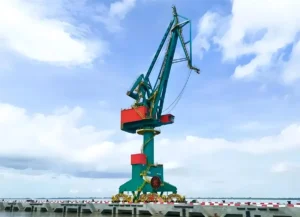
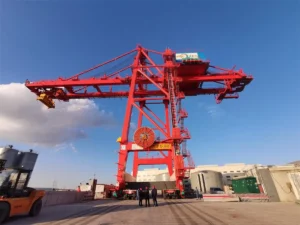
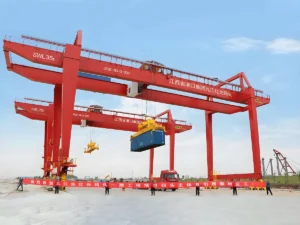
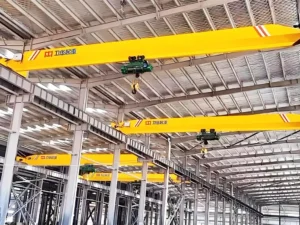
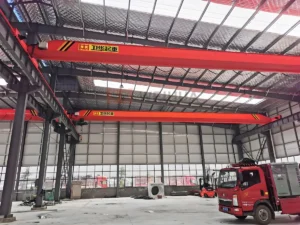
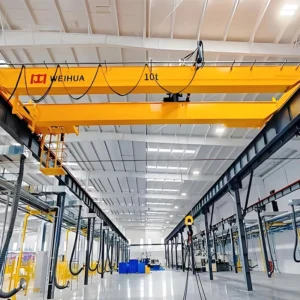
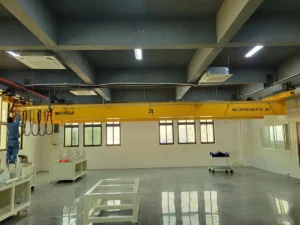
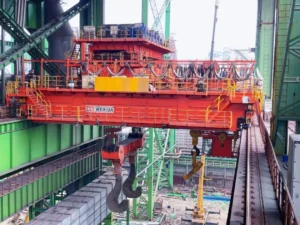
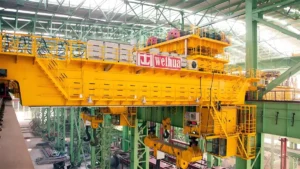
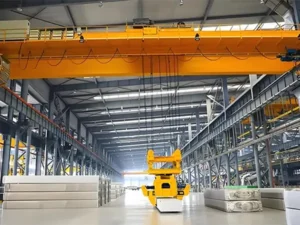
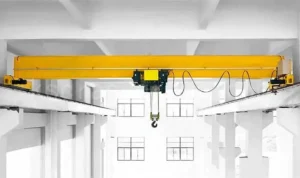
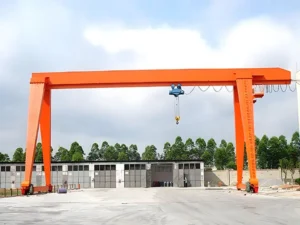
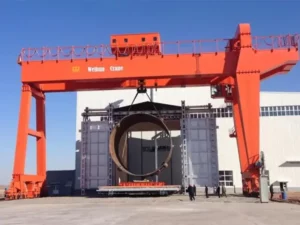
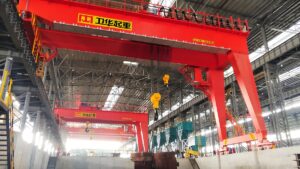
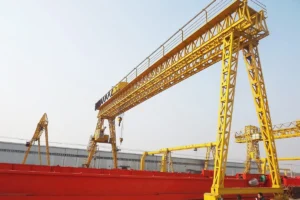

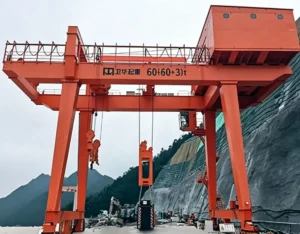
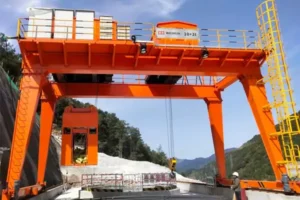

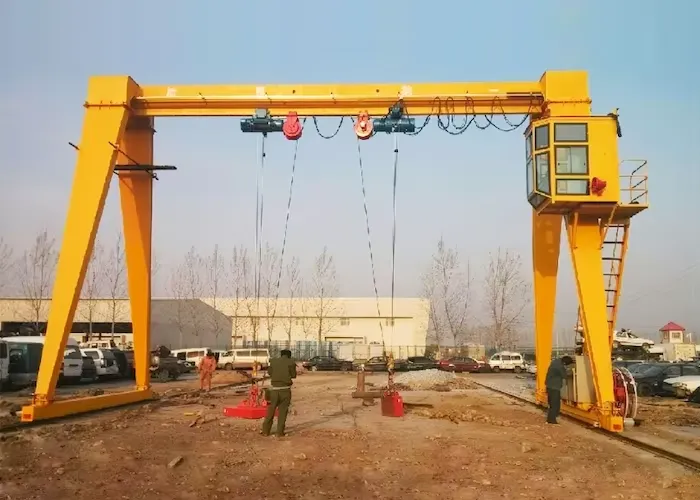
A truss gantry crane for industrial outdoor yards typically costs between $18,000 and $75,000 for single girder configurations (5–50 t) and $80,000 to $380,000+ for double girder heavy-duty models (50–500 t). These figures reflect factory-direct pricing from Chinese manufacturers and cover the crane structure, hoist, and electrical system — before freight, installation, and rail work.
Most procurement teams ask about price early, and rightly so. But truss gantry crane costs are shaped by variables beyond tonnage alone: span, working duty class, hoist type, and site environment all shift the final number significantly. Requesting a price without these details typically produces a quote that doesn’t match what your site actually needs.
This guide breaks down what drives truss gantry crane pricing, what hidden project costs to budget for, and how to get an accurate quotation from Weihua Crane’s engineering team.
Índice
Quick Price Reference — Weihua Crane Truss Gantry Crane
Configuration Capacidade Span Missão de Serviço Market Price Reference Single Girder (MH Type) 5–50 t 15–40 m A5–A6 $18,000–$75,000 Double Girder (A Type) 50–500 t 25–100 m A6–A7 $80,000–$380,000+ Prices reflect Chinese factory-direct market reference levels. Final cost depends on span, lifting height, duty class, power supply, and destination. Rail, freight, and installation are calculated separately.
Request a Site-Specific Quotation from Weihua Crane →
Obtenha uma Cotação Personalizada Agora
Why Truss Gantry Crane Pricing Is Different from Box Girder Models
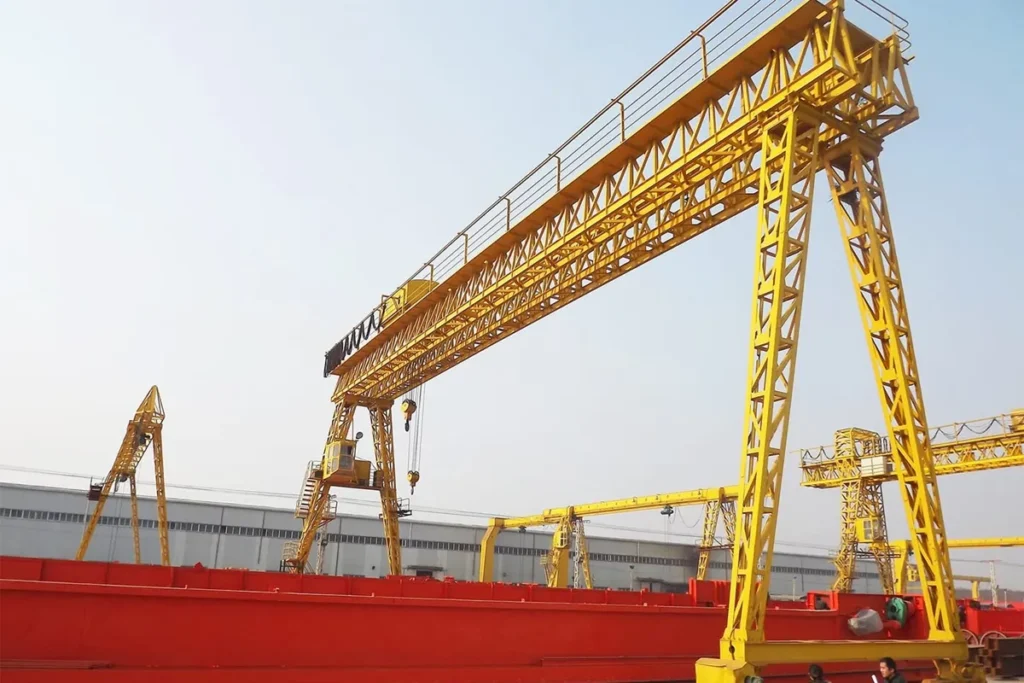
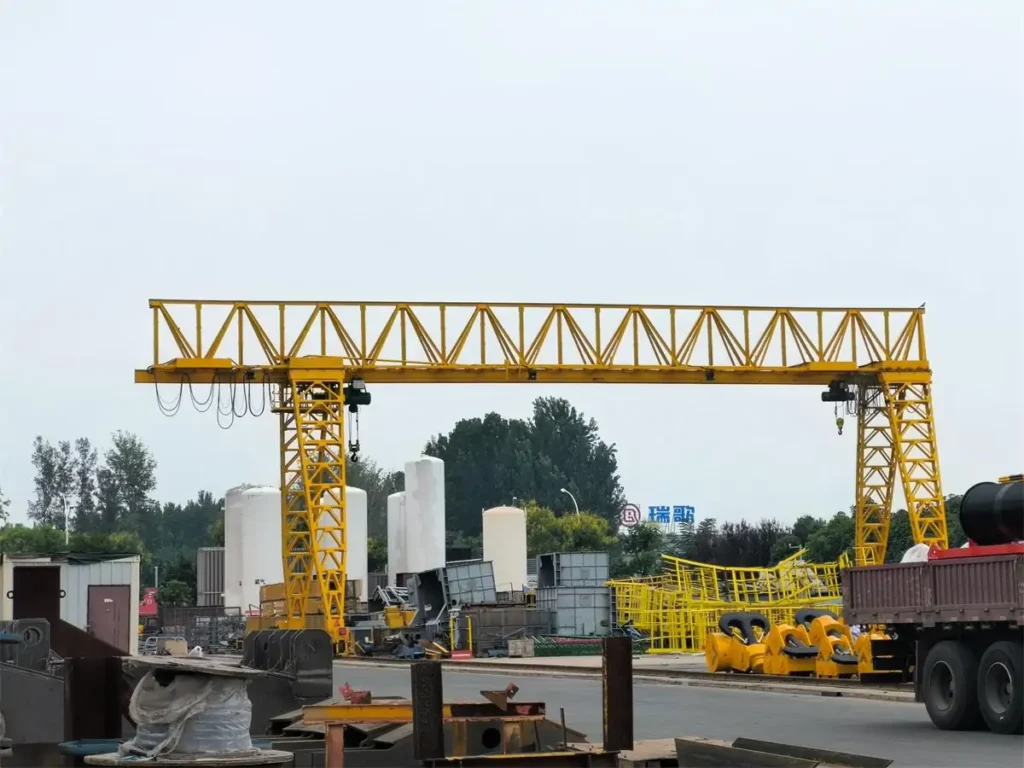
The open-lattice structure changes the cost equation at large spans
A truss girder distributes load through triangulated steel members rather than solid plate walls. For spans above 20 m, this means significantly less steel weight per meter than a comparable box girder, keeping material cost lower and reducing the foundation load your site must support. At the same time, truss fabrication is more labor-intensive: each member must be cut, positioned, and welded to precise angles.
For spans under 15 m, a box girder is often cheaper because fabrication savings outweigh material savings. Above 20 m — the typical starting point for outdoor industrial yards — the truss design becomes more cost-competitive and structurally appropriate. As a working reference, truss cranes at equivalent capacity and span generally cost 10–20% less than comparable outdoor box girder cranes, primarily due to lower steel consumption on long-span designs and easier sectional transport to site.
Wind-resistance specifications add cost that box girder buyers don’t always see
Truss cranes are designed for outdoor, high-wind environments. Your quotation will include windproof braking systems, reinforced leg bracing for wind zone compliance, and anti-corrosion paint grades not required for indoor equipment. These are not optional extras — they are baseline features for outdoor truss crane operation, and they appear in the price whether itemized or bundled. When comparing quotes from different suppliers, confirm that wind-resistance specifications are equivalent. A lower price that omits windproof braking is not a fair comparison.
Truss Gantry Crane Price by Configuration
Single girder MH-type: $18,000–$75,000
Single girder MH-type truss cranes from Weihua cover 5 to 50 tons across spans of 15 to 40 m, with working duties A5–A6. This is the correct range for steel yards, port ancillary areas, outdoor storage, and construction sites with regular lifting cycles.
Span is the largest single cost lever for single girder units. A 5 t crane at a 15 m span sits at the lower end of the range; the same 5 t crane at 35 m can cost 40–60% more due to deeper girder sections, heavier rail specification, and stronger leg bracing required to maintain stability over the wider opening.
Hoist type moves price meaningfully within the same capacity. Higher-duty hoist configurations add to equipment cost upfront but reduce long-term maintenance and replacement expense. Control method adds a predictable increment: ground pendant is standard; wireless remote adds approximately $800–$2,000; a driver’s cabin adds $5,000–$15,000 or more at larger capacity ranges.
| Capacidade | Span | Altura de elevação | Missão de Serviço | Indicative Price (USD) |
|---|---|---|---|---|
| 5–10 t | 15–25 m | 6–10 m | A5 | $18,000–$35,000 |
| 20–32 t | 20–35 m | 8–15 m | A5–A6 | $35,000–$65,000 |
| 40–50 t | 25–40 m | 10–18 m | A6 | $55,000–$75,000 |
Market reference ranges from Weihua Crane factory-direct pricing. Contact engineering team to confirm for your span and site parameters.
Double girder A-type: $80,000–$380,000+
Double girder A-type truss cranes cover 50 to 500 t across spans of 25 to 100 m, working duty A6–A7. These are the correct configuration for steel mills, shipyards, large precast yards, and heavy engineering projects where no single girder design can achieve the required capacity or span.
At this capacity level, price is primarily driven by total lifted weight and span in combination, not either variable alone. A 100 t crane at 30 m span sits in the middle of the range; a 300 t crane at 80 m span pushes toward the upper end and into custom engineering territory. Working duty at A6–A7 means the structural steel, hoist mechanisms, and drive systems are all designed for intensive continuous use — heavier sections, more robust braking, higher-rated motors throughout.
| Capacidade | Span | Altura de elevação | Missão de Serviço | Indicative Price (USD) |
|---|---|---|---|---|
| 50–100 t | 25–50 m | 10–20 m | A6 | $80,000–$160,000 |
| 150–200 t | 40–70 m | 15–25 m | A6–A7 | $160,000–$260,000 |
| 300–500 t | 60–100 m | Custom | A7 | $260,000–$380,000+ |
All figures are market reference ranges. Final quotation requires confirmed site parameters. Contact Weihua Crane for project-specific pricing.

7 Factors That Determine Your Final Truss Gantry Crane Price
Capacidade de elevação
Capacity sets the structural design category, and the price relationship is not linear. Moving from 10 t to 20 t adds modest cost; crossing from 50 t to 100 t triggers a full redesign of the girder, hoist assembly, legs, and foundation load — with corresponding cost increases at each structural threshold.
For truss gantry cranes specifically, note the capacity boundary between configurations: Weihua’s single girder MH-type covers up to 50 t; the double girder A-type starts at 50 t. If your maximum lift requirement sits near this boundary, confirm with the engineering team which configuration suits your duty cycle before comparing prices.
Span
Span has an outsized effect on truss crane cost. Every additional meter requires more steel in the main girder and deeper section depth to maintain stiffness — and for truss beams, this means more individual members, more fabrication time, and heavier rail specifications. As a working reference: increasing span from 20 m to 35 m on an equivalent 20 t configuration typically adds 25–40% to the structure cost before any other variables change.
Working duty class
Working duty (A5, A6, A7 under ISO 4301) defines how intensively the crane is expected to operate across its design life. Higher duty class means heavier structural steel, more robust hoist components, and larger motors throughout — all of which increase upfront cost. The trade-off is significant: a crane specified at A5 running an A7 workload will require major component replacement well before its design service life, costing far more than the initial duty-class upgrade.
Altura de elevação
Taller leg sections require thicker plate steel and wider base spreads to maintain stability. For every additional 3 m of lifting height, expect structural cost to increase approximately 8–15% on the leg assemblies alone. Outdoor exposure and wind loading requirements amplify this effect — taller legs in high-wind zones need additional bracing.
Power supply
Standard is 380V / 50Hz / 3-phase, which carries no premium. Non-standard voltages — 440V, 480V, or 60Hz systems common in North America, the Middle East, and parts of Southeast Asia — require custom motor windings and modified control panels, typically adding 8–15% to the electrical system cost. Confirm your local power supply before requesting a quotation.
Environmental requirements
Coastal environments, chemical yards, or high-humidity tropical locations require marine-grade anti-corrosion coatings, stainless fasteners in exposed locations, and sealed electrical enclosures rated IP55 or higher. These additions typically add 5–12% to base price — substantially less than the cost of replacing standard-specification components that fail within 2–3 years in a salt-air environment.
Control configuration
Ground pendant control is the cost baseline. Remote wireless control adds $800–$2,500 depending on range and safety interlocks. A full driver’s cabin — structurally integrated into the bridge, with HVAC, safety glass, and communication systems — adds $5,000–$20,000+ at the higher capacity ranges. For operations requiring sustained precision positioning or long travel distances, cabin control pays for itself in reduced fatigue errors and improved cycle times.
Hidden Project Costs to Budget Before You Order
Rail supply and foundation preparation
Truss gantry cranes run on ground-level rails, which require a properly prepared concrete runway and precisely leveled rail installation. Rail specification depends on the crane’s wheel load — heavier cranes require heavier rail profiles. For a standard 20 t crane on a 50 m runway, rail supply and installation alone typically adds $8,000–$20,000 to the project budget, before any foundation preparation. If your site already has a prepared concrete runway, this cost reduces significantly.
Freight and shipping
Large-span truss cranes are shipped in sections and reassembled on site. For a 20 t single girder unit to a Southeast Asian port, containerized freight from China typically runs $3,000–$8,000. For a 100 t+ double girder shipped as heavy lift cargo, freight and port handling can reach $15,000–$40,000 or more. Always request FOB, CIF, and DDP pricing separately to understand the true landed cost.
Installation and commissioning
For a mid-size single girder unit, experienced local crews can complete assembly and pre-commissioning in 3–7 days; larger double girder units may require 2–4 weeks with specialized lifting equipment for the girder sections. Budget $3,000–$15,000 for installation depending on crane size, site conditions, and whether Weihua on-site technical support is included. Weihua provides detailed installation documentation and can arrange remote guidance or on-site support upon request.
Spare parts package
For operations in locations where crane component lead times are long, a commissioning spare parts package — covering wear parts for the hoist, limit switches, and electrical contactors — is worth adding to the initial order. Cost is typically $500–$2,500, and it eliminates significant downtime risk if a component fails in the first operational year.
Certifications and Compliance: What to Verify and What It Costs
Standard documents required before every shipment
Regardless of destination, request the following documents before making final payment: an ISO 9001 certificate for the manufacturing facility; a load test certificate proving the crane was tested at rated load before shipment (the document most commonly absent during insurance claims); and material test certificates for primary structural steel members.
CE marking for EU and European-adjacent markets
Marcação CE under EU Machinery Directive 2006/42/EC is required for crane imports into the European Union. Weihua Crane holds CE certification. Confirm that the specific crane configuration you are purchasing is covered under the Declaration of Conformity — not just the manufacturer’s general certification. CE compliance should not add cost to your quotation; it reflects baseline manufacturing standard.
EAC for CIS markets and OSHA for US installations
For Russia, Kazakhstan, Belarus, and other CIS countries, EAC certification is the applicable conformity requirement — specify this at the quotation stage, as it is not automatically included. For US installations, cranes must comply with OSHA regulations (29 CFR 1910.179), which primarily affects safety feature requirements in the crane configuration rather than the import documentation itself.
What to Provide Weihua for an Accurate Quotation
Providing the following eight items in your first inquiry eliminates multiple back-and-forth exchanges and produces a price that reflects your actual project:
- Maximum lifting capacity (tons) — your peak lift, not your average
- Site span (meters) — distance between rail centerlines
- Required lifting height (meters) — hook height at maximum elevation
- Site location — country and coastal vs. inland, for wind zone and corrosion class
- Power supply — voltage, phases, and frequency at site
- Working hours per day — used to confirm appropriate duty class
- Control preference — ground pendant, wireless remote, or cabin
- Rail status — existing rails in place, or full runway supply required
Weihua Crane’s engineering team returns an itemized quotation, layout drawing, and delivery timeline within 24 working hours.
Conclusão
Truss gantry crane price starts at around $18,000 for light single girder units and scales to $380,000+ for large double girder configurations — but the number that matters for your project is the total landed cost, not just the equipment line. Rail, freight, installation, and site preparation consistently add 20–35% on top of the crane quote, and leaving these out of early budget estimates leads to project overruns that are entirely avoidable.
Three actions worth taking before requesting quotes: confirm your span, capacity, and lifting height precisely, as these three variables determine approximately 70% of the crane structure cost; identify your compliance requirement (CE, EAC, or OSHA) and specify it in the purchase order rather than after shipment; and request an itemized quotation that separates crane, hoist, electrical, rail, and freight so supplier comparisons are meaningful rather than misleading.
Weihua Crane manufactures truss gantry cranes from 5 t to 500 t with spans to 100 m, CE and ISO 9001 certified, with over 37 years of industrial crane production experience. Contact the engineering team with your lifting parameters to receive a project-specific truss gantry crane price.
Response within 24 working hours. Provide: capacity, span, lifting height, site location, power supply.
FAQ
Q1: How much does a 10-ton truss gantry crane cost?
A 10-ton single girder truss gantry crane typically falls in the $22,000–$45,000 range from Chinese manufacturers, depending on span and control configuration. A 15 m span unit sits toward the lower end; a 30 m span unit with remote control and corrosion protection approaches the upper range. The span variable alone can shift a 10 t unit’s price by 40% or more — always request a span-specific quotation.
Q2: What is the price difference between single and double girder truss gantry cranes?
Single girder configurations (5–50 t) generally range from $18,000 to $75,000; double girder units (50–500 t) start around $80,000 and reach $380,000+ for large custom configurations. The price gap reflects not just additional steel in a second girder but an entirely different structural design class, hoist system, and working duty rating. These are not interchangeable at the capacity boundary — confirm which suits your duty cycle with the engineering team before comparing prices.
Q3: Does the truss gantry crane price include installation?
No — installation is almost always quoted separately. Equipment price covers the crane structure, hoist, and electrical system ex-factory. Rail supply, freight, on-site assembly, and commissioning are separate line items that typically add 20–35% on top of the equipment price. Request a full project cost estimate before finalizing your budget.
Q4: What certifications affect truss gantry crane procurement cost?
CE marking and ISO 9001 are baseline certifications that serious manufacturers hold and should not add cost to your quotation. EAC certification for CIS markets must be specified at the quotation stage. The most practically important document for import buyers is the load test certificate before shipment — include this requirement explicitly in every purchase order.
Q5: What is the typical lead time, and does urgency affect price?
Standard single girder units (5–50 t) typically have production lead times of 4–8 weeks from order confirmation. Large double girder configurations (100 t+) may require 10–16 weeks depending on steel procurement and engineering complexity. Rush production is sometimes possible but typically adds 10–20% to base cost. Factor lead time into your project schedule before placing the order — it is significantly harder to compress after manufacturing has started.



 English
  Русский
  العربية
  Français
  Português
  Español