
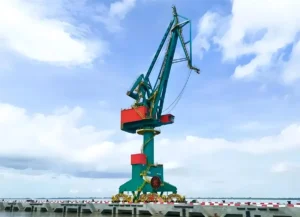
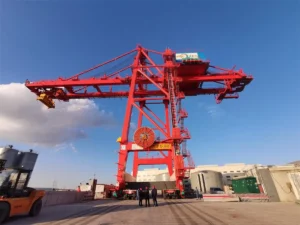
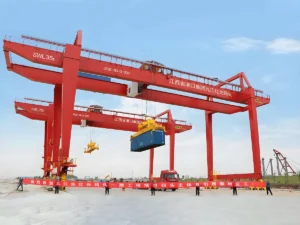
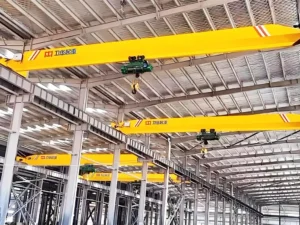
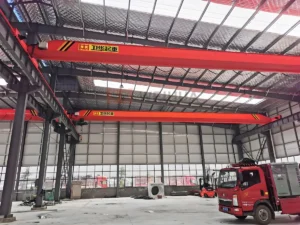
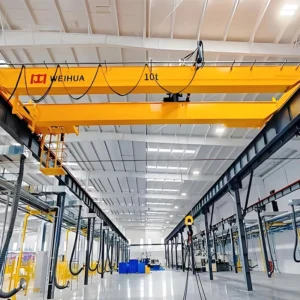
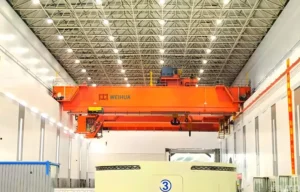
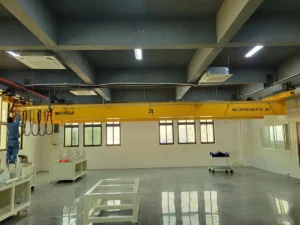
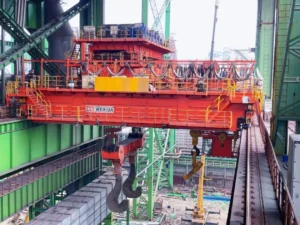
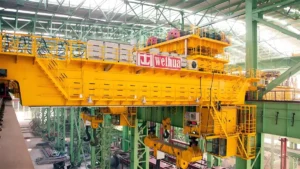
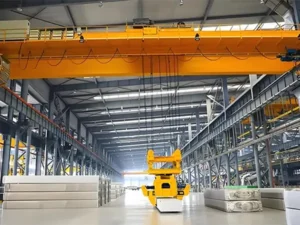
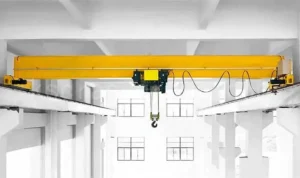
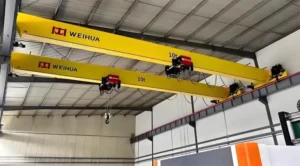
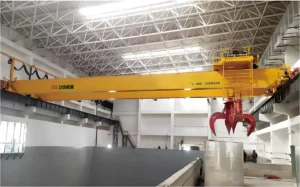
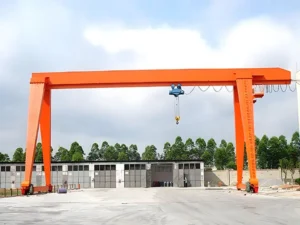
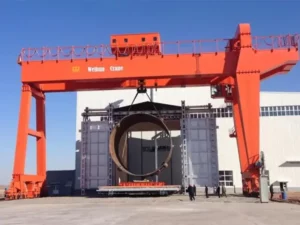
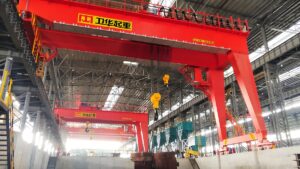
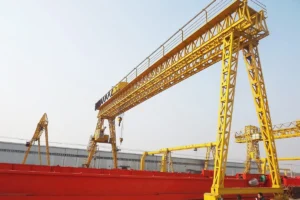

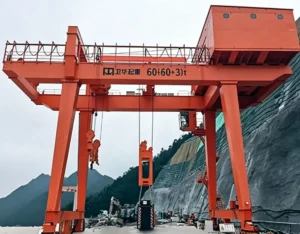
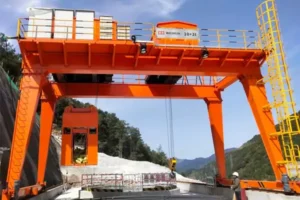







Does it matter which type of 10 ton overhead crane a facility buys? Far more than most procurement teams expect. The rated capacity is the easy part — the decisions around girder configuration, duty class, span, and headroom clearance determine whether the crane runs reliably for 15 years or becomes a maintenance problem within three.
Buyers evaluating a 10 ton overhead crane for sale need a clear comparison of available configurations, the specifications that actually drive cost, and a practical checklist for vetting a supplier before placing an order. This guide covers all three, based entirely on Weihua’s product range.
Índice
Quick Reference: 10 Ton Overhead Crane Types at a Glance
| Configuration | Âmbito Típico | Classe de Dever | Altura de elevação | Market Price (USD) |
|---|---|---|---|---|
| Single girder (LD standard) | 7,5–28,5 m | A3–A5 | 6–30 m | $3,900–$12,000 |
| Underslung single girder (LX) | 7.5–31.5 m | A3–A5 | 6–30 m | $3,900–$12,000 |
| Double girder with hoist trolley (LH) | 10.5–31.5 m | A5–A6 | Up to 16 m std. | $17,200–$32,500 |
| Double girder with winch trolley (QD) | 10.5–31.5 m | A5–A6 | Up to 16 m std. | $17,200–$32,500 |
| European-style EOT (FEM standard) | 7.5–33 m | A5–A6 | Customizable | $7,800–$17,300 |
| Explosion-proof / Metallurgical EOT | Custom | A3–A6 | Custom | Contact engineering |
All figures are market reference ranges from Weihua’s supply chain. Final pricing depends on span, lifting height, duty class, and optional features.
Obtenha uma Cotação Personalizada AgoraWhat Makes a 10 Ton Overhead Crane a Critical Specification Decision
A 10 ton bridge crane sits at a capacity threshold where engineering decisions become genuinely consequential. Below 5 tons, single-girder configurations handle most applications without much debate. At 10 tons, buyers must make explicit choices about girder type, duty class, and structural design — choices that directly affect building load requirements, maintenance intervals, and long-term safety margins.
Why 10 Tons Is One of the Most Commonly Specified Capacities
Manufacturing, logistics, and heavy processing facilities consistently specify 10 ton overhead cranes because the capacity covers a broad range of production tasks — moving steel fabrications, engine blocks, molds, coil stock, and machinery components — without requiring the heavier runway structure that 20 ton and above cranes demand. The combination of real lifting utility and manageable infrastructure cost makes it one of the most widely ordered crane capacities globally.
Weihua’s 10 ton EOT crane range reflects this breadth: from compact underslung cranes for low-clearance workshops to heavy-duty double girder units with cab control and anti-sway systems for continuous production environments.
The Four Specification Variables Buyers Must Set Before Ordering
Span sets the distance between runway rails. Wider spans require heavier main beams, which raises unit cost. Single-girder configurations are generally available up to 28.5 m; double-girder units extend to 31.5 m and beyond.
Altura de elevação is the distance from floor to hook at maximum elevation. Taller facilities require longer hoist rope and a larger drum, adding cost incrementally.
Duty class (ISO 4301-1 classification) defines how intensively the crane will be used. This is the variable buyers most commonly underspecify — and the one with the most direct impact on long-term performance.
Headroom clearance determines whether a standard top-running crane fits, or whether a low-headroom or underslung configuration is needed to maximize hook height within the building’s structural limits.
Single Girder vs. Double Girder: The Decision That Matters Most
Choosing between single and double girder is the most consequential structural decision for a 10 ton overhead crane. Buyers who get this wrong typically discover the problem during the second or third year of operation, not at commissioning.
When Single Girder Is the Right Choice
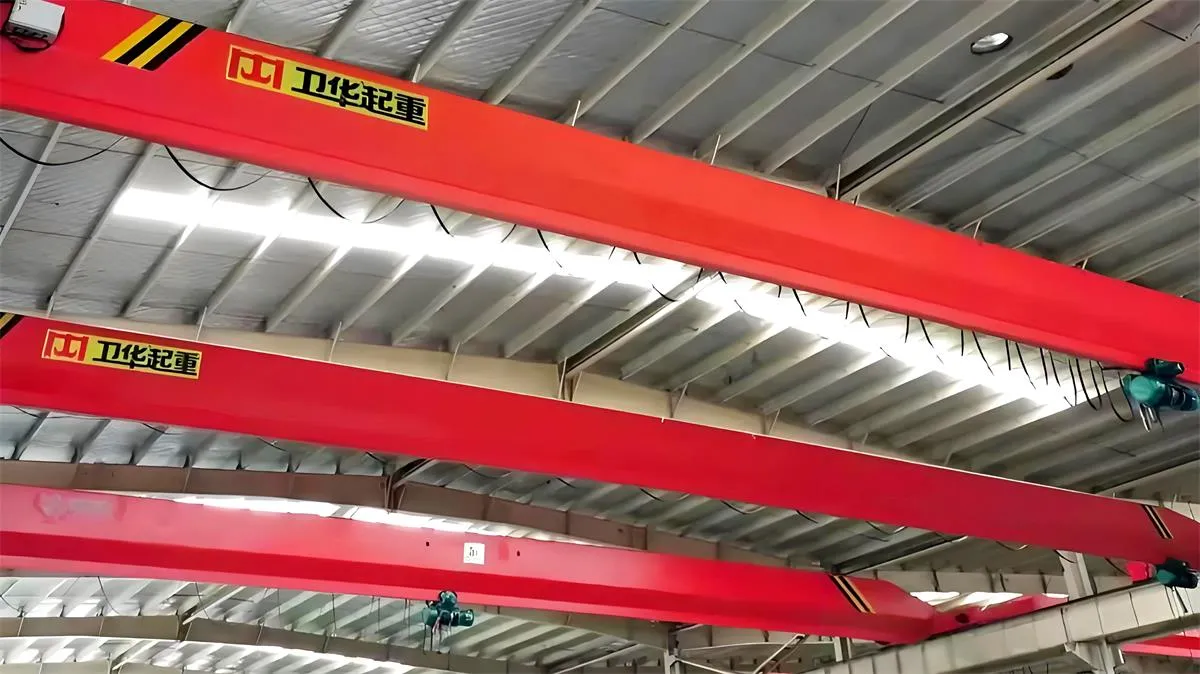
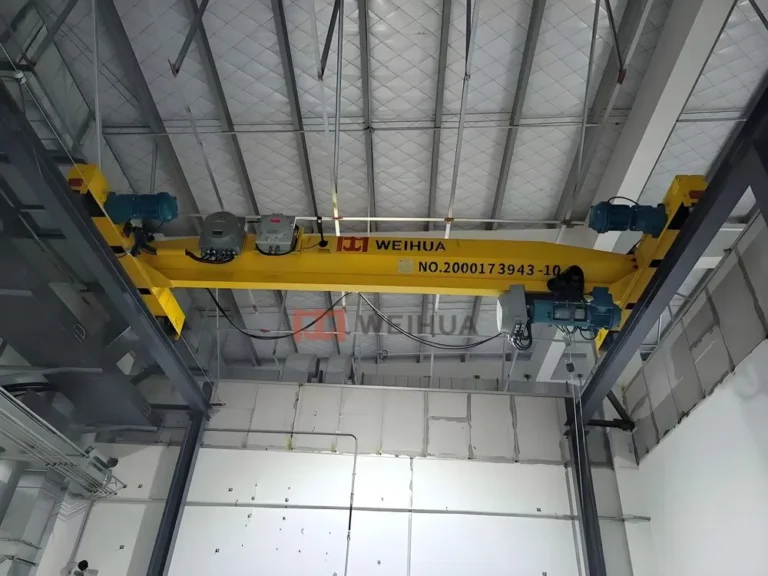
A single girder overhead crane uses one main beam, with the hoist and trolley running beneath it on the lower flange. For 10 ton applications at duty class A3 or A4 — meaning infrequent lifts, moderate cycle counts, no continuous production demands — a single girder configuration is technically sound and meaningfully more cost-effective.
This means lower upfront cost, lower freight (the structure is lighter), and reduced runway load on the building. Typical applications include assembly workshops, maintenance bays, fabrication yards, and warehouses where the crane runs a limited number of cycles per shift.
Weihua’s LD single girder EOT crane covers spans from 7.5 to 28.5 m at this capacity, with A3–A5 duty class options and pendant or remote control. The LX underslung variant suits buildings where available headroom is tight — the hoist travels beneath the runway structure, recovering 500–1,000 mm of effective hook height compared to a standard top-running unit.
When Double Girder Becomes Necessary
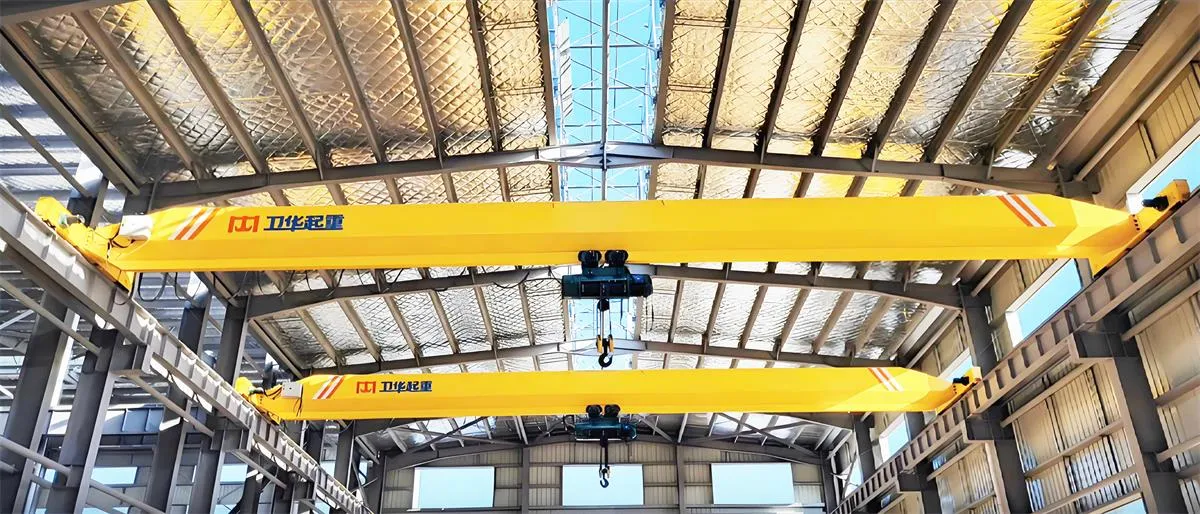
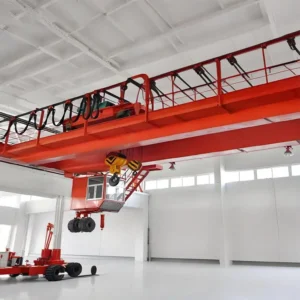
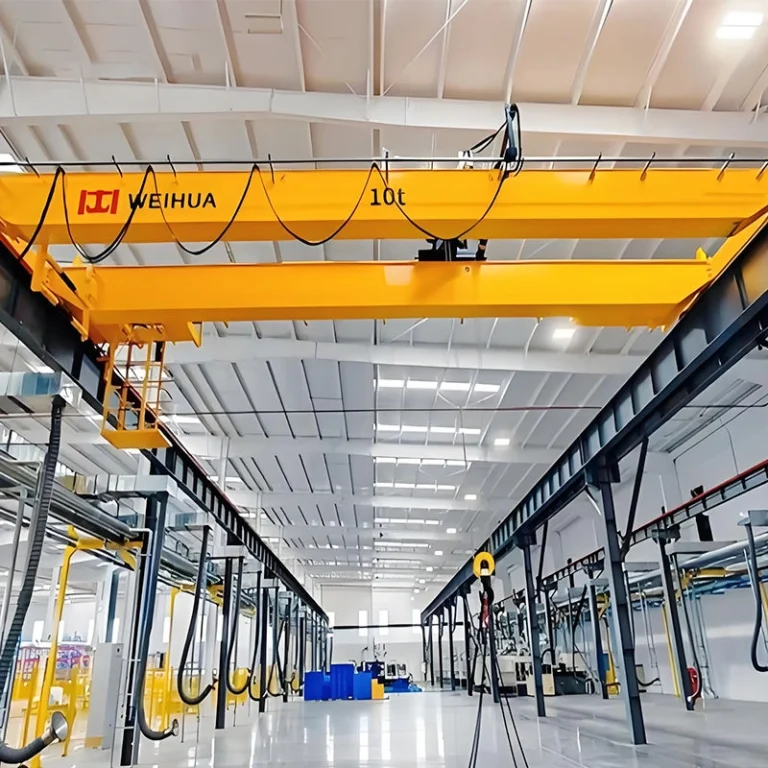
A double girder overhead crane uses two parallel main beams with the hoist trolley running on top-mounted rails between them. At 10 tons, double girder becomes necessary when: duty class is A5 or A6 (heavy or very heavy use), the application involves continuous production with a high lift count per shift, long spans demand tighter deflection control, or the application requires cab control or an auxiliary hook.
The structural advantage is significant. Double girder designs deliver higher static rigidity and better beam-deflection performance under load — this matters for precise positioning in steel processing or equipment assembly. Weihua’s LH-type and QD-type double girder units cover spans from 10.5 to 31.5 m with A5–A6 duty class and optional variable frequency drive for smooth load control.
A practical threshold: facilities running more than 30–40 lift cycles per shift on a sustained basis should specify at minimum A5 duty class, which in a 10 ton application almost always means double girder. Below that threshold, a properly specified single girder at A3 or A4 performs adequately and costs considerably less.
What Drives the Price of a 10 Ton Overhead Crane
Span is the largest single cost driver after configuration type. A 10 ton single girder unit at 10 m span and a 10 ton single girder unit at 28 m span can differ by $4,000–$6,000 purely due to beam material and structural engineering. Several other factors add cost in predictable ways.
Key Factors That Move the Price
Variable frequency drives (VFD) add cost but materially reduce mechanical wear on the hoist and improve load positioning accuracy. For production environments where precise positioning matters — stamping, assembly, glass handling — VFD is typically worth specifying.
Explosion-proof specifications carry a meaningful premium because the electrical components (motors, controls, pendant stations) must each carry certified explosion-proof ratings. For ATEX-zone workshops or chemical storage environments, this is a hard requirement, not an optional upgrade.
Span beyond standard ranges requires custom structural analysis. Single girder units above 28.5 m and double girder units above 31.5 m involve engineering work beyond the standard product matrix. Buyers should flag non-standard spans early to avoid redesign costs mid-order.
Control mode affects price modestly. Pendant control is the baseline. Wireless remote adds flexibility for applications where the operator cannot safely stand in a fixed position beneath the load. Cab control (standard on QD-type heavy-duty units) adds cost but is the right choice for high-volume, high-precision operations.
Industry Applications: Where 10 Ton Overhead Cranes Perform Best
Manufacturing and Steel Fabrication
Steel fabrication shops, machine shops, and metalworking facilities are the primary environment for 10 ton bridge cranes. The capacity handles structural steel members, large machined parts, tooling, dies, and press components within spans typical of mid-sized industrial buildings. Duty class A3–A4 covers most fabrication environments; facilities running continuous lines should confirm cycle rates before specifying.
Logistics and Heavy Warehousing
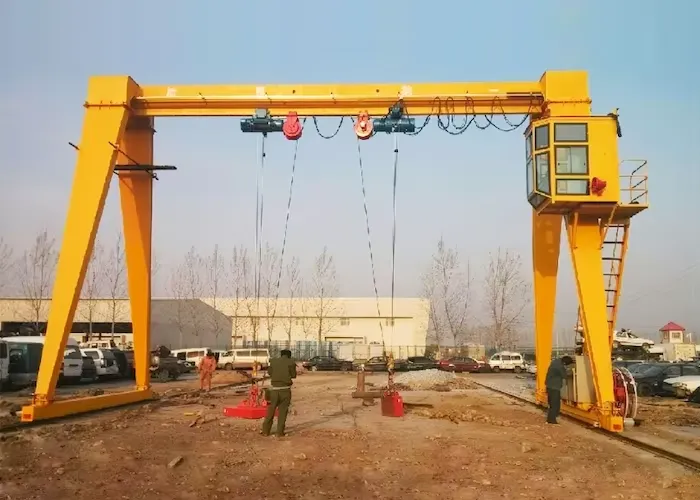
Warehousing applications involving heavy unitized loads — machinery, large equipment, and fabricated goods — suit single girder configurations well. Most warehouse environments have relatively low duty cycles (intermittent lifts, not production-line rates), which aligns with the A3 design basis of standard single girder units and keeps procurement cost in check.
Energy Equipment and Infrastructure
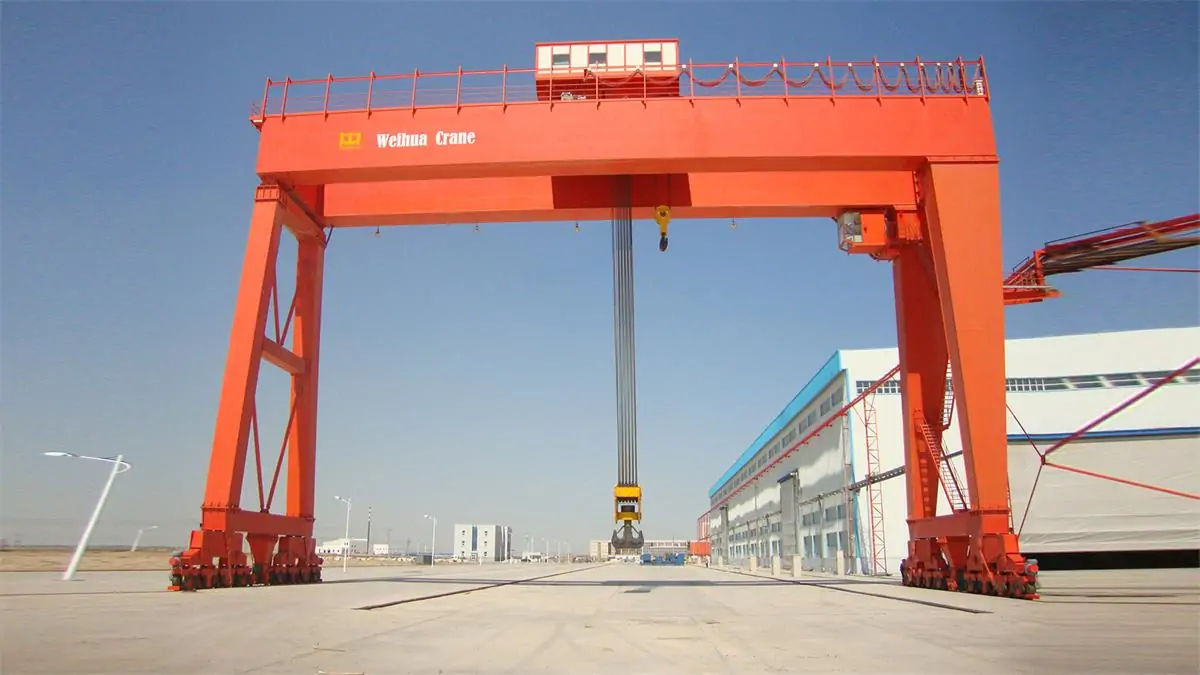
Generator handling, transformer installation, and turbine assembly all fall within the 10 ton range for mid-sized equipment. Double girder and industrial EOT variants are used in power station workshops and infrastructure projects where the crane needs to position heavy equipment precisely in constrained spaces over long spans.
Metallurgical and Hazardous Environments
For steel mills, foundries, or chemical processing plants, Weihua’s industrial EOT range includes metallurgical-grade and explosion-proof configurations. These address elevated temperatures, heavy dust loading, or flammable atmospheres — conditions that standard LD or LH configurations are not rated for. Buyers in these sectors should specify the operating environment in detail at inquiry stage so the correct protection class is confirmed from the outset.
Supplier Evaluation: What to Confirm Before Placing an Order
Selecting a 10 ton overhead crane for sale involves more than comparing price tables. The following points give buyers a practical checklist for vetting any supplier, including confirming the technical and documentation requirements that affect customs clearance and long-term support.
Technical Documentation to Request at Inquiry
Duty class confirmation in writing. The purchase contract should specify the ISO duty class (A3, A4, A5, A6) as a named design parameter, not just a verbal understanding. This is the single most common source of specification disputes after delivery.
CE Declaration of Conformity. Required for EU and many export markets. Buyers should confirm the crane is CE-marked under Machinery Directive 2006/42/EC and request the Declaration of Conformity document before committing to an order. Weihua issues this as a standard export document.
ISO 9001 manufacturing certificate. Confirms the factory operates under a documented quality system. Request the current certificate with the issuing certification body named and the validity date visible.
Load test and overload protection certificate. A factory-tested 10 ton overhead crane should come with a load test report confirming the rated capacity was verified, and documentation of safety devices — overload limiter, upper/lower limit switches, and (where applicable) anti-collision systems.
Long-Term Support Factors Worth Evaluating
Spare parts availability matters more than most buyers consider at purchase stage. A crane running in a production environment will eventually need replacement hoist components, brake pads, or electrical parts. Confirming that Weihua maintains spare parts availability for the specific hoist model ordered reduces future downtime risk.
Installation and commissioning support. For buyers installing in a new facility or a market where local crane expertise is limited, factory-side installation guidance — whether on-site or remote — is worth confirming at order stage rather than discovering the gap at delivery.
Warranty terms. Weihua offers a standard one-year warranty on equipment. Buyers should clarify what the warranty covers (manufacturing defects vs. wear items) and what the escalation process is for warranty claims across borders.
Conclusão
Selecting the right 10 ton overhead crane for sale comes down to three decisions made in order: girder type (single or double, based on duty cycle and span), duty class (A3/A4 for moderate-use applications, A5/A6 for heavy production), and supplier documentation verification before shipment. Buyers who clarify these points at inquiry — before comparing prices — avoid the most common and expensive procurement errors in this category.
Weihua supplies the full range of 10 ton EOT crane configurations covered in this guide, with CE and ISO 9001 certification and export experience across more than 120 countries. Contact the engineering team with your span, lifting height, duty class, and operating environment to receive a matched specification and quotation.
Recommended next steps:
- Confirm your facility’s lift cycle rate per shift to determine the correct duty class.
- Specify span, lifting height, and headroom clearance before requesting a quote.
- Request CE Declaration of Conformity and ISO 9001 certificate at inquiry stage.

FAQ
Q1:What is the typical price range for a 10 ton overhead crane?
A 10 ton overhead crane for sale typically ranges from around $3,900 for a standard single girder unit with moderate span, up to $32,500 or more for a double girder configuration with longer span, variable frequency drive, and A5/A6 duty class. Span, duty class, and special environment requirements are the main price drivers.
Q2:How do buyers choose between single girder and double girder at 10 tons?
The key factor is duty class — how intensively the crane will run. Facilities running more than 30–40 lift cycles per shift on a sustained basis should specify A5 duty class, which at 10 tons almost always means double girder. For less frequent use — assembly bays, maintenance shops, and moderate-cycle warehouses — a single girder unit at A3 or A4 is adequate and significantly more cost-effective.
Q3:What does duty class mean, and why does it matter?
Duty class (ISO 4301-1) classifies crane use intensity based on load spectrum and expected number of working cycles over the crane’s design life. A3 is for light, infrequent use; A5 covers moderate-to-heavy production; A6 is for intensive continuous-production environments. Specifying an A3 crane for an A5 application is one of the most common procurement errors — the crane will typically show fatigue-related issues within two to four years of heavy use.
Q4:What documentation should buyers request before shipment?
At minimum: CE Declaration of Conformity (for EU and equivalent markets), current ISO 9001 certificate from the manufacturing facility, duty class confirmation in the purchase contract, and a load test report. For hazardous area applications, explosion-proof certification for the relevant protection class should also be confirmed at inquiry stage.
Q5:Can a 10 ton overhead crane be customized for non-standard building dimensions?
Weihua’s range is fully customizable for span, lifting height, duty class, control mode, and supply voltage. Standard configurations cover spans from 7.5 to 31.5 m and lifting heights from 6 to 30 m. For buildings with non-standard dimensions or longer spans, Weihua’s engineering team provides solution design support from initial specification through to installation guidance.