








Índice
Vertical Shaft Gantry Cranes for Shaft Projects
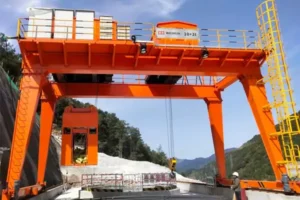
A vertical shaft gantry crane is a lifting system commonly used in shaft construction, mining, tunneling, and underground infrastructure projects. It is used to raise and lower construction materials, equipment, excavation debris, and other loads within vertical shafts. Due to its large lifting height, high load capacity, and reliable operation, it is widely applied as mining shaft lifting equipment and a vertical shaft hoisting system in shaft sinking and underground construction work. This article covers the definition, applications, features, types, working principles, main components, and selection considerations of a vertical shaft gantry crane.
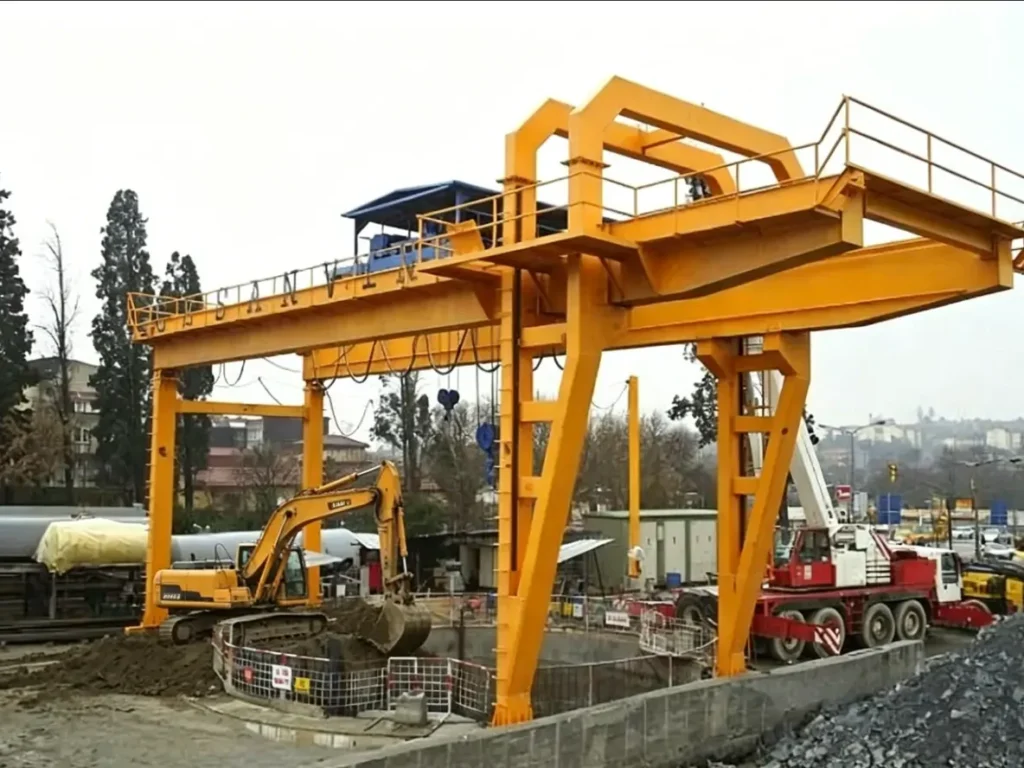
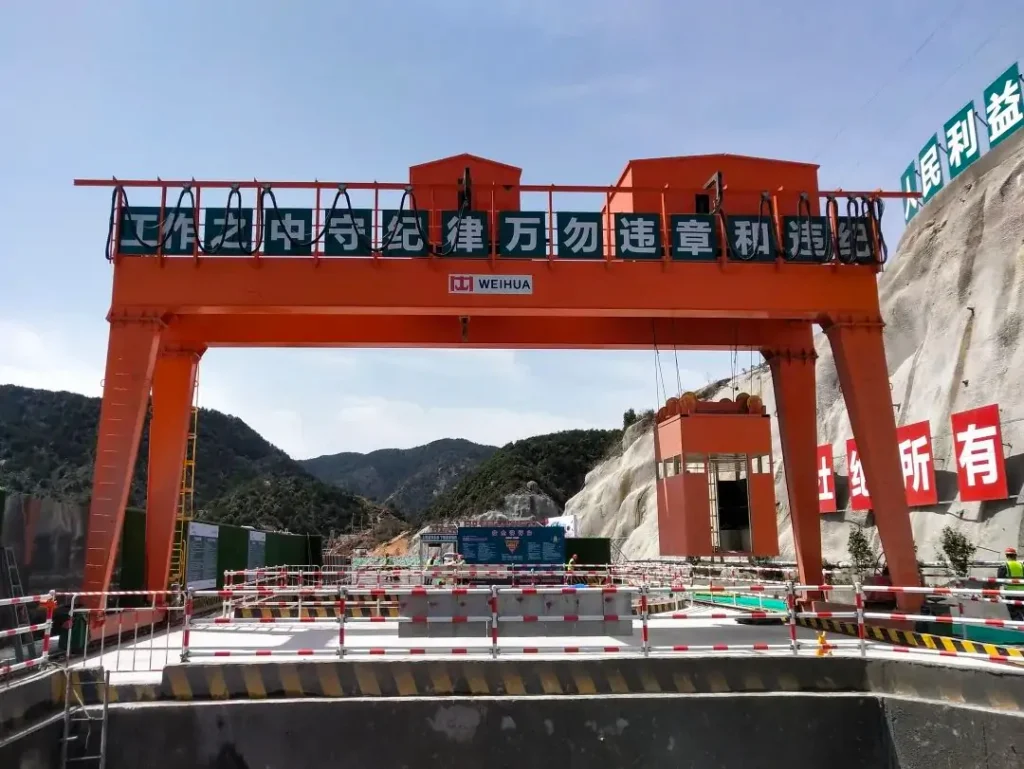
What is a vertical shaft gantry crane?
A vertical shaft gantry crane is a specialized lifting system installed above a shaft opening and used for material handling during shaft construction and underground engineering projects. It is commonly used to lift construction materials, equipment, and excavated materials between the shaft bottom and the surface, making it an important piece of equipment for shaft sinking, mining, and tunneling operations.
Princípio de funcionamento
A vertical shaft gantry crane used in subway, metro, and underground shaft construction operates through coordinated longitudinal, transverse, and vertical movements to complete continuous lifting operations in a confined shaft environment. The working process is as follows:
1. Positioning and Setup
The crane travels along the ground rails to the working position above the shaft, then the trolley moves along the main girder to align the hook with the shaft center.
2. Lifting and Hooking
The hoisting system lowers the hook into the shaft to connect with a muck bucket or construction load, then lifts it to a safe height using a controlled lifting operation, reducing load swing during hoisting.
3. Transport and Unloading
The crane or trolley moves the load to the unloading area. Depending on the configuration, unloading is completed either by a hydraulic flipping hook system or a mechanical rotating unloading rack.
4. Return Cycle
After unloading, the hook returns to the shaft position for the next cycle. Variable frequency control allows low-speed heavy-load lifting and high-speed return, improving operational efficiency.
The system relies on the coordinated movement of the crane traveling mechanism, trolley, and hoisting system to complete continuous material handling in vertical shafts. Learn more about how the equipment works: How Does a Vertical Shaft Gantry Crane Work?
Peças
A vertical shaft gantry crane is composed of several key mechanical and electrical systems that work together to complete lifting operations in shaft construction and underground projects. Each component has a specific function in supporting load handling, crane movement, and operational control.
| Component | Function Description |
|---|---|
| Gantry Frame | Main load-bearing structure composed of legs and girder, providing overall stability for shaft lifting operations. |
| Hoist Trolley | Moves along the main girder and carries lifting devices for precise material handling. |
| End Carriages & Running Wheels | Support the crane and enable rail-mounted travel, with wheel types matched to load capacity. |
| Crane Runway | Ground rails that guide the crane’s movement along the shaft construction area. |
| Special Unloading Devices | Hydraulic hooks or mechanical racks used for controlled tipping and unloading of muck buckets. |
| Electrical System | Includes motors, drives, and control panels for variable speed operation and stable power control. |
| Controls & Safety Devices | Provides operation control and protection such as overload limiters, emergency stop, and rail locking systems. |
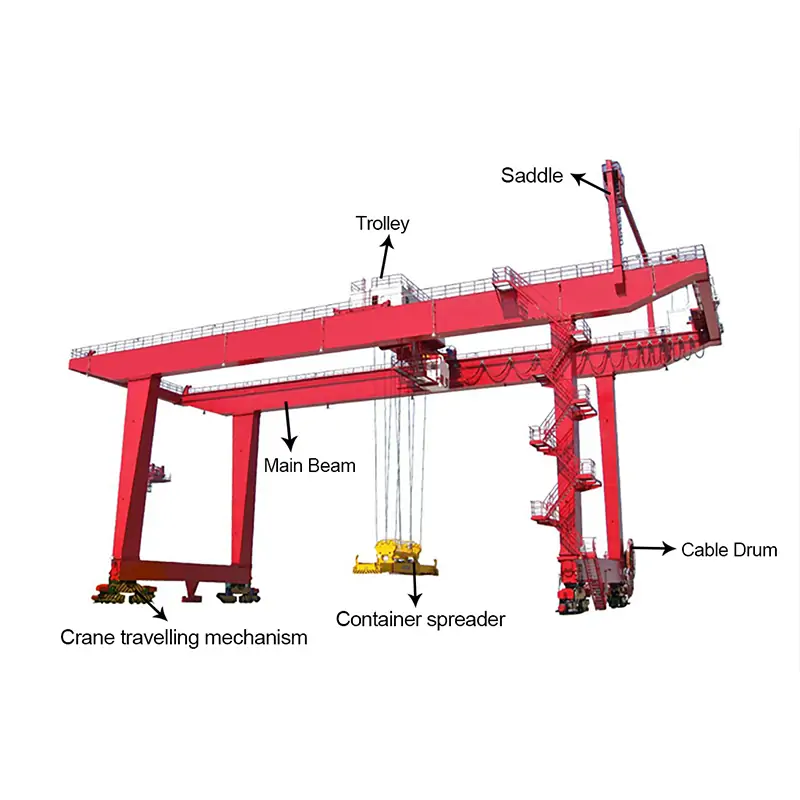
The coordinated performance of these components supports stable lifting, controlled movement, and safe operation of the vertical shaft gantry crane in mining, metro, and underground construction applications.
Tipos
Vertical shaft gantry cranes are available in different configurations to suit various shaft sizes, lifting capacities, and site conditions. The most common types are classified by girder structure, as single-girder and double-girder models.
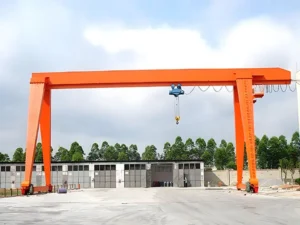
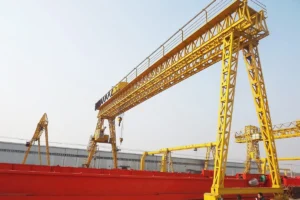
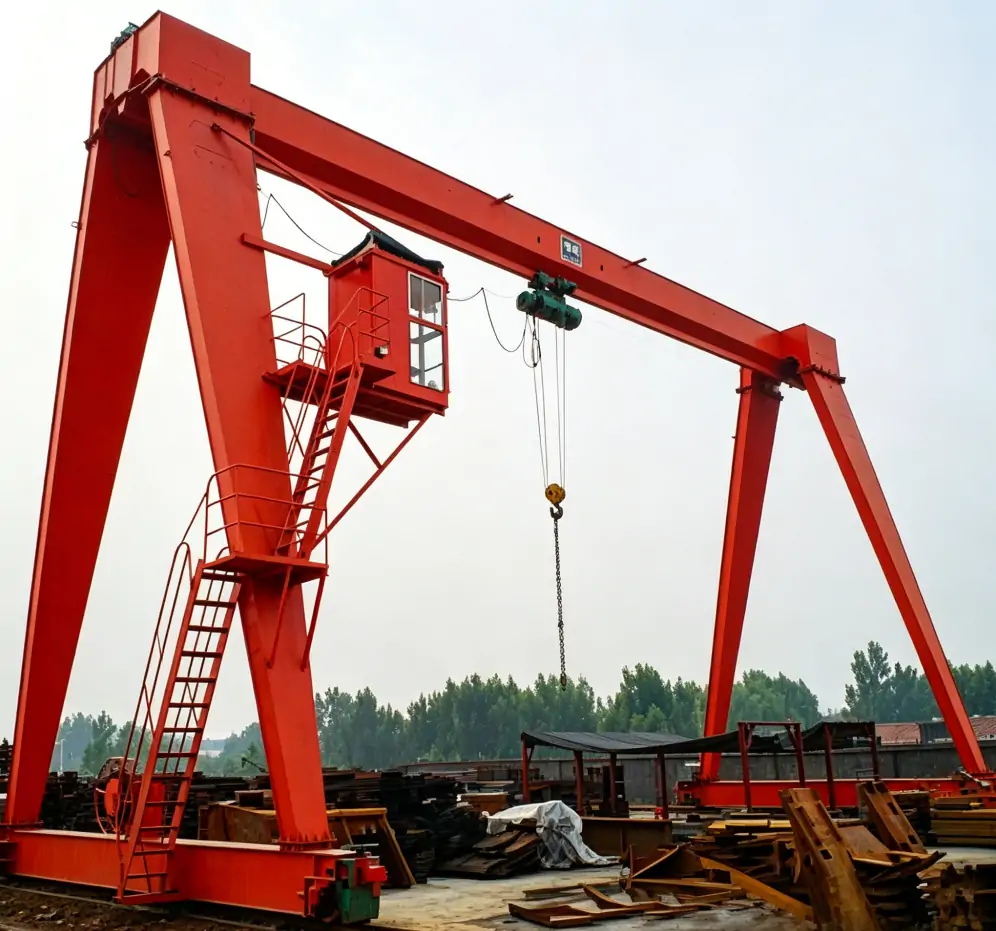
Rail-mounted Single-girder Vertical Shaft Gantry Crane
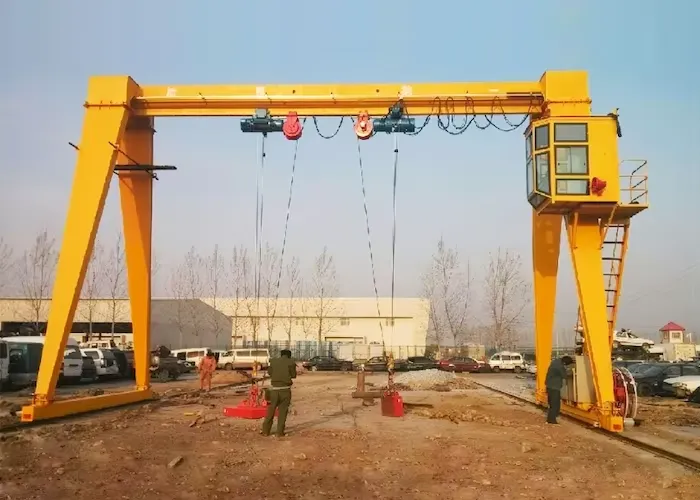
A rail-mounted single-girder vertical shaft gantry crane uses a single-girder structure and travels on ground-mounted rails. It features a relatively simple structure, lower equipment weight, and reduced installation and maintenance requirements. This type is commonly used for small and medium-sized shaft projects, including metro branch lines, municipal utility tunnels, and material handling operations with moderate lifting demands.
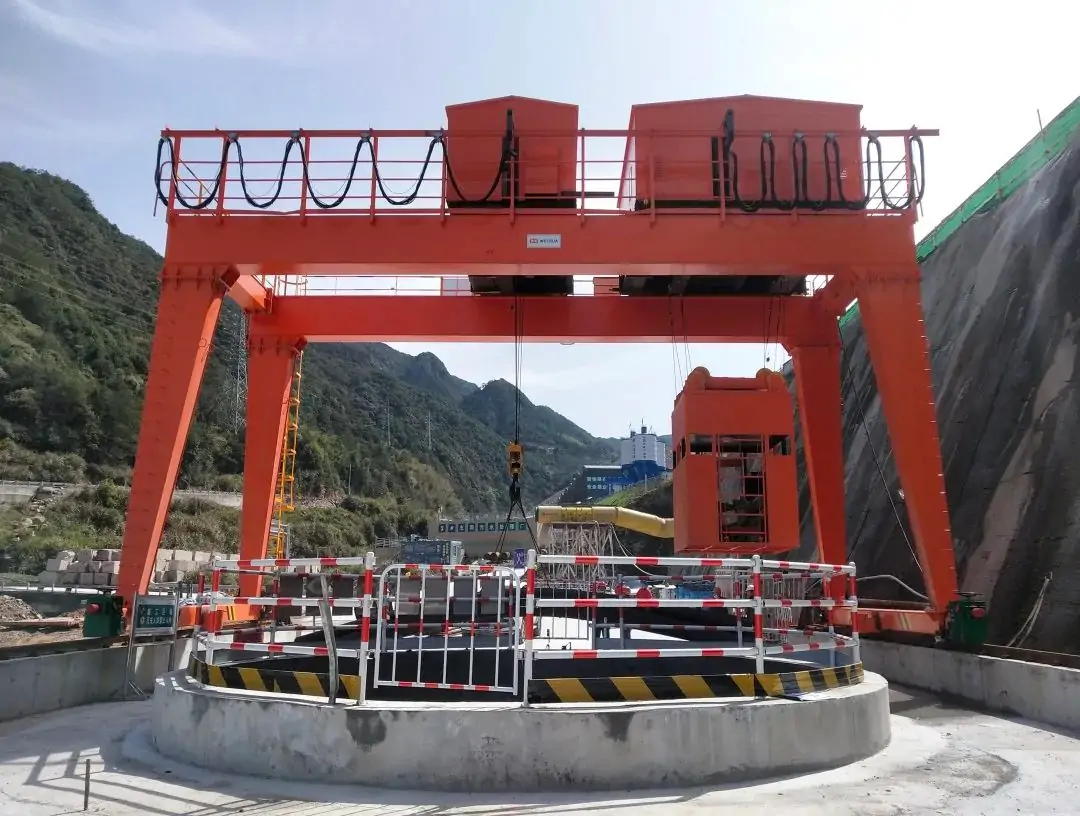
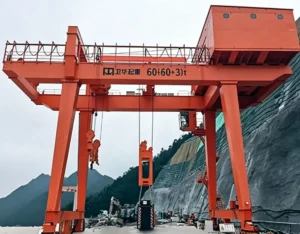
Rail-mounted Double-girder Vertical Shaft Gantry Crane
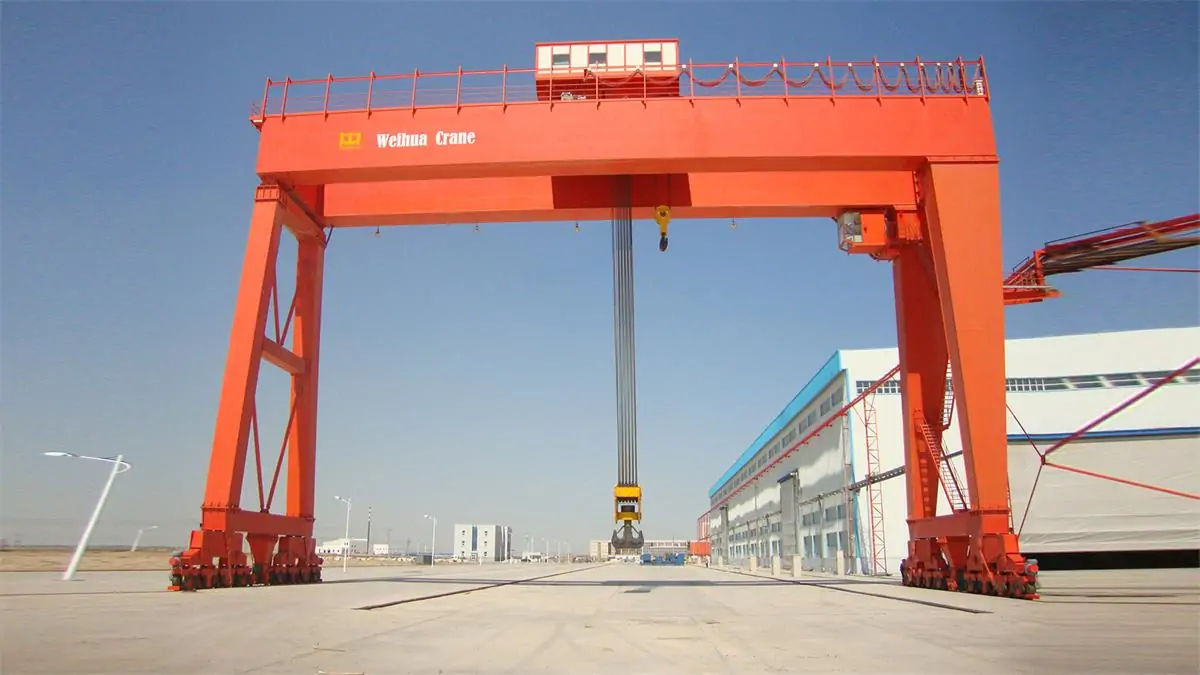
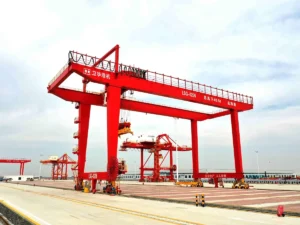
A rail-mounted double-girder vertical shaft gantry crane uses a double-girder structure and a rail-mounted travel system. It offers higher load capacity and structural rigidity, making it suitable for continuous heavy-duty lifting operations. It is widely used in large-diameter, deep-shaft construction projects, including metro main shafts, underground stations, and major infrastructure developments.
The choice of a vertical shaft gantry crane depends on lifting requirements, shaft dimensions, site conditions, and project schedules. Selecting the appropriate configuration helps meet the lifting needs of different shaft construction and underground engineering projects. This equipment is commonly used in the hydropower and mining industries. Learn more about the equipment: Guindaste pórtico hidráulico para escavação de poços profundos. Fabricante e fornecedor de guindastes pórticos verticais para mineração.
Especificações
| Parâmetro | Typical Specification |
|---|---|
| Capacidade de Elevação | 5 t – 300 t |
| Span | 16 m – 30 m |
| Span Adjustment | 200 mm increments |
| Cantilever Length | Optional, depending on span configuration |
| Altura de elevação | 10 m – 100 m+ |
| Rail Length | 40 m or customized |
| Velocidade de içamento | Variable frequency control |
| Speed Regulation Ratio | 1:10 |
| Velocidade de deslocamento | Variable frequency control |
| Classe de Dever | A5 – A7 |
| Temperatura de operação | -20°C to 50°C |
| Motor Starting Current | ≤ 1.5 × rated current |
| Main Girder Material | Q235B, Q355B, Q390B, Q420B |
| Fonte de Alimentação | 380V / 50Hz / 3Ph (personalizável) |
| Método de controlo | Cabin, remote, or combined control |
| Dispositivos de segurança | Overload limiter, limit switches, emergency stop |
| Normas aplicáveis | GB3811, GB/T14406 or equivalent standards |
Actual specifications of a vertical shaft gantry crane can be customized according to lifting capacity, shaft dimensions, working conditions, and project requirements.
Aplicações
A vertical shaft gantry crane is primarily used for lifting and material handling in shaft construction and underground engineering projects. Installed above a shaft opening, it supports the transportation of construction materials, equipment, excavated materials, and other loads between the surface and underground work areas.
Subway and Metro Shaft Construction
Used for lifting excavation debris, construction materials, and equipment during subway and metro shaft construction.
Mining Shaft Construction
Used for transporting mining equipment, structural materials, and excavated rock in mine shaft projects.
Underground Power Tunnel Construction
Used for material handling and muck removal in underground power cable and utility tunnel construction.
Utility Tunnel and Pipe Gallery Construction
Used for lifting pipes, precast components, and construction materials through access shafts.
Tunnel Access Shaft Construction
Used for transporting equipment, concrete, steel structures, and supplies between the surface and underground tunnel works.
Water Conservancy and Drainage Projects
Used for lifting pumps, pipelines, valves, and construction materials in water and drainage infrastructure projects.
Excavation Debris and Muck Removal
Used for continuous removal of soil, rock, and excavation debris from deep shafts.
Instalação e manutenção de equipamentos
Used for installing, replacing, and maintaining underground mechanical and electrical equipment.
The vertical shaft gantry crane is an important piece of equipment for transporting materials and equipment between the surface and underground work areas.
Vantagens
Vertical shaft gantry cranes are used for material handling in shafts, tunnels, mines, and other confined construction environments. Their overhead gantry structure requires limited ground space and supports lifting operations in deep vertical shafts.
- High Space Utilization:
The crane is installed above the shaft opening, reducing the ground space required for lifting operations and making it suitable for confined construction sites.
- 2. Large Lifting Height:
Its structure is designed for vertical lifting over long distances, allowing materials, equipment, and excavation debris to be transported between the surface and deep underground work areas.
- 3. Stable Lifting Operation:
The rigid gantry structure provides stable load handling during lifting and lowering operations, helping maintain consistent performance in shaft construction projects.
- 4. Enhanced Safety:
The crane can be equipped with overload protection, limit switches, emergency stop systems, and other safety devices to support safe lifting operations.
- 5. Customizable Design:
Configurations can be customized according to shaft depth, shaft diameter, lifting capacity, and project requirements.
- 6. Efficient Material Handling:
The crane supports continuous transportation of materials, equipment, and excavated materials, helping maintain the workflow of shaft construction and underground engineering projects.
The vertical shaft gantry crane is suitable for mining, tunneling, metro construction, utility tunnel projects, and other applications that require vertical lifting and material handling within shafts.
Guia de Seleção
Selecting a vertical shaft gantry crane depends on lifting requirements, site conditions, and operational needs.
- Lifting Capacity and Structure—Single-girder types are used for loads up to 50 tons, while double-girder types are used for heavier lifting above 50 tons. Steel grades are selected based on capacity from Q235B to Q420B.
- Traveling System—Rail-mounted cranes suit fixed shaft projects with stable operation, while rubber-tyred types are used for sites requiring frequent relocation.
- Span Configuration—Span is adjustable within 16–30 m based on shaft size, with optional cantilever at larger spans and removal for smaller configurations.
- Working Conditions—Operating temperature ranges from -20°C to 50°C, with standard designs compliant with GB3811 and GB/T14406.
- Control System—Variable frequency control (1:10 range) supports low-speed lifting and high-speed return with stable operation and lower starting current.
Proper selection helps match the crane configuration with project conditions, supporting stable and efficient shaft construction operations.
Safety Precautions
Vertical shaft gantry cranes often work in deep shafts, tunnels, and underground construction sites where lifting conditions can be challenging. Proper safety management helps reduce operational risks.
Pre-Operation Inspection
- Check wire ropes, hooks, lifting mechanisms, brakes, and safety devices before each shift.
- Inspect structural components for cracks, deformation, corrosion, or loose bolts.
- Verify that electrical systems, limit switches, and emergency stop functions are operating properly.
Follow Load Capacity Limits
- Never exceed the crane’s rated lifting capacity.
- Confirm the weight of materials, equipment, or debris before lifting.
- Use appropriate lifting accessories and rigging equipment for the load.
Secure and Balanced Lifting
- Ensure loads are properly attached and balanced before hoisting.
- Avoid sudden lifting, lowering, or swinging movements.
- Keep the load centered beneath the lifting point during operation.
Maintain Safe Shaft Access Zones
- Establish restricted areas around the shaft opening.
- Prevent personnel from standing beneath suspended loads.
- Install barriers, warning signs, and communication systems around working zones.
Monitor Weather and Site Conditions
- Suspend lifting operations during strong winds, lightning, or severe weather.
- Keep crane rails, foundations, and working platforms free from debris and standing water.
- Ensure adequate lighting for night operations or low-visibility conditions.
Operator Training and Communication
- Only trained and authorized personnel should operate the crane.
- Use standard hand signals, radios, or communication systems between operators and ground crews.
- Conduct regular safety briefings and operational checks.
Emergency Preparedness
- Establish emergency rescue and evacuation procedures.
- Test emergency stop systems regularly.
- Keep maintenance tools and spare safety components readily available on-site.
The safety of a vertical shaft gantry crane is closely related to equipment condition, lifting procedures, and jobsite management. Regular inspections, proper load handling, and clear coordination between operators and ground personnel help reduce risks, minimize downtime, and keep construction work moving efficiently.
Conclusão
A vertical shaft gantry crane is widely used in shaft construction, mining, tunneling, and underground engineering projects for vertical material handling and muck removal. Its performance depends on the proper selection of structure type, lifting capacity, span configuration, and control system based on specific project conditions.
WEIHUA is a professional crane manufacturer. Can provides customized vertical shaft gantry crane solutions designed to meet different shaft dimensions, lifting requirements, and working environments. For technical support, detailed specifications, or project quotations, feel free to contact our engineering team for a tailored solution.

Perguntas frequentes
What is a vertical shaft gantry crane used for?
It is used for lifting materials, equipment, and excavation debris in shaft construction, mining, tunneling, and underground engineering projects.
What lifting capacity can a vertical shaft gantry crane handle?
Typical capacity ranges from 5 tons to 300 tons, depending on structure type and project requirements.
What is the difference between single-girder and double-girder types?
Single-girder cranes are used for lighter loads up to 50 tons, while double-girder types support heavier lifting with higher stability.
What is the difference between rail-mounted and rubber-tyred models?
Rail-mounted cranes are used for fixed sites, while rubber-tyred models allow flexible movement between multiple shaft locations.
Can the crane be customized for different shaft sizes?
Yes, span, lifting height, structure type, and control system can all be customized based on project requirements.
What industries use vertical shaft gantry cranes?
They are commonly used in metro construction, mining, utility tunnel projects, water conservancy works, and underground infrastructure development.