








Índice
Introduction
STS Crane (Ship-to-Shore Crane) is the key equipment connecting vessels and container terminals. Its performance directly affects vessel turnaround time, container handling efficiency, and long-term port operation capacity. During port expansion or equipment upgrades, selecting an STS crane based only on purchase cost may lead to capacity mismatch and limit future development.
How to choose the right STS crane for your port? In this article, I will explain the main factors to consider when choosing the right STS crane for your port, including vessel size, container throughput, lifting capacity, outreach requirement, and terminal layout. These factors determine the crane size, working range, and configuration required for different port conditions. Understanding these requirements helps operators select equipment that matches current operations and future growth plans.
What Is An STS Crane?
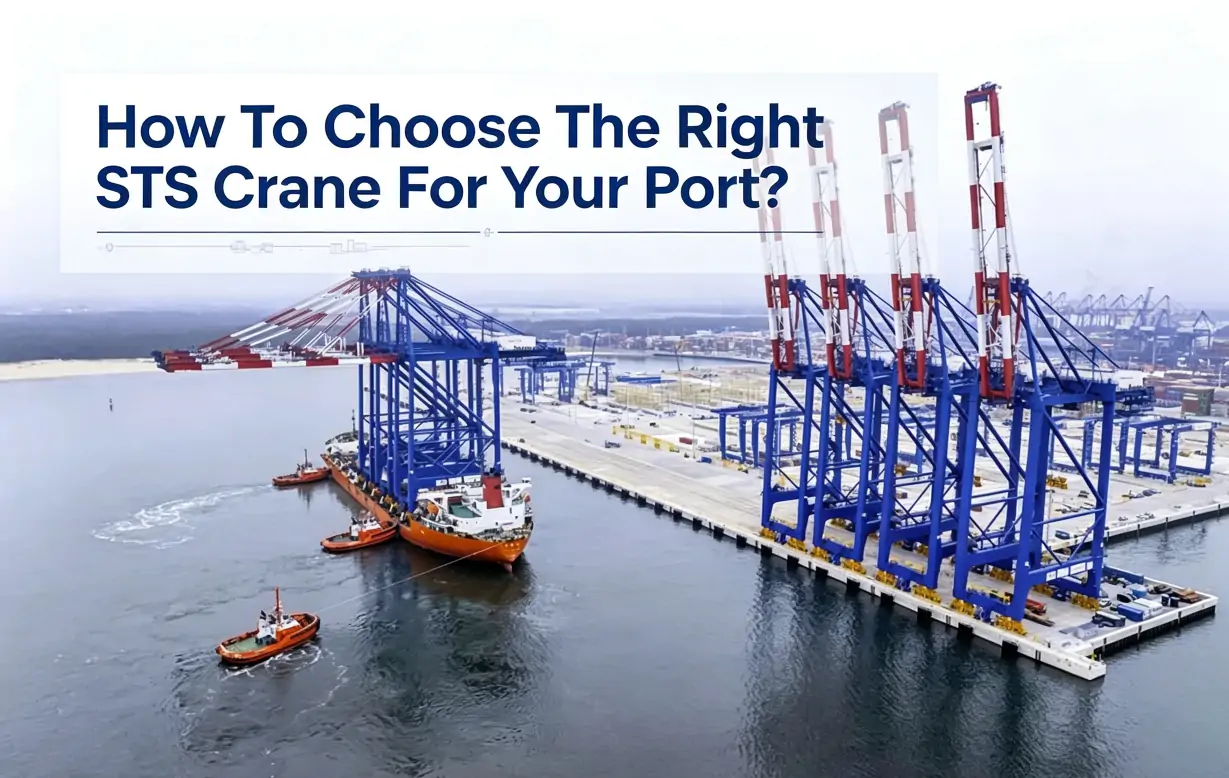
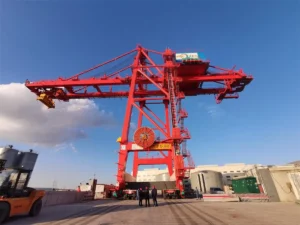
An STS Crane (Ship-to-Shore Crane), also known as a quay crane or container terminal gantry crane, is the main container handling equipment installed at the port quay. It operates on rails along the waterfront and transfers containers between vessels and the terminal yard, directly affecting vessel turnaround time and port handling efficiency.
An STS crane consists of the steel structure, boom system, trolley mechanism, spreader, and electrical control system. During operation, the boom extends over the vessel, while the trolley moves along the girder to lift and transfer containers. Large STS cranes usually have a lifting capacity of 65 tons or more and an outreach of around 70 meters, allowing them to handle ultra-large container vessels.
The main parameters for STS crane selection include lifting height, outreach, backreach, rated load, and wheel load. These specifications must match vessel size, berth conditions, and terminal layout. For vessels with more than 20,000 TEU capacity, ports usually require cranes with lifting heights above 52 meters and outreach exceeding 69 meters to reach the outer container rows.
For more information on STS cranes, see the article: What Is an STS Container Crane? A Complete Guide for Port Projects
Factors To Consider When Choosing An STS Crane
Selecting an STS Crane requires matching the crane specifications with vessel size, terminal capacity, and operating conditions. The main factors include vessel dimensions, lifting capacity, outreach range, working height, throughput requirements, and control systems.
1. Vessel Size And Container Ship Type
Vessel size is the first factor when selecting an STS crane. The crane must match the ship width, container rows across the deck, and vessel height to reach all container positions safely.
| Vessel Type | Ship Capacity | Especificação |
|---|---|---|
| Panamax Vessel | 5,000–8,000 TEU | Medium outreach and lifting height |
| Post-Panamax Vessel | 8,000–15,000 TEU | Larger outreach and higher lifting height |
| Ultra Large Container Vessel | 20,000+ TEU | 52 m+ lifting height and 69 m+ outreach |
For ultra-large container vessels, the STS crane usually requires a lifting height above 52 meters and outreach exceeding 69 meters. Cranes with 70 m+ outreach are commonly used for large vessels with wide deck layouts.
The outreach radius of an STS crane directly determines whether the crane can fully cover the cargo being handled. For a detailed comparison of size specifications, see the article: STS Crane Outreach Explained: How to Match Crane Size to Container Ships?
2. Lifting Capacity Requirements
The rated lifting capacity determines the maximum container weight the STS crane can handle. The selection should match container types, lifting methods, and future operation needs.
| Operation Requirement | Recommended Capacity |
|---|---|
| Standard container handling | 40–50 tons |
| Heavy container handling | Around 65 tons |
| Twin-lift operation | 65–80 tons |
| Special lifting requirements | Customized capacity |
Most modern STS cranes use 65–80 tons rated capacity. The value should include spreader weight and possible twin-container handling requirements.
To understand how STS crane lifting capacity matches specific applications, see: STS Crane Capacity Guide: How Much Can a Ship-to-Shore Crane Lift?
3. Outreach And Backreach
Outreach defines the crane working range on the ship side, while backreach defines the operating range toward the terminal side.
| Parâmetro | Definição | Selection Consideration |
|---|---|---|
| Outreach | Maximum horizontal distance from rail centerline to ship side | Matches vessel width and container rows |
| Backreach | Maximum working distance on the land side | Matches truck lanes and terminal layout |
For a 24-row ultra-large container vessel, the outreach usually needs to reach around 70 meters to access the outer container positions. Backreach should provide enough space for terminal vehicles and container transfer operations.
4. Lifting Height And Working Range
Lifting height determines the number of container layers the STS crane can handle on modern vessels.
include:
- Maximum container tier height
- Ship deck structure
- Future vessel upgrades
A crane with insufficient lifting height may limit future vessel handling capability. Ports should consider future ship size development when selecting the crane height.
5. Terminal Throughput Requirements
Terminal throughput affects crane speed, quantity, and working frequency. High-volume ports require STS cranes with shorter container handling cycles and stable long-term operation.
| Terminal Requirement | Selection Consideration |
|---|---|
| High annual throughput | Higher crane speed and reliability |
| Short vessel turnaround time | Faster lifting and trolley movement |
| Large container flow | More cranes or higher productivity models |
High-performance STS cranes can achieve around 30–50 container moves per hour depending on vessel condition, operator skills, and terminal operation.
For large terminals, lifting speed, trolley speed, and equipment availability directly affect berth productivity.
6. Automation And Control System
Modern STS cranes use automated control systems to improve operation accuracy and reduce operator workload.
| Function | Purpose |
|---|---|
| Remote Control | Allows crane operation from a remote station |
| Anti-Sway System | Reduces container movement during lifting and traveling |
| Automatic Positioning | Helps align the spreader with container positions |
| Monitoring System | Tracks crane status and detects equipment conditions |
Automation systems improve handling accuracy and provide better control during high-frequency container operations.
Choosing the right STS crane requires balancing current port requirements with future development plans. Vessel size determines the basic crane dimensions, while throughput, layout, and automation requirements affect the final configuration.
Different Types Of STS Cranes And Their Applications
STS Crane (Ship-to-Shore Crane) selection depends on vessel size, container throughput, and terminal operation requirements. Different crane types are designed for different ship sizes and port conditions.
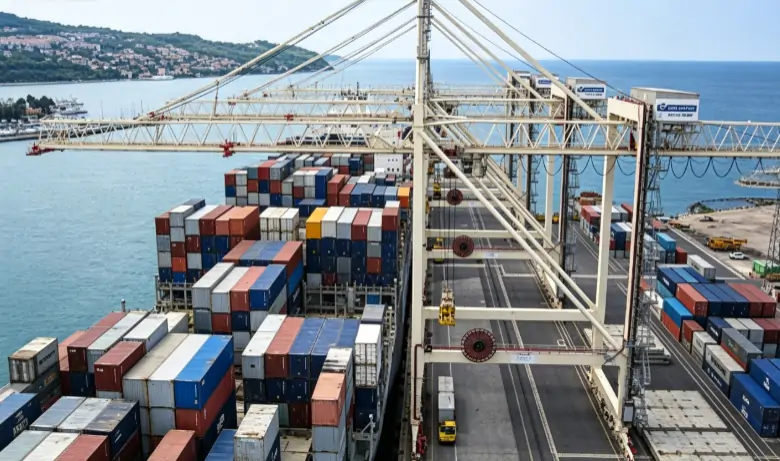
Panamax STS Crane
Panamax STS Crane is designed for Panamax container vessels with a capacity of around 4,000–5,000 TEU. It is mainly used in ports that handle smaller container ships and regional shipping routes. The crane provides basic container loading and unloading functions with moderate outreach and lifting height.
- Designed for Panamax vessels
- Outreach usually covers 13–16 container rows
- Lifting height around 30–35 meters
- Lower investment cost and easier maintenance
Suitable Ports: Panamax STS cranes are commonly used in feeder ports, regional container terminals, and domestic shipping ports.
Obtenha uma Cotação Personalizada AgoraPost-Panamax STS Crane
Post-Panamax STS cranes are designed for wider container vessels that exceed traditional Panamax dimensions. It is suitable for medium-sized container terminals and regional hub ports handling vessels from 8,000–15,000 TEU.
- Larger outreach than Panamax cranes
- Covers around 18–20 container rows
- Lifting height reaches 40–48 meters
- Rated lifting capacity usually 50–65 tons
- Handles wider container vessels
Suitable Ports: Regional transshipment ports and some mainline container terminals use Post-Panamax STS cranes. These ports usually serve international routes and require equipment that can handle both feeder vessels and larger ocean-going ships. Different terminals select crane sizes based on vessel types and cargo volume.
Obtenha uma Cotação Personalizada Agora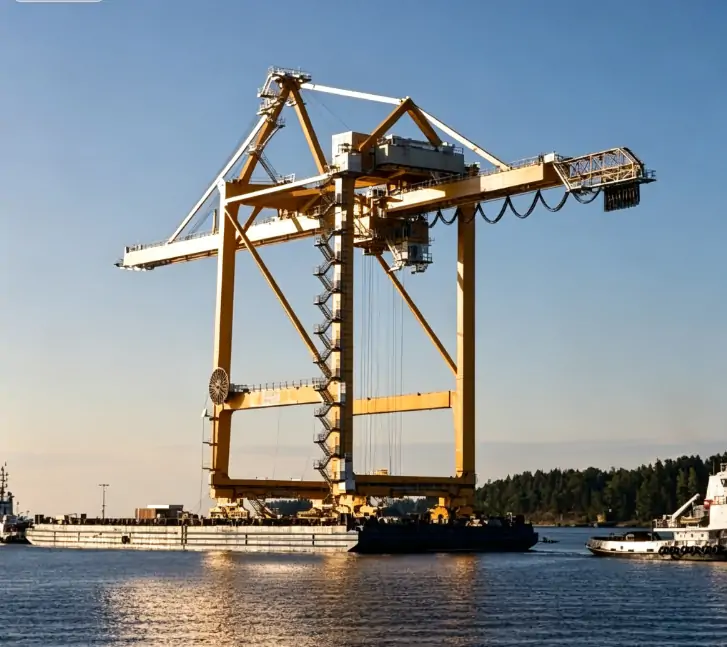
Super Post-Panamax STS Crane
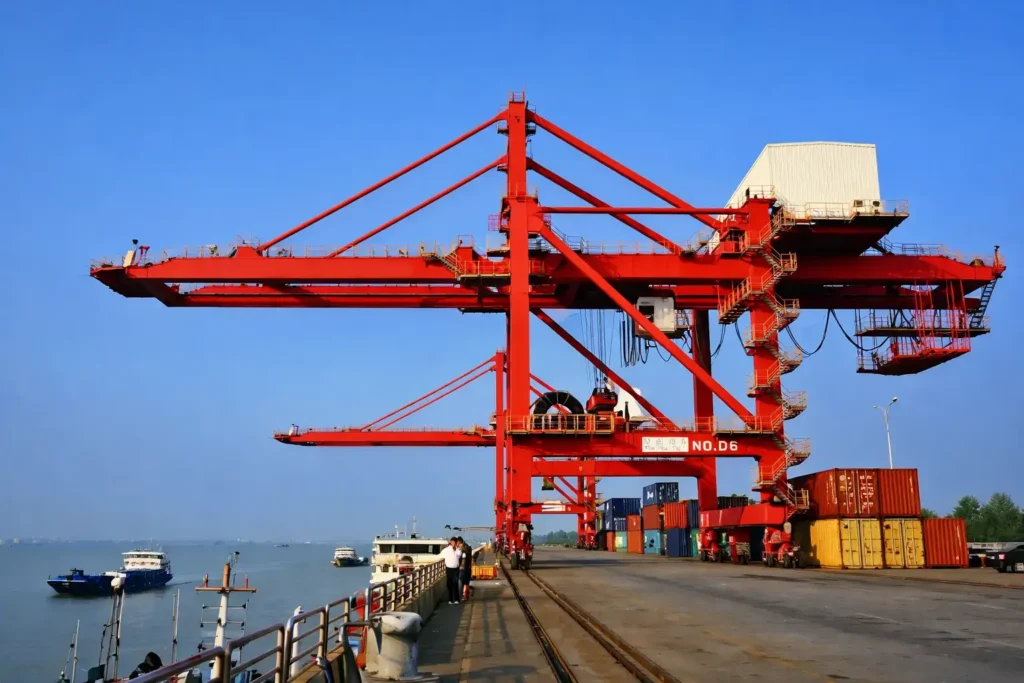
Super Post-Panamax STS Crane is designed for ultra-large container vessels with capacities above 20,000 TEU. It is the main equipment used in large global hub ports and deep-water container terminals.
- Designed for ultra-large container vessels
- Outreach exceeds 70 meters
- Covers more than 24 container rows
- Lifting height usually exceeds 52 meters
- Rated lifting capacity reaches 65–80 tons
- Supports twin-lift container handling
- Handles vessels with 7–8 container tiers on deck
Suitable Ports: Super Post-Panamax cranes are used in major international hub ports and large transshipment terminals. These ports handle the world’s largest container vessels and require long outreach and high lifting height.
Obtenha uma Cotação Personalizada AgoraAutomated STS Crane
Automated STS Crane integrates remote operation and intelligent control systems into traditional ship-to-shore container cranes. Operators can control crane movements from a remote control center, while automation systems manage positioning, anti-sway control, and equipment monitoring.
- Remote operation from a control center
- Anti-sway system and automatic positioning
- Supports semi-automatic and automatic operation cycles
- Integrated equipment monitoring system
- Supports predictive maintenance
Suitable Ports: Automated STS cranes are suitable for large hub ports that require continuous operation, higher handling accuracy, and reduced labor dependence.
Obtenha uma Cotação Personalizada Agora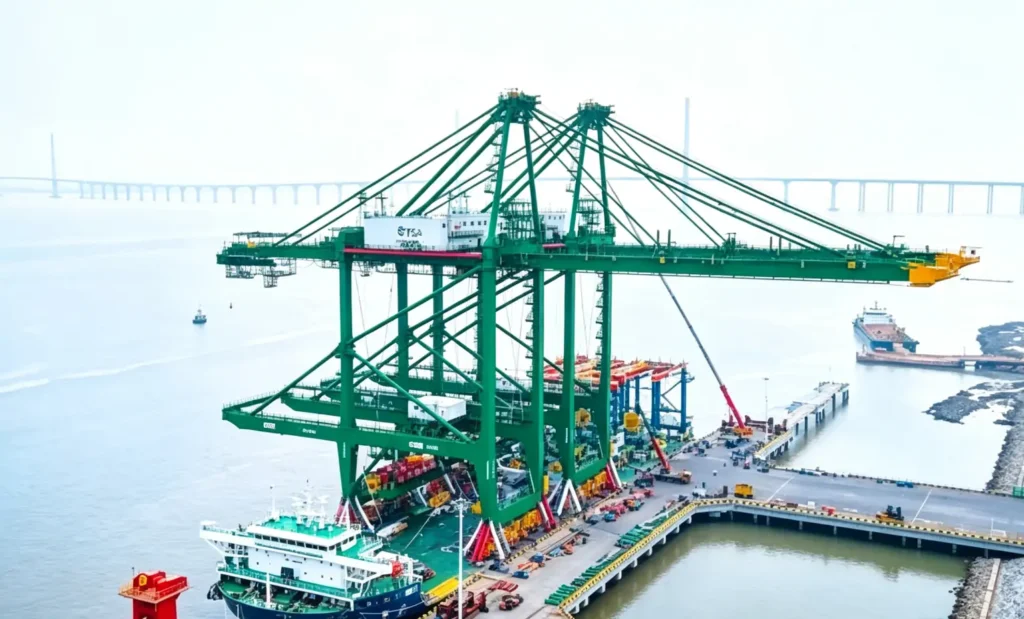
| Port Type | Recommended STS Crane | Parameters |
|---|---|---|
| Feeder Port | Panamax STS Crane | Outreach: 35–45 m, Lifting Capacity: 40–50 tons |
| Medium Transshipment Port | Post-Panamax STS Crane | Outreach: 50–65 m, Lifting Capacity: 50–65 tons |
| Large Hub Port | Super Post-Panamax STS Crane | Outreach: 70 m+, Lifting Capacity: 65–80 tons |
| Automated Terminal | Automated STS Crane | Remote control + intelligent control system |
Ports should select STS cranes according to vessel size, cargo volume, berth conditions, and operating requirements. Crane specifications should fit the current terminal operation and support future vessel handling needs. WEIHUA provides STS crane solutions with proven port project experience and reliable service support for different container terminal requirements.
How To Match STS Crane Specifications With Port Requirements?
STS Crane specifications should be selected based on vessel size, terminal throughput, berth conditions, and future operation plans. Each port has different handling requirements, and the crane parameters should match the actual working environment.
| Port Requirement | STS Crane Specification | Selection Direction |
|---|---|---|
| Large container vessels | Outreach, lifting height | Select cranes with longer outreach and higher lifting height |
| High throughput terminals | Lifting speed, trolley speed, crane quantity | Select high-efficiency cranes for frequent container handling |
| Deep-water ports | Outreach, lifting capacity | Super Post-Panamax STS Crane is suitable for large vessels |
| Limited terminal space | Rail span, backreach, layout design | Customized design is required for restricted areas |
| Automated terminals | Control system, positioning system | Select remote control cranes with automation functions |
Parameters For STS Crane Selection
| Port Requirement | Main Parameters To Check |
|---|---|
| Vessel size | Outreach, lifting height, backreach |
| Container weight | Rated lifting capacity |
| Annual throughput | Crane quantity, lifting speed, operating efficiency |
| Terminal layout | Rail span, travel range, truck operation area |
| Future development | Capacity reserve, automation upgrade capability |
For vessels above 20,000 TEU, STS cranes normally require 70 m+ outreach and lifting height above 52 m to reach outer container rows and upper deck containers. High-throughput terminals should also consider lifting speed, trolley speed, equipment availability, and maintenance requirements when planning crane configuration.
For information on STS crane specifications, costs, and differences, see the article: How To Choose The Right STS Crane For Your Port: Specifications, Pricing & Buying Guide
Common Mistakes When Choosing An STS Crane
Selecting Capacity Without Future Planning
Choosing a crane based only on current vessel size may limit future operations. Vessel upgrades and larger container ships should be considered during equipment planning.
Possible problems:
- Limited vessel handling capability
- Restricted terminal expansion
- Additional equipment replacement cost
Ignoring Terminal Layout
The berth layout directly affects crane operation range and container flow. The crane design should match rail spacing, truck lanes, and yard connection conditions.
Possible problems:
- Limited crane movement range
- Lower container transfer efficiency
- Difficult terminal expansion
Focusing Only On Purchase Cost
The lowest purchase price does not always mean lower operating costs. Ports should also consider long-term operation factors.
Important factors include:
- Maintenance cost
- Consumo de energia
- Service life
- Spare parts availability
Choosing A Crane Without Custom Design
Each port has different operating conditions. A standard crane configuration may not fit every terminal.
Selection should consider:
- Berth condition
- Vessel type
- Operation requirements
- Local environmental conditions
Conclusão
Selecting the right STS Crane requires a clear understanding of vessel size, terminal throughput, berth conditions, and future operating requirements. The crane outreach, lifting height, rated capacity, and control system should match the actual port environment to maintain stable container handling performance.
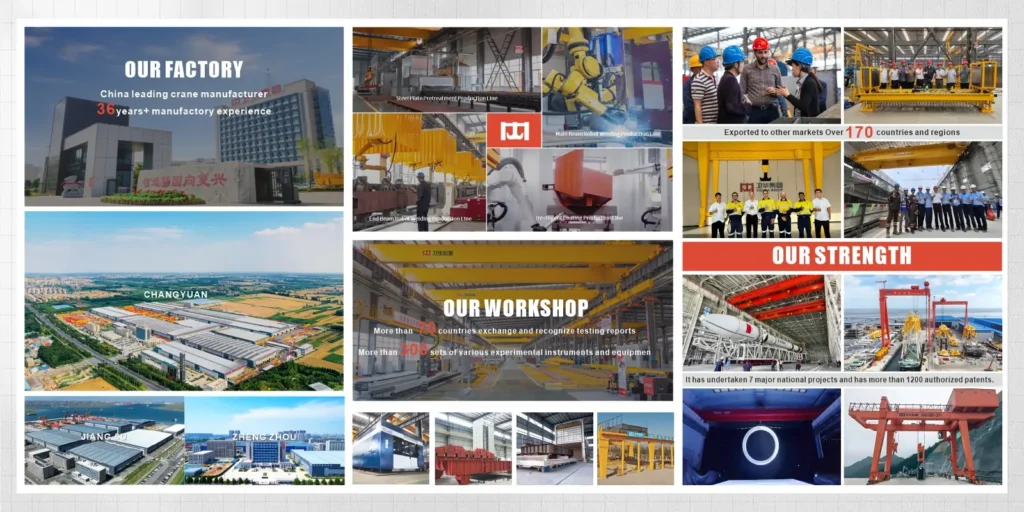
A suitable STS Crane configuration helps ports improve loading and unloading efficiency, reduce operational limitations, and support future vessel development. WEIHUA provides customized STS crane solutions based on different terminal requirements, with experienced engineering teams and proven port project experience. Contacte-nos for STS crane solutions designed for your port operation needs.
FAQ
What is an STS crane used for?
An STS crane (Ship-to-Shore Crane) is used for loading and unloading containers between vessels and port terminals. It is installed along the quay and transfers containers from ships to trucks, rail systems, or container yards.
How do I choose the right STS crane for my port?
The right STS crane should be selected based on vessel size, container throughput, berth conditions, lifting requirements, and terminal layout. Key parameters include outreach, lifting height, rated capacity, and automation level.
What is the lifting capacity of an STS crane?
Most modern STS cranes have a lifting capacity of 40–80 tons. Standard models commonly use 50–65 tons, while Super Post-Panamax cranes for large container vessels usually reach 65–80 tons and can support twin-lift operations.
How much outreach does an STS crane need?
The required outreach depends on vessel width and container rows across the deck. Panamax cranes usually require 35–45 meters outreach, while Super Post-Panamax cranes for vessels above 20,000 TEU may require 70 meters or more.
What is the difference between Panamax and Super Post-Panamax STS cranes?
Panamax STS cranes are designed for smaller vessels with around 4,000–5,000 TEU capacity and usually have shorter outreach and lower lifting height. Super Post-Panamax STS cranes are designed for ultra-large container vessels above 20,000 TEU, with 70 m+ outreach and higher lifting height.
Can STS cranes be customized?
Yes. STS cranes can be customized according to vessel size, berth conditions, terminal layout, lifting requirements, and automation needs. Custom designs may include outreach, lifting height, rail span, power system, and control functions.
How many containers can an STS crane handle per hour?
A high-performance STS crane can handle around 30–50 container moves per hour depending on vessel conditions, operator skills, crane configuration, and terminal operating processes.
What factors affect STS crane operating efficiency?
STS crane efficiency is affected by crane speed, vessel size, operator experience, automation systems, equipment condition, container layout, and terminal management. Regular maintenance and suitable crane configuration help maintain stable operation.