






Introdução
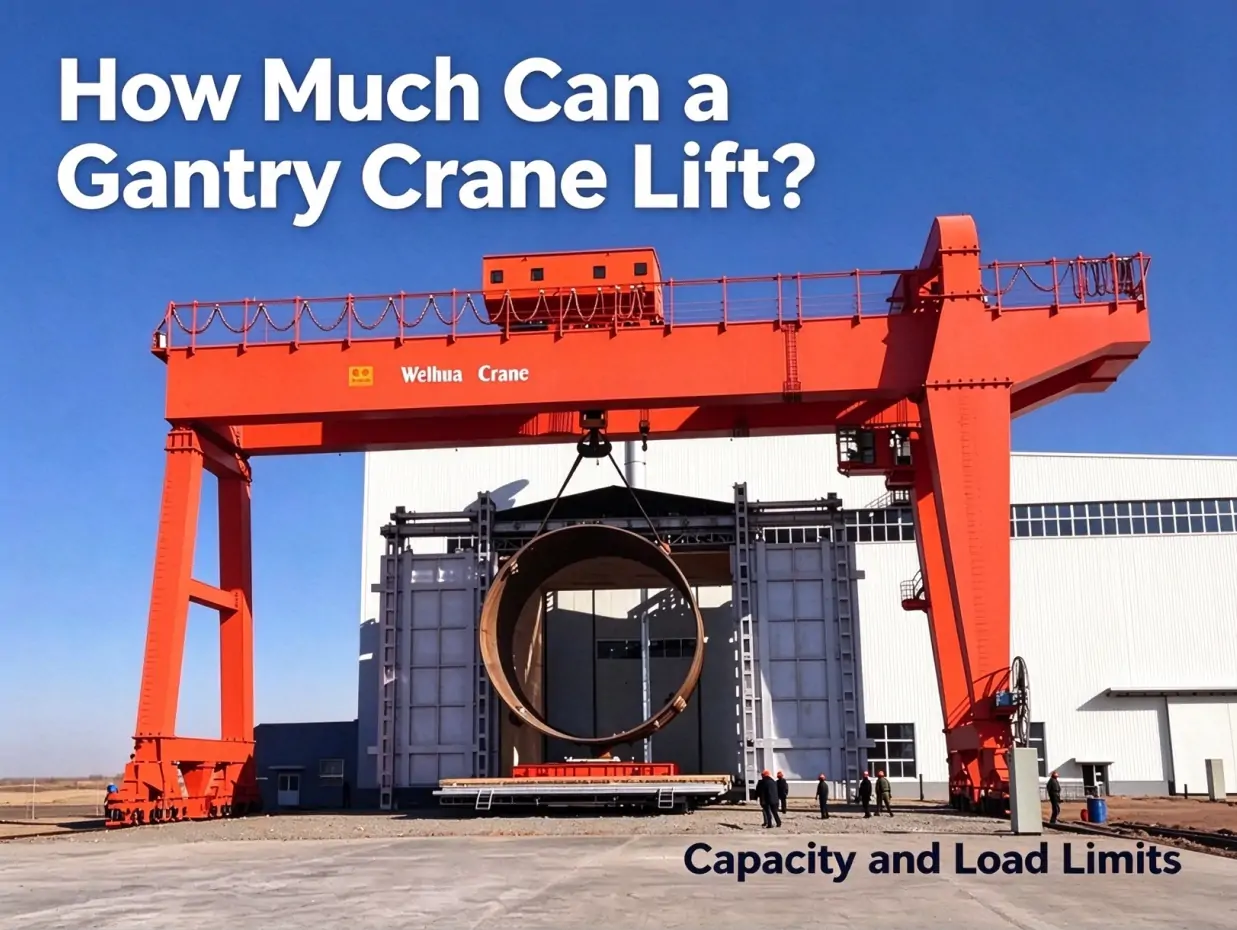
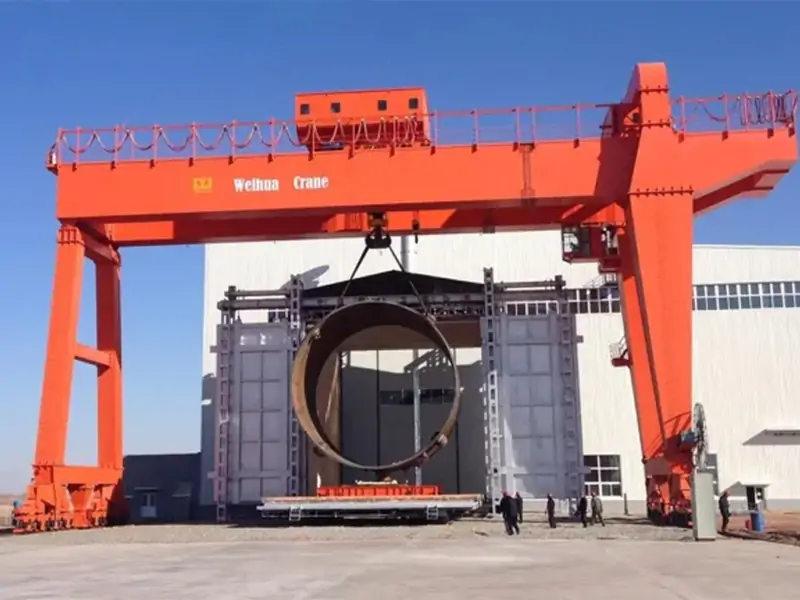
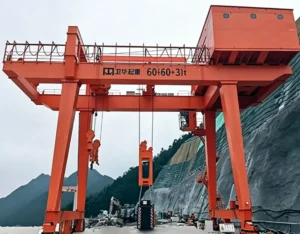
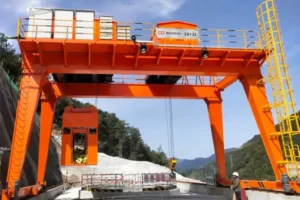
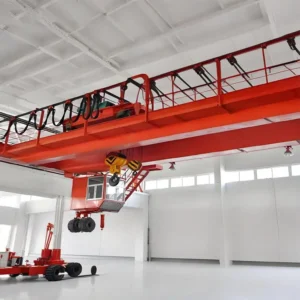
A custom gantry crane is a bridge-type lifting system supported by legs, configured or engineered for a specific lifting task and site. Rail-mounted designs travel on fixed ground rails; wheeled designs use a suitable travel surface within their approved limits. Capacity, span, hook height, duty classification, and site constraints determine the final configuration.
This guide explains which design options affect performance, what technical information a buyer should provide, and how to compare proposals. A custom gantry crane may use a single or double girder, a full or semi-gantry structure, and a rail-mounted or rubber-tired travel system. These choices must be assessed together rather than selected independently.
Índice
Custom Gantry Crane Design Options
A custom ponte rolante can be designed around the required lifting capacity, span, site layout, travel method, and material handling task. Key design decisions include the girder structure, gantry configuration, travel system, hoisting mechanism, and lifting attachments. Each option serves different operating conditions, so the final configuration should be based on project requirements and engineering calculations.
Single-Girder and Double-Girder Gantry Cranes
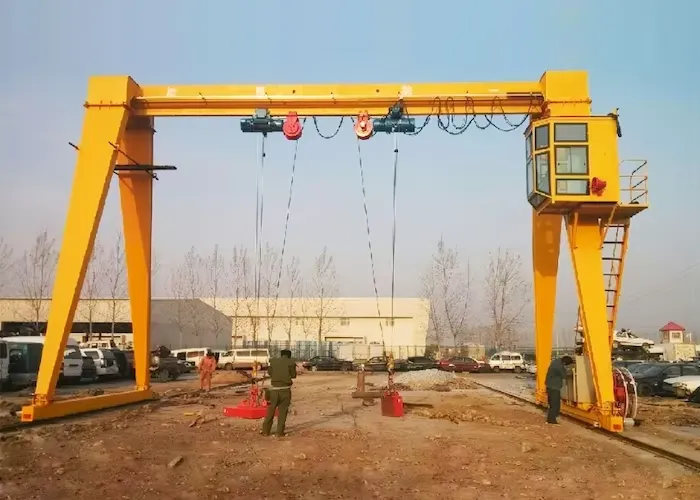
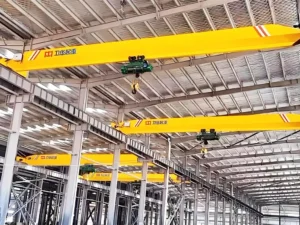
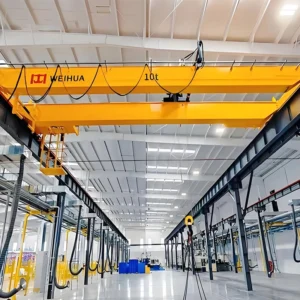
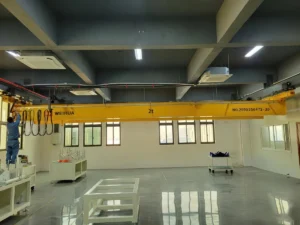
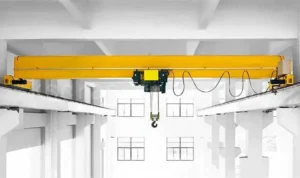
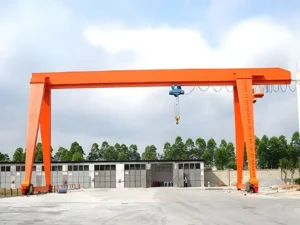
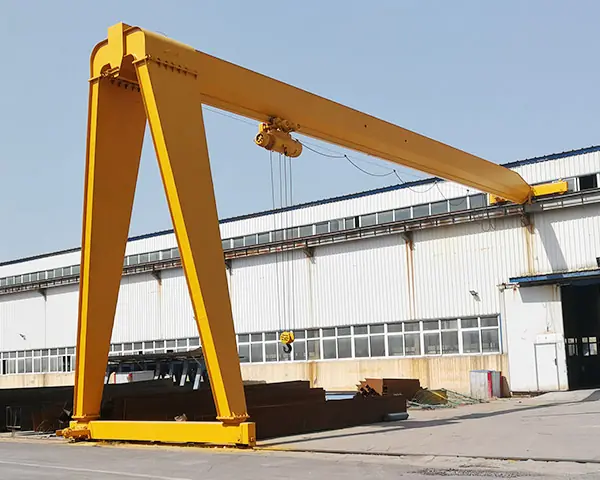
A single girder gantry crane uses one main girder, with a wire rope hoist commonly suspended beneath it. Its relatively simple structure suits general material handling in manufacturing workshops, storage yards and precast concrete facilities. The main design considerations are rated load, span, lifting height and available headroom.
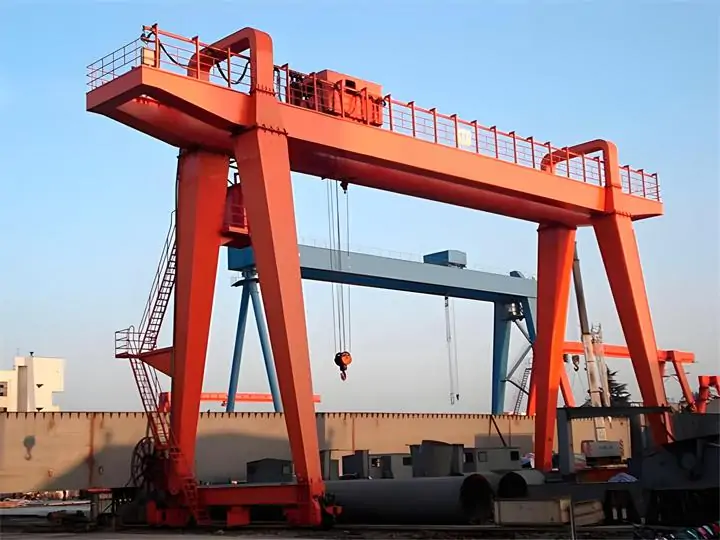
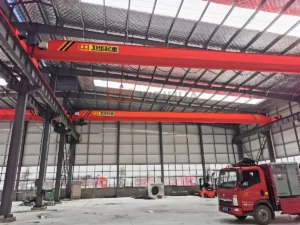
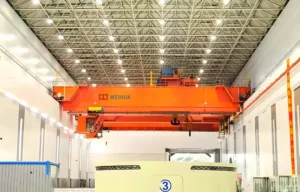
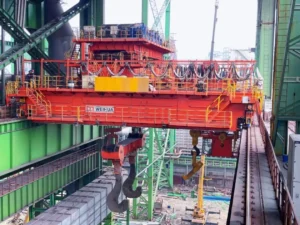
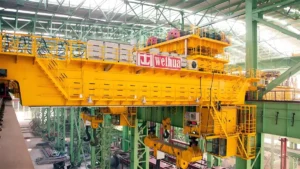
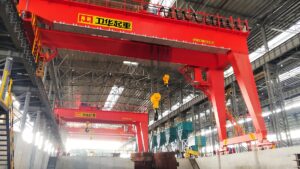
A double girder gantry crane uses two main girders with a hoisting trolley running on rails mounted on the girders. The arrangement provides more space for hoisting equipment and suits heavy loads, larger spans and demanding operating cycles. The increased structural weight and wheel loads require careful assessment of the supporting rails and foundations.
| Design factor | Viga única | Viga dupla |
|---|---|---|
| Main structure | One main girder | Two main girders |
| Hoisting arrangement | Commonly a suspended electric hoist | Commonly a trolley-mounted hoisting mechanism |
| Typical applications | General industrial handling | Heavy-duty and high-frequency lifting |
| Key selection factors | Load, span and headroom | Load, span, duty class and wheel loads |
For a custom gantry crane, the choice should follow rated load, duty classification, available headroom, and support limits. A girder arrangement alone does not establish a universal capacity threshold.
Full Gantry and Semi-Gantry Cranes
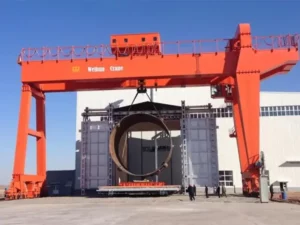
A full gantry crane has supporting legs on both sides, with the crane traveling along ground-level rails or designated travel paths. It suits outdoor yards, freight handling areas, and industrial sites where both sides of the operating area can accommodate the crane supports and travel system.
A semi-gantry crane has one leg running on a ground rail, while the opposite side is supported by an elevated runway. This arrangement can suit workshops where an existing building structure and available floor space influence the crane layout. The elevated runway and building supports must be checked for the crane’s wheel loads and operating forces.
| Design factor | Full Gantry Crane | Pórtico Semi-Giratório |
|---|---|---|
| Support arrangement | Both sides supported by legs | One ground-supported side and one elevated side |
| Travel system | Ground rails or designed travel paths on both sides | Ground rail on one side and elevated runway on the other |
| Typical site | Outdoor yards and open industrial areas | Workshops and sites with existing elevated structures |
| Main engineering concern | Rail alignment and foundation settlement | Elevated runway capacity and differential support behavior |
For a custom gantry crane, the decision depends on site dimensions, existing structures, ground conditions, and installation space. An elevated runway must be checked for vertical, horizontal, and operating forces rather than assumed suitable because it already exists.
Box Girder and Truss Girder Structures
A box girder is fabricated from welded steel plates to form a closed section. Its torsional stiffness and established fabrication methods make it suitable for many general-purpose and heavy-duty gantry cranes. The girder dimensions and plate thicknesses are determined by the design loads, span, and structural requirements.
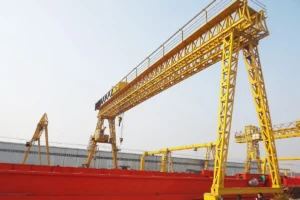
A Ponte Rolante de Pérgola uses interconnected steel members to form a framework. Its open structure may reduce wind force for some geometries, but the benefit must be calculated using the applicable wind provisions. Member connections, fatigue performance, corrosion protection, and inspection access also require assessment.
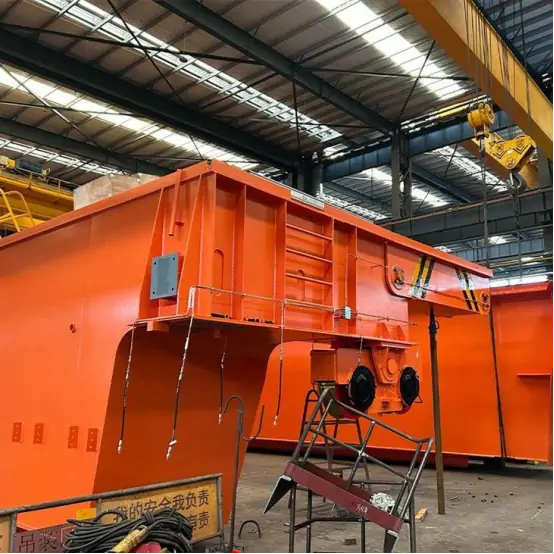
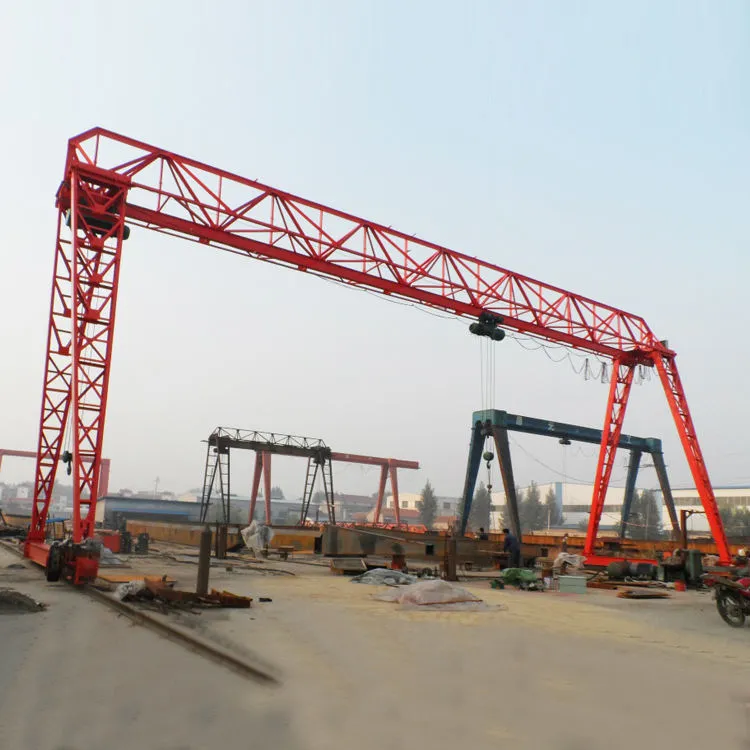
| Design factor | Box Girder | Truss Girder |
|---|---|---|
| Estrutura | Closed welded steel section | Framework of connected steel members |
| Main consideration | Section strength, stiffness and fabrication | Member forces, joint design and fatigue |
| Suitable applications | General industrial and heavy-duty lifting | Selected large-span or weight-sensitive projects |
| Design checks | Deflection, stress, fatigue and stability | Member buckling, joint fatigue and stability |
For a custom gantry crane, structural selection depends on the load, span, allowable structural height, wind conditions, and maintenance requirements. Neither design should be selected on steel weight alone.
Rail-Mounted and Rubber-Tired Travel Systems
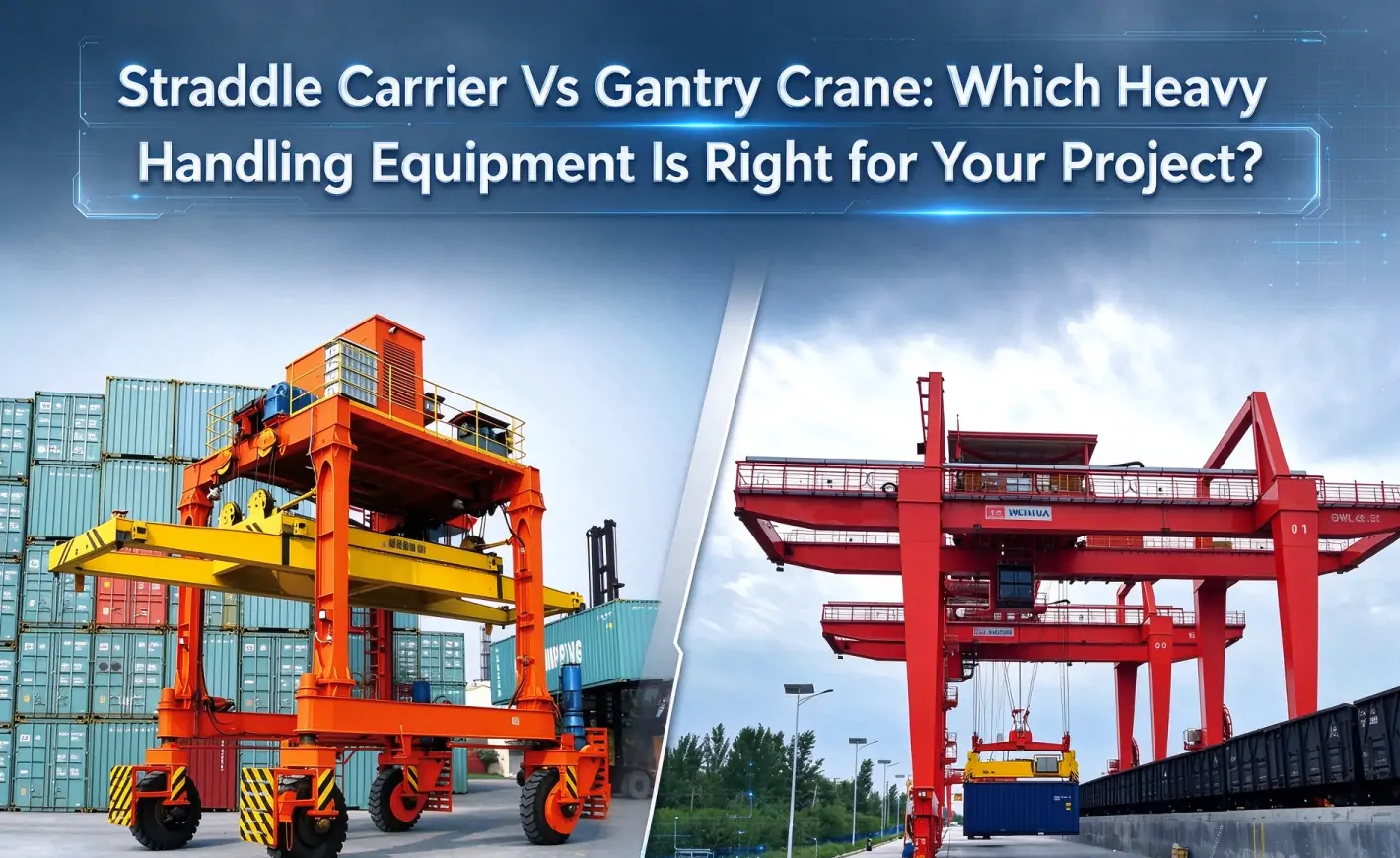
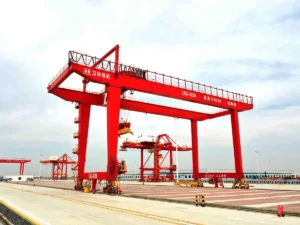
A rail-mounted gantry crane follows a fixed travel route. Steel wheels running on rails provide guided movement for operations within a defined working area. This arrangement suits repetitive lifting along established routes, although rail installation, alignment, and foundation work must be included in the project design.
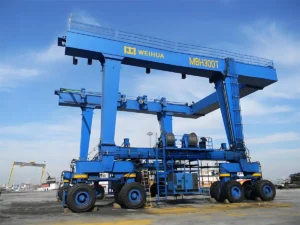
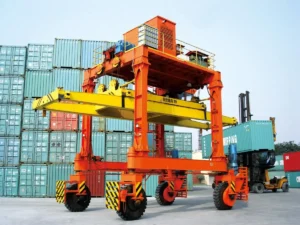
A rubber-tired gantry crane travels on tires and can move between work areas without a fixed rail system. It suits sites that require flexible positioning or access to different handling zones. The ground must support the wheel loads, and the travel and steering systems must be designed for the required movement pattern.
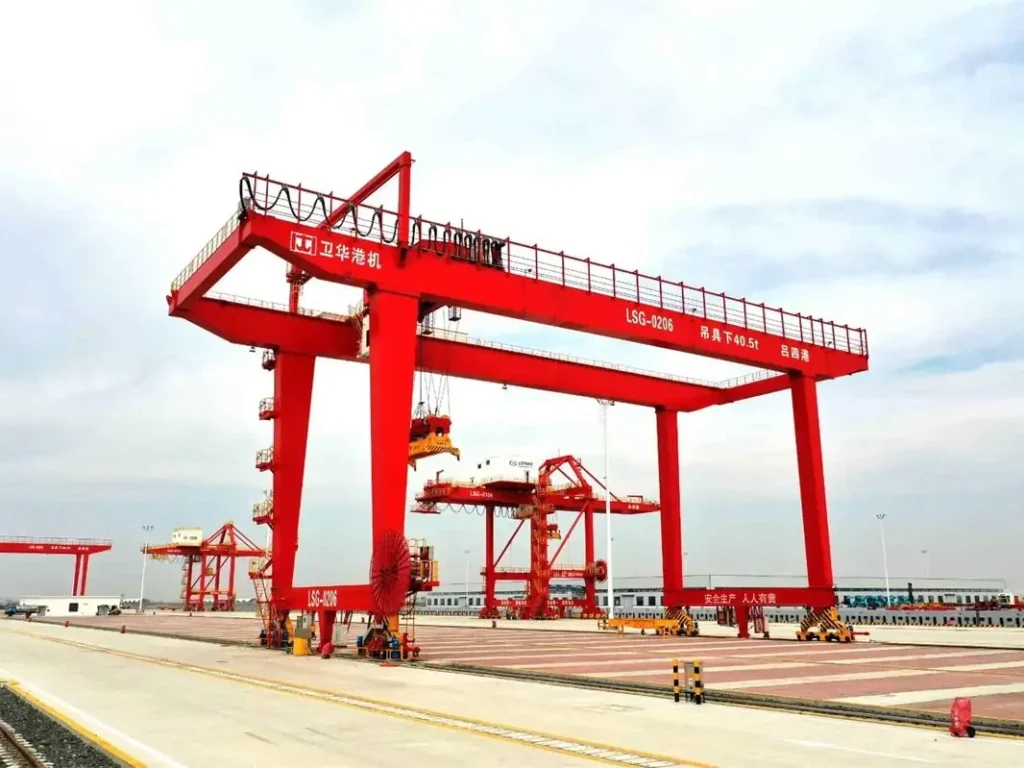
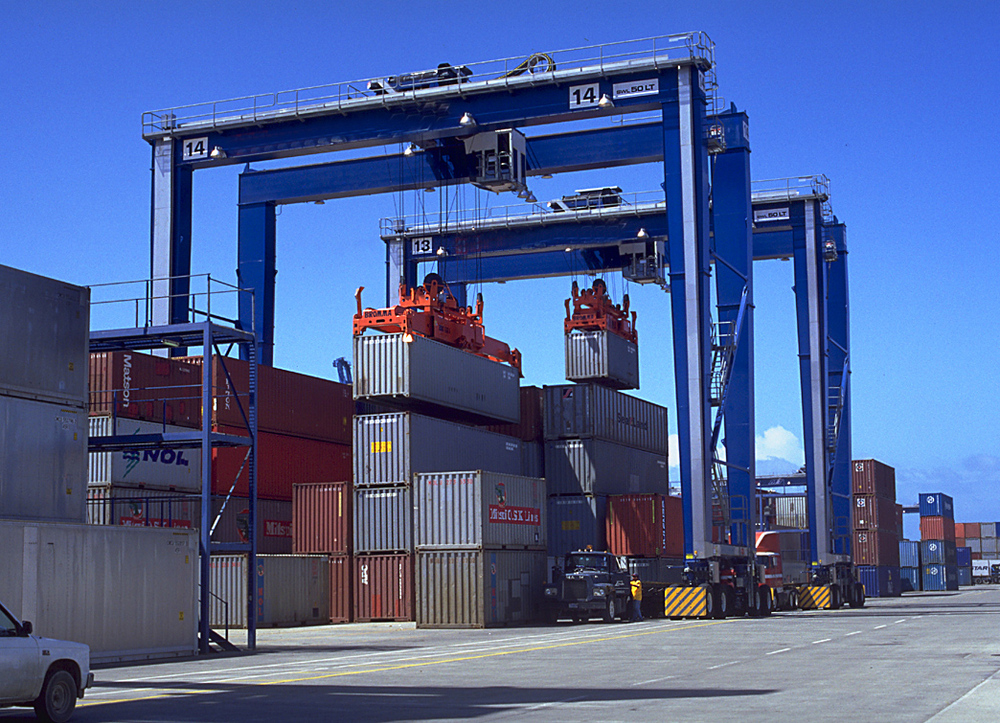
| Design factor | Rail-Mounted | Rubber-Tired |
|---|---|---|
| Travel route | Fixed | Flexible within the designed operating area |
| Ground requirements | Rail foundations and alignment | Adequate bearing capacity and surface condition |
| Positioning | Guided along the rail route | Depends on steering and travel control |
| Typical use | Fixed production or storage routes | Multiple work areas and flexible yard operations |
Select a custom gantry crane travel system according to site layout, ground conditions, movement frequency, and relocation needs. A rubber-tired design still requires a suitable travel surface, turning clearance, and defined operating limits. Wheels do not by themselves establish permission to travel with a suspended load.
Hoisting Mechanisms and Lifting Attachments
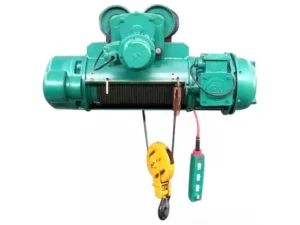
The hoisting mechanism determines how the load is raised, lowered, and positioned. Single girder gantry cranes commonly use electric wire rope hoists suspended beneath the girder. Double girder designs often use trolley-mounted hoisting mechanisms, with the arrangement selected according to lifting capacity, lifting height, speed and duty class.
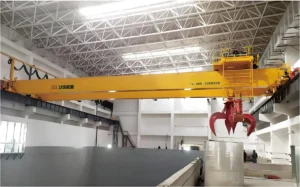
Lifting attachments should match the shape, dimensions and handling method of the load. Hooks may suit general-purpose lifting, while spreaders, grabs, clamps and other dedicated devices may be specified for containers, bulk materials, steel products or precast components.
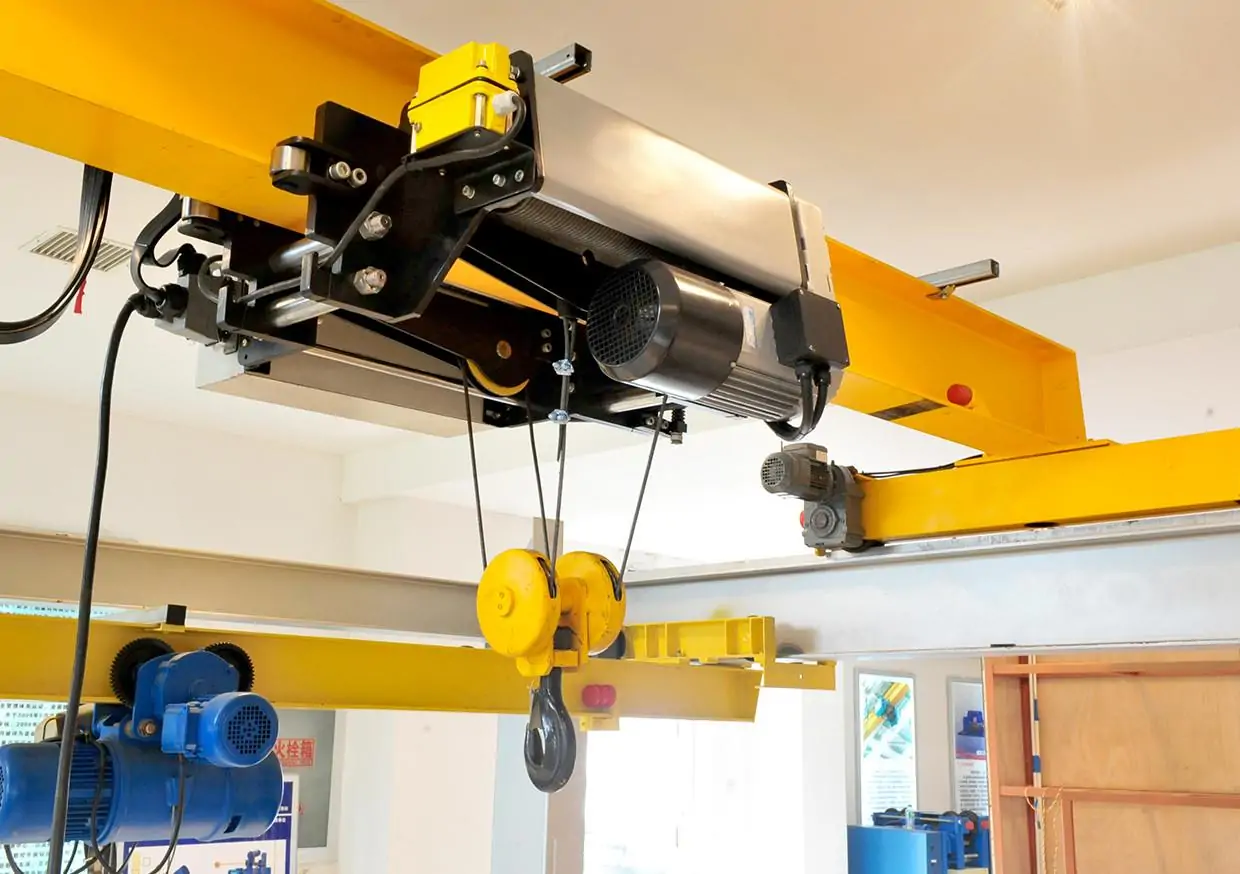
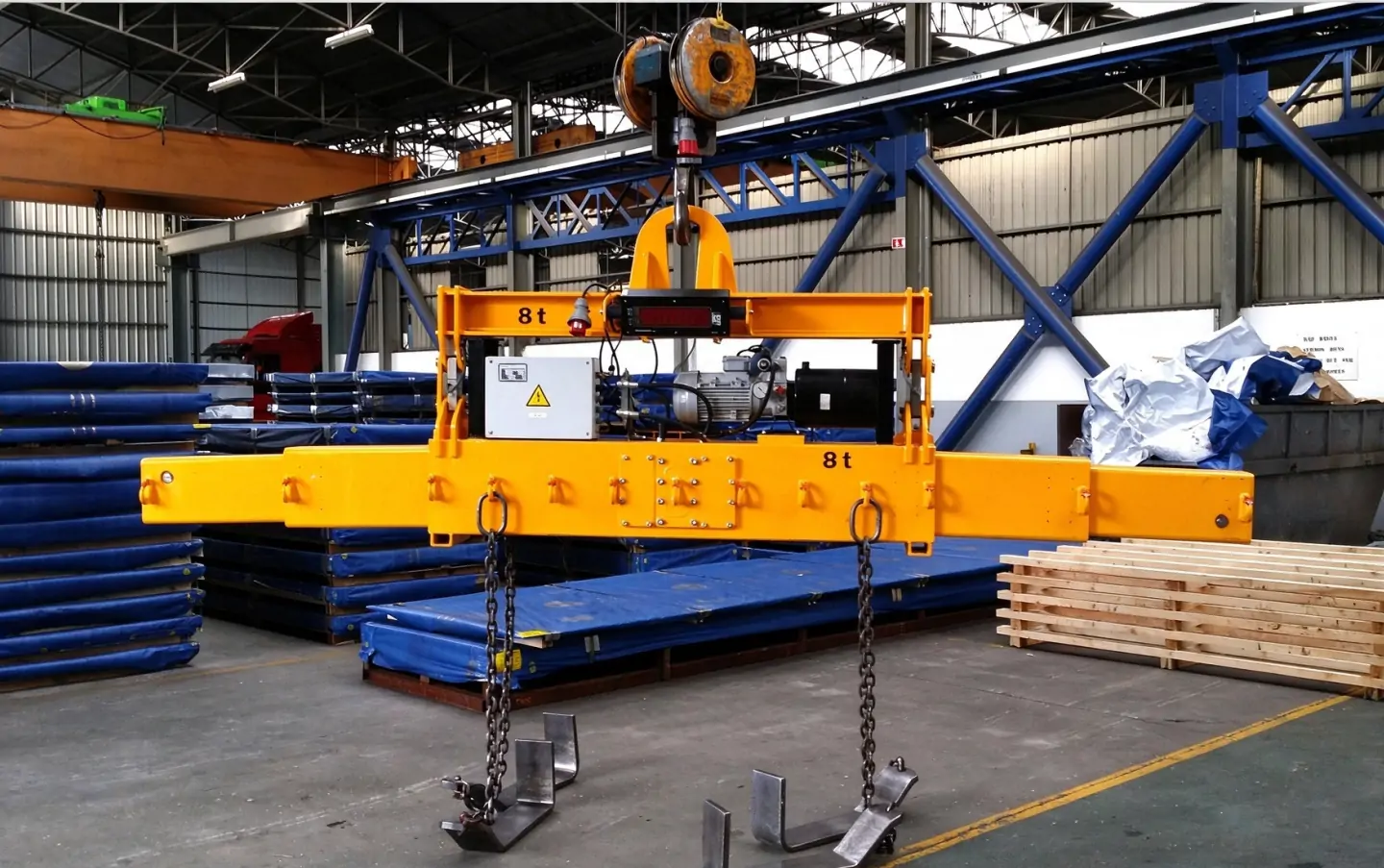
Key design considerations include:
- Rated load: State the workpiece, rigging and attachment weights separately. Confirm whether the quoted rating is under the hook, under the spreader, or defined on another basis, so the permitted payload is clear.
- Lifting height and headroom: Check the required hook travel against the available clearance and hoist arrangement.
- Operating speed: Specify lifting and lowering speeds according to the load, positioning requirements, and work cycle.
- Load handling method: Select the attachment according to the workpiece geometry, lifting points and center of gravity.
- Duty requirements: Match the hoisting mechanism and controls to the expected operating frequency and load spectrum.
Specify the hoist, trolley, and attachment as a coordinated custom gantry crane system. Their selection affects the structure, available hook height, wheel reactions, and operating performance.
For project-specific configurations, provide WEIHUA with the load data, site layout, and required handling method for technical review. Confirm the proposed structure and equipment configuration in the agreed specification and engineering drawings.
Custom Gantry Crane Specifications
Custom gantry crane specifications must describe the operating task as well as the crane dimensions. Numerical ranges from different product series should not be treated as interchangeable or combined into one guaranteed configuration. Use the comparison below to define what must be confirmed for each design.
Specification Checks by Gantry Crane Type
| Crane type | Configuration to confirm | Site and operating checks |
|---|---|---|
| Single girder | Rated load, hoist arrangement, span and hook height | Headroom, duty classification and wheel reactions |
| Double girder | Rated load, trolley arrangement, span and hook coverage | Structural height, fatigue duty and foundation reactions |
| Truss structure | Rated load, span, member layout and hoist arrangement | Wind calculations, joints, corrosion and inspection access |
| Rail-mounted container crane | Payload rating basis, spreader, stacking envelope and rail gauge | Wheel reactions, power supply and yard layout |
| Rubber-tired crane | Payload rating basis, wheel layout, steering and travel limits | Pavement capacity, traction, turning envelope and gradients |
For each proposed model, obtain a dated technical data sheet showing the applicable capacity, span, hook height, duty classification and operating conditions together. A maximum value for one parameter does not imply that all other maximum values are available simultaneously.
Key Parameters for Custom Gantry Crane Design
| Parâmetro | Engineering Considerations |
|---|---|
| Capacidade de Elevação Nominal | Confirm the maximum load weight, lifting attachment weight, and load distribution. |
| Span and coverage | Define rail center spacing or wheel center spacing as applicable; show clear leg opening, cantilever reach and hook coverage separately. |
| Hook height and headroom | State the highest and lowest hook positions relative to a site datum, plus required overall height and clearances. |
| Lifting and Travel Speeds | Specify hoisting, trolley travel and crane travel speeds according to the handling cycle and positioning requirements. |
| Classe trabalhadora | Assess the load spectrum, operating cycles and daily working hours to select the appropriate duty classification. |
| Mecanismo de içamento | Select an electric wire rope hoist or trolley-mounted hoisting system according to the crane structure and load requirements. |
| Fonte de Alimentação | Confirm site voltage, frequency, phase and the required power supply arrangement. |
| Método de controlo | Specify pendant control, radio remote control or cabin operation according to the selected model and operating conditions. |
| Wheel reactions and supporting surface | Obtain maximum wheel reactions and relevant horizontal forces; check rails and foundations or the wheeled travel surface as applicable. |
| Ambiente operacional | Identify indoor or outdoor use, ambient temperature, wind exposure, dust, moisture, and corrosive conditions. |
How to Specify a Custom Gantry Crane
A custom gantry crane specification starts with rated load, span, hook height and duty classification. Match the hoisting arrangement, travel speeds, power supply and controls to the work cycle. Include a general arrangement drawing and a clear load-rating basis before comparing quotations.
Hook Height, Span and Duty Classification
For a rail-mounted custom gantry crane, span normally refers to the distance between the travel rail centerlines; it is not the same as the clear opening between the legs. Define wheel centers and clear opening separately for a wheeled design. Show any cantilever reach and the required hook coverage on the layout.
State the highest and lowest hook positions relative to a common site datum. Required hook height differs from total crane height and available headroom. Include the workpiece, lifting beam, rigging, hook block, and clearance needed to pass over obstacles.
Working hours alone do not define duty classification. Provide operating cycles, typical and maximum loads, load spectrum, and expected service life. A3 to A8 labels, ISO classifications, and FEM groups must be interpreted under the specified standard; do not assume a direct equivalence without a documented assessment.
Aplicações
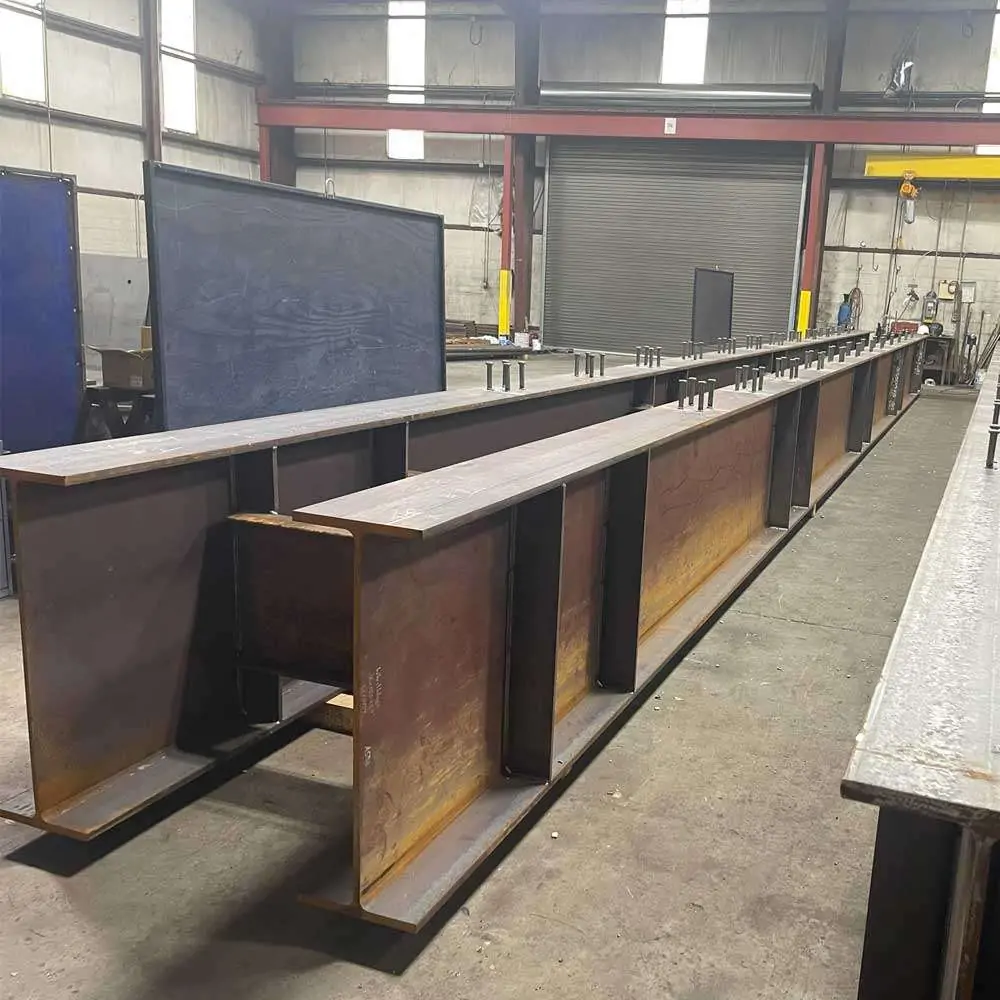
Steel Fabrication and Heavy Manufacturing
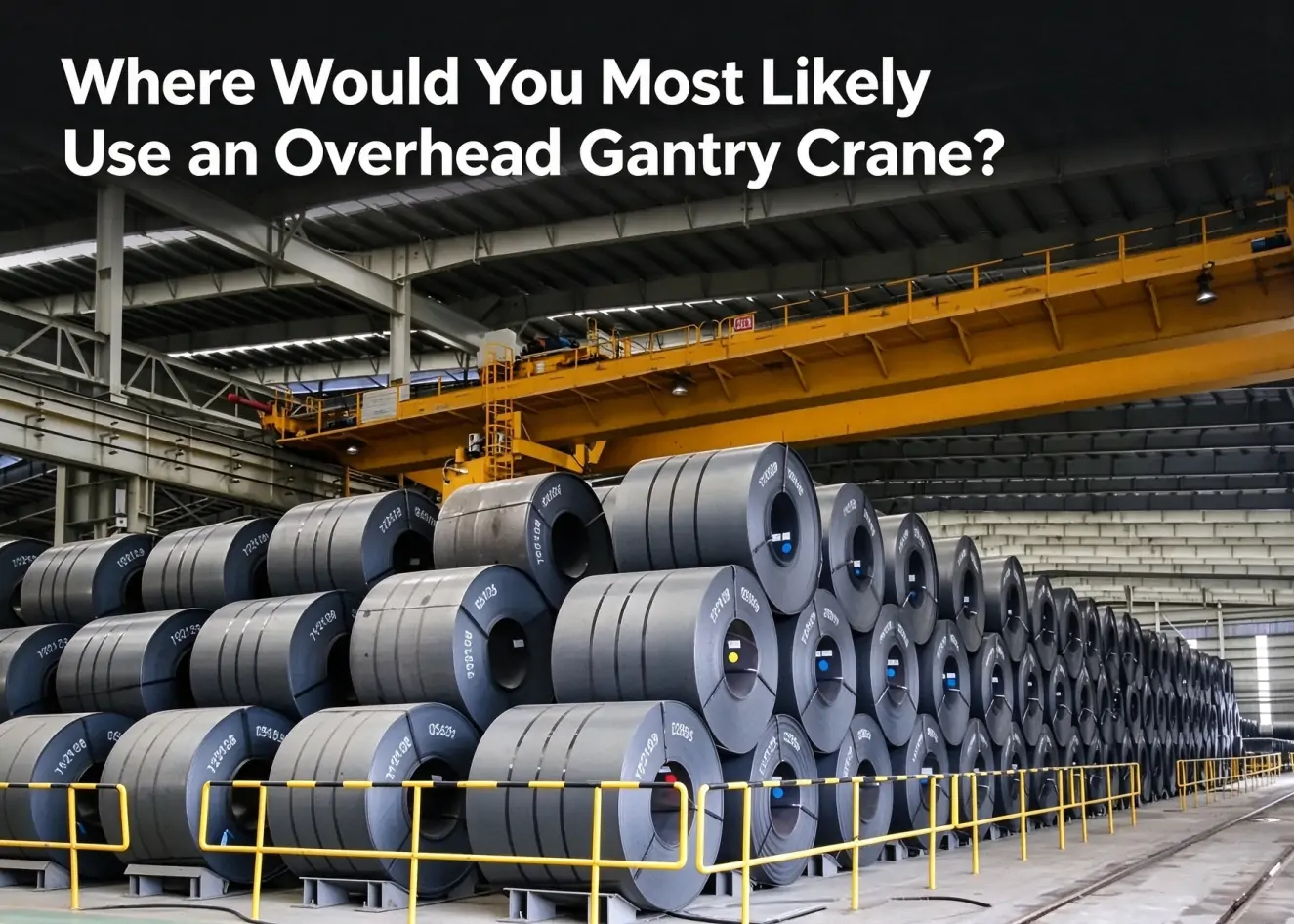
A custom gantry crane can handle steel plates, welded beams, fabricated structures, and machinery parts. Evaluate double girder arrangements where the load, span, available hook height, or duty cycle justifies them. Match hooks, magnets, or clamps to the actual material and lifting method.
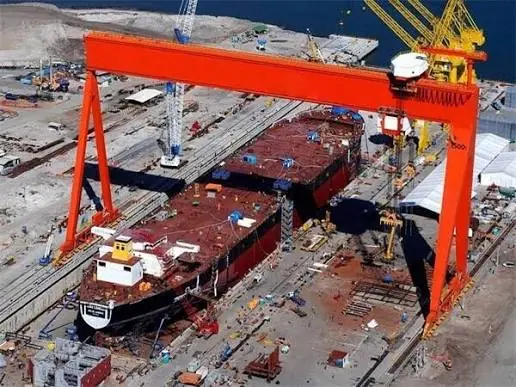
Shipbuilding
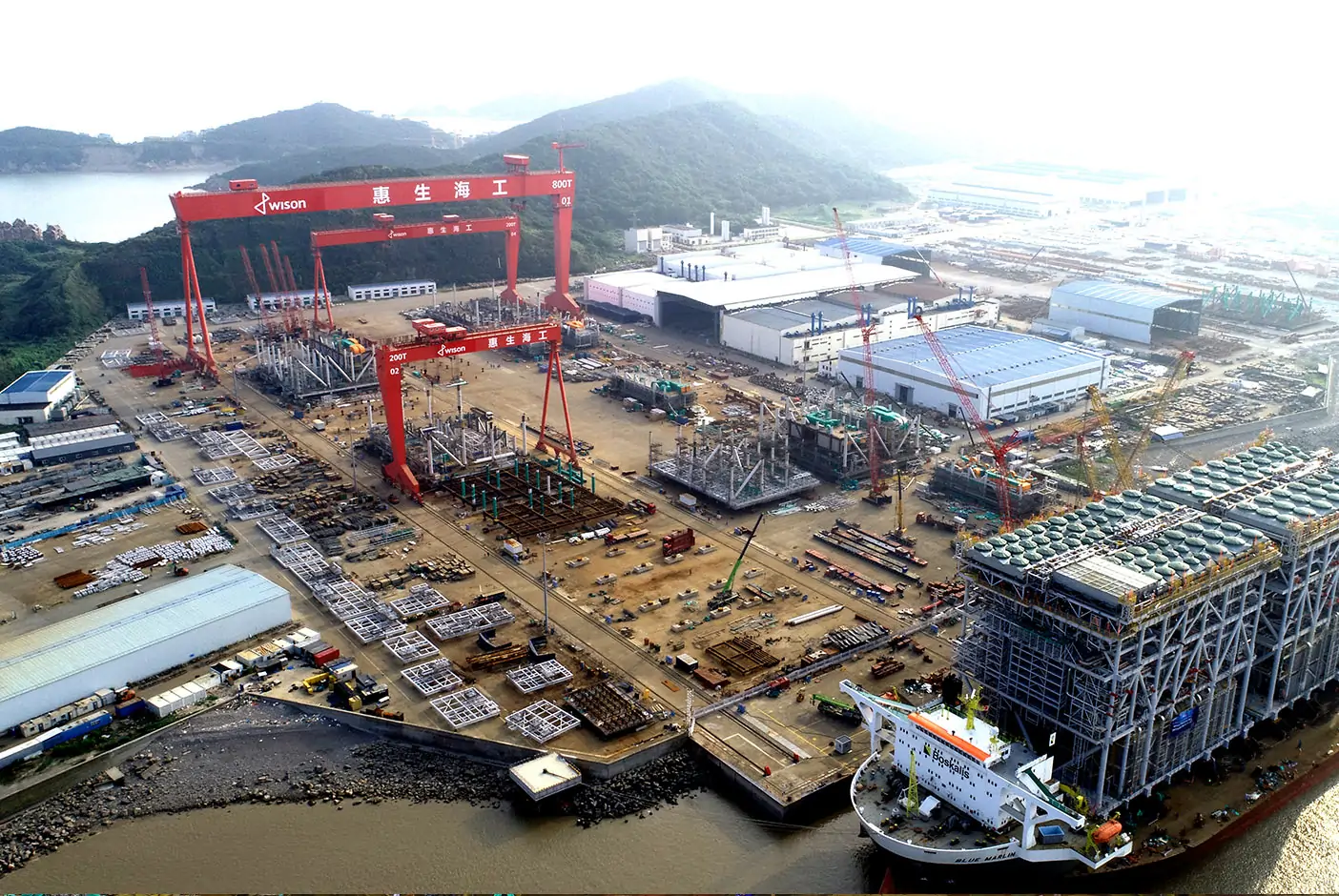
A shipyard custom gantry crane may handle ship blocks, hull sections, and oversized assemblies. Lifting capacity, span, hook height, multi-point lifting, and positioning requirements affect the design. Tandem lifting or multiple hoists requires an engineered load-sharing and control arrangement.
Railway Manufacturing
Railway factories may specify a custom gantry crane for railcar bodies, bogies, wheelsets, and other large components. Match the span, hook height and load distribution to the assembly line, maintenance access and workshop layout.
Precast Concrete and Bridge Construction
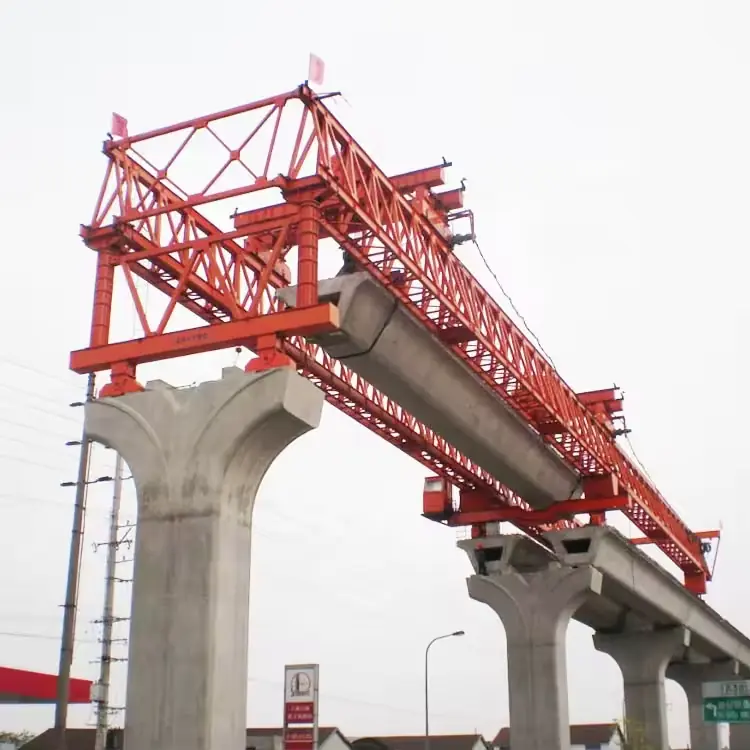
A custom gantry crane in a precast yard may handle concrete beams, slabs, wall panels, molds and bridge segments. Check the lifting points, required beam orientation, storage arrangement, and outdoor exposure when assessing double girder or truss options.

Ports and Container Terminals
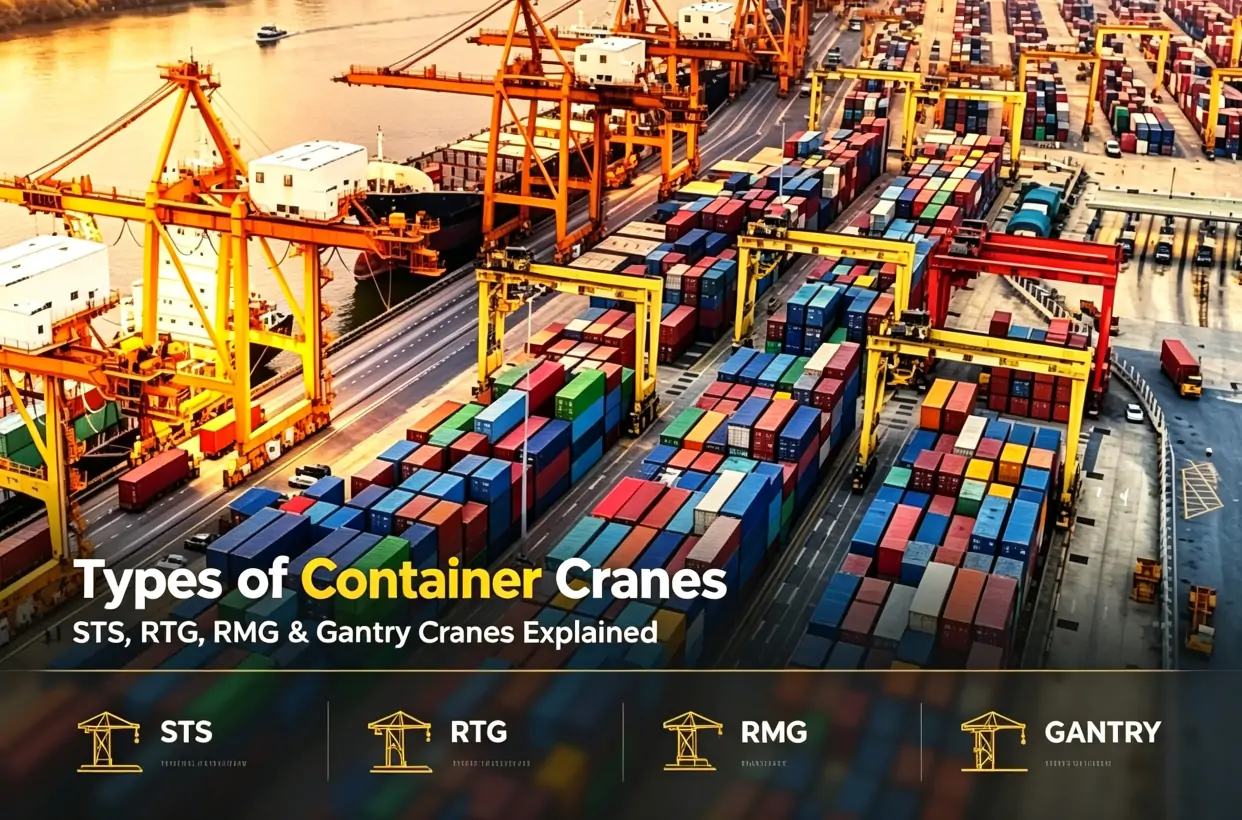
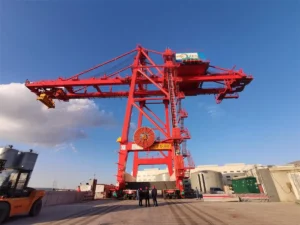
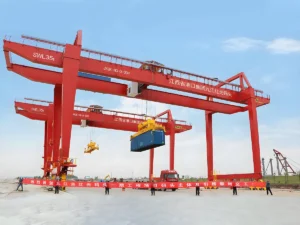
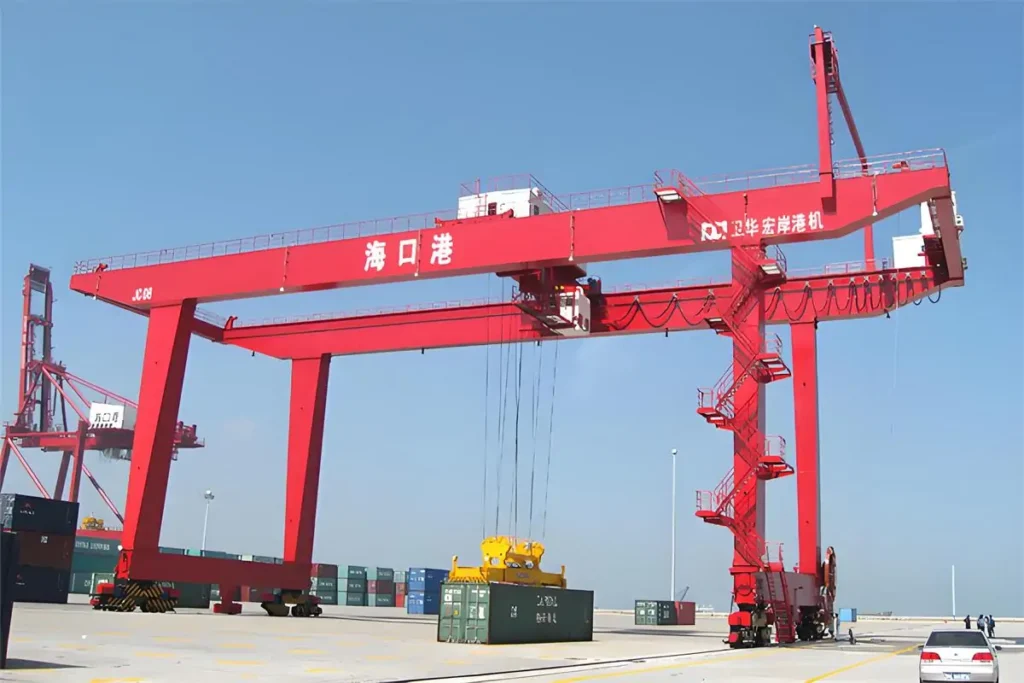
Rail-mounted gantry cranes (RMGs) serve fixed container yard routes and stacking operations. Rubber-tired gantry cranes (RTGs) suit yards requiring flexible movement. Span, stacking height, container size, and handling frequency guide the design.
Mining and Hydropower Projects
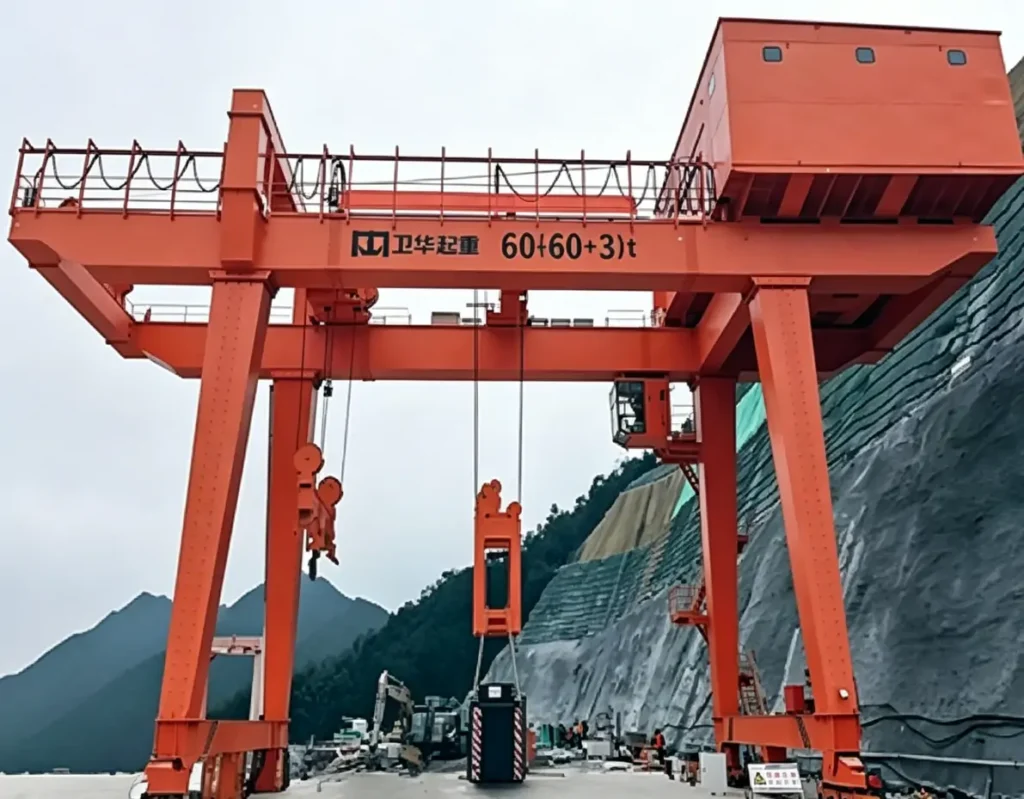
A project-specific custom gantry crane may handle steel supports, pipes, and heavy equipment in mining or hydropower work. Shaft handling also requires confirmation of hook travel below ground, rope length, reeving, braking, and the applicable equipment category.
Special Design Requirements for Custom Gantry Cranes
A custom gantry crane design must account for site constraints, load characteristics, and operating conditions beyond rated capacity, span, and hook height. Record these conditions before design approval so the equipment and civil works use compatible assumptions.
1. Outdoor Operation and Wind Loads
- Wind load: Specify operating and non-operating wind speeds according to the site conditions and applicable design standards.
- Environmental exposure: Confirm ambient temperature, rain, dust, humidity, and corrosive conditions.
- Travel restraint: Assess rail clamps, storm anchors, or other parking restraints where required by the crane design.
2. Heavy-Duty and High-Frequency Operations
- Working cycle: Define daily operating hours, lifting cycles, and load spectrum.
- Duty classification: Select the working class based on actual usage and the applicable crane design standard.
- Mechanical components: Review hoisting mechanisms, brakes, motors, wheels, and structural fatigue requirements for the specified duty.
3. Long or Irregular Loads and Special Lifting Devices
- Load geometry: Provide workpiece dimensions, weight, lifting points, and center-of-gravity location.
- Lifting attachments: Specify the required spreader beams, clamps, grabs, or dedicated fixtures.
- Load stability: Assess load balance, deflection, clearance, and positioning during lifting and travel.
4. Site Layout, Rail Foundation and Installation Clearance
- Travel route: Confirm rail gauge, travel distance, turning or transfer points, and required coverage.
- Foundation: Check rail alignment, foundation capacity, and maximum wheel loads.
- Installation clearance: Provide available headroom, building height, nearby structures, and maintenance access.
Confirm custom gantry crane requirements against the project specification, site survey, and applicable engineering standards. Define who supplies the rails, foundations, power feed, and installation work. Special operating conditions may require additional calculations or dedicated equipment.
How to Select a Custom Gantry Crane
Custom gantry crane selection starts with the lifting task, operating cycle, and installation site.
- Define Load Weight, Dimensions, and Center of Gravity: Specify the maximum workpiece weight, dimensions, lifting points, and center of gravity. List rigging and attachment weights separately and agree on how they are included in the custom gantry crane rating.
- Confirm Span, Hook Height, and Working Area: Define the rail span, required hook height, travel distance, and loading or unloading positions.
- Evaluate Duty Class and Operating Cycle: Provide daily operating hours, lifting frequency, and load distribution to determine the required working class.
- Match the Crane Type to Site Conditions: Select the custom gantry crane structure and travel system according to site layout, supporting surface, power supply, and indoor or outdoor conditions. Check the entire travel route, including clearances, joints, gradients, and turning areas where applicable.
- Confirm Applicable Standards and Technical Documents: For a custom gantry crane, agree the applicable standard names, editions, and contractual requirements. Request the general arrangement drawing, design loads, inspection and test plan, operating instructions, and maintenance documentation. Define the scope of installation and after-sales support.
- Safety Functions and Acceptance Documents: The custom gantry crane risk assessment should determine the required protective functions, such as overload protection, travel and hoist limits, emergency stops, braking, collision protection, or outdoor securing arrangements. Define their intended behavior and verification method rather than assuming every listed device is included.
Agree an inspection and test plan before manufacture. It should identify drawing approval, material and welding records where required, inspection stages, functional checks, load testing, and site acceptance responsibilities. Test loads, procedures, and acceptance criteria must follow the applicable standard and approved plan; a generic percentage is not a substitute.
Custom Gantry Crane Cost and Quotation
Factors Affecting Custom Gantry Crane Cost
Custom gantry crane cost depends on rated load, span, hook height, duty classification, structure, hoisting and travel mechanisms, attachments, controls, transport and installation scope. A low equipment price may exclude civil works or services that are necessary for operation.
Information Required for a Quotation
Provide the following details for a project-specific quotation:
- Required lifting capacity
- Crane span and lifting height
- Load dimensions and handling method
- Indoor or outdoor operating conditions
- Duty cycle and operating frequency
- Destination country and installation requirements
Ask for a custom gantry crane quotation with an itemized scope covering equipment, rails or travel surface interfaces, power supply, shipping, installation, commissioning, and training as applicable. Identify exclusions, site responsibilities, and assumptions so proposals can be compared on the same basis.
Compare Total Project Cost and Delivery Milestones
Compare the custom gantry crane purchase price with civil works, power infrastructure, inspection, installation, and expected maintenance costs. Ask which wear components, access provisions, and spare parts are included. Review energy use against the actual work cycle rather than assuming one structure is always cheaper.
Agree on design approval, manufacturing, inspection, shipping, and commissioning milestones separately. State the delivery term and named place, responsibilities for unloading and site preparation, warranty start point, and acceptance conditions. Production or delivery dates should be confirmed after technical scope and contractual inputs are settled.
Conclusão
A custom gantry crane should be selected around the load, work cycle, operating route, and supporting structure. Girder type, travel system, hoist, and attachments work together, and the agreed technical specification should state their operating limits.
Send WEIHUA your load data, span, required hook height, site layout, and material-handling requirements for a technical evaluation and project quotation. Confirm the proposed supply and service scope in writing.
FAQ
What Is a Custom Gantry Crane?
A custom gantry crane is designed around specific lifting loads, span, lifting height, operating conditions, and site layout. Its structure and equipment configuration are selected for the project requirements.
Which Parts of a Gantry Crane Can Be Customized?
Customization may include the girder structure, leg design, span, lifting height, hoisting mechanism, travel system, lifting attachments, power supply, and control method.
How Do I Choose Between a Single Girder and Double Girder Gantry Crane?
A single girder arrangement can suit general handling, while a double girder arrangement may suit heavier loads, greater hook-height needs, or demanding duty cycles. Select the custom gantry crane using the complete load case, span, clearance, duty classification, and support design.
What Lifting Capacities Are Available for Custom Gantry Cranes?
There is no single capacity range for every custom gantry crane. The available rating depends on the product series, span, hook arrangement, duty classification, and structural design. Obtain a model-specific technical data sheet and confirm the permitted payload after accounting for attachments and rigging.
Can a Custom Gantry Crane Be Designed for Outdoor Use?
Yes. Outdoor configurations can be designed around site wind conditions, temperature, rain, corrosion exposure, and ground conditions. Wind restraints and other protective measures depend on the project requirements.
How Do Span and Lifting Height Affect Gantry Crane Design?
Span affects girder dimensions, structural loads, and wheel loads. Lifting height affects leg dimensions, hoisting arrangements, and overall crane height. Both parameters must be assessed against the load requirements and available installation space.
What Information Is Needed to Request a Custom Gantry Crane Quotation?
Provide the required lifting capacity, load dimensions, span, lifting height, operating frequency, site layout, indoor or outdoor conditions, power supply, destination country, and installation requirements.
How Long Does It Take to Manufacture and Deliver a Custom Gantry Crane?
Lead time depends on crane specifications, design approval, manufacturing workload, inspection, transportation, and installation scope. WEIHUA can confirm the estimated production and delivery schedule after reviewing the project requirements.