








Introdução
Container terminals, ports, and intermodal yards rely heavily on efficient container handling equipment to improve throughput, reduce operating costs, and maximize yard utilization. Among the most widely used solutions are Straddle Carriers and Rubber Tyred Gantry (RTG) Cranes.
Although both are designed for container transportation and stacking, their working methods, automation capabilities, infrastructure requirements, and operational efficiency differ significantly. Choosing the right system directly affects terminal productivity, labor efficiency, fuel consumption, and long-term investment returns.
This guide compares Straddle Carriers and RTG cranes from multiple professional perspectives, helping terminal operators, EPC contractors, logistics companies, and port investors select the most suitable solution for their projects.
What Is a Straddle Carrier?
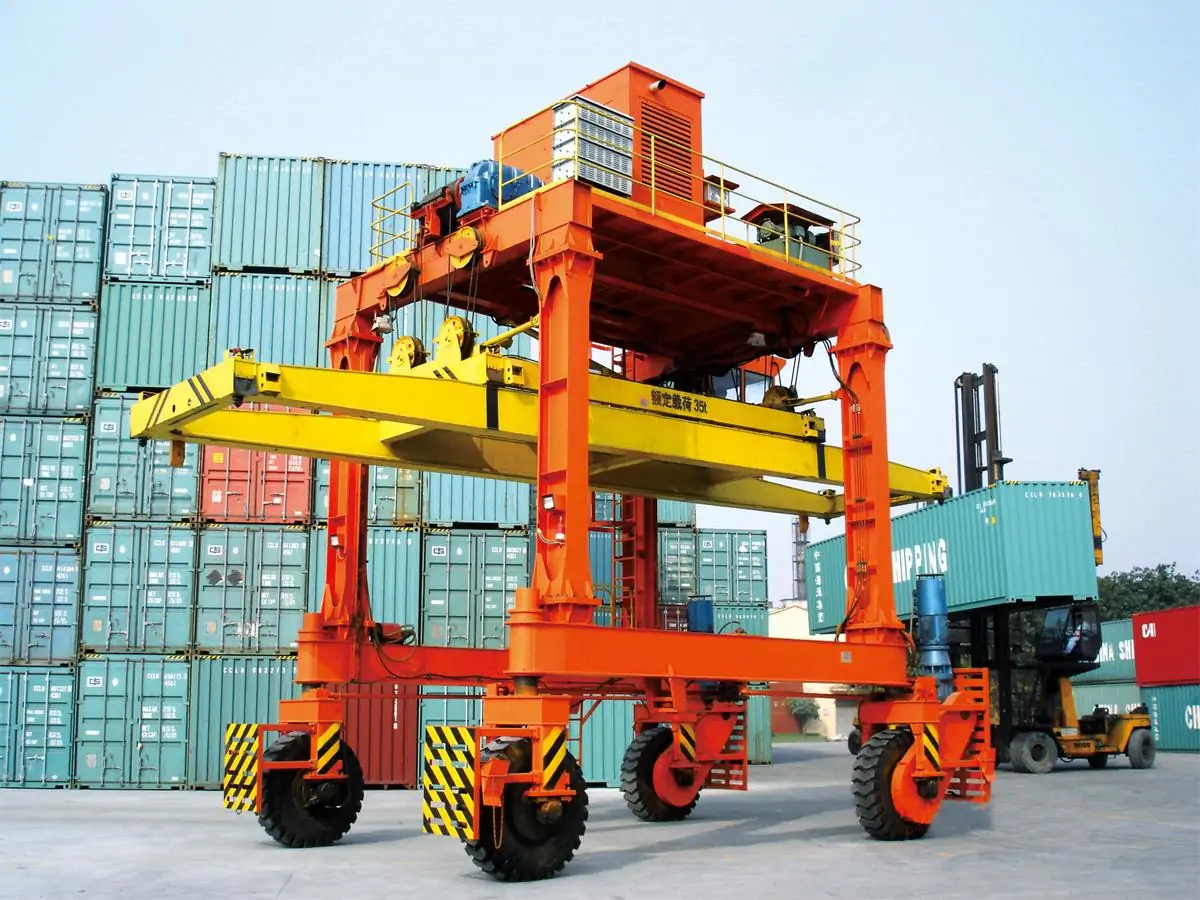
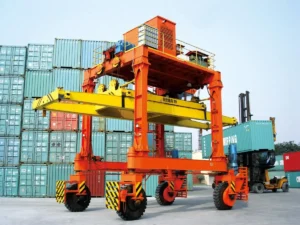
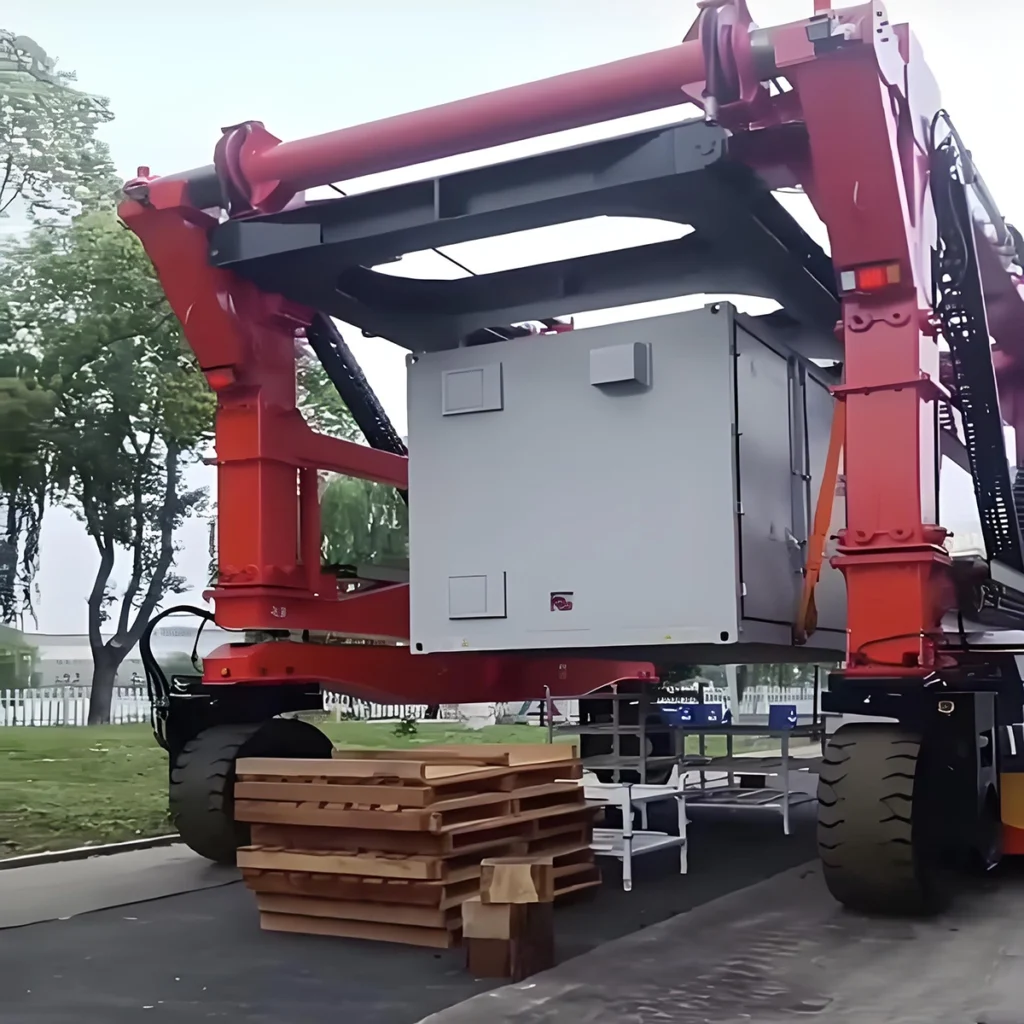
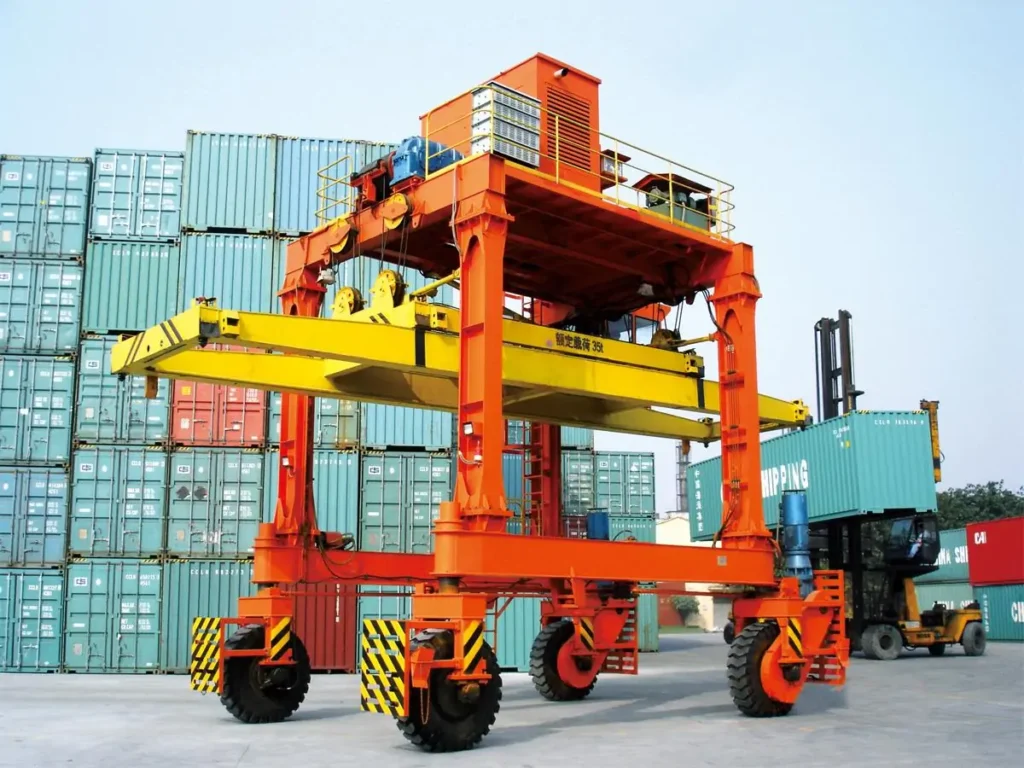
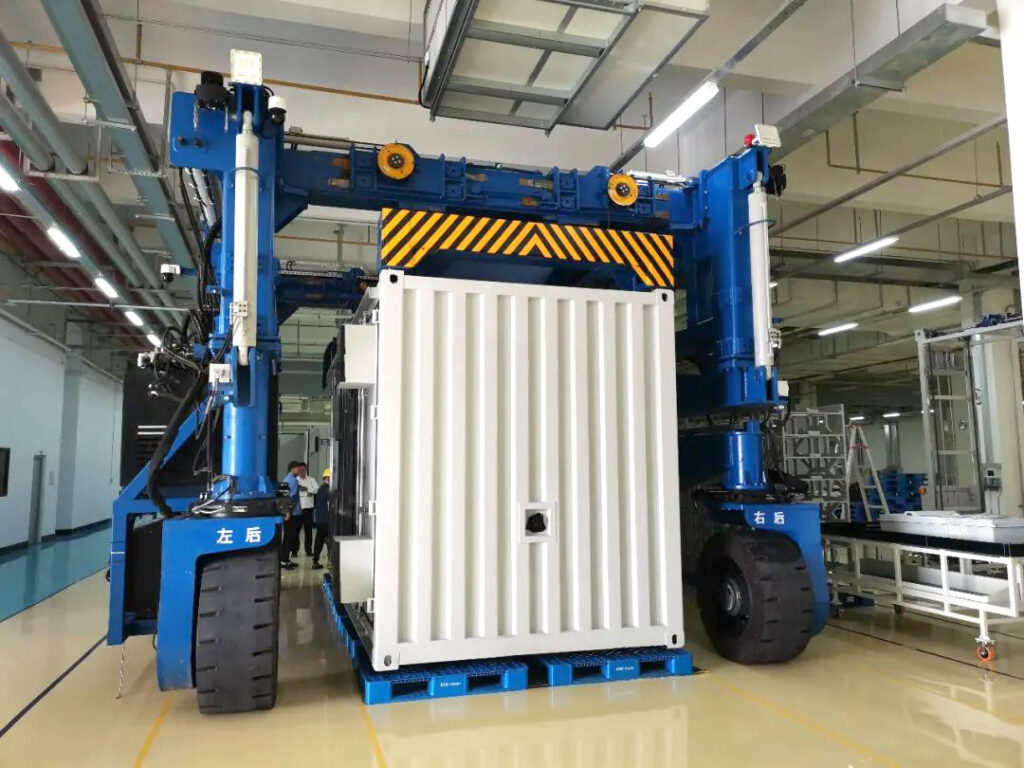
A Porta-equipamentos de transporte is a self-propelled container handling vehicle designed to lift, transport, and stack containers independently. Unlike RTG cranes, it combines both transportation and stacking functions into a single machine.
Straddle carriers are widely used in automated ports and high-throughput container terminals because they provide flexible container movement without relying heavily on terminal tractors.
How Straddle Carriers Work
A straddle carrier drives directly over a container, lifts it using a spreader system, and transports it to another location within the yard. Depending on the design, the machine can stack containers two to four high.
Because the equipment can move containers independently, terminals can reduce congestion and simplify traffic flow.
O que é um guindaste RTG?
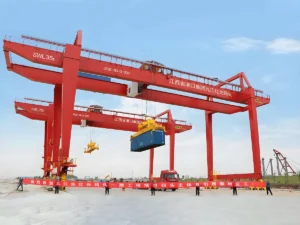
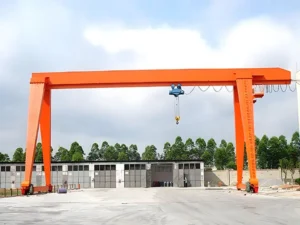
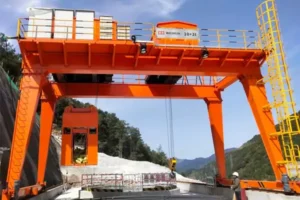
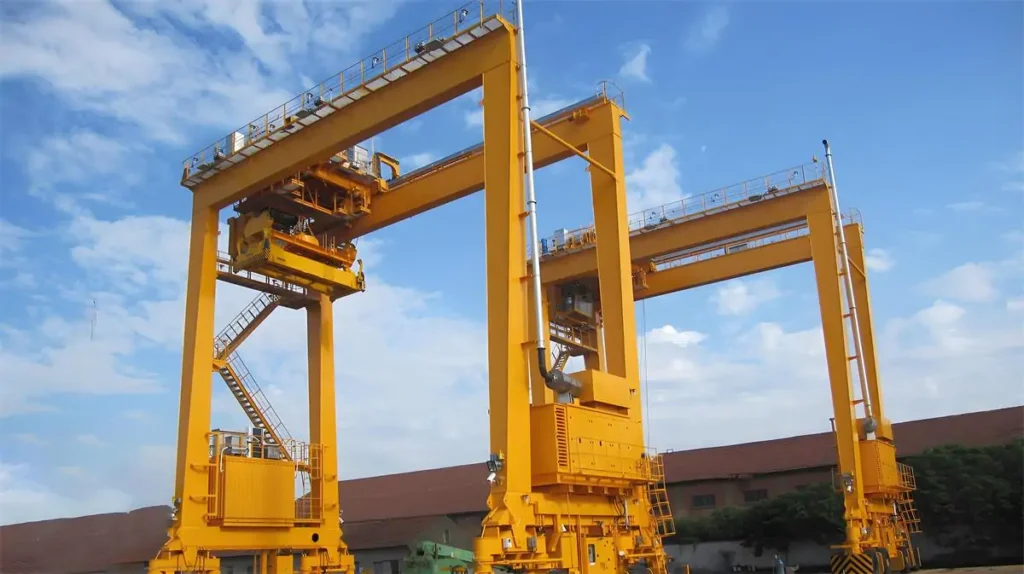
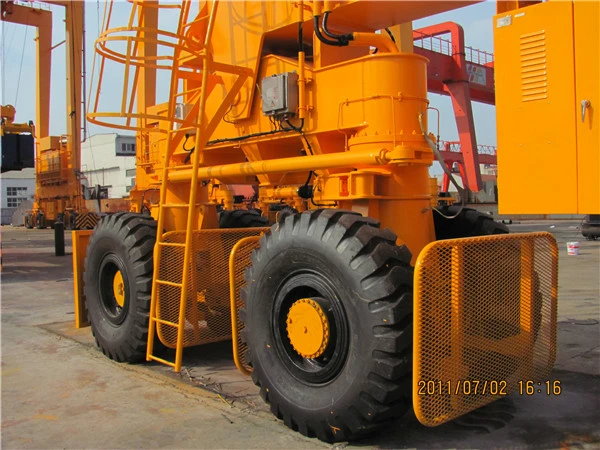
An RTG crane, also known as a Rubber Tyred Gantry Crane, is a mobile gantry crane used primarily for stacking containers within storage yards.
RTG cranes are commonly seen in large container ports where maximizing storage density is a priority.
How RTG Cranes Work
RTG cranes operate above container rows and move on rubber tires across the yard. The crane lifts containers vertically using a hoisting system and positions them within designated stacking lanes.
Unlike straddle carriers, RTG cranes typically rely on trucks or terminal tractors to transport containers between the quay and storage yard.
Para obter informações detalhadas sobre os procedimentos operacionais e precauções, consulte o artigo: Como operar um guindaste RTG: um guia passo a passo
Container crane operations require coordination across multiple stages. To learn how they work and their operating principles, see: How Do Container Cranes Work? Container Handling Process Explained
Straddle Carrier vs RTG Crane: Key Differences
Straddle Carriers and RTG cranes are both important container handling equipment in modern ports, but their operating methods, yard requirements, and application scenarios are very different. The following sections compare their working principle, infrastructure requirements, operational efficiency, yard utilization, automation capability, and maintenance needs in detail to help you choose the right solution for your terminal or container yard.
1. Working Principle
A Straddle Carrier integrates lifting, transport, and stacking into a single mobile unit, allowing containers to be moved freely across the terminal without fixed equipment. An RTG crane mainly focuses on vertical stacking and relies on external trucks or terminal tractors for horizontal transport.
In practical operation, this difference defines whether a terminal prioritizes flexible container flow ou structured yard storage efficiency.
2. Infrastructure Requirements
Straddle Carrier systems require relatively simple yard infrastructure, mainly reinforced pavement and flexible traffic lanes. RTG systems depend on structured stacking blocks, fixed operating lanes, and, in electric models, stable power supply systems.
Because of this, straddle carriers are often selected for terminals with evolving layouts, while RTGs are preferred in long-term fixed storage yards.
3. Container Stacking Capacity & Yard Adaptability
Porta-equipamentos de transporte
Straddle carriers typically stack containers 3–4 high, with some configurations reaching up to 5 layers. Their advantage is not stacking height, but flexibility. They can adjust stacking positions dynamically, handle both heavy and empty containers efficiently, and even utilize irregular yard spaces such as corners or temporary storage areas. This makes them suitable for terminals with variable daily storage demand and frequent operational changes.
Guindaste RTG
RTG cranes can stack containers 5–7 high, offering significantly higher storage density. In the same yard area, RTG systems can increase storage capacity by approximately 30%–50% compared with straddle carrier layouts. They are designed for large-scale, organized container stacking, making them ideal for high-volume main storage areas in major ports.
4. Flexibility & Transfer Efficiency
Porta-equipamentos de transporte
Straddle carriers use rubber-tyred mobility, allowing direct movement without auxiliary handling equipment. A 500-meter transfer can typically be completed within 5 minutes, and the minimum turning radius is only 5–6 meters, enabling operation in narrow 6-meter-wide lanes. Multiple steering modes also allow efficient switching between different yard zones, making them highly suitable for dynamic operations.
Guindaste RTG
RTG cranes are heavier, generally 20%–30% heavier than straddle carriers, resulting in slower repositioning speed. A 500-meter relocation usually takes 10–15 minutes, and the system requires relatively flat ground conditions (slope ≤2°). Frequent repositioning can significantly reduce efficiency, making RTGs more suitable for fixed-zone operations rather than frequent movement.
5. Operational Efficiency Comparison
Straddle carriers perform better in fast-moving, multi-point container transfer scenarios, especially where trucks, quay cranes, and yard operations are tightly connected. RTG cranes perform better in stable, structured environments where containers remain in designated storage blocks for longer periods.
In practice, terminals often choose based on whether they prioritize flow efficiency (Straddle Carrier) ou storage density (RTG Crane).
6. Automation Potential
Both systems support modern automation technologies, but their focus differs.
Straddle carriers are widely used in automated transport systems with TOS integration, GPS navigation, and AI-based traffic control. RTG cranes, on the other hand, are commonly equipped with remote control, anti-sway systems, and automated stacking functions, often working alongside AGVs in semi-automated yards.
7. Maintenance & Operating Considerations
Straddle carriers require more frequent mechanical maintenance due to continuous movement, especially on tires, steering systems, and hydraulics. RTG cranes require more specialized maintenance in hoisting systems, electrical components, and structural alignment.
As a result, straddle carriers tend to have higher routine maintenance frequency, while RTGs require more technical expertise but fewer daily interventions.
Operating Costs Comparison
The total cost of ownership for Straddle Carriers and RTG cranes is influenced by multiple factors, including initial purchase price (CAPEX), infrastructure investment, energy consumption, maintenance requirements, and long-term operational efficiency (OPEX). In most container terminal projects, the real cost difference becomes clearer over the equipment lifecycle rather than at the purchasing stage.
Straddle carriers typically require lower fixed infrastructure investment but higher day-to-day operating costs, especially in fuel, tires, and mobile mechanical wear. RTG cranes, on the other hand, involve higher initial installation costs but often deliver lower long-term cost per container due to higher storage density and more energy-efficient electric configurations.
Typical price ranges in the industry (depending on capacity, automation level, and configuration) are generally:
- Straddle Carrier: approximately USD 140,000 – 700,000 per unit
- RTG Crane: approximately USD 250,000 – 1million per unit
Operating Cost Comparison Table
| Fator de custo | Porta-equipamentos de transporte | Guindaste RTG |
|---|---|---|
| Initial Investment (CAPEX) | Mais baixo | Higher |
| Infrastructure Cost | Lower (no rail system required) | Higher (yard blocks + electrical system) |
| Consumo de energia | Higher (diesel or hybrid fuel use) | Lower (especially electric RTG systems) |
| Fuel / Electricity Cost | Medium to High | Low to Medium |
| Maintenance Complexity | Medium (mechanical-heavy system) | High (electrical + hoisting systems) |
| Wear Parts Cost | High (tires, hydraulics) | Medium (wire ropes, electrical parts) |
| Yard Efficiency Impact | Médio | High (higher stacking density) |
| Cost per Container Handling | Médio | Lower in high-density yards |
Maintenance Considera
Maintenance is one of the key factors that directly affects equipment availability, lifecycle cost, and overall terminal productivity. While both Straddle Carriers and RTG cranes require regular
From a practical operations perspective, straddle carriers tend to require more frequent mechanical maintenance due to continuous movement across the yard, while RTG cranes require more specialized electrical and structural maintenance. In terms of downtime, RTGs usually involve longer planned maintenance cycles, whereas straddle carriers experi
Industry experience shows that well-structured preventive maintenance programs can reduce unexpected downtime by more than 30%, especially when combined with predictive monitoring systems and real-time fault diagnostics.
Maintenance Considera
Maintenance is one of the key factors that directly affects equipment availability, lifecycle cost, and overall terminal productivity. While both Straddle Carriers and RTG cranes require regular
From a practical operations perspective, straddle carriers tend to require more frequent mechanical maintenance due to continuous movement across the yard, while RTG cranes require more specialized electrical and structural maintenance. In terms of downtime, RTGs usually involve longer planned maintenance cycles, whereas straddle carriers experi
Industry experience shows that well-structured preventive maintenance programs can reduce unexpected downtime by more than 30%, especially when combined with predictive monitoring systems and real-time fault diagnostics.
Maintenance Comparison Table
| Maintenance Aspect | Porta-equipamentos de transporte | Guindaste RTG |
|---|---|---|
| Maintenance Frequency | Higher (frequent mechanical wear checks) | Lower but more scheduled maintenance cycles |
| Technical Complexity | Medium (mechanical + hydraulic systems) | High (electrical + structural + hoisting systems) |
| Typical Downtime Duration | Short, but more frequent | Longer, but less frequent |
| Maintenance Cost Structure | Higher consumable costs (tires, hydraulics) | Higher specialized labor and electrical costs |
| Main Wear Components | Tires, steering system, hydraulic parts | Wire ropes, hoist system, electrical components |
| Maintenance Skill Requirement | Medium-level mechanical expertise | High-level electrical and crane engineering expertise |
| Predictive Maintenance Value | High (reduces tire and hydraulic failures) | Very high (critical for hoisting safety and uptime) |
How to Choose the Right Solution
Selecting between Straddle Carriers and RTG cranes is not a simple equipment comparison—it is a system-level decision that directly affects terminal layout, long-term operating cost, and overall container throughput performance. In real port planning, the “better option” depends on how the yard is expected to operate over the next 10–20 years, not just the initial investment stage.
From industry practice, terminals with high dynamic flow usually prioritize mobility and fast transfer speed, while terminals with stable storage demand focus more on stacking density and land utilization. In most cases, the decision is driven by a balance between CAPEX, OPEX, yard space efficiency, and automation readiness.
- If your priority is speed, flexibility, and dynamic container flow → choose Straddle Carrier system
- If your priority is storage density, land efficiency, and long-term yard optimization → choose RTG system

The following is key decision factors:
1. Annual Container Throughput
Throughput determines whether speed or storage density is the priority. High-volume transshipment hubs (often above 500,000–1,000,000 TEU/year) tend to favor straddle carrier systems for faster horizontal movement, while inland depots with stable flows often prefer RTG cranes for organized stacking.
2. Yard Space Availability
Land cost is a critical factor. RTG systems can stack containers 5–8 high, significantly increasing storage density, while straddle carriers typically operate with lower stacking height and wider lanes.
3. Total Investment Strategy (CAPEX vs OPEX)
Straddle carriers generally require lower initial infrastructure investment but higher long-term operating costs (fuel, tires, mechanical wear). RTG systems require higher upfront investment but offer lower cost per container in long-term storage operations.
4. Automation Level
If the terminal is designed for automation or smart port integration, both systems are viable. However, straddle carriers are often preferred for fully dynamic automated transport systems, while RTGs are widely used in semi-automated or structured yard environments.
5. Energy and Sustainability Targets
Electric RTG cranes can reduce fuel consumption by more than 60%, making them attractive for ports under strict carbon reduction policies. Hybrid straddle carriers also reduce emissions but typically still require more energy per move in high-density operations.
6. Maintenance and Technical Capability
Straddle carriers require continuous mechanical maintenance (tires, hydraulics, steering systems), while RTGs require more specialized electrical and hoisting system maintenance. Ports with limited technical staff may prefer systems aligned with their maintenance capability.
7. Expansion Flexibility
If future yard expansion is expected, straddle carriers offer greater layout flexibility. RTG systems are more efficient in fixed, long-term structured yards but less flexible for rapid layout changes.
Conclusão
Straddle Carriers and RTG cranes both play an important role in modern container terminals, but they are designed for different operational priorities. Straddle carriers are better suited for flexible, high-speed container transport, while RTG cranes excel in high-density storage and efficient yard utilization.
In practice, the right choice is not determined by equipment price alone. It depends on throughput requirements, yard layout, infrastructure investment, automation strategy, and long-term operating costs.
Henan Wei Hua specializes in providing reliable container handling solutions, including Straddle Carrier systems and RTG cranes tailored to different terminal conditions. Our engineering team focuses on optimizing performance, safety, and lifecycle efficiency for global port and logistics projects.
If you are planning a new terminal or upgrading your existing yard system, feel free to contact us. We can help you evaluate the most suitable solution based on your operational needs and project goals.

FAQ
What is the main difference between a straddle carrier and an RTG crane?
A straddle carrier combines container transport and stacking in one mobile machine, making it suitable for flexible terminal operations. An RTG crane mainly handles high-density container stacking and usually works together with trucks or terminal tractors inside the yard.
Which system is better for automated ports?
Both systems support automation, but automated straddle carriers are often preferred in high-throughput terminals requiring fast horizontal transport. Automated RTGs are more commonly used in structured container yards focused on stable stacking operations and optimized storage management.
Are RTG cranes more space-efficient?
Yes. RTG cranes can typically stack containers 5–8 high, improving yard utilization by up to 30–50% compared with lower-density handling systems. This makes RTGs a popular choice for ports and inland terminals with limited available land.
Which equipment has lower infrastructure requirements?
Straddle carrier systems usually require lower fixed infrastructure investment because they do not rely on rail systems or highly structured yard layouts. They also provide greater flexibility for future terminal expansion and changing operational requirements.
Are electric RTGs becoming more popular?
Yes. Many ports are replacing diesel RTGs with electric RTG systems to reduce fuel consumption, operating costs, and emissions. In some terminals, electric RTGs can lower fuel usage by more than 60% while improving environmental compliance and energy efficiency.